
Rick Fox played 13 seasons in the NBA, winning three championships with the Los Angeles Lakers along the way. During his time in the league, he earned a little over $34 million in salary.
After retiring from basketball, Fox built a second career in Hollywood, racking up over 200 film and television credits. In 2015, he made a high-profile jump into esports, launching the Echo Fox organization. For a few years, it looked like a smart bet. Then it all collapsed in a messy legal battle that ultimately forced the team to shut down entirely.
More recently, he has pivoted to politics.
Fox, who was born in Canada but raised in the Bahamas, is currently running to become a Member of the Bahamian Parliament.
And that's where things get interesting.
Under Bahamian law, all candidates for Parliament are required to submit a detailed financial disclosure listing their income, assets, liabilities, and estimated net worth.
Now, if you were guessing, you might assume that a former NBA player who earned around $34 million, acted for years, maybe owned a big mansion in Los Angeles, and made a few business bets, good and bad, would be worth… maybe $10 to $20 million. That would be a reasonable guess.
Well… According to his official government filing, Rick Fox's net worth is… $470 million.
That means Rick is one of the six richest NBA players on the planet, behind only:
- Michael Jordan – $3.6 billion
- Magic Johnson – $1.6 billion
- LeBron James – $800 million
- Shaquille O'Neal – $500 million
- Vinnie Johnson – $500 million
- Rick Fox – $470 million
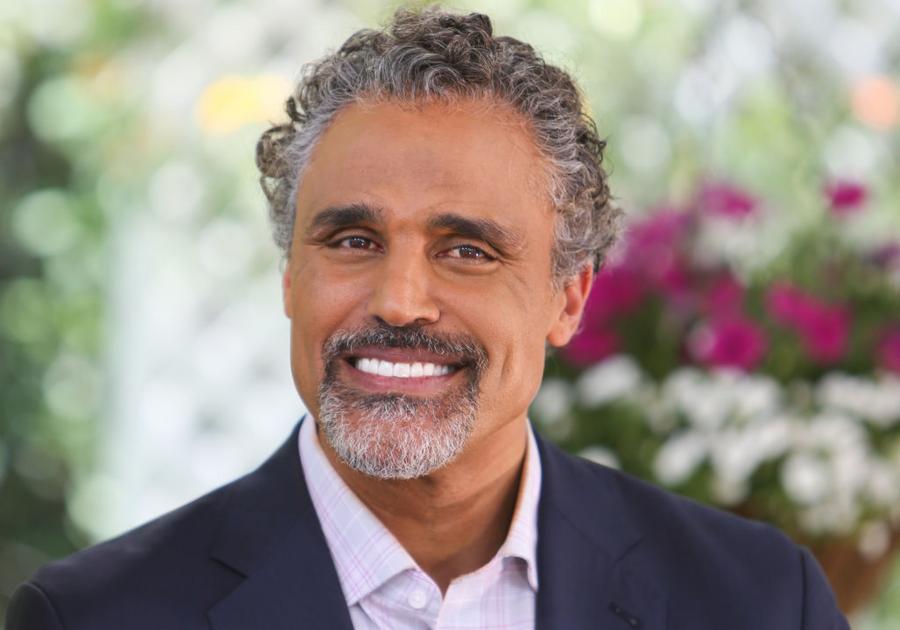
(Photo by Paul Archuleta/Getty Images)
To be clear, that number didn't come from a viral Twitter account posting salacious nonsense for pageviews. It came from an official financial disclosure filed with the Bahamian government.
Under the country's Public Disclosure Act, candidates for Parliament are required to submit a breakdown of their finances, including assets, income, and liabilities. Those filings are reviewed by the Public Disclosure Commission and then summarized in the country's Official Gazette. Here's what Rick's disclosure declared:
- Total Assets: $469,752,090
- Liabilities: $123,388
- Annual Income: $4.8 million
The composition of that wealth is where things get even more surprising.
According to the disclosure, roughly $14.5 million of his assets are "accounts receivable, $11 million is personal real estate, and $430 million is attributable to securities and investments. Specifically, one key investment. As it turns out, Rick Fox is the founder and CEO of a climate technology startup that is surprisingly valuable…
Partanna – Rick Fox's Secret Concrete Startup
Rick Fox is the founder and CEO of Partanna, a Bahamas-based climate tech startup focused on producing carbon-negative concrete and building materials. On paper, it sounds niche. In reality, it sits in the middle of a potentially massive global opportunity.
Concrete is one of the most widely used materials on Earth and also one of the dirtiest. The cement industry alone accounts for an estimated 7% of global carbon emissions, which has sparked a wave of investment into companies trying to clean it up.
Stepping back for a moment…
If you want to turn ocean water into drinkable water, you need a desalination process. But there's a major downside to desalination. After separating the clean water, the process generates an enormous amount of a salty byproduct called brine.
Globally, desalination plants produce tens of millions of cubic meters of brine every single day, in some cases even more than the amount of fresh water they generate.
That brine is denser and saltier than normal seawater. When it's pumped back into the ocean, it sinks to the seafloor, where it can disrupt ecosystems by lowering oxygen levels and increasing salinity. In some cases, it can also carry chemical residues from the desalination process itself.
In other words, desalination solves one problem, water scarcity, but creates another.
Partanna's pitch is to turn that problem into an opportunity.
Instead of dumping brine back into the ocean, the company uses it as a key ingredient in producing its carbon-negative concrete. The idea is simple but powerful. Take a waste product that's environmentally harmful, and convert it into a building material that can potentially lock carbon away instead of emitting it.
But that's not all.
Partanna claims the buildings made from its concrete act like trees—they actively absorb CO2 from the atmosphere!!!
I'm not going to get into the scientific details of how that happens. Here's all you need to know:
Imagine building a house out of giant sponges and just leaving them outside in the sun. But instead of soaking up water when it rains, these sponges are constantly soaking up invisible pollution (CO2) floating in the air. As the pollution gets sucked inside the walls, it freezes into solid rock. It actually becomes the invisible "glue" that makes the walls harder and stronger over time. So, not only are the walls of a building built in a much more eco-friendly way than traditional concrete, these walls then spend decades outside, literally getting stronger by EATING pollution! Mind blown.
In 2023, Partanna raised a $12 million pre-seed round that reportedly valued the company at around $190 million. Since then, it has moved well beyond the early-stage startup phase and into real-world deployment.
Most notably, Partanna signed an agreement with the Bahamian government to help build 1,000 affordable homes using its carbon-negative concrete technology, beginning with the development of a $50 million manufacturing facility.
Based on Rick's declaration, Partanna's valuation has likely more than doubled from its 2023 round, which valued the company at $190 million. Let's say Rick owns 75% of the company. And we now know this one investment is worth around $430 million. That implies Partanna has raised money in the last three years at a roughly $600 million valuation.
/2010/09/Rick-Fox.jpg)
/2013/10/rick-riordan-1.jpg)
/2013/12/GettyImages-846512726.jpg)
/2014/12/Rick-Rockwell.jpg)
/2020/09/rick-leventhal.png)
/2010/11/Vanessa-Williams.jpg)
/2020/06/taylor.png)
/2009/09/Cristiano-Ronaldo.jpg)
/2017/02/GettyImages-528215436.jpg)
/2020/04/Megan-Fox.jpg)
:strip_exif()/2009/09/P-Diddy.jpg)
/2020/02/Angelina-Jolie.png)
/2019/11/GettyImages-1094653148.jpg)
/2018/03/GettyImages-821622848.jpg)
/2009/11/George-Clooney.jpg)
/2020/01/lopez3.jpg)
/2019/10/denzel-washington-1.jpg)
:strip_exif()/2015/09/GettyImages-476575299.jpg)
/2019/04/rr.jpg)
/2009/09/Jennifer-Aniston.jpg)
/2009/09/Brad-Pitt.jpg)