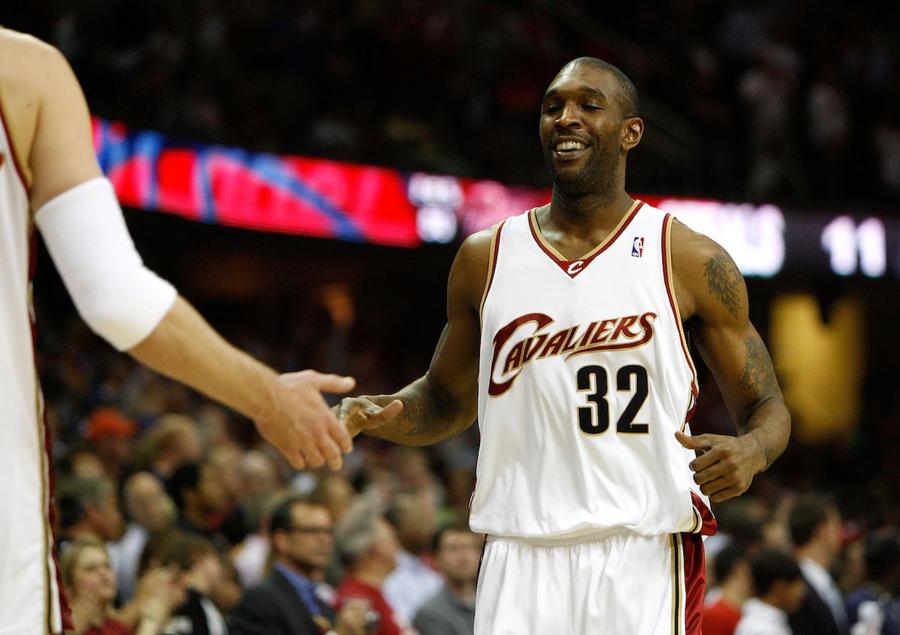
In 1995, Joe Smith appeared to have secured his financial future.
After winning the Naismith College Player of the Year and AP Player of the Year awards at the University of Maryland, Smith was selected by the Golden State Warriors with the first overall pick in the NBA draft. He never became the franchise superstar many expected, but he still enjoyed a productive 16-season career, played for 12 teams and earned approximately $61 million in salary.
Yet by several years after his retirement, Smith was living paycheck to paycheck and carrying roughly $157,000 in debt.
In a recent interview, Smith offered a detailed accounting of how it happened. His explanation involved taxes, agent commissions, expensive real estate mistakes, luxury vehicles, reduced income after basketball and a divorce that consumed more than half of the retirement savings he had remaining.
$61 Million Became About $18 Million
The first important distinction is between Smith's headline NBA earnings and the money he actually kept.
Although his career salary totaled approximately $61 million, Smith estimates that taxes, agent commissions and other professional fees reduced his take-home earnings to around $18 million.
In other words, more than two-thirds of the amount shown on his contracts was gone before accounting for houses, cars, investments or everyday living expenses.
Eighteen million dollars was still enough to create lifelong financial security. But Smith has admitted that he did not fully appreciate how dramatically taxes and professional fees would reduce his wealth. He spent as though his gross salary was much closer to the amount available in his bank account.
Joe Smith says he earned $61 million in the NBA but lost over half his retirement money in a divorce
"During my career, I made $61 million, but after taxes and agent fees, it netted to about $18 million."
"I bought houses in Virginia, the Bay Area, and Milwaukee, and lost a lot… pic.twitter.com/Uk3ZnDWfaw
— Isaac Bassey (@0xBassey) July 17, 2026
Several Homes Became Expensive Losses
Smith has clarified that he did not buy a new house every time he changed NBA teams. He did, however, purchase properties in several markets, including Virginia, the San Francisco Bay Area and Milwaukee.
One of his earliest real estate purchases was a home for his mother in Norfolk, Virginia. A 1996 newspaper profile described the spacious residence as overlooking Lake Whitehurst and characterized it as an early Mother's Day gift from Smith following his rookie season.
He also purchased a house in the Bay Area while playing for the Warriors and another during his time with the Milwaukee Bucks. Smith has said he made no money from those homes after being forced to sell and that disposing of the properties cost him substantial amounts.
A separate Scottsdale, Arizona, estate provides a documented example of how damaging his real estate decisions became.
In 2005, Smith paid $2.225 million for an approximately 8,200-square-foot Scottsdale mansion. The property had five bedrooms, nine bathrooms, a guesthouse, a movie theater, a sports court, a swimming pool and a music studio.
Smith listed the estate for $3.1 million in 2015, but a buyer failed to materialize. The asking price was repeatedly reduced over the next several years before the home finally sold in March 2019 for $1.735 million.
That was a nominal loss of $490,000 compared with the original purchase price. After accounting for commissions, mortgage interest, taxes, insurance, maintenance and nearly 14 years of carrying costs, the true financial loss was likely considerably larger.
Getty Images
Luxury Cars Added To The Spending
Smith also accumulated an expensive collection of vehicles during his playing career.
His garage reportedly included a Bentley, a Corvette, two Range Rovers and several other luxury cars. Unlike real estate that may appreciate under the right circumstances, most vehicles begin losing value as soon as they leave the dealership.
Beyond their purchase prices, Smith had to absorb insurance, maintenance, registration and depreciation. No single vehicle destroyed his finances, but the collection reflected a broader pattern of spending that was sustainable only while seven-figure NBA paychecks continued arriving.
The Divorce Cost Nearly $3 Million
Smith now identifies his divorce as the single largest blow to his remaining wealth.
By the time the marriage ended, his original $18 million in estimated take-home earnings had already been reduced by years of spending, real estate losses and other expenses. Smith estimates that the divorce cost him close to $3 million.
That represented more than half of the retirement money he had remaining at the time.
The distinction is important. Smith did not lose half of his original $61 million in the divorce. He lost more than half of what remained after taxes, professional fees and years of financial mistakes.
After the divorce was settled and other assets were liquidated, Smith said he eventually found himself approximately $157,000 in debt.
His Income Collapsed After Retirement
Smith retired from professional basketball in 2011. During his NBA career, his annual salary had never fallen below approximately $1.3 million. Once he stopped playing, that income disappeared almost overnight.
By 2018, Smith was coaching basketball for roughly 10 to 15 hours per week. He and his then-fiancée were reportedly earning a combined $26,000 per year through several jobs while spending approximately $133,000 annually.
The household was therefore spending more than five times its income while attempting to manage six figures of debt.
That gap revealed one of Smith's biggest problems: his lifestyle had not adjusted quickly enough to reflect his post-NBA earning power.
Alex Rodriguez Helped Create A Recovery Plan
Smith's financial struggles were featured on the CNBC series "Back in the Game," hosted by former baseball star Alex Rodriguez.
Rodriguez's plan was straightforward. Smith needed to cut his expenses and turn his basketball experience into a more substantial source of income.
A financial planner began reviewing Smith's finances with him regularly, helping the former NBA player see exactly how much money was leaving the household each month. Smith and his fiancée also moved out of their more expensive home in the Atlanta suburbs, a decision expected to save approximately $14,000 per year.
Rodriguez encouraged Smith to expand his coaching operation beyond a limited number of hourly sessions. Smith could charge more for private instruction, hold group workouts, organize camps and use his status as a former No. 1 draft pick to attract more clients.
A $61 Million Cautionary Tale
Joe Smith's financial collapse was not caused by one spectacular purchase or a single fraudulent investment. It happened gradually.
By speaking openly about his mistakes, Smith has transformed an embarrassing chapter into a warning for younger athletes. A contract may say $61 million, but without a long-term plan, even an extraordinary fortune can disappear.
/2014/10/Joe-Smith.jpg)
/2024/09/Screenshot-2024-09-03-145414.jpg)
/2013/04/GettyImages-634107150.jpg)
/2018/10/rod.jpg)
/2020/01/Djimon-Hounsou.jpg)
/2013/05/Stephen-Curry.jpg)
/2020/04/Megan-Fox.jpg)
/2017/02/GettyImages-528215436.jpg)
/2019/10/denzel-washington-1.jpg)
/2009/11/George-Clooney.jpg)
/2019/04/rr.jpg)
/2018/03/GettyImages-821622848.jpg)
:strip_exif()/2009/09/P-Diddy.jpg)
/2020/06/taylor.png)
/2009/09/Jennifer-Aniston.jpg)
:strip_exif()/2015/09/GettyImages-476575299.jpg)
/2019/11/GettyImages-1094653148.jpg)
/2020/02/Angelina-Jolie.png)
/2009/09/Brad-Pitt.jpg)
/2020/01/lopez3.jpg)
/2009/09/Cristiano-Ronaldo.jpg)