
For most of his 15 seasons in the NBA, Luol Deng lived in the league's middle class. He was durable, dependable, and consistently productive, the kind of player every coach trusted and every front office valued. Deng averaged roughly 15 points per game across more than 900 appearances, earned two All-Star selections, and logged some of the heaviest minutes of any wing in his era. What he never became was a franchise-defining superstar.
That distinction mattered less financially than it once did. Deng's career unfolded during the NBA's salary-cap boom, fueled by massive television deals with ESPN and TNT. So, over the course of his career, Deng earned $168 million in NBA salary, including a four-year, $72 million contract with the Lakers that continued paying him years after he stopped playing. By the time he officially walked away from the league, Deng had already secured generational wealth by basketball standards.
That résumé alone would have been enough for most players to retire comfortably and generationally wealthy. But Deng had another plan. While he was still playing in the NBA, he quietly funneled his salary into building something else entirely: A commercial real estate portfolio that today is worth $200 million.
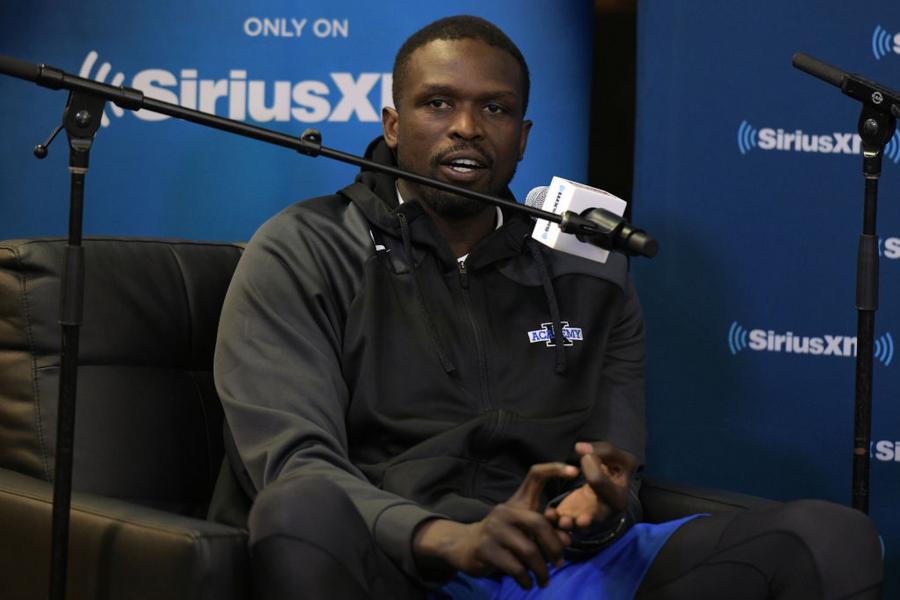
Lance King/Getty Images
Real Estate as the Real Long-Term Play
While many players in the prime of their careers are focused on squeezing out one more huge contract or eventually pivoting into media, Deng took another path. Beginning with his rookie season in 2004, he started investing in real estate.
From the beginning, his investments reflected patience and discipline. Deng initially put money into projects in East Africa and London before expanding into the United States. Over time, his holdings grew to include properties in the Hamptons, large apartment complexes in Baltimore, the Virgin Hotels Las Vegas, and a luxury resort in the Bahamas. Rather than chasing speculative flips, Deng prioritized long-term cash flow and institutional-grade assets.
A major acceleration point came after the 2017 tax overhaul introduced Opportunity Zones, which incentivized investment in designated low-income areas by allowing capital gains to compound tax-free if held long enough. Deng became an early and aggressive participant, partnering with other current and former NBA players through large-scale funds while also targeting projects tied to cities where he had personal connections.
Chicago, where he spent nearly a decade with the Bulls, became a focal point. Deng had long wanted to reinvest in the city, and Opportunity Zone projects gave him a vehicle to blend returns with redevelopment.
Behind the scenes, Deng surrounded himself with heavyweight mentors and partners. He formed his real estate company, D3N9, in 2014 and leaned on guidance from figures such as JPMorgan Chase CEO Jamie Dimon, real estate developer Don Peebles, and former Wall Street banker David Gross, who became a key investment partner.
That infrastructure separated Deng from the stereotype of the athlete dabbling in business. This was not a vanity operation. It was a professionalized investment platform built for scale and longevity.
Today, he controls a sprawling portfolio of hotels, resorts, casinos, luxury condominiums, and multifamily apartment buildings spread across multiple countries. The estimated value of his commercial real estate assets? $200 million.
That puts Deng in a rare lineage of athlete-investors who made their biggest money outside their sport. His path mirrors figures like the late Junior Bridgeman in the NBA or Roger Staubach in the NFL, players who treated athletic income as seed capital rather than a finish line.
Planning for Life After Basketball
Deng's motivation was shaped as much by fear as by ambition. A widely cited study once estimated that roughly 60% of NBA players ran into serious financial trouble within five years of retirement. Deng took that statistic personally. Even while still playing, he organized real estate investment symposiums for fellow players, aimed at teaching the fundamentals of commercial property and helping athletes avoid predatory deals.
By the time Deng's NBA career wound down, the most important work of his professional life was already well underway. There was no scramble for relevance, no desperate pivot into broadcasting or endorsement deals. The infrastructure was built. The assets were in place. The income streams were already compounding.
What separates Deng from most athletes is not just that he invested early, but that he invested deliberately. He treated basketball as a finite opportunity and real estate as a permanent one. His $168 million in NBA earnings funded a platform that now stands on its own. Few players, stars or otherwise, exit the league with something larger than the career that made them famous.
/2014/01/GettyImages-619550310.jpg)
/2021/10/Hakeem-Olajuwon.jpg)
/2025/06/jerry.jpg)
/2025/11/roger-staubach-image.png)
/2010/07/Don-Peebles.png)
/2014/05/ron-baron.png)
/2009/09/Jennifer-Aniston.jpg)
:strip_exif()/2009/09/P-Diddy.jpg)
/2019/11/GettyImages-1094653148.jpg)
/2020/02/Angelina-Jolie.png)
/2017/02/GettyImages-528215436.jpg)
/2019/04/rr.jpg)
/2009/09/Brad-Pitt.jpg)
/2009/09/Cristiano-Ronaldo.jpg)
/2019/10/denzel-washington-1.jpg)
/2018/03/GettyImages-821622848.jpg)
:strip_exif()/2015/09/GettyImages-476575299.jpg)
/2020/04/Megan-Fox.jpg)
/2020/06/taylor.png)
/2009/11/George-Clooney.jpg)
/2020/01/lopez3.jpg)