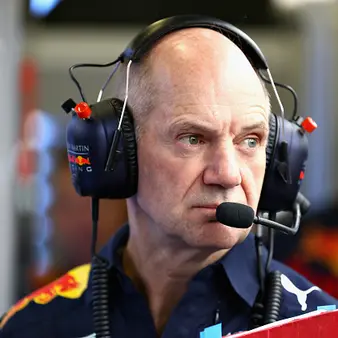
When Red Bull abruptly fired Christian Horner in July 2025, everyone knew one of the biggest breakups in Formula One history had just taken place. Horner wasn't some executive who had been brought in a few seasons earlier and failed to deliver. He had run Red Bull Racing from its first Formula One season in 2005, overseeing six Constructors' Championships, eight Drivers' Championships and 124 Grand Prix victories. For two decades, Christian Horner essentially was Red Bull Racing.
And there was another complication: his contract. Horner was making somewhere in the neighborhood of £8 million to £10 million per year by the end of his tenure. Red Bull Technology's 2024 accounts showed £8.032 million of compensation for its highest-paid director, understood to be Horner, while reporting around his departure put his annual pay closer to £10 million.
More importantly, Horner later revealed that when Red Bull fired him, he still had six years remaining on his contract. So everyone naturally assumed Red Bull probably had to write an enormous check to make him go away.
But how enormous?
There were plenty of reasons we might never have learned the answer. Horner's dismissal came after an extraordinarily turbulent period. In 2024, a female Red Bull employee accused him of inappropriate behavior. Horner denied the allegations, and a grievance was dismissed following an investigation by an independent King's Counsel. An appeal was subsequently reviewed by another independent KC and was also not upheld. Red Bull never publicly said that Horner's eventual firing in July 2025 was punishment for those allegations.
Still, when a high-level executive gets fired after that kind of turmoil, all sorts of contractual possibilities come into play. If Red Bull believed it had grounds to terminate Horner for cause, perhaps it owed him very little. If it simply wanted out of a long-term contract, perhaps it owed him tens of millions.
And whatever deal ultimately ended the relationship almost certainly came with enough confidentiality language to ensure neither side would casually disclose the details. Indeed, when Horner was recently asked about his payoff, he declined to give the number. There was a very real possibility that the exact financial terms of one of the biggest management divorces in Formula One history would remain private forever.
Then came a couple of very boring-looking British corporate filings.
And buried inside them was the answer.

(Photo by Rudy Carezzevoli/Getty Images)
So How Much Did Red Bull Pay Christian Horner?
Red Bull Racing and its parent company, Red Bull Technology Limited, recently filed their financial accounts for the year ending December 31, 2025, with Britain's Companies House. Buried in Red Bull Technology's group accounts is the number everyone wanted to know: the company's highest-paid director received £66.988 million in "compensation for loss of office."
Horner isn't named next to the payment, but he was Red Bull's highest-paid director and departed during the year covered by the accounts. At current exchange rates, that £66.988 million exit payment is worth $88.5 million.
And that wasn't all he received in 2025. The accounts show another £9.029 million in remuneration and £10,000 in pension contributions for the highest-paid director.
Put it all together and Horner's total disclosed 2025 compensation comes to £76.027 million, or just over $100 million.
So the clean takeaway is this: Red Bull paid Christian Horner $88.5 million to leave the team, and $12 million in normal salary for the year, bringing his total compensation from the company during 2025 to $100 million.
Red Bull Had A Six-Year Problem
The size of the payment makes more sense when you remember what Red Bull was trying to unwind. Horner had been running Red Bull Racing for 20 years. More importantly, he says he had six years remaining on his contract.
In a recent interview, Horner said Red Bull initially told him that the team's performance had slipped and management wanted to go in a different direction. When he pressed for a more specific explanation — particularly given those six remaining years — Horner said he was eventually told the organization had become more "Christian Horner Racing" than Red Bull Racing.
Whether or not Horner agrees with that assessment, Red Bull had every right to decide it wanted someone else running the team. The expensive part was getting rid of the guy who already had the job.
Imagine for a moment that Horner's future compensation would have remained near £10 million per year. Six additional years could have represented another £60 million in salary before even considering bonuses or other contractual benefits. Suddenly, a £66.988 million settlement doesn't look like a random number. It looks like the price of tearing up a very valuable long-term contract.
One Of The Most Lucrative Firings In Sports History
Red Bull announced Horner's removal on July 9, 2025, days after the British Grand Prix. The company did not initially terminate his directorships immediately. Companies House records show that his Red Bull Racing directorship formally ended in August, while Red Bull and Horner ultimately announced in September that they had reached an agreement formally ending their relationship.
At the time, reports pegged his settlement at £50 million, £52 million, £60 million and eventually as high as £80 million. Horner wasn't particularly interested in correcting anyone.
Asked about the payoff recently, he suggested the sheer size of it demonstrated that Red Bull hadn't concluded he had committed some offense requiring dismissal without compensation. His interpretation was much simpler: they didn't want him running the team anymore, and they were willing to pay a fortune to make that happen.
Now the accounts give us our first hard look at that fortune. The £66.988 million loss-of-office figure alone is equivalent to more than eight years of Horner's £8.032 million 2024 compensation.
Horner's wealth also sits alongside another very public fortune. Since 2015, he has been married to Geri Halliwell, better known as Ginger Spice from the Spice Girls. Halliwell built a separate $40 million net worth of her own through music, touring, endorsements and other ventures.
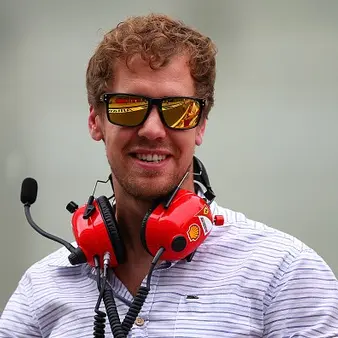
It also represents one of the stranger financial realities of professional sports. Christian Horner spent two decades building Red Bull Racing into one of the most successful Formula One teams ever created. He helped oversee championship eras with Sebastian Vettel and Max Verstappen. He became one of the most recognizable executives in motorsports and one half of a bitter modern F1 management rivalry with Toto Wolff.
And after all of those victories, championships and years of multimillion-dollar salaries, one of the largest paydays of his career appears to have come from Red Bull deciding that it would rather pay him nearly $90 million than have him show up for work.