
/2021/10/roald-dahl.png)
/2014/08/GettyImages-451570874.jpg)
/2022/02/seuss.jpg)
/2010/05/John-Ronald-Reuel-Tolkien.jpg)
/2021/04/Suzanne-Collins.jpg)
/2020/10/Wes-Anderson-1.jpg)
/2010/10/GettyImages-468741788.jpg)
/2010/07/John-Elway.jpg)
/2020/04/Teddy-Bridgewater.jpg)
/2021/10/Tea-Leoni.jpg)
/2021/05/Ian-Ziering.jpg)
/2013/09/reggie.jpg)
/2014/11/Odell-Beckham-Jr.jpg)
/2022/08/mickey.jpg)
/2019/11/Jerry-Jones-1.jpg)
/2009/11/seal2.jpg)
/2010/11/Tyson-Beckford.jpg)
What Was Roald Dahl's Net Worth?
Roald Dahl was a British novelist, poet, screenwriter, and fighter pilot who had a net worth of $20 million at the time of his death in 1990. As of this writing, Roald Dahl's books have sold over 300 million copies globally. Known for writing darkly comical, unsentimental children's books, his titles include "James and the Giant Peach," "The BFG," "Charlie and the Chocolate Factory," and "Matilda." Dahl is frequently considered among the greatest British authors of the 20th century, although he has also received criticism for anti-Semitism and misogyny. Netflix has paid Roald Dahl's heirs an astonishing $1.5 billion over two transactions for 100% rights to all of his intellectual property. In November 2018, Netflix paid $1 billion to acquire animation rights to a total of 16 Dahl works, including "Charlie and the Chocolate Factory" and "Matilda." In late 2021, Netflix paid another $500 million to outright purchase the Roald Dahl Story Company from Dahl's widow and their three children.
Early Life and Education
Roald Dahl was born on September 13, 1916, in Cardiff, Wales. He was the son of affluent Norwegian immigrant parents Harald and Sofie. He had four sisters, Astri, Alfhild, Else, and Asta. Astri passed away from appendicitis at age seven, while Dahl's father died of pneumonia several weeks later. With his first language being Norwegian, Roald went to the Church of Norway, the country's Lutheran state church. He attended the Cathedral School in Llandaff, Wales, and then transferred to St. Peter's boarding school in Weston, Somerset, England. At the age of 13, Dahl began going to Repton School in Derbyshire. There, he was tormented by an environment of ritual cruelty among the students and corporal punishment by the headmaster. During his school years, he played golf, cricket, and football, and developed an interest in literature and photography.
Following his schooling, Roald crossed the Atlantic and hiked through Newfoundland, Canada, with the Public Schools Exploring Society. He then joined the Shell Petroleum Company, which assigned him to posts in Kenya and Tanganyika, where he lived in luxury in the company's Shell House.
World War II
While in Africa in 1939, Dahl was commissioned as a lieutenant in the King's African Rifles, where he commanded a platoon of indigenous troops serving in the colonial army. Following this, Roald joined the Royal Air Force, first becoming a fighter pilot and then an intelligence officer before rising to the rank of wing commander. Due to injuries he suffered in a flying accident in 1940, Dahl was eventually declared unfit for further service and was invalided out of the Royal Air Force in 1946.
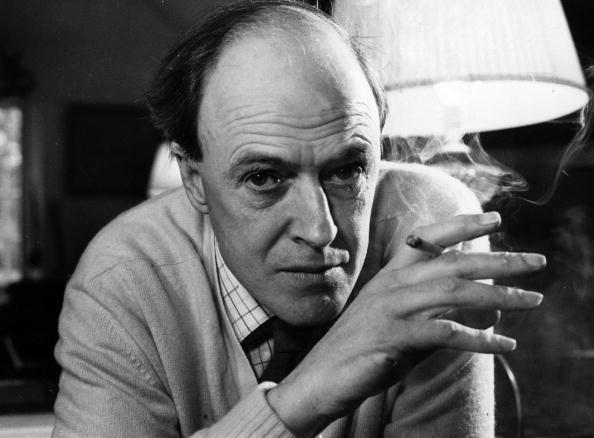
Getty Images
Beginning of Writing Career
In 1942, Dahl published his first written work, which focused on his wartime adventures and was inspired by a meeting with English novelist C. S. Forester. It was bought by the "Saturday Evening Post" for $1,000, and published under the title "Shot Down Over Libya." The next year, Roald published his first children's book, "The Gremlins," about tiny creatures serving in the Royal Air Force. The author also wrote adult short stories, which were included in early collections such as "Someone Like You" and "Kiss Kiss."
Children's Books
Starting with "James and the Giant Peach" in 1961, Dahl became known as a preeminent author of children's fiction. He went on to pen such popular children's classics as "Charlie and the Chocolate Factory," "Fantastic Mr. Fox," "The Twits," "The BFG," "The Witches," and "Matilda," among many others. In the process, he became one of the best-selling authors in the world and won numerous awards for literature. Further, many of his works have been adapted into feature films.
Dahl's books for children are often told from the point-of-view of their child protagonists. They typically include adult villains who despise and abuse kids, a trope that reaches back to the author's experiences at boarding school. His books also feature fantasy, darkly droll humor, grotesque or magical characters, and an undercurrent of sentiment, although they are never maudlin. Roald also examined themes of class, as in "Fantastic Mr. Fox" and "Danny, the Champion of the World." In 1983, he received the World Fantasy Award for Life Achievement for his contributions to literature.
Screenwriting
For a period of time in the '60s, Dahl penned screenplays. He wrote the scripts for the James Bond film "You Only Live Twice" and the musical fantasy film "Chitty Chitty Bang Bang," both of which were based on novels by Ian Fleming. Additionally, Roald began to adapt his own novel "Charlie and the Chocolate Factory," but after failing to make the deadline, it was completed by David Seltzer and turned into "Willy Wonka & the Chocolate Factory." Dahl hated the results and disowned the film. Consequently, he refused for any further adaptations of the book to be produced during his lifetime.
Among Dahl's other screenplay credits are the BBC children's television series "Jackanory" and the 1971 thriller film "The Night Digger." From 1979 to 1988, he wrote 26 episodes of the British anthology series "Tales of the Unexpected."
Controversies
Throughout his career, Dahl received a great deal of criticism for written and spoken words that were racist, misogynistic, or anti-Semitic. The latter charge came to him for a 1983 review he wrote of the picture book "God Cried," in which he claimed that Jewish people switched from "victims to barbarous murderers" following the Holocaust. Roald went on to decry the "Jewish financial institutions" that "dominate" the United States and asserted that Jewish people have a trait that provokes antagonism. Dahl also drew claims of misogyny due to his depiction of female characters, whom he often wrote as evil, ugly, and imperious.
Personal Life
In 1953, Dahl married actress Patricia Neal. They were married for 30 years and had five children: Olivia, Chantal, Theo, Ophelia, and Lucy. When he was only a few months old, Theo was struck by a taxi while in his baby carriage and briefly suffered from hydrocephalus. Roald subsequently became involved in the development of the WDT valve, which is designed to improve the cerebral shunt used to treat the condition. A few years later, Dahl's daughter Olivia passed away from measles at the age of seven. Later, in 1965, his wife suffered three cerebral aneurysms; she ultimately recovered.
In 1972, Dahl began an 11-year affair with film producer Felicity d'Abreu Crosland, whom he wed in 1983 after divorcing Neal. On November 23, 1990, Roald passed away at the age of 74 from a rare blood cancer. His charitable contributions to hematology, neurology, and literacy are continued through Roald Dahl's Marvellous Children's Charity, which provides care to sick youth throughout the UK.
Estate
Upon his death in 1990, Roald's widow, Felicity, inherited the majority of what was left of his assets after taxes and other bequeaths. Felicity and her three children oversee the Roald Dahl Story Company which has generated billions in royalties and other revenue over the years.
Netflix Deals
In November 2018, Netflix paid a reported $1 billion to acquire the animated rights to 16 of Dahls' books. In September 2021, Netflix completed the set by acquiring the Roald Dahl Story Company outright for $500 million.
/2021/10/roald-dahl.png)
/2020/10/Wes-Anderson-1.jpg)
/2015/04/astrid.jpg)
/2010/05/John-Ronald-Reuel-Tolkien.jpg)
/2021/04/Suzanne-Collins.jpg)
/2020/01/Stephen-King.jpg)
/2022/09/Truman-Capote.jpg)
/2019/11/GettyImages-91596456.jpg)