What Is The Largest Single-Movie Actor Payday Of All Time?

By on July 6, 2025 in ArticlesEntertainment

It's no secret that the biggest Hollywood stars can earn ridiculous amounts of money from a single movie.

For decades, $20 million represented the ultimate movie-star salary. Jim Carrey famously became the first actor to command that amount upfront when he signed on for 1996's "The Cable Guy."

But even a $20 million salary looks relatively modest compared with the largest single-film payday in Hollywood history.

That record does not belong to Tom Cruise for jumping out of airplanes, Robert Downey Jr. for saving the universe or Keanu Reeves for bending the rules of reality.

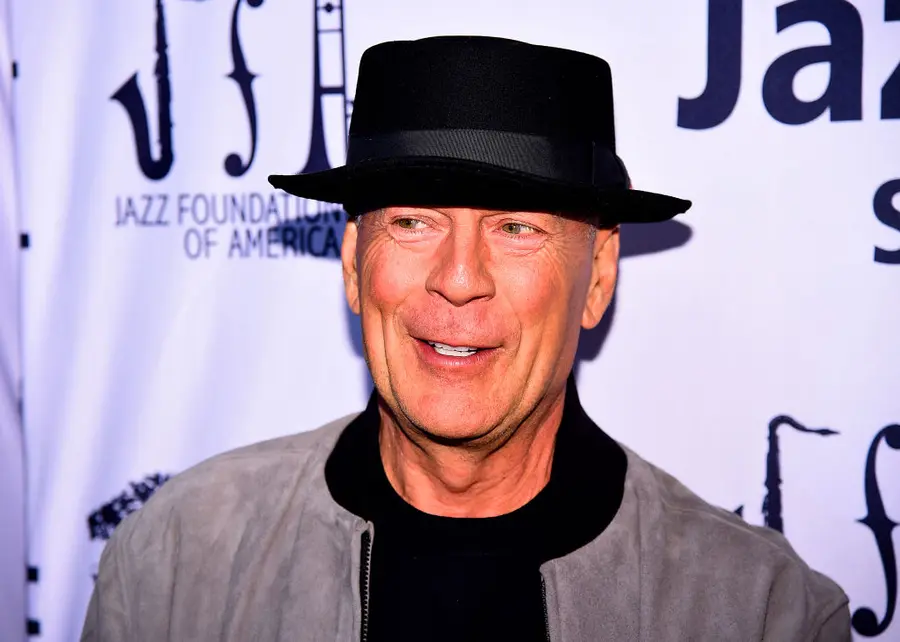
It belongs to Bruce Willis, who earned as much as $120 million from "The Sixth Sense."

After adjusting for inflation, Bruce's payday would be worth approximately $232 million in 2025 dollars.

Even more surprisingly, Bruce did not earn the record from an action blockbuster. He earned it by starring in a relatively modest supernatural thriller directed by a filmmaker with almost no commercial track record. So how did that happen?

Theo Wargo/Getty Images

The Difference Between Salary And A Movie Payday

A movie salary is the guaranteed amount an actor receives for appearing in a film.

A total movie payday can be much larger.

Hollywood's most powerful actors sometimes negotiate backend points, which give them a percentage of a film's box-office revenue, profits, home-video sales, television licensing or other income.

The most valuable version is called first-dollar gross participation. Under that arrangement, the actor begins collecting a percentage of revenue before the studio deducts most production, marketing and distribution expenses.

Points can be risky. An actor who gives up guaranteed salary for a percentage of the movie may sacrifice millions of dollars if the film flops.

But when the movie becomes a worldwide phenomenon, the reward can dwarf the original salary.

That is exactly what happened with Bruce Willis and "The Sixth Sense."

A Strange Script From An Unknown Director

In 1997, Disney executive David Vogel read a screenplay called "The Sixth Sense" from a relatively unknown writer-director named M. Night Shyamalan.

Vogel was blown away by the script.

He reportedly agreed to pay Shyamalan $3 million for the screenplay while also accepting his demand that he direct the movie.

It was an aggressive commitment. Shyamalan's only previous major studio directing credit was "Wide Awake," a Rosie O'Donnell comedy-drama that earned only a fraction of its production budget at the box office.

When senior Disney executives learned that Vogel had committed millions of dollars and handed directing control to an unproven filmmaker without receiving the necessary approval, they were furious.

Vogel was removed from his position overseeing Disney's film division. Disney then transferred much of the project to Spyglass Entertainment while retaining a distribution interest.

Shyamalan and Spyglass had a compelling script and an ambitious director. What they still needed was a movie star powerful enough to convince audiences to buy tickets for a quiet supernatural drama about a frightened child who could see dead people.

They needed Bruce Willis.

Bruce Willis' Extraordinary Contract

In the late 1990s, Willis was one of the biggest movie stars in the world.

He had already starred in "Die Hard," "Die Hard 2," "Die Hard with a Vengeance," "Pulp Fiction," "The Fifth Element" and "Armageddon." During this period, Bruce regularly commanded base salaries of around $14 million or more.

Convincing him to star in "The Sixth Sense" required an unusually generous deal.

Bruce received a $14 million base salary, plus a substantial share of the movie's backend and home-video revenue. His participation has commonly been described as roughly 17.5% of the film's proceeds.

He also accumulated a private-jet bill of approximately $450,000 and reportedly received a $400,000 allowance while working on the movie.

For comparison, Haley Joel Osment was paid approximately $150,000 to play Cole Sear.

He did not receive a private jet or a $400,000 allowance.

"The Sixth Sense" Becomes A Phenomenon

"The Sixth Sense" opened in theaters in August 1999 and earned $26.5 million during its first weekend.

Instead of fading after its opening, the movie remained at the top of the box office for five consecutive weeks.

Audiences became obsessed with its supernatural mystery and twist ending. Word of mouth was enormous, and repeat viewings helped turn the film into one of the defining movies of the year.

"The Sixth Sense" ultimately earned more than $670 million worldwide against a production budget of around $40 million.

The movie's financial success did not end when it left theaters. It became the most-rented home-video title of 2000 and generated significant additional revenue from VHS, DVD, television licensing and other sources.

Thanks to his backend participation, Bruce reportedly earned as much as $106 million beyond his original $14 million salary.

That brought his total compensation to an estimated $120 million.

What Would Bruce's Payday Be Worth Today?

A $120 million payday would be staggering in any era. But Bruce earned that money in 1999, when the dollar had considerably more purchasing power.

Adjusted for inflation, $120 million in 1999 would be worth approximately $232 million in 2025 dollars.

That inflation advantage is important because several actors have earned nominal paydays of around $100 million since then.

Some may even have surpassed Bruce in raw dollars.

None has clearly surpassed the inflation-adjusted value of his "Sixth Sense" payday.

Tom Cruise's Three $100 Million Paydays

No actor has come closer to Bruce's record more often than Tom Cruise.

Cruise has earned approximately $100 million from at least three individual movies: "Mission: Impossible II," "War of the Worlds" and "Top Gun: Maverick."

Cruise earned these fortunes because he rarely operates as a conventional salaried actor.

His production company controlled the movie rights to "Mission: Impossible," allowing him to collect acting compensation, producing fees and a major share of the franchise's success.

Cruise earned an estimated $100 million from "Mission: Impossible II." Adjusted for inflation, that would be worth approximately $187 million in 2025 dollars.

His estimated $100 million payday from "War of the Worlds" would be worth around $165 million.

"Top Gun: Maverick" presents the strongest potential challenge to Bruce's record in nominal dollars.

Cruise received an upfront salary of around $13 million, plus valuable first-dollar gross participation. The movie earned nearly $1.5 billion during its original theatrical run and generated additional revenue through rentals, digital purchases, streaming, television and home video.

Cruise's final compensation clearly passed $100 million and may have exceeded $120 million. One reasonable estimate places his total payday at around $133 million.

But because the final number has never been publicly confirmed, "Top Gun: Maverick" cannot definitively claim the record.

Even if Cruise earned $133 million, that amount would be worth only around $146 million in 2025 dollars—far below the inflation-adjusted value of Bruce's payday.

Jack Nicholson's "Batman" Gamble

In 1989, Jack Nicholson accepted a reduced $6 million salary to play the Joker in "Batman."

Nicholson reportedly would have commanded around $10 million under a conventional agreement.

In exchange for accepting less money upfront, he received a share of the movie's box-office revenue, home-video sales and merchandise.

"Batman" became a cultural phenomenon. Batman and Joker merchandise flooded stores, and Nicholson participated financially in the frenzy.

His total payday reached an estimated $60 million, setting a Hollywood record at the time.

Adjusted for inflation, Nicholson's compensation would be worth approximately $156 million in 2025 dollars.

That is an extraordinary amount of money, but it still falls well short of Bruce Willis.

Tom Hanks And "Forrest Gump"

Tom Hanks was originally supposed to receive a large guaranteed salary for "Forrest Gump."

When the production began running over budget, Hanks agreed to surrender much of his upfront compensation in exchange for first-dollar gross participation. Director Robert Zemeckis made a similar arrangement.

It was a significant gamble.

"Forrest Gump" became one of the defining movies of the 1990s, earning around $700 million during its theatrical run and generating additional revenue through home video, licensing and television.

Hanks earned an estimated $70 million in the first year alone.

Adjusted for inflation, that payday would be worth approximately $152 million in 2025 dollars.

Hanks also won his second consecutive Academy Award for Best Actor.

Will Smith And "Men In Black 3"

Will Smith earned approximately $100 million from "Men in Black 3."

The production experienced delays, script problems and a budget that reportedly exceeded $200 million. Despite those issues, the movie earned more than $620 million worldwide.

Smith's salary and backend participation produced one of the largest nominal acting paydays ever recorded.

Adjusted for inflation, his $100 million payday would be worth approximately $140 million in 2025 dollars.

Once again, it was an enormous windfall—but nowhere near Bruce's $232 million inflation-adjusted record.

Sandra Bullock And "Gravity"

Sandra Bullock received $20 million upfront to star in "Gravity," along with 15% of the movie's first-dollar gross and a percentage of its home-entertainment revenue.

The contract proved extremely valuable when "Gravity" earned more than $700 million worldwide.

Bullock's final compensation reached an estimated $77 million, which would be worth approximately $106 million in 2025 dollars.

Her deal remains one of the largest single-film paydays ever earned by an actress.

What About Keanu Reeves?

Keanu Reeves is frequently credited with earning $126 million from "The Matrix Reloaded" and another $80 million from "The Matrix Revolutions."

Those individual figures should be treated cautiously.

The two sequels were filmed back-to-back under one connected compensation package. Contemporary reporting estimated that Reeves would earn somewhere between $90 million and $200 million from the two movies combined.

There is no sufficiently reliable public breakdown establishing exactly how much of that compensation came from each individual film.

When his earnings from the original "Matrix" are included, Reeves may have earned more than $250 million from the trilogy.

That is one of the largest franchise windfalls in Hollywood history, but it is not a clearly documented single-movie payday.

What About Mel Gibson

Mel Gibson earned around $400 million from "The Passion of the Christ."

That figure is much larger than Bruce Willis' "Sixth Sense" payday, but the circumstances were fundamentally different.

Gibson personally financed much of the movie, directed it and retained a massive ownership position after traditional studios declined to fund the project.

He earned hundreds of millions of dollars as the film's financier, director and owner—not merely as an actor receiving salary and backend participation.

Calling Gibson's windfall an acting paycheck would therefore be misleading.

Who Holds The Record?

In raw dollars, Tom Cruise may eventually be proven to have earned more from "Top Gun: Maverick."

Keanu Reeves may have earned more from the combined production of two "Matrix" sequels.

Mel Gibson earned substantially more as the owner and financier of "The Passion of the Christ."

But when the question is narrowed to a clearly established payday earned by an actor from one individual movie, the record remains Bruce Willis' estimated $120 million compensation from "The Sixth Sense."

Adjusted for inflation, that payday would be worth approximately $232 million in 2025 dollars.

Bruce did not earn the largest acting payday in Hollywood history by saving the world, jumping off a skyscraper or destroying an asteroid. He earned it by sitting quietly across from a frightened little boy who could see dead people.

Did we make a mistake?
Submit a correction suggestion and help us fix it!
Submit a Correction