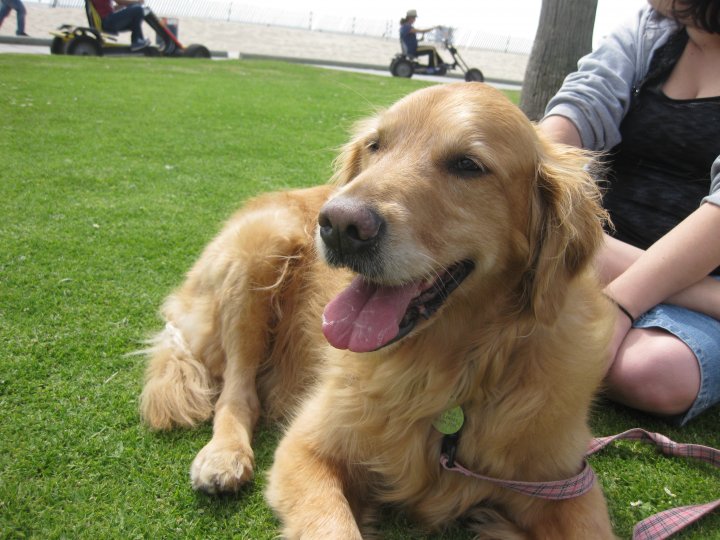
David MacNeil – The Billionaire Founder Of WeatherTech – Spent $6 Million On A Super Bowl Ad To Thank The Vets Who Saved His Golden Retriever

By on February 8, 2020 in ArticlesEntertainment

During the 2020 Super Bowl, millions of viewers expected the usual lineup of beer commercials, celebrity cameos, pickup trucks, streaming-service promos, and tear-jerking brand ads. Google had one of the night's most emotional spots, featuring an elderly man asking Google Assistant to help him remember details about his late wife. But another commercial hit dog lovers right in the chest.

It opened with a Golden Retriever named Scout running across a beach.

Scout was not a random actor dog. He was the beloved pet of David MacNeil, the billionaire founder and CEO of WeatherTech, the Illinois-based auto accessories company best known for its custom-fit floor mats. Scout had also become something of an unofficial mascot for WeatherTech, appearing in the company's ads and becoming part of the brand's public identity.

But in the summer of 2019, Scout nearly died.

The 7-year-old Golden Retriever collapsed at home. A veterinarian examined him and delivered devastating news: Scout had cancer. More specifically, he had hemangiosarcoma, an aggressive cancer of the blood vessel walls. The tumor was located in his heart, and the prognosis was grim. Scout was given about a month to live.

MacNeil was crushed. But he refused to accept that the next step was simply saying goodbye.

As he later recalled, Scout was standing in a small exam room, wagging his tail. MacNeil looked at him and thought, "I'm not putting that dog down. There's just absolutely no way."

So MacNeil took Scout to the University of Wisconsin–Madison School of Veterinary Medicine, one of the country's leading veterinary research institutions. The odds were almost impossibly low. Scout was reportedly given a 1% chance of survival.

The team at UW treated Scout with an aggressive combination of chemotherapy, radiation, and immunotherapy. Against all expectations, the treatment worked. Scout's tumor shrank dramatically, nearly disappearing. Just as important, the treatments allowed him to maintain a strong quality of life. To MacNeil, the school had not simply treated a dog. It had saved a member of his family.

So he decided to say thank you in the most David MacNeil way imaginable.

He bought a Super Bowl commercial.

Photo courtesy of the author

The 30-second ad, titled "Lucky Dog," reportedly cost around $6 million. But it was not a normal WeatherTech commercial. It was not focused on floor mats, cargo liners, or any of the other car accessories that made MacNeil a billionaire. Instead, it told Scout's story and directed viewers to donate to the University of Wisconsin School of Veterinary Medicine's cancer research efforts.

For a company that had already become known for spending heavily on Super Bowl ads, it was a remarkable pivot. MacNeil used one of the most expensive advertising slots in the world not to sell a product, but to thank the doctors who helped save his dog and to raise awareness for veterinary cancer research.

The ad aired during the second quarter of the game. It showed Scout running on a beach, then receiving treatment from UW veterinarians. It ended by encouraging viewers to support the school's research through a WeatherTech-linked donation campaign.

MacNeil later explained the goal simply:

"I hope it has a positive impact on cancer for animals and people, all over the world."

That human connection was not just sentimental. Researchers at the school emphasized that cancer research in dogs can also help advance cancer research in people. Dogs and humans develop many similar cancers, and treatments studied in veterinary medicine can help inform broader breakthroughs in oncology. As UW officials noted at the time, much of what doctors know about diagnosing and treating certain devastating diseases has roots in veterinary research.

The ad also turned Scout into a national symbol. Here was a dog who had been given almost no chance to survive, whose owner had the resources to pursue every possible treatment, and whose story was now being broadcast to more than 100 million people.

MacNeil's ability to spend $6 million on a thank-you ad is part of what made the story so unusual. His fortune came from one of the least glamorous businesses imaginable: car floor mats.

MacNeil started WeatherTech in 1989 after taking out a second mortgage on his home to import high-quality automotive floor mats from the United Kingdom. Before launching the company, he had worked in the automotive world and noticed that many car floor mats in the U.S. were poorly made. While traveling in the U.K., he saw thicker, better-designed mats with raised edges that trapped water, mud, and debris. He believed American drivers would pay for a better version.

At first, he imported the mats. Then he began manufacturing his own products in the United States under the WeatherTech name. Over time, the company expanded into trunk liners, mud flaps, pickup bed liners, seat protectors, pet products, and other accessories. WeatherTech became famous for its "Made in America" branding, direct-to-consumer marketing, and splashy Super Bowl commercials.

MacNeil owns 100% of the company. That ownership stake, combined with WeatherTech's hundreds of millions in annual revenue, made him a billionaire. CelebrityNetWorth estimates David MacNeil's net worth at $2 billion.

He is also known for his love of cars. In 2018, MacNeil made headlines when he reportedly paid $70 million for a 1963 Ferrari 250 GTO, one of just 36 ever built. At the time, it was considered the most expensive car ever sold. So yes, David MacNeil is a billionaire who made his fortune protecting car interiors, then spent $70 million on one of the most coveted Ferraris in history.

But the Scout story revealed a very different side of him.

Sadly, Scout did not live for years and years after the commercial aired. He passed away in March 2020, not long after his story reached the world during the Super Bowl. But his impact continued.

According to the University of Wisconsin–Madison, Scout's story helped inspire more than $1 million in donations to the School of Veterinary Medicine's cancer research efforts. Donations came from all 50 states and from around the world. The money helped support research into better ways to diagnose, treat, and prevent cancer in animals, with potential benefits for humans as well.

Some of the support helped the school acquire a cutting-edge radiation therapy system called Radixact, installed at UW Veterinary Care in 2020. The system allows doctors to target tumors with greater precision while sparing healthy tissue. It also helps treat tumors in difficult areas of the body, including the chest and abdomen, where vital organs make radiation especially complicated.

Funding inspired by Scout also supported oncology clinical trials and research into hemangiosarcoma, the same aggressive cancer that nearly took Scout's life. In 2023, UW announced plans for a clinical trial of a new anti-hemangiosarcoma vaccine designed to train a dog's immune system to recognize and attack cancer cells left behind after surgery and chemotherapy.

That is the real legacy of "Lucky Dog." It began as one billionaire's refusal to give up on his Golden Retriever. It became a $6 million Super Bowl thank-you note. And it turned into a fundraising and awareness campaign that continued helping dogs, veterinarians, cancer researchers, and potentially human patients long after Scout was gone.

Most Super Bowl commercials disappear from memory within days. Scout's did something rarer.

It made millions of people pause, hug their dogs a little tighter, and consider that veterinary medicine is not just about pets. It is also a front line in the fight against diseases that affect all of us.

Did we make a mistake?
Submit a correction suggestion and help us fix it!
Submit a Correction