
Back in 2005, David Evans, better known as U2 bandmember "The Edge," paid just under $9 million for roughly 150 acres of hilltop land overlooking Malibu. The property sat on a pristine coastal ridge with sweeping views of the Pacific. His vision was ambitious, bordering on fantastical. The Edge wanted to build a private enclave of five strikingly modern mansions, connected by a private road, in a development he planned to call "Leaves in the Wind."
Malibu residents and government officials were incensed.
From the moment the plans became public, residents, environmental groups, and coastal regulators mobilized against the project. Critics argued that carving roads into the ridge, running utilities through sensitive habitat, and erecting massive homes on the skyline would permanently scar one of the most visible stretches of the coast. Over the next decade, The Edge found himself locked in a grinding, expensive standoff with the California Coastal Commission and local activists.
To his credit, he did not simply bulldoze ahead. He revised designs. He reduced the size of the homes. He hired elite architects, environmental consultants, lobbyists, and lawyers. Dozens of studies were commissioned. Millions more were spent attempting to prove the development could coexist with the land. At one point, the Coastal Commission even approved the project, only for the decision to be challenged in court by conservation groups.
In June 2019, after years of legal back-and-forth, the California Supreme Court declined to hear The Edge's appeal. That decision effectively killed "Leaves in the Wind." The rock star who seemingly had every advantage, money, fame, and patience, walked away empty-handed. The land remains undeveloped to this day.
Keep that story in mind for a moment…
Exactly one year ago, the Palisades Fire destroyed more than 700 homes in Malibu, including roughly 300 beachfront properties. Rebuilding has been slow and contentious. Only a small fraction of permits have been issued. Longtime residents have grown frustrated watching empty lots sit untouched while the community struggles to recover.
Into that vacuum have stepped two billionaire brothers from New Zealand: Mat and Nick Mowbray. They are the richest people in New Zealand, with a combined net worth of $20 billion.
Over the past year, Mat and Nick have quietly purchased 16 burned beachfront lots along Pacific Coast Highway.
Unlike The Edge's hilltop vision, these properties sit directly on the sand. And unlike Malibu's prolonged resistance to large-scale development, the city has so far allowed the acquisitions to proceed…
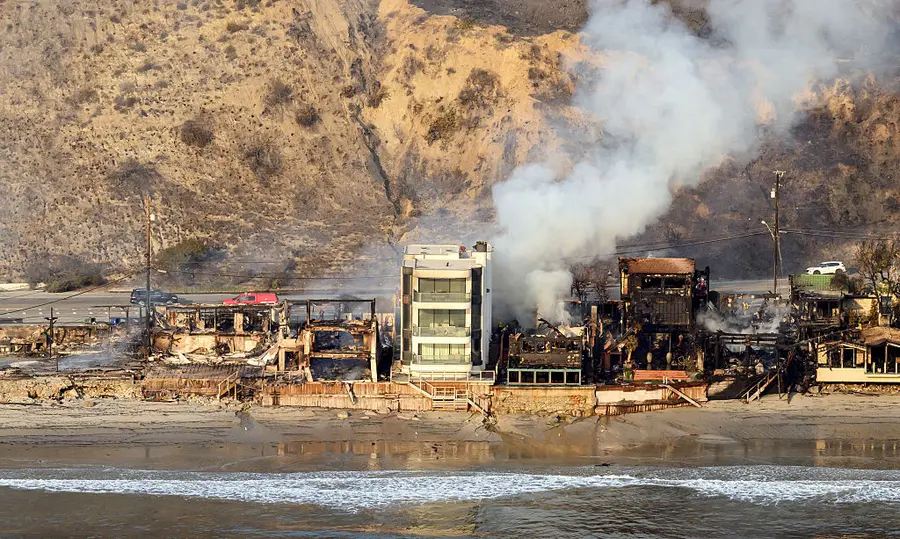
(Photo by JOSH EDELSON/AFP via Getty Images)
Who Are The Mowbrays and How'd They Get So Rich?
The brothers grew up in New Zealand and showed entrepreneurial instincts early. As teenagers, they designed and sold toy products while still in school. In the early 2000s, Mat, Nick, and their sister Anna founded a toy company called Zuru. In 2003, they set up their own manufacturing operations in Hong Kong and mainland China. The bold move to control their own operations, rather than rely on third parties, paid off. Zuru was able to iterate and scale aggressively, undercutting competition.
Zuru's breakout success came with mass-market hits like "Bunch O Balloons," a literal bunch of water balloons that can be filled simultaneously from one hose. It became one of the best-selling outdoor toys of the 2010s:
The company followed that with a string of blockbuster brands, including "XShot," "5 Surprise," and "Mini Brands," many of which dominated shelf space at retailers like Walmart and Target. Unlike traditional toy companies that rely heavily on licensing and seasonal hits, Zuru focuses on fast product cycles, viral appeal, and tight manufacturing control.
By the late 2010s, Zuru had quietly become one of the largest toy companies in the world by revenue, while remaining privately held. Profits were largely reinvested, and the brothers avoided public markets, media circuits, and celebrity-founder culture. That low-profile approach helped them compound wealth out of the spotlight.
In recent years, the Mowbrays expanded beyond toys. Through divisions such as Zuru Tech, they began investing heavily in automated construction and prefabricated housing systems. The goal was to apply the same manufacturing principles that worked in toys, speed, scale, and cost control, to real estate and construction, industries long criticized for inefficiency.
Last year, the brothers, who are the company's majority owners, were officially crowned the richest people in New Zealand, with a combined net worth of $20 billion. Despite that status, they remain relatively unknown outside business and manufacturing circles. This is why their sudden emergence as major property buyers in Malibu has caught so many people off guard.
Malibu Purchases
According to city officials and reporting from local media, the Mowbrays' Malibu purchases were not part of some grand, pre-announced master plan. The brothers initially intended to buy a single beachfront lot for personal use. But as word spread that they were willing and able buyers in a market frozen by insurance disputes, permitting delays, and post-fire uncertainty, more opportunities followed. One lot became several. Several became sixteen.
All sixteen parcels sit along Pacific Coast Highway and were previously developed with single-family homes before the fire. That distinction is critical. Unlike The Edge's ridgeline project, which would have introduced entirely new development into an undeveloped area, the Mowbrays are rebuilding on lots where homes already existed. From a legal and political standpoint, that places them on far firmer ground.
The brothers have said their intention is to rebuild one home per lot, not combine parcels, not push for oversized footprints, and not provoke a showdown with the California Coastal Commission. The homes are expected to be prefabricated using fire-resistant materials and assembled on-site, a process their company argues is faster, safer, and more predictable than traditional Malibu construction.
Even so, the scale of the land grab has unsettled many longtime residents.
Malibu City Council members have openly worried that wealthy buyers could use the rebuilding process as an opportunity to quietly rewrite the character of the coastline. While there are size limits on homes in many parts of Malibu, beachfront properties operate under a different set of rules. Proposals to impose stricter square-footage caps on beachfront rebuilds have already been debated and rejected, leaving residents wary that today's modest plans could evolve tomorrow.
There is also a deeper, more emotional layer to the discomfort.
Hundreds of Malibu families remain displaced, caught in a bureaucratic maze of insurance claims, environmental reviews, and permit backlogs. Against that backdrop, watching foreign billionaires acquire prime beachfront land with apparent ease feels jarring, even if the purchases are entirely legal. The concern is not just about money, but about who Malibu is being rebuilt for.
That is where the ghost of "Leaves in the Wind" looms largest.
A decade ago, Malibu expended enormous political and legal energy stopping a billionaire from reshaping a ridgeline that many believed should remain untouched. The Edge ultimately walked away, despite his willingness to compromise and spend freely to meet regulatory demands. Today, Malibu is far more vulnerable. Fire has already erased entire neighborhoods, and the city desperately needs rebuilding to happen at all.
The Mowbrays are not proposing castles on a hill. They are offering speed, capital, and a narrative of restoration rather than transformation. For now, that appears to be enough.
Whether it stays that way will depend on what gets built, how closely those plans track what once stood there, and whether Malibu's famously skeptical residents believe the brothers' stated intentions hold up over time.
Malibu has never been opposed to wealth. It has been opposed to permanence imposed from the outside. The Edge learned that lesson the hard way. The Mowbrays are betting that post-fire Malibu is ready to make an exception.
/2019/03/GettyImages-959404614.jpg)
/2020/01/GettyImages-1038902832.jpg)
/2018/10/view2.jpg)
/2018/03/GettyImages-180366422.jpg)
/2014/02/sl.jpg)
/2009/11/edge.jpg)
/2019/11/GettyImages-1094653148.jpg)
/2017/02/GettyImages-528215436.jpg)
/2020/06/taylor.png)
/2009/09/Jennifer-Aniston.jpg)
:strip_exif()/2015/09/GettyImages-476575299.jpg)
/2019/10/denzel-washington-1.jpg)
/2020/02/Angelina-Jolie.png)
/2020/04/Megan-Fox.jpg)
/2020/01/lopez3.jpg)
/2009/09/Brad-Pitt.jpg)
/2018/03/GettyImages-821622848.jpg)
:strip_exif()/2009/09/P-Diddy.jpg)
/2019/04/rr.jpg)
/2009/11/George-Clooney.jpg)
/2009/09/Cristiano-Ronaldo.jpg)