
I have some good news and some bad news for you, Prince Andrew.
The good news? Today is your 66th birthday! Happy birthday!
And actually, there's more good news.
By turning 66, you've officially just qualified for the full U.K. state pension. That's £230.25 per week—roughly £12,000 a year ($16,000 USD). Add in the £20,000 annual Royal Navy pension that you're already receiving, and you're now pulling in about £32,000 ($43,000 USD) from the British government annually, to enjoy your golden years.
Not bad. Respectable. A tidy retirement income. Might need to clip a few coupons. But hey — golf courses and seaside strolls await.
Now for the bad news.
You hear that knock at the door?
That's not a birthday surprise. It's the police. You're being arrested and your brother, King Charles, isn't going to bail you out…
Earlier today, the man formerly known as Prince Andrew — now officially Andrew Mountbatten-Windsor — was arrested at Wood Farm on the Sandringham Estate in Norfolk. Once the favored escape of his father, Prince Philip, the modest farmhouse has served as Andrew's primary residence since his eviction from the 30-room Royal Lodge last October.
Which brings us to something that has puzzled me for years.
As the operator of CelebrityNetWorth, I've written about thousands of fortunes. Athletes. Tech founders. Oil magnates. Lottery winners. Dictators. Of every single person we've ever profiled, Andrew Mountbatten-Windsor is the only one whose net worth we list not with a number — but with three question marks:
???
For decades, Andrew's finances have been an onion of opacity. Every layer reveals another question.
- How did he come up with £18 million for a Swiss ski chalet?
- How did he maintain Royal Lodge, a 30-room estate in Windsor Great Park, for more than two decades?
- How did he sustain a lifestyle that suggested immense private wealth while his documented income was modest at best?
Before today's state pension bump, Andrew's only confirmed personal income was that £20,000 annual military pension.
And no, the explanation isn't as simple as "the taxpayers funded it" or "the Queen paid for everything."
Yes, he received a public stipend between 1978 and 2010, which peaked at £249,000. That stipend was eliminated in 2011. After that, his late mother provided private financial support from her own wealth.
But even that doesn't fully close the gap.
And that gap — between visible lifestyle and documented income — is the financial mystery at the heart of this story.
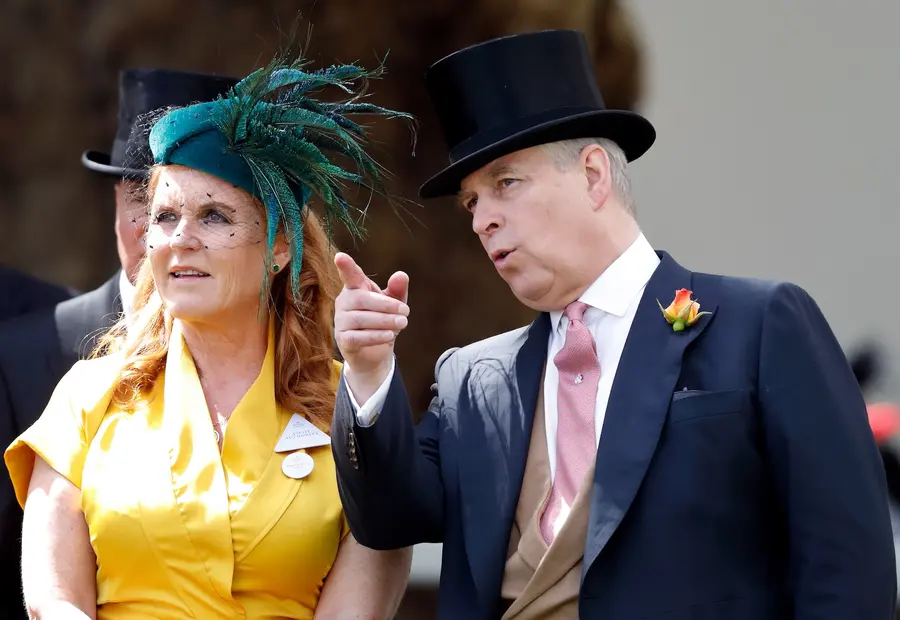
(Photo by Max Mumby/Indigo/Getty Images)
Mind the (Wealth) Gap
For most of the past decade, Andrew's confirmed personal income consisted of a £20,000 annual Royal Navy pension (about $26,000). He did, for many years, receive a public stipend that peaked at £249,000 in 2010 (roughly $324,000), but that payment was eliminated in 2011. After that, Queen Elizabeth reportedly supported him with a private allowance from her personal wealth, believed to be around £1 million per year (approximately $1.3 million). That private support ended following her death, and King Charles is widely reported to have cut off any remaining allowance in 2024.
Even if we assume that Andrew consistently received £1 million annually ($1.3 million) from the Queen for more than a decade, that still does not fully explain the lifestyle he maintained. A 30-room estate in Windsor Great Park is not inexpensive to operate. Royal Lodge required full-time staff, extensive grounds maintenance, heating, insurance, and private security. After Andrew lost his taxpayer-funded protection, security alone was reportedly costing up to £3 million per year (around $3.9 million) — a bill the Queen is said to have privately absorbed.
Add to that international travel, legal expenses that reportedly reached eight figures, and the acquisition of a Swiss ski chalet with a purchase price north of £18 million (roughly $23–29 million), and the numbers begin to strain credibility.
The Hereditary Wealth Gap
While the public often views "Royal money" as a single pool, the internal math is far more hierarchical. Unlike King Charles or Prince William, Andrew has never had access to the massive revenues generated by the family's infamous "Duchies," which are essentially extremely valuable real estate portfolios that generate rental income. There are two primary duchies:
The Duchy of Cornwall: Reserved exclusively for the eldest son of the reigning monarch (the Prince of Wales), this estate provides an annual surplus of roughly £23 million ($30 million). King Charles enjoyed this income for five decades, and Prince William inherited it in 2022. As a younger son, Andrew was entirely bypassed by this institutional wealth.
The Duchy of Lancaster: This private estate, valued at over £650 million, belongs to the Sovereign. While Queen Elizabeth used some of these profits to provide Andrew's reported "allowance," he has no legal claim to the estate itself. With the transition of the Crown, that "tap" is now controlled entirely by King Charles, who has no constitutional obligation to share its profits with his siblings.
For his entire career, Andrew was essentially a salaried employee of the "Firm." When he was stripped of his official duties in 2022, he didn't just lose a job—he lost his only legitimate pipeline to the family's institutional wealth, leaving him with a pension that barely covers the heating bill of a single wing at Royal Lodge.
The Sunninghill Windfall
One of the clearest injections of cash came in 2007, when Andrew sold Sunninghill Park, the 12-bedroom estate given to him by Queen Elizabeth as a wedding gift. The property had lingered on the market for years and had reportedly fallen into disrepair. Then it suddenly sold for £15 million (about $19.5 million) — approximately £3 million ($3.9 million) above its asking price.
The buyer was an offshore trust linked to Timur Kulibayev, the son-in-law of Kazakhstan's president at the time. The property reportedly remained unoccupied for years after the purchase.
That £15 million ($19.5 million) remains Andrew's single largest documented cash windfall.
The Swiss Chalet
In 2014, Andrew acquired the seven-bedroom Chalet Helora in Verbier for a reported £18–22 million (approximately $23–29 million). Rather than using a traditional bank mortgage, he entered into a private installment agreement with the seller, Isabelle de Rouvre.
By 2020, Andrew had fallen behind on payments, and de Rouvre sued for approximately £6.6 million in unpaid installments and interest (around $8.6 million). The chalet was eventually sold in 2022 for roughly £19 million (about $24.7 million), but by then the proceeds were largely consumed by the lawsuit, and his reported £9–12 million settlement with Virginia Giuffre (approximately $11.7–15.6 million).
The episode suggests that Andrew's finances were far more constrained than his lifestyle implied.
The £12 Million Settlement
In 2022, Andrew reached an out-of-court settlement with his accuser, Virginia Giuffre. While the exact figure was never officially disclosed, financial experts and royal insiders estimate the total cost—including legal fees—at roughly £12 million ($15.6 million). Ignoring the fact that innocent people don't typically pay their accusers $15 million settlements, the other major question was:
For a man living on a £20,000 pension, this was an impossible sum. So, where did it come from?
According to recent reports and disclosures following the 2026 "Epstein Files" release, the settlement was essentially a family bake sale on a sovereign scale. The late Queen Elizabeth II reportedly provided the lion's share—estimated at £7 million—from her private Duchy of Lancaster funds. An additional £3 million reportedly came from the estate of the late Prince Philip, with the remaining £2 million covered by King Charles (then the Prince of Wales) and other family members.
The arrangement was framed at the time as a "loan" to be repaid once the Swiss chalet was sold. However, as of today, the word from Andrew has reportedly not repaid a single penny. When the Verbier chalet finally sold, the proceeds were almost entirely swallowed by existing debts and interest, leaving the King and the Queen's estate holding the bag for his legal exit fee.
Royal Lodge
Royal Lodge created the appearance of permanence and wealth, but it was never an outright asset. Andrew secured a 75-year lease in 2003 by paying a £1 million premium (about $1.3 million) and committing to at least £7.5 million in renovations (roughly $9.75 million). The rent was nominal — one peppercorn per year — but the maintenance costs were very real.
When King Charles reportedly withdrew funding for private security — estimated at up to £3 million annually ($3.9 million) — and ultimately forced Andrew to vacate in October 2025, the financial strain became visible.
The "Air Miles Andy" Subsidy
From 2001 to 2011, Andrew served as the U.K.'s "Special Representative for International Trade and Investment." On paper, it was an unpaid gig. But the perks? Those were priceless.
The role essentially functioned as a taxpayer-funded black card. Dubbed "Air Miles Andy" by the British press, Andrew's decade as a trade envoy subsidized a globe-trotting lifestyle that would make a tech magnate blush. While traveling to court foreign investment, he routinely bypassed the free, highly secure accommodations at British embassies. Instead, he preferred to book out luxury hotels, like the time he reportedly charged taxpayers roughly £50,000 for an entire floor at the Mandarin Oriental.
The flight receipts were equally staggering. Records from 2010 to 2011 alone showed his travel expenses topping £350,000 for just five trips. In another instance, he billed the public £4,000 to have a private RAF jet "drop him off" in the Swiss Alps on his way home from a conference.
But the real value of the trade envoy gig wasn't the free flights. It was the access.
This role gave him a golden ticket into the drawing rooms of Middle Eastern royals, Central Asian oligarchs, and, yes, Jeffrey Epstein. He later launched "Pitch@Palace," ostensibly a shark-tank-style networking hub for tech startups. But as recent court documents and leaked emails suggest, the initiative essentially served as a vehicle to monetize his royal aura, placing him in the same room as billionaire financiers and sovereign wealth funds.
The British government didn't just pay his travel expenses. They unwittingly funded his global networking. And it's exactly this era of his life—and whether he traded confidential government investment briefs to Epstein in exchange for financial backing—that authorities are investigating today.
The Pattern of Financial Support
It's not just Andrew. His ex-wife, Sarah Ferguson, and their two daughters, Beatrice and Eugenie, have long floated in a lifestyle that looks expensive even by royal-adjacent standards, despite no obvious family business, no inherited estate income, and no public record of the kind of investment fortune that would comfortably fund it.
Take Princess Beatrice in her 20s. In 2015, she was photographed in the kind of social orbit that typically requires seven-figure annual cash flow: ski weeks in Verbier, summers in St. Tropez and Ibiza, and yacht-hopping alongside billionaires. One report noted she booked time off for 17 holidays that year while earning a reported £19,500 salary at Sony (about $25,000), with the year's travel estimated at roughly £300,000 (about $390,000). Even allowing for the reality of royal life — invites, comps, upgrades, and wealthy friends covering tabs — the mismatch raises a broader question: when the House of York traveled like this, who was quietly paying for it?
One plausible answer is that the family's finances were periodically supported by benefactors, bailouts, and favors that never show up on a pay stub. And in Sarah Ferguson's case, we know at least one such bailout happened. In 2011, Jeffrey Epstein paid £15,000 (about $19,500) to help Ferguson resolve a debt. More recent disclosures include emails in which Epstein claimed he had financially helped Ferguson for years, dating back to her 1996 divorce, suggesting the £15,000 may have been only the small, publicly admitted portion of a longer relationship.
Here's another strange occurrence: In December 2017, Andrew took out a £1.5 million unsecured personal loan from Banque Havilland in Luxembourg. Just 11 days later, the entire loan was mysteriously paid off by offshore companies controlled by David Rowland, the bank's founder and a millionaire property tycoon.
None of this, on its own, establishes wrongdoing. But taken together — the lifestyle, the timing, and the recurring pattern of financial assistance — it suggests Andrew's world was sustained less by personal wealth generation and more by a patchwork of private support, strategic asset sales, and timely rescues that kept the household's true balance sheet hidden in plain sight.
The desperation to fund this lifestyle wasn't exactly a well-kept secret, either. By 2010, Ferguson was millions of pounds in debt following the collapse of a U.S. lifestyle business. That same year, she was caught in a devastating undercover sting by the News of the World. Secretly filmed by a reporter posing as an Indian businessman, Ferguson offered to arrange access to Prince Andrew in his capacity as a trade envoy in exchange for £500,000. '£500,000 when you can, to me… open doors,' she was recorded saying. She later apologized, and Andrew denied knowing anything about the scheme, but the incident laid bare a stark reality: the Yorks were so starved for cash that his royal influence was actively being treated as a tradable commodity.
The Financial Mystery Remains
For decades, the math simply hasn't made sense. Andrew Mountbatten-Windsor operated at a multi-million-pound annual deficit, bridging the gap through a combination of his mother's immense generosity, bizarrely profitable real estate flips, and quiet bailouts from billionaire friends.
But with his mother gone, his titles stripped, his royal allowances severed, and his eviction from Royal Lodge complete, the music finally stopped. The safety net vanished.
Which brings us back to today's arrest.
The police aren't knocking on his door in Norfolk simply because he spent more than he earned. They are investigating how he funded that deficit. Authorities are currently probing whether, during his decade as a U.K. trade envoy, Andrew traded the only currency he truly had left: his access. If the allegations prove true—that he leaked confidential government briefing materials to financiers like Jeffrey Epstein to secure the financial lifelines that kept his household afloat—then the great financial mystery of Prince Andrew isn't a mystery at all. It was a motive.
/2013/12/GettyImages-699662606.jpg)
/2011/05/Sarah-Ferguson-1.jpg)
/2013/12/Prince-Edward.jpg)
/2020/06/Prince-George.jpg)
/2009/11/Prince-Charles.jpg)
/2014/09/sein-1.jpg)
/2009/09/Brad-Pitt.jpg)
:strip_exif()/2009/09/P-Diddy.jpg)
/2009/11/George-Clooney.jpg)
/2009/09/Cristiano-Ronaldo.jpg)
/2020/06/taylor.png)
/2020/01/lopez3.jpg)
/2018/03/GettyImages-821622848.jpg)
/2019/10/denzel-washington-1.jpg)
:strip_exif()/2015/09/GettyImages-476575299.jpg)
/2020/02/Angelina-Jolie.png)
/2019/11/GettyImages-1094653148.jpg)
/2019/04/rr.jpg)
/2017/02/GettyImages-528215436.jpg)
/2020/04/Megan-Fox.jpg)
/2009/09/Jennifer-Aniston.jpg)