
In the free-spending chaos of the streaming wars, Netflix made some extremely aggressive bets. Few of those bets were riskier than the deal it struck with Carl Erik Rinsch, a director best known for exactly one movie: the 2013 Keanu Reeves samurai fantasy "47 Ronin."
"47 Ronin" was produced on a budget of $175-225 million. It earned $150 million. It currently sports a 16% on Rotten Tomatoes. And yet, despite those numbers, this rookie director was somehow able to spark a bidding war between Netflix and Amazon in 2018 over the rights to his next project. Amazon should thank its lucky stars that it lost.
Netflix won the bidding war by agreeing to pay Carl $61 million to deliver a sci-fi series called "White Horse" (later retitled "Conquest"), a high-concept thriller about artificial intelligence that executives once believed could become a franchise on the scale of "Star Wars" or "Westworld."
What Netflix actually received for its money was nothing. Not an episode. Not a rough cut. Not even a single updated storyboard after 2020.
Instead, over the next several years, Netflix watched production implode, deadlines disappear, and Rinsch plunge into increasingly erratic behavior. The director sent messages to executives claiming he had discovered the "secret mechanism of COVID-19 transmission" and believed he could predict lightning strikes and earthquakes. Despite the chaos, Netflix kept believing the show was salvageable. By early 2020, the company had already poured $44.3 million into production. Then Rinsch asked for another $11 million to finish the season. Netflix, still convinced the project could become its next prestige tentpole, approved the transfer on March 4, 2020.
According to prosecutors, the moment the funds hit the account, the real story began.
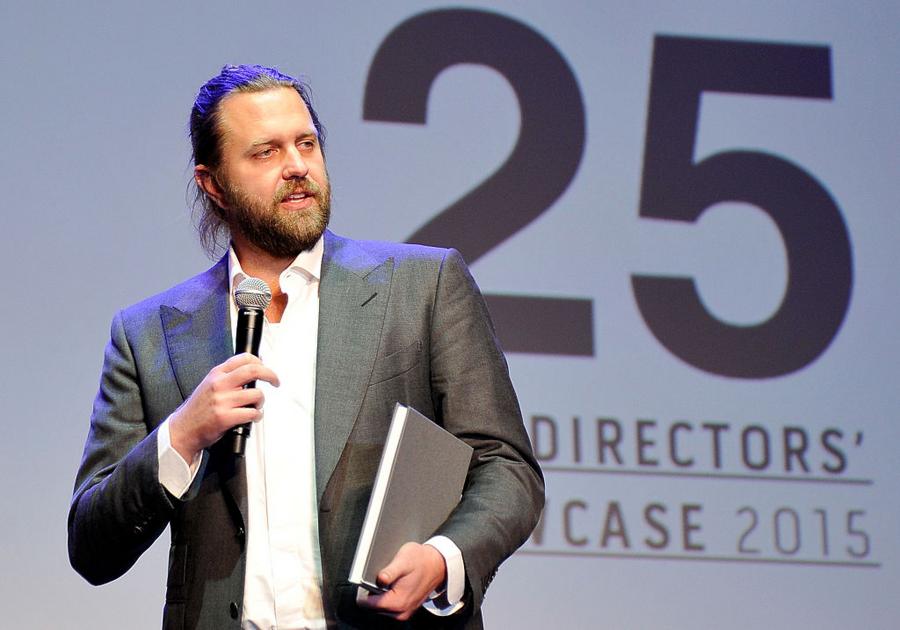
John Sciulli/Getty Images
The $11 Million Spending Spree
In court this week, FBI agents walked jurors through the financial trail. Almost immediately after receiving the funds, Rinsch allegedly routed $10.5 million into personal accounts and began spending it at a pace that stunned investigators. Over the following months and years, the $11 million earmarked for storyboards, editing, costume fabrication, and key crew salaries instead went toward luxury cars, high-end furniture, designer clothes, hotel stays, credit card bills, and cryptocurrency speculation.
The breakdown described in testimony reads like the lifestyle of someone who suddenly discovered a bottomless bank account. Agents detailed more than $3 million spent on furniture and antiques. Nearly $2.4 million went toward cars, including a Ferrari and multiple Rolls-Royces. Four mattresses alone cost a combined $638,000. Hundreds of thousands more went to jewelry, art, and hotels. Rinsch also racked up more than $1.8 million in American Express charges, although the exact categories of those expenses remain under seal.
One of the most surreal details introduced at trial: during a six-month span in 2022, Rinsch made over 480 food delivery orders through Postmates and Uber Eats, sometimes placing a dozen separate orders in a single day. The FBI showed jurors spreadsheets tracking each delivery.
The spree extended into the crypto world. Rinsch moved millions into a Kraken exchange and began trading Bitcoin Cash, Ethereum, Tether, and especially Dogecoin. While his stock option trades early in the pandemic were disastrous, his crypto bets made money — enough that he boasted to an FBI agent that he had become "The Dogecoin Whale."
In 2023, a confidential arbitration ended with Netflix being awarded $11.8 million in damages. Rinsch did not pay, instead arguing that Netflix actually owed him another $14 million. The arbitrator disagreed.
To summarize, according to FBI testimony this week, Rinsch spent:
- $2.4 million on luxury cars, including a Ferrari and multiple Rolls-Royces
- $3.36 million on furniture, antiques, and décor
- $638,000 on four luxury mattresses
- $1.8 million on American Express bills
- Hundreds of thousands on hotels, jewelry, and art
- Over 480 food delivery orders on Postmates and Uber Eats in a six-month span
- $652,000 on designer clothing and watches, including a six-figure timepiece
Through all of this, Netflix was still expecting progress on "White Horse." The last thing the company ever received was a glossy coffee-table book of production photos that Rinsch gifted to Netflix executive Peter Friedlander in early 2020. Emails and internal reports shown at trial reveal growing panic among executives, who traveled to Budapest in late 2019 to try to rescue the troubled production. Nothing worked. By late 2020, Netflix had written off the entire project.
Arrest and Fallout
On March 18, 2025, federal agents arrested Rinsch in Los Angeles. He now faces charges including wire fraud, money laundering, and five counts of unlawful financial transactions. If convicted, he could spend decades in prison. Prosecutors argue the case is straightforward: Rinsch asked for production funding, told Netflix it was essential to finish the series, then used the money for personal enrichment.
Rinsch's defense paints a different picture. His attorney has described him as a misunderstood artist overwhelmed by Netflix's demands and undone by pandemic-era chaos. In opening statements, he compared Rinsch to "Vincent van Gogh with a Netflix deal," a visionary crushed by corporate expectations. Rinsch himself claimed in a deposition that the Rolls-Royces he purchased were intended as props for the show, insisting that labeling them personal expenses "would be fraud otherwise."
The jury, so far, has reacted coolly to that explanation.
What remains undeniable is that "White Horse" has become the most expensive series in Netflix history to produce zero episodes. Not a frame has been delivered. Not a single scene cut together. Only fragments of early test footage — including a trailer shown in court — prove the project ever existed.
The irony is that the behind-the-scenes saga is now far more compelling than anything the show itself ever promised. If Netflix eventually releases a documentary chronicling the rise and spectacular collapse of Carl Rinsch's $61 million misadventure, it may be the only way the company ever recoups a dollar of its investment.
And unlike "White Horse," that documentary would probably get finished.
/2017/08/Screen-Shot-2017-08-08-at-12.47.24-PM.png)
/2025/05/todd-chrisley.jpg)
/2019/10/GettyImages-171479869.jpg)
/2019/09/GettyImages-174256634.jpg)
/2019/01/Billy-McFarland.jpg)
/2025/10/GettyImages-2242809527.jpg)
:strip_exif()/2015/09/GettyImages-476575299.jpg)
/2019/10/denzel-washington-1.jpg)
/2020/04/Megan-Fox.jpg)
/2009/11/George-Clooney.jpg)
:strip_exif()/2009/09/P-Diddy.jpg)
/2018/03/GettyImages-821622848.jpg)
/2009/09/Brad-Pitt.jpg)
/2020/02/Angelina-Jolie.png)
/2019/11/GettyImages-1094653148.jpg)
/2020/01/lopez3.jpg)
/2017/02/GettyImages-528215436.jpg)
/2020/06/taylor.png)
/2009/09/Jennifer-Aniston.jpg)
/2009/09/Cristiano-Ronaldo.jpg)
/2019/04/rr.jpg)