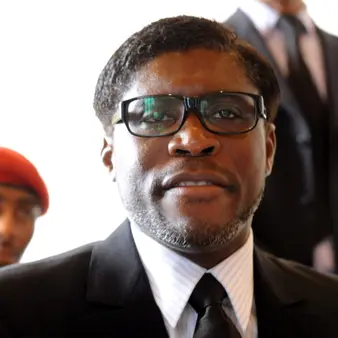
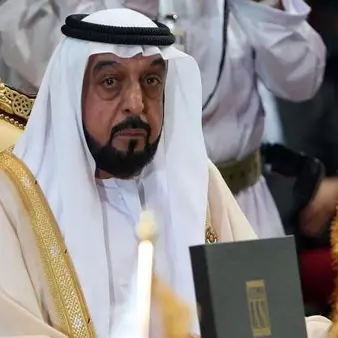
Back in 1991, 23-year-old Teodorín Obiang arrived in Malibu, California, to study English at Pepperdine University. And while many college students worked part-time jobs to cover tuition and spending money, Teodorín had a slightly better arrangement. An American oil company called Walter International, which had business interests in his father's country of Equatorial Guinea, agreed to pay his $3,400-per-term tuition and cover all of his living expenses.
And while most students made do with cramped dorm rooms, Teodorín preferred slightly different accommodations. Instead of living on campus, he split his time between a rented house in Malibu and a suite at the legendary Beverly Wilshire Hotel in Beverly Hills. According to the woman who ran his English-language program, he sometimes arrived at school in limousines, rarely attended class, and appeared considerably more interested in partying than studying.
After five months, Teodorín dropped out. By that point, his generous oil-company sponsor had reportedly spent $50,000 on his brief American college experience. Fortunately, Teodorín didn't need to worry about finding a job or paying off student loans.
His father, Teodoro Obiang Nguema Mbasogo, was the president of Equatorial Guinea, an oil-rich African country he had ruled since seizing power in a military coup in 1979. In 1993, Dad awarded Teodorín a 20-year concession to harvest timber from more than 60,000 acres of rainforest. A few years later, he appointed his son minister of forestry, a government job that paid less than $100,000 annually.
But Teodorín's modest government salary didn't stop him from enjoying an extraordinary lifestyle. In 2006, he returned to Malibu and purchased a spectacular $30 million mansion featuring a private golf course, tennis court, swimming pool, and panoramic views of the Pacific Ocean. The purchase was just one part of a spending spree that eventually included a $100 million Paris mansion, a $38 million private jet, luxury yachts, dozens of exotic supercars, and an extensive collection of Michael Jackson memorabilia.
According to the British government, Teodorín ultimately spent more than $500 million on luxury possessions while working as a public official. American prosecutors alleged that he accumulated more than $300 million in assets through corruption and money laundering. Those allegations triggered investigations across multiple continents, the confiscation of hundreds of millions of dollars in property, and a criminal conviction in France.
And the most remarkable part? Despite everything, Teodorín is still the vice president of Equatorial Guinea, serving directly beneath his father, who remains president more than four decades after taking power.

JEROME LEROY/AFP/Getty Images
The $100,000 Government Job That Made Him Rich
After his abbreviated college experience in Malibu, Teodorín returned to Equatorial Guinea and began accumulating business interests with considerable assistance from his father.
In January 1993, President Obiang awarded his 24-year-old son a 20-year concession to harvest timber from 61,000 acres of rainforest. The following year, another company controlled by Teodorín received a concession covering an additional 27,000 acres. By the late 1990s, he had acquired rights to harvest timber across 88,000 acres of land.
His father then appointed him minister of forestry and environment, putting him in charge of regulating the very industry in which he held significant commercial interests.
According to a detailed U.S. Department of Justice investigation, Teodorín used that authority to demand personal payments from companies seeking permission to export timber. Companies allegedly had to pay him approximately 10% of the value of their exports, on top of the taxes they already owed the government.
One timber company, Tromad Forestal, allegedly paid him approximately $700,000 annually between 1998 and 2003. Some payments were reportedly delivered in suitcases of cash, while others were deposited directly into bank accounts controlled by one of Teodorín's companies, Somagui.
The Justice Department alleged that businesses refusing to make these payments could be denied export licenses, leaving valuable timber sitting at the port while additional expenses accumulated.
Meanwhile, Teodorín's official government salary was approximately $6,799 per month, or $81,588 annually.
The Incredible $182 Million Highway Deal
The forestry business was only one alleged source of Teodorín's wealth.
As Equatorial Guinea's oil revenues exploded during the 2000s, the government began spending enormous sums on roads, airports, government buildings, and other infrastructure projects. Teodorín's responsibilities expanded to include infrastructure, giving him influence over another industry awash in government money.
One transaction described in a 2013 Justice Department court filing is particularly astonishing.
According to federal prosecutors, a company controlled by Teodorín, Somagui, received a $200 million government contract to build a highway between the cities of Ebebiyin and Mongomo. The government ultimately paid Somagui $182 million toward the contract.
There was one problem. Prosecutors alleged that Somagui wasn't actually equipped to build the highway.
Instead, the company subcontracted the construction work to another business called General Work, which agreed to complete the project for $44 million. That was $156 million less than the original contract price.
And here's where things get even more outrageous.
According to the Justice Department, despite receiving $182 million from the government, Somagui paid its subcontractor only $15 million. General Work eventually stopped construction because it wasn't receiving enough money to continue.
The government canceled Somagui's contract but, according to the federal complaint, never recovered the $182 million it had already paid.
Federal prosecutors alleged that the arrangement was one example of how Teodorín used companies under his control to divert public funds into private accounts. Teodorín has disputed accusations that his fortune was obtained illegally.
Meanwhile, Most Of His Country Was Living In Poverty
Equatorial Guinea is a small Central African country that experienced one of the most extraordinary economic booms in modern African history. Major offshore petroleum discoveries in the 1990s brought billions of dollars in revenue, transforming a previously impoverished economy into an important oil and natural gas producer.
Yet the wealth did not translate into prosperity for much of the population. According to the World Bank, an estimated 57% of Equatorial Guinea's people lived below the $6.85-per-day poverty threshold in 2024.
The contrast between the country's oil wealth and the ruling family's lifestyle became a central focus of international anticorruption investigations.
In 2014, the U.S. Department of Justice alleged that Teodorín had accumulated more than $300 million in assets through corruption and money laundering. The British government later cited investigations and reporting showing that he had spent more than $500 million on luxury possessions since becoming a minister.
To put that into perspective, a government salary of $100,000 a year would take 5,000 years to generate $500 million, even if not a single dollar were spent along the way.
The $30 Million Malibu Mansion
Perhaps the most spectacular symbol of Teodorín's wealth was the Malibu mansion he purchased in 2006.
The property, located at 3620 Sweetwater Mesa Road, occupied a sprawling bluff-top site overlooking Malibu Lagoon and the Pacific Ocean. Its nearly 15,000-square-foot main residence featured six bedrooms and eight bathrooms, while the grounds included a swimming pool, tennis court, landscaped ponds, and a private three-hole golf course.
Local reports described the mansion as being protected by security guards from Equatorial Guinea, some reportedly carrying automatic weapons.
The purchase immediately attracted attention. In November 2006, anticorruption organization Global Witness called on American officials to investigate how a government minister earning less than $100,000 annually could afford a $30 million California estate.
The Justice Department eventually pursued a civil forfeiture case involving the mansion and other American assets connected to Teodorín.
In October 2014, he agreed to relinquish more than $30 million in property as part of a settlement. Among the assets he had to surrender or sell were the Malibu mansion, a Ferrari, and portions of his Michael Jackson memorabilia collection.
The mansion was sold in 2016, with public property records reporting a $33.5 million transaction. The buyer was an investment group connected to luxury real estate developer Mauricio Oberfeld and Mauricio Umansky, the husband of "The Real Housewives of Beverly Hills" star Kyle Richards.
After extensive renovations, the investors flipped the property in March 2017 for $69.9 million.
And the mansion's remarkable financial journey didn't end there. In June 2026, the same estate sold again, this time for an astonishing $93.5 million.
A property that originally cost Teodorín $30 million had now traded for more than three times that amount.
The $100 Million Paris Mansion
Teodorín's American real estate holdings were extravagant, but his French property was arguably even more impressive.
At 42 Avenue Foch, one of Paris's most prestigious addresses, he acquired an enormous mansion valued at more than $100 million. The residence contained elaborate entertaining spaces, a private cinema, nightclub, Turkish bath, and an extraordinary assortment of luxury furnishings and artwork.
French investigators began examining his finances in 2010 as part of a broader inquiry into assets allegedly purchased with misappropriated public funds. Authorities subsequently seized luxury automobiles, artwork, furnishings, and the Paris mansion itself.
In October 2017, a French court convicted Teodorín of money-laundering offenses. He received a three-year suspended prison sentence, a suspended €30 million fine, and an order confiscating his seized French assets.
Teodorín appealed, but the principal convictions were upheld in 2020. The appeals court also made the €30 million fine payable rather than suspended. France's highest appeals court confirmed the judgment in July 2021.
The confiscated French assets were valued at approximately €150 million.
Even then, the battle wasn't over. Equatorial Guinea argued that the Paris mansion was diplomatic property and should therefore be protected from confiscation. In 2020, the International Court of Justice rejected its claim that the building qualified as diplomatic premises.
A subsequent attempt to prevent the property from being sold was rejected by the same court in September 2025. French authorities formally moved forward with marketing the confiscated building in 2026.
The $38 Million Jet, Exotic Supercars And Michael Jackson Collection
If the mansions weren't enough, Teodorín also developed an extraordinary collection of expensive toys.
In 2006, he purchased a Gulfstream G-V private jet for $38.5 million. Federal prosecutors alleged that the aircraft was acquired using proceeds from corruption, and court filings detailed the complicated international transfers used to complete the purchase.
His collection of automobiles was equally extravagant, featuring rare models from Bugatti, Ferrari, Lamborghini, Bentley, Aston Martin, McLaren, and Koenigsegg.
Swiss authorities began investigating Teodorín's finances in 2016 and seized numerous luxury vehicles. The case ultimately concluded with an agreement requiring the sale of 25 automobiles.
In September 2019, Bonhams auctioned the collection in Switzerland for approximately $27.2 million. Among the most valuable vehicles were a yellow Ferrari F12tdf, a white Lamborghini Veneno Roadster that sold for approximately $8.3 million and a Koenigsegg One:1 that fetched approximately $4.6 million.

(FABRICE COFFRINI/AFP via Getty Images)

(Photo by FABRICE COFFRINI / AFP) (Photo credit should read FABRICE COFFRINI/AFP via Getty Images)
And then there was his fascination with Michael Jackson.
Teodorín reportedly spent millions collecting memorabilia associated with the late King of Pop, including costumes, life-size statues, and other collectibles. Among his most famous purchases was a crystal-covered glove worn during Jackson's "Bad" tour, reportedly purchased for $275,000.
The memorabilia became so significant that it was specifically addressed in the American government's 2014 forfeiture settlement. Teodorín agreed to relinquish certain pieces and make an additional $1 million payment representing the value of collectibles he had already removed from the United States.
He was permitted to keep other possessions, including some valuable Jackson memorabilia and his Gulfstream jet, although the aircraft would become subject to seizure if brought back into the United States.
What Happened To The Money The U.S. Recovered?
An important part of the American settlement was the requirement that recovered money benefit the people of Equatorial Guinea, rather than simply being returned to the government whose officials were accused of corruption.
The original agreement allocated approximately $20 million toward charitable programs and another $10.3 million to the United States, with the intention of using those funds to benefit Equatorial Guinea's population.
Implementing the arrangement took years.
In September 2021, the Justice Department announced agreements allocating $25.6 million in recovered funds toward medical assistance in Equatorial Guinea. Of that amount, $19.25 million was designated for a United Nations program to purchase and administer COVID-19 vaccines for at least 600,000 people.
Another $6.35 million was allocated to Medical Care Development International to provide medicines, medical supplies, and related healthcare assistance.
The arrangements were designed to deliver assistance through international and nongovernmental organizations rather than transferring the recovered money directly into government accounts.
And Then Another $86 Million Was Discovered
Even after the international seizures and convictions, investigators continued uncovering significant financial relationships involving Teodorín and companies under his control.
In May 2025, the International Consortium of Investigative Journalists published an investigation based on leaked documents involving Portuguese construction company Zagope, a subsidiary of Brazilian engineering giant Andrade Gutierrez.
According to the investigation, Zagope was awarded nearly $1.2 billion in Equatorial Guinean government construction contracts between 2009 and 2012. The projects included highways, airports, and infrastructure associated with an ambitious plan to build a new capital city in the country's interior.
The leaked records revealed that between 2014 and 2018, Zagope paid more than $86 million to Somagui, the company controlled by Teodorín.
Yes, the same Somagui that American investigators had previously linked to the extraordinary highway-contract allegations.
French prosecutors had described the business as a shell company used to channel public money, and the new reporting raised questions about what services Somagui actually provided in exchange for the payments.
The investigation also examined Equatorial Guinea's enormous infrastructure spending. Among the projects was Ciudad de la Paz, a planned capital city with elaborate government buildings, wide boulevards, and expensive public works. Much of the development remained incomplete as the country's oil revenues declined.
In July 2025, Portugal's Attorney General confirmed that an investigation had been opened into possible corruption involving Zagope and its relationship with Teodorín. The announcement did not establish that a crime had occurred in connection with the newly revealed payments.
Separately, a Brazilian federal investigation concluded in 2024 with an indictment involving Teodorín and others over alleged money laundering associated with a luxury property in São Paulo. That case followed a 2018 incident in which Brazilian authorities discovered approximately $1.5 million in cash and luxury watches reportedly worth $15 million among possessions accompanying his delegation.
The Vice President Who Oversees Anticorruption Efforts
Teodorín's legal troubles have not prevented him from maintaining substantial political power in Equatorial Guinea.
His father has ruled the country since August 1979, winning successive presidential elections that international observers and human rights organizations have repeatedly criticized over restrictions on political competition and civil liberties.
Teodorín became second vice president in 2012 and was promoted to first vice president in 2016, with responsibility for national defense and state security. He is widely regarded as a potential successor to his father.
In one of the more unusual developments in his political career, Teodorín also became involved in leading Equatorial Guinea's national anticorruption commission, created in 2022 as part of reforms connected to International Monetary Fund requirements.
Meanwhile, in July 2021, Britain imposed sanctions on him under its Global Anti-Corruption sanctions regime, citing his alleged misappropriation of public funds, corrupt contracting arrangements, and solicitation of bribes.
The British government's statement was unusually explicit. Authorities pointed to more than $500 million in reported spending on mansions, a private jet, a yacht, exotic automobiles, and Michael Jackson memorabilia.
Yet none of these international proceedings has dislodged Teodorín from his position near the top of Equatorial Guinea's political leadership.
Consider the extraordinary financial record.
American prosecutors alleged that he accumulated more than $300 million through corruption and money laundering. Britain documented reports of more than $500 million in luxury spending. French authorities confiscated assets valued at approximately €150 million. Swiss authorities auctioned 25 of his supercars for $27.2 million. American authorities forced him to surrender his Malibu mansion and other possessions.
And new investigations continue to examine enormous payments made to companies associated with him.
For Teodorín Obiang, the journey from a carefree, oil-company-sponsored student in Malibu to a vice president with hundreds of millions of dollars in documented luxury purchases has been nothing short of extraordinary.
For the people of Equatorial Guinea, a country whose oil resources generated billions in revenue while much of its population remained poor, the financial record tells a considerably different story.