Bernie Ecclestone's Rags To Riches Journey From Small Fishing Village To Billionaire Honcho of Formula 1 Racing

By on June 4, 2026 in ArticlesEntertainment

Bernie Ecclestone is one of the most unlikely billionaires in sports history. He was not born into money. He did not inherit a racing empire. He did not arrive in Formula One as a glamour figure, engineering prodigy, or aristocratic team owner. He started out as the son of a fisherman, left school as a teenager, worked at a gasworks, sold motorcycle parts, survived dangerous crashes, and then slowly figured out something most people inside racing had missed:

The real money was not only in the cars. It was in controlling the show.

Over several decades, Ecclestone transformed Formula One from a loose, chaotic, European-dominated racing circuit into a global television and sponsorship machine. He bullied promoters, charmed billionaires, negotiated with dictators, fought regulators, cut deals with teams, and turned Grand Prix racing into one of the most valuable sports properties on earth. By the time Liberty Media agreed to buy Formula One in a transaction valuing the business at roughly $8 billion, Ecclestone had already cemented his place as the man who turned F1 into F1.

Today, CelebrityNetWorth estimates Bernie Ecclestone's net worth at $2.5 billion. That fortune is the product of a lifetime spent doing what he appeared to do better than almost anyone in sports: finding the commercial leverage point, taking control of it, and never letting go until the price was high enough.

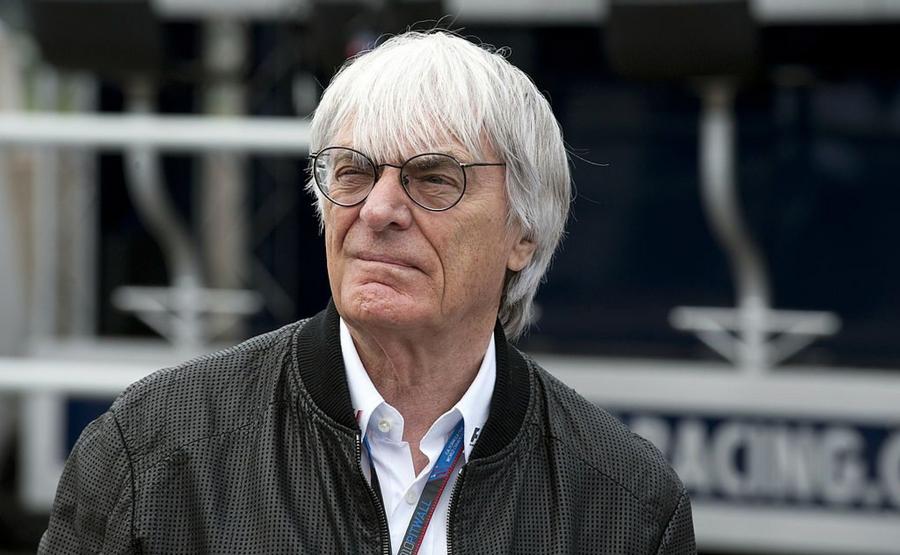
Bernard Ecclestone

DON EMMERT/AFP/Getty Images

From Suffolk To The Gasworks

Bernard Charles Ecclestone was born on October 28, 1930, in St Peter South Elmham, a small hamlet in Suffolk, England. His father, Sidney, was a fisherman, and Bernie grew up in modest circumstances before the family moved to Bexleyheath in southeast London.

Money was tight, and Ecclestone learned early that small margins mattered. One of the most famous stories from his childhood has him running multiple paper routes before school, then using the money to buy pastries from a local bakery and resell them to classmates for a profit. It is almost too perfect as a childhood origin story, but it also neatly captures the trait that would define his adult life. Bernie Ecclestone was never just interested in participating. He wanted the spread.

He left school at 16 and went to work at the local gasworks, where he tested gas purity. At the same time, he developed an obsession with motorcycles. Postwar Britain was full of mechanical opportunity for a young man who was willing to hustle, and Ecclestone began trading motorcycle parts before opening a dealership with his friend Fred Compton.

The business, Compton & Ecclestone, gave him his first serious taste of entrepreneurship. It also pulled him closer to racing.

The Racer Who Became A Dealer

Ecclestone tried racing himself, first on motorcycles and then in cars. He competed in Formula Three in the late 1940s and early 1950s and later made a brief attempt at Formula One, entering two Grand Prix events in 1958 but failing to qualify.

His time as a driver was short and dangerous. He was involved in accidents and eventually realized that his future probably was not behind the wheel. That did not mean he was done with racing. It meant he had to find a better seat.

For a while, he stepped away and made money elsewhere, particularly in used cars and real estate. Those businesses mattered because they gave him capital, independence, and a reputation as a tough negotiator. Ecclestone did not come back to racing as a dreamer. He came back as a businessman.

In the late 1950s, he managed driver Stuart Lewis-Evans. That chapter ended tragically when Lewis-Evans crashed during the 1958 Moroccan Grand Prix. His car caught fire, and he died from his injuries several days later. Ecclestone again withdrew from racing, shaken by the loss.

But the sport kept pulling him back.

Buying Brabham

Ecclestone's true entry into Formula One power came in 1971, when he bought the Brabham team from Ron Tauranac. The reported price was around £100,000, or roughly $120,000 at the time. It would become one of the great bargain purchases in sports history.

Brabham was not just a racing team to Ecclestone. It was a platform. He learned how the paddock worked, how teams survived, how sponsors behaved, how race promoters made money, and how little control the constructors had over the commercial future of the sport.

Under Ecclestone, Brabham became a serious force. Gordon Murray emerged as one of the sport's great designers. Niki Lauda drove for the team. Nelson Piquet won world championships with Brabham in 1981 and 1983, the second coming in a BMW-powered car that became the first turbocharged car to win the drivers' championship.

Ecclestone eventually sold Brabham in 1988 for more than $5 million. The profit was nice. The education was priceless.

Turning Racing Into Television

The central insight of Ecclestone's career was simple: Formula One was not being monetized properly.

Before Ecclestone's rise, Grand Prix racing was glamorous but fragmented. Teams negotiated separately. Race organizers had enormous local control. Television coverage was inconsistent. The sport had prestige, danger, and international appeal, but it did not yet have a unified commercial engine.

Ecclestone helped change that through the Formula One Constructors Association, known as FOCA, which he formed with other team bosses in the 1970s. His power came from understanding that the teams were the product. No teams, no race. No race, no TV show. No TV show, no global business.

He began negotiating television rights and race agreements with increasing authority. Over time, Ecclestone's companies controlled critical pieces of Formula One's commercial operation, including television distribution, race promotion, logistics, and fees paid by host cities and circuits.

This was where Bernie became Bernie. He was not the tallest, loudest, or most glamorous person in the paddock, but he was often the person everyone had to go through. He could be charming, ruthless, funny, infuriating, and brutally direct. He also had a talent for making the sport feel scarce. If a city wanted a race, it had to pay. If a broadcaster wanted the show, it had to deal with him. If teams wanted bigger payouts, they also had to accept that Ecclestone had created the pie they were fighting over.

The F1 Supremo

By the 1990s and 2000s, Ecclestone was routinely described as the "F1 Supremo," and the nickname fit. Formula One had become a traveling global circus with races across Europe, Asia, the Middle East, Australia, and the Americas. Its stars became international celebrities. Its sponsors included tobacco giants, automakers, banks, airlines, telecom companies, energy drinks, and luxury brands.

Ecclestone's model was extraordinarily profitable. Race promoters paid large hosting fees. Broadcasters paid for rights. Sponsors paid for access. Teams became more valuable. Drivers became richer. The entire sport moved from a niche European obsession toward a global entertainment product.

Ecclestone also understood the value of exclusivity. Formula One was not NASCAR. It was not trying to be cheap or local. It was Monaco, private jets, billionaires, royalty, speed, danger, and champagne. That image made the sport easier to sell to governments, sponsors, and broadcasters.

It also made Ecclestone rich.

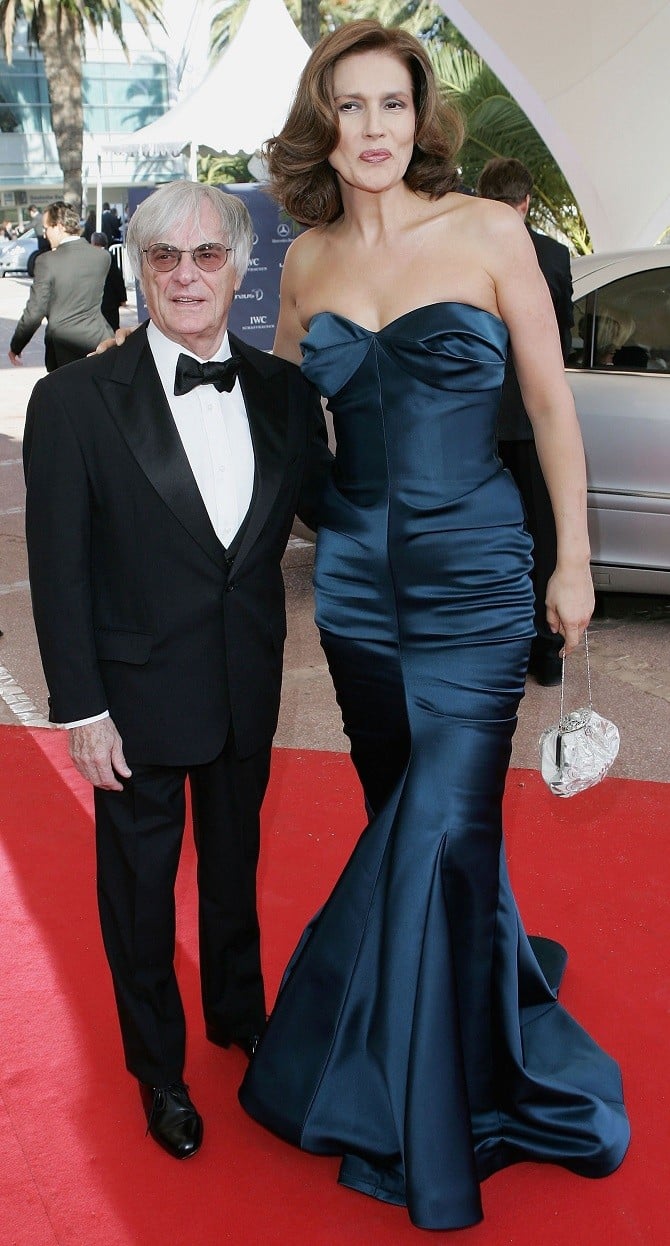
ESTORIL, PORTUGAL - MAY 16: Formula One chief Bernie Ecclestone and wife Slavica arrive at the Laureus World Sports Awards on May 16, 2005 at the Estoril Casino, Estoril, Portugal. (Photo by MJ Kim/Getty Images for Laureus)

MJ Kim/Getty Images for Laureus

The Big Money Era

Ecclestone's fortune was built through stakes in Formula One's commercial rights, dealmaking around those rights, and the enormous value created as the sport institutionalized its global business model.

Private equity eventually moved in. CVC Capital Partners became Formula One's controlling shareholder in the mid-2000s, while Ecclestone remained the sport's dominant operating figure. Then, in 2016, Liberty Media agreed to acquire Formula One in a transaction that valued the business at roughly $8 billion. The deal closed in 2017, and Ecclestone's 40-year reign effectively came to an end when he was replaced as chief executive by Chase Carey.

The transition marked the end of one era and the beginning of another. Liberty Media brought a more modern media strategy, leaned into digital growth, and benefited enormously from the Netflix series "Formula 1: Drive to Survive," which helped supercharge the sport's popularity in the United States.

But Liberty inherited a global machine that Ecclestone had spent decades building. The modern F1 boom may belong to a new generation of executives, drivers, and owners, but the commercial architecture was largely Bernie's creation.

Controversies And Legal Problems

Ecclestone's career was not merely colorful. It was controversial.

He was often criticized for taking Formula One into countries with questionable human rights records. He made remarks over the years that generated backlash. His hardball negotiating style made him enemies inside and outside the paddock. And his legal problems became a major part of his later public story.

In 2014, a German bribery trial involving Ecclestone ended after he agreed to make a $100 million payment. The case was dropped without a formal finding of guilt or innocence.

A much more serious personal financial reckoning came in 2023. Ecclestone pleaded guilty in the UK to fraud by false representation after failing to declare a Singapore trust with hundreds of millions of dollars in assets. He received a 17-month prison sentence suspended for two years and agreed to a civil settlement with HM Revenue & Customs of £652.6 million, covering tax, interest, and penalties over an 18-year period.

For a man whose life had been defined by control, the case was a late-career reminder that even billionaires do not always get the final word.

The Car Collection

Ecclestone also assembled one of the most important private collections of Grand Prix and Formula One cars in the world. The collection included dozens of historically significant racing cars connected to Ferrari, Brabham, Vanwall, and other major names in motorsport history.

In 2024, the 69-car Ecclestone Grand Prix Collection was put up for sale through high-end dealer Tom Hartley Jr. In 2025, the collection was sold to Mark Mateschitz, the Red Bull heir and co-owner of Red Bull GmbH. The exact sale price was not publicly disclosed, but estimates around the collection ran into the hundreds of millions of dollars.

It was a fitting late-life transaction for Ecclestone: rare cars, private negotiations, enormous numbers, and a buyer connected to one of the most powerful modern forces in Formula One.

Personal Life

Ecclestone has been married three times. He had his first daughter, Deborah, with his first wife, Ivy Bamford. He later had a long relationship with Tuana Tan before marrying Croatian model Slavica Radic. Bernie and Slavica had two daughters, Tamara and Petra, who became well-known socialites and reality-TV personalities in their own right.

His divorce from Slavica was widely reported as one of the most expensive in British history, though the family finances were complicated by trusts and asset structures.

In 2012, Ecclestone married Brazilian marketing executive Fabiana Flosi. In 2020, when he was 89, the couple welcomed a son named Ace. That made Ecclestone a father again nearly seven decades after the birth of his eldest daughter.

His family has also been tied to some of the flashiest real estate stories in billionaire circles. Petra Ecclestone famously bought the former Aaron Spelling mansion in Los Angeles for $85 million in 2011. Bernie himself sold a London property to steel billionaire Lakshmi Mittal in 2004 for roughly $86 million, a record-setting price at the time.

From Paper Routes To Formula One

The most remarkable part of Bernie Ecclestone's story is not simply that he became rich. Plenty of team owners, sponsors, drivers, and investors have made fortunes from Formula One.

The remarkable part is that Ecclestone saw the business before almost anyone else did.

He saw that a race could be a television product. He saw that teams could bargain collectively. He saw that cities would pay for prestige. He saw that sponsors wanted global glamour. He saw that the sport's chaos could be reorganized into a machine.

Bernie Ecclestone did not invent Formula One. He did not design its fastest cars or drive its greatest laps. But for decades, he controlled the commercial oxygen around the sport. He turned a dangerous, glamorous, often disorganized racing series into a multibillion-dollar global empire.

Not bad for a teenager who started out selling pastries to classmates for a profit.

Did we make a mistake?
Submit a correction suggestion and help us fix it!
Submit a Correction