
/2015/09/GettyImages-476575299.jpg)
:strip_exif()/2009/09/Brad-Pitt.jpg)
/2019/10/GettyImages-1128659106.jpg)
/2020/01/Tobey-Maguire.jpg)
/2010/08/Chris-ODonnell-1.jpg)
/2010/01/Kate-Winslet.jpg)
/2025/03/DUSTIN-LYNCH.jpg)
/2019/10/Troy-Aikman.jpg)
/2010/04/Emmitt-Smith-1.jpg)
/2010/02/Jennifer-Hudson.jpg)
/2009/12/Troy-Polamalu.jpg)
/2019/09/jg.jpg)
/2022/02/Dan-Bongino.jpg)
/2012/07/Laila-Ali.jpg)
/2009/11/Ciara-1.jpg)
/2010/09/Gloria-Estefan.jpg)
/2022/01/Jane-Birkin.jpg)
What is Leonardo DiCaprio's Net Worth and Salary?
Leonardo DiCaprio is an American actor, producer, philanthropist and activist. Leonardo DiCaprio has a net worth of $300 million. In the 25 years between 1995 and 2020 alone, Leonardo DiCaprio earned north of $300 million from salaries and backend points alone. For example, though he earned just $2.5 million in base salary from 1997's Titanic, he eventually earned $40 million thanks to a 1.8% cut of gross backend points. He has also earned additional tens of millions from endorsements, real estate investments, and venture capital stakes.
The Oscar-winning star of such films as "This Boy's Life," "What's Eating Gilbert Grape," "The Basketball Diaries," "Romeo + Juliet," "Titanic," "Catch Me If You Can," "The Aviator," "The Departed," "Revolutionary Road," "Inception," "The Revenant" and "The Wolf of Wall Street," began his acting career 30 years ago, when he was booted from the cast of "Romper Stomper" for being too rowdy. Luckily, that slightly inauspicious beginning did not deter him from pursuing a career in acting, and as a young teen, he worked steadily, appearing in commercials and guest-starring roles on various television shows. He began to attract more attention after being cast in a recurring role on "Growing Pains," and then officially broke out with his critically acclaimed performance in the film, "This Boy's Life," in 1992. Since then, he has quite literally never stopped working and is always involved in a new project, whether as an actor or producer.
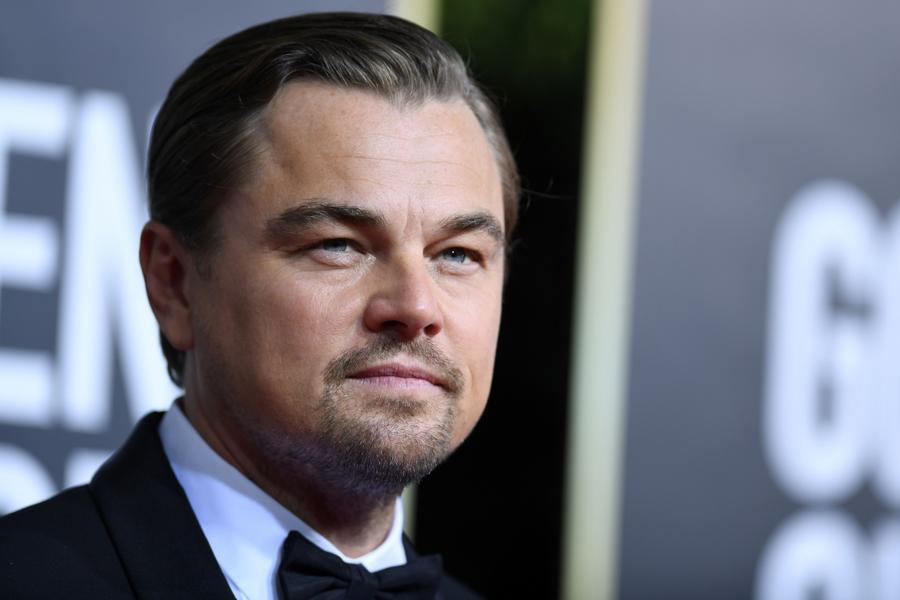
(Photo by VALERIE MACON/AFP via Getty Images)
Early Life
Leonardo got his start in Hollywood by appearing in a smattering of commercials and television roles as a child. A breakthrough part happened when the 14 year old DiCaprio landed a Mattel commercial for the company's Matchbox cars. As a teenager, he appeared in commercials for Bubble Yum, Apple Jacks, and Kraft Foods, among many other brands. Television roles soon poured in for Leonardo. He appeared in one-off episodes of The New Lassie, The Outsiders, and Roseanne. He appeared in 12 episodes of a series called Parenthood and then 23 episodes of Growing Pains.
Rise To Success
In 1991, Leonardo made his film debut in Critters 3. In 1993, he landed the lead role in the biopic This Boy's Life and received much critical praise for this performance. Leonardo's next movie, What's Eating Gilbert Grape? earned him an Academy Award nomination for Best Supporting Actor. Dicaprio also garnered acclaim for his performances in the intense dramas Total Eclipse and The Basketball Diaries. In 1996, DiCaprio starred in the box office hit William Shakespeare's Romeo + Juliet, which grossed $147.5 million worldwide.
Following this success came the 1997 film Titanic, directed by James Cameron. Titanic eventually smashed all box office records, won multiple awards, and secured DiCaprio's place as a leading man. DiCaprio moved forward with a string of successful movies, including Steven Spielberg's Catch Me if You Can which grossed $352 million worldwide, Christopher Nolan's Inception and the award-winning film Revolutionary Road.
He has starred in several films directed by the legendary Martin Scorsese including Gangs of New York (grossed $193.7 million worldwide), The Aviator (grossed $211.7 million worldwide), The Departed ($289 million worldwide), Shutter Island ($294.8 million), and The Wolf of Wall Street ($392 million). DiCaprio has also starred in films including J. Edgar, Django Unchained, The Great Gatsby, and The Revenant. DiCaprio's credits as a producer include The Aviator, Orphan, Runner Runner, and The Wolf of Wall Street.
In 2016, he won an Academy Award for Best Actor in The Revenant. DiCaprio has also won Golden Globe Awards for Best Actor for The Aviator, The Wolf of Wall Street, and The Revenant. In 2017, it was announced that DiCaprio would star in the title role in the Martin Scorsese film Roosevelt.
Leonardo's movies have grossed more than $7.2 billion worldwide (without even adjusting for inflation).
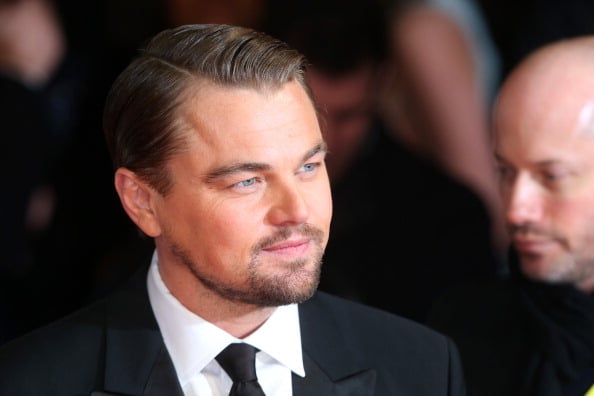
Leonardo DiCaprio (via Getty)
How Much Did Leonardo DiCaprio Make Off Titanic?
Leonardo's base salary for Titanic was $2.5 million. He also wisely negotiated for a 1.8% share of gross revenue backend points. After Titanic went on to gross $3 billion worldwide at the box office, DVD, and through syndication, Leo's total take on Titanic was $40 million.
Leonardo DiCaprio Salary Highlights
Leo's biggest early paycheck was the $1 million he earned for 1995's The Basketball Diaries. The success of Titanic allowed Leo to command $20 million for 2000's The Beach. He earned a $10 million base salary for Gangs of New York. He then earned $20 million a piece for Catch Me If You Can, The Aviator, The Departed, and Blood Diamond. For 2010's Inception, Leo once again negotiated gross percentage points, which allowed him to earn just under $60 million. Between 1995 and 2020, Leonardo earned at least $300 million in box office salary and bonuses. Both he and Brad Pitt took paychecks to $10 million a piece (down from $20 million) to appear alongside each other in Quentin Tarantino's 2019 Charles Manson movie Once Upon A Time In Hollywood.
For the 2021 Netflix movie Don't Look Up, Leonardo earned $30 million.
Highest-Paying Roles
Below are 11 of Leonardo DiCaprio's highest-paying film roles to date:
- #11: Gangs of New York – $10 million
- #10: The Beach – $20 million
- #9: Catch Me If You Can – $20 million
- #8: The Aviator – $20 million
- #7: The Departed – $20 million
- #6: Blood Diamond – $20 million
- #5: The Great Gatsby – $20 million
- #4: The Revenant – $20 million
- #3: The Wolf of Wall Street – $25 million
- #2: Don't Look up – $30 million
- #1: Inception – $59 million
Total = $264 million
Endorsements and Investments
For many years, Leonardo has been the face of Tag Heuer watches, appearing mainly in print ads. He has endorsed more brands overseas. For example he has appeared in commercials for Jim Beam in Japan. He also appeared in a commercial for a Japanese credit card company that reportedly paid him $5 million. In 2017, he became the brand ambassador for a Chinese electric car company, BYD. He was an early investor in vegan fake meat company Beyond Meat, which went public in May 2019 at a $4 billion valuation. Unfortunately, by mid-2022, BYND's valuation had sunk below $1 billion.
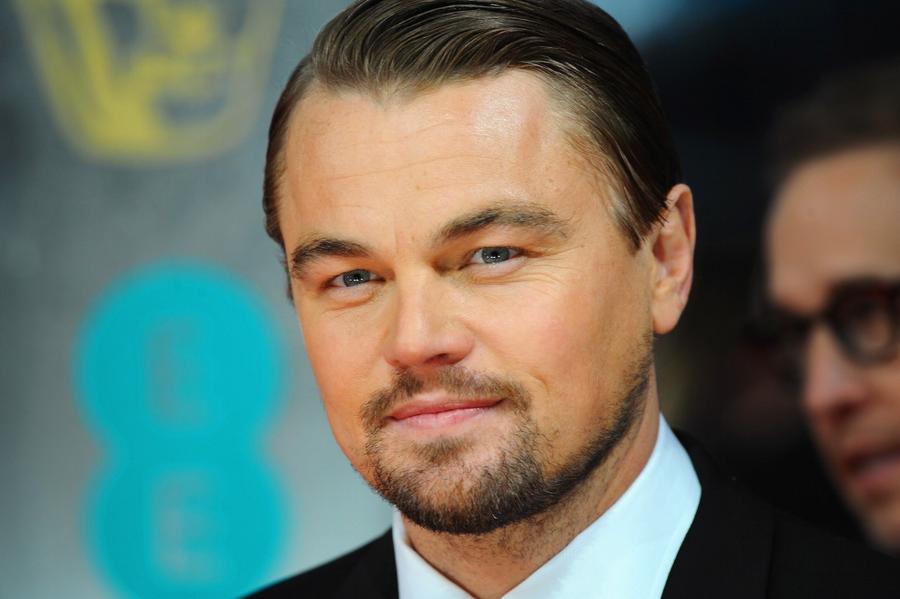
Getty Images
Leonardo DiCaprio Foundation
No stranger to helping the less fortunate, the artistic mogul has a long history of donating to a vast array of causes. With money and resources given to organizations such as Declare Yourself, Feeding America, Global Cool, Global Green, Pediatric Epilepsy Project, and many more, this actor has left a trail of various charities that have benefited greatly from his selflessness and generosity.
Following the success of Titanic in 1998, Leo established the Leonardo DiCaprio Foundation, a non-profit that is focused on the environment. More specifically, "to help promote and sustain the long-term vitality of all of the Earth's inhabitants." With the help of various collaborative partnerships, the organization supports efforts in the integrated ingenuity that helps to protect wildlife while simultaneously restoring harmony in unbalanced ecosystems and communities. Since its inception, his foundation has given away more than $80 million to fund more than 70 highly successful projects in over 40 countries.
In July 2015, DiCaprio pledged $15 million in grants to a variety of environmental organizations dedicated to various conservation efforts across the globe. The beneficiaries of this initiative range from cutting-edge organizations with a commitment to innovation and preserving the planet to those that empower indigenous communities to preserve and protect their natural resources. Inspired by the efforts of Al Gore and his campaign against global warming, DiCaprio has opted to amplify his own efforts to help aid those who are working on the most pressing issues in regard to global conservation. Helping to enable organizations such as the National Geographic Pristine Seas, an organization dedicated to helping preserve the seas, and ClearWater – helping to protect millions of acres of the tropical rainforest in Ecuador, to achieve more aggressive goals in a much shorter period of time.
Outside of his foundation, Leo donated $35,000 to establish the Leonardo DiCaprio Computer Center at the Los Feliz, California Library, which was built on the former site of his childhood home. He donated $1 million to the Haiti relief efforts and another $1 million to Hurricane Harvey relief efforts.
Real Estate
Leonardo DiCaprio is somewhat of a real estate tycoon. Total it all up, and Leo's real estate portfolio (including the private island we describe in the next paragraph) is worth at least $100 million.
In 1998, he spent $1.6 million on his FIRST oceanfront Malibu home. He tried to sell this house in 2015 for $11 million but ultimately opted to lease it instead for $25-50,000 per month (depending on length of stay). Leo finally sold this home in November 2021 for $10.3 million, $300,000 more than its most-recent asking price. Here's a video tour of that former DiCaprio mansion:
Leo owns at least two other oceanfront homes in Malibu, one he purchased in 2016 for $23 million.
He owns around a dozen homes in Southern California, including several in Hollywood Hills, three in Malibu, and two in Silver Lake. At the end of 2022, it was reported that DiCaprio bought his neighbor's home for $10.5 million to add to his Hollywood Hills compound.
In 2014, he spent $5.2 million on Dinah Shore's former mansion in Palm Springs.
In 2017, he paid $23 million for an undeveloped plot of land in Malibu.
In September 2021 Leo paid just under $14 million for a mansion on a bluff looking out on the ocean in Malibu.
He owns two apartments in New York City. The first is a 2.5-bedroom bachelor pad that set him back $10 million in 2014. The second apartment is actually the result of two side-by-side purchases in one building over two transactions that total $11.7 million.
In December 2021, Leonardo paid $9.9 million for a home in Beverly Hills.
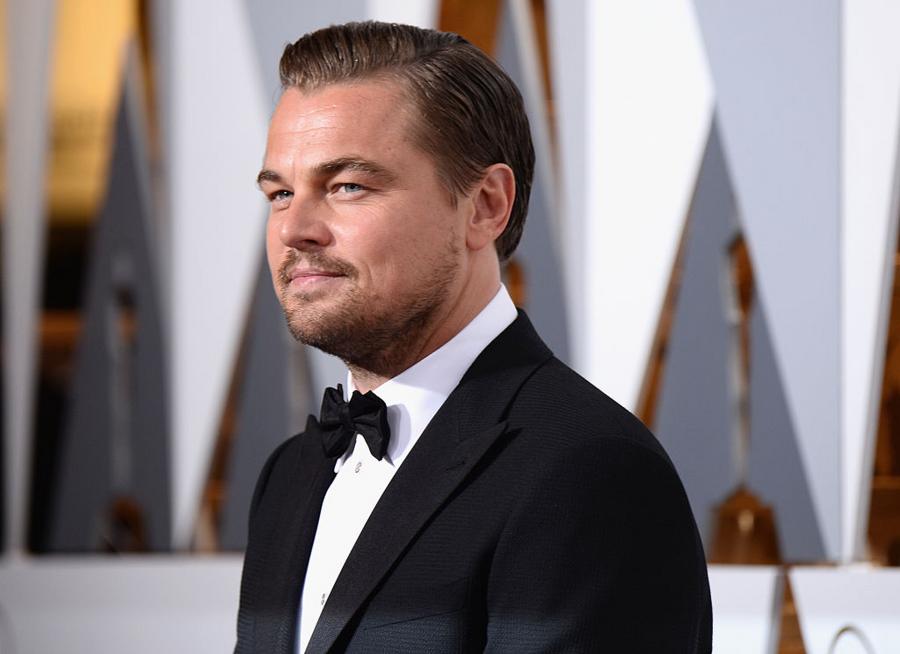
Frazer Harrison/Getty Images
Private Island and Eco Resort
In 2005, Leo spent $1.75 million to acquire a 104-acre private island in Belize. He left the island relatively untouched for many years but, in 2016 announced he would be turning the property into an eco-friendly private resort called Blackadore Caye (which is also the name of the island). According to the most recent plans, Blackadore Caye will feature 36 bungalows and 36 estate-style homes that will be sold to private owners. All of the homes and island facilities will be 100% powered by renewable energy with zero footprint. It has been estimated that the private homes will sell for $5 – $15 million a piece.
Relationships
Leonardo DiCaprio met Brazilian model Gisele Bundchen in 1999. They dated until 2005. He then dated Israeli model Bar Refaeli from 2005 to 2011. DiCaprio later dated German fashion model Toni Garnn from 2013 to 2014 and then again in 2017. From 2017 until 2022, he was romantically involved with American model and actress Camila Morrone.
/2015/09/GettyImages-476575299.jpg)
/2010/01/Kate-Winslet.jpg)
/2015/10/GettyImages-513145516.jpg)
/2021/05/leo.jpg)
/2021/12/leo-house.png)
/2018/02/GettyImages-617820746.jpg)
/2023/07/GettyImages-1200624256.jpg)
/2015/12/GettyImages-495966322.jpg)