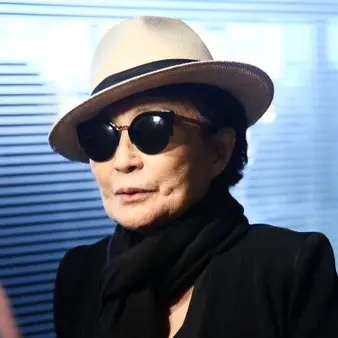
For nearly half a century, one of the most persistent stories surrounding John Lennon's death has been that he left an enormous fortune to his widow, Yoko Ono, and their young son Sean, while his older son Julian was essentially cut out.
The story has all the ingredients of a classic celebrity inheritance feud: a famous father, two sons from different marriages, a widow controlling hundreds of millions of dollars, and a bitter legal dispute that dragged on for years. For Julian, who had already experienced a painful separation from his father during childhood, the financial conflict seemed to reinforce the notion that John had favored his second family.
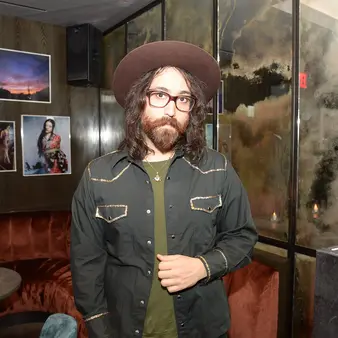
But earlier this week, Sean Lennon made a surprising statement that called the conventional version of the story into question. It began with a photograph Sean posted of himself spending time with Julian during his birthday celebration:
Had a great bday with my brother…@JulianLennon https://t.co/Gc2CFgERGu
— Seán Ono Lennon (@seanonolennon) October 11, 2026
A snarky Twitter user saw the photo and replied with the following commentary:
"One guy abandoned by his famous Dad, the other embraced and closely attended to by the same Dad, whom he then saw murdered as a young child. One guy inherited most of the estate, the other largely cut out and forced to engaged in decadeslong litigation in pursuit of a comparatively small share of it. Unbearably painful and enraging for the one, surely pretty darn awkward for the other."
To the surprise of many, Sean not only saw the comment, but he replied:
"Julian and I inherited the same amount from our dad. Our trusts were equal. Although his was slightly more, but negligibly so."
That's an extraordinary statement from someone at the center of one of the most valuable estates in music history.
So how does that square with the stories about Julian being excluded from his father's will? Why did Julian spend years battling Yoko over the estate? What did Yoko actually receive? And how much money was John Lennon worth when he was murdered?
To understand what happened, we have to go back to 1968, examine John's final will from 1979, and follow the music rights that continued generating enormous sums long after his death.
How Much Was John Lennon Worth When He Died in 1980?
John Lennon was an extraordinarily wealthy man when he was murdered outside the Dakota apartment building in Manhattan on December 8, 1980.
In December 1980, just two weeks after his death, TIME magazine published a lengthy account of Lennon's final years that valued his estate at $235 million. That's the same as $955 million in today's dollars. In February 1981, United Press International reported that his total worldwide holdings were valued at $250 million. That's the same as around $1 billion today. The wire service also reported that his fortune was generating an estimated $200,000 per day in record royalties at the time.
Interestingly, those valuations stand in sharp contrast to the amounts disclosed in the official probate proceedings. An initial filing in Manhattan placed Lennon's estate at $30 million, while separate proceedings in England and Wales identified another $5.5 million in assets. So where was the other $200 million? Part of the explanation is that probate filings aren't necessarily a complete accounting of someone's wealth. Assets held jointly with a spouse, property placed in trusts, and investments held through companies can pass outside the probate process. Lennon and Yoko also maintained a complicated portfolio of international investments, real estate, business interests, and valuable music royalties.
The First Trust Was Created During John's Divorce From Cynthia
One of the most important pieces of the inheritance puzzle predates Lennon's death by 12 years.
John married Cynthia Powell in 1962. Their son, Julian Lennon, was born the following year, just as the Beatles were becoming one of the biggest bands in Britain. By 1968, however, their marriage had collapsed. John had begun a relationship with Yoko Ono, and he and Cynthia divorced that November.
Under the divorce settlement, Cynthia received £100,000 and annual maintenance payments of £2,400. John also established a separate £100,000 trust for Julian, with the money intended to become available when Julian turned 21. After adjusting for inflation, £100,000 in 1968 is the same as around £1 million today.
But there was a provision in the trust agreement: If John had additional children, the money would be shared among them. In 1975, John and Yoko welcomed their son, Sean Lennon. As a result, Julian's entitlement under the 1968 trust was reduced from £100,000 to £50,000, with Sean entitled to the other half.
That £50,000 figure would become a recurring element of stories about Julian's supposedly tiny inheritance. But here's the critical detail: The £100,000 divorce trust was not the same trust John established in connection with his much larger estate in 1979. It was a separate financial arrangement created when John divorced Cynthia.
Confusing those two arrangements has contributed to decades of misleading reporting about what the brothers received.

(Photo by George Pimentel/WireImage)
What Did John Lennon's Final Will Actually Say?
On November 12, 1979, John Lennon signed his final will. The document was four pages long and established how his estate would be administered following his death.
The will did not simply declare that all his money should go to Yoko and Sean. Instead, it established two major arrangements:
First, Yoko was entitled to a substantial direct inheritance calculated using a formula tied to one-half of John's adjusted gross estate and the marital deduction permitted under federal estate-tax law. The formula also accounted for assets that would pass to her outside the will.
Second, everything remaining in the estate was directed into a separate trust established on the same date. Yoko and attorney Eli Garber were named trustees, and Yoko was appointed executor of the estate.
Something important is missing from the public will: It does not identify either son by name as the recipient of a specific share of the estate. Instead, the will directs assets into the separate trust, whose terms governed who would receive the money and under what circumstances. Those complete trust documents have not been publicly disclosed.
There is another interesting provision in John's will. It contained what lawyers call a no-contest clause, threatening to disinherit a beneficiary who attempted to invalidate the will or the trust. That provision underscores how carefully Lennon and his attorneys attempted to structure the estate, although it does not establish whether the clause had any bearing on Julian's later legal dispute.
How Much Did Yoko Ono Inherit?
Of the three surviving family members, Yoko Ono received the clearest and most substantial direct financial benefit from John's will.
Yoko Ono was already an accomplished artist with her own career before she met John, but the assets she inherited and managed following his death became the foundation of an enormous personal fortune.
Using our $200 million estimate of John's worldwide net worth, half of that amount would be $100 million. That's a useful illustration of the potential scale of Yoko's direct inheritance. However, the actual marital bequest was calculated using the adjusted value of the estate and took account of qualifying assets already passing to Yoko outside the will. The publicly available documents do not establish that she personally received exactly $100 million in 1980.
Her financial responsibilities extended far beyond receiving an inheritance check. She became the executor of John's estate and a trustee of the separate 1979 trust. She also took charge of managing valuable investments, copyrights, royalty income, real estate, artwork, and the commercial use of John's name and image.
By that point, Yoko was already accustomed to managing the family's finances. During the second half of the 1970s, John had largely withdrawn from the recording industry to raise Sean, while Yoko took a leading role in the couple's business affairs. Over the following decades, those assets continued appreciating and generating substantial income.
We currently value Yoko Ono's net worth at $700 million. That fortune reflects her inherited assets, investments, music-related business interests, real estate, and her own career as an artist and musician.
Why Did Julian Spend Years Fighting For His Inheritance?
For Julian, the financial arrangements were complicated by a much longer and more painful family history.
John left Cynthia and Julian when Julian was five years old. His relationship with his eldest son subsequently became intermittent, while his relationship with Sean was very different. Following Sean's birth in 1975, John stepped away from music and devoted much of the next five years to raising him.
The contrast between the boys' childhoods was enormous. Paul McCartney famously wrote "Hey Jude," originally called "Hey Jules," to comfort Julian during his parents' separation. John later wrote "Beautiful Boy (Darling Boy)" for Sean.
When John was murdered, Julian was 17 and Sean was just five. Julian's relationship with his father had been improving, but his death ended the possibility of any further reconciliation.
Julian subsequently became involved in a prolonged dispute with Yoko over his father's estate. The conflict continued for years before the parties reached a confidential settlement in 1996. Contemporary reports repeatedly stated that Julian had secured a £20 million settlement, equivalent to more than $30 million at the exchange rates of the period.
But there's a major problem with that figure: Julian himself said it wasn't true. In a July 1998 interview with "Salon," Julian was asked about the £20 million settlement. He immediately emphasized that the number was merely something the newspapers had reported, explaining that he was legally prohibited from revealing the actual payment but insisting it was substantially smaller than £20 million.
So while a significant settlement unquestionably occurred, we do not know the exact amount Julian received.
Julian Had To Buy Back Letters His Father Sent Him
One of the most heartbreaking chapters of Julian's inheritance story took place in September 1996, shortly after the settlement. That month, Julian spent more than £55,000 at a London auction buying Beatles memorabilia that had deeply personal significance to him.
Among the purchases were handwritten notes associated with "Hey Jude," the song Paul McCartney had written for him during his parents' divorce. Julian paid £25,000 for the notes. He also purchased postcards that John had sent him during his childhood.
One, sent from Japan and signed by John, Yoko, and Sean, cost £4,140. Another, sent from New York in 1979 and signed by John, cost £3,700.
Some of the postcards had originally been addressed to Julian but had been lost or dispersed over the years.
Julian has also been critical of Yoko's commercial management of his father's image. In his 1998 "Salon" interview, he expressed frustration at seeing John's likeness and artwork licensed for products such as ties and mugs while having little influence over those decisions.
Although Julian's feelings about the handling of the estate are well documented, the 1996 auction reporting did not establish that Yoko personally sold the letters and postcards he purchased.
Both Sons Inherited Something More Valuable Than Cash: Music Rights
Here's another important part of the story that often gets overlooked.
John Lennon did not own the publishing copyrights to most of the classic Lennon-McCartney Beatles songs when he died. He and Paul McCartney had lost control of Northern Songs in 1969 and subsequently sold their remaining shares.
Those publishing copyrights eventually became part of the ATV catalog, which Michael Jackson purchased in 1985. The catalog later became part of Sony/ATV Music Publishing, eventually coming under Sony's full control.
But Lennon and McCartney retained important songwriter royalty interests associated with their compositions. And certain copyright renewal rights could pass to an author's surviving family members under U.S. law, independently of the ordinary distribution of property under a will.
We have documented evidence that Julian, Sean, and Yoko all held interests associated with John's music. In 1998, all three were registered as copyright renewal claimants for "Imagine." Their interests became part of a federal copyright infringement case in 2008, when Yoko, Julian, and Sean were named together as plaintiffs over the use of the song in the documentary "Expelled: No Intelligence Allowed."
The case is especially revealing because it demonstrates that Julian had legally recognized claims involving his father's songwriting. He wasn't simply someone who had collected a one-time settlement and permanently disappeared from the financial picture.
In April 2007, Julian made another significant financial decision. He sold a substantial portion of his economic interest in royalties from Beatles songs written or co-written by John to Primary Wave Music Publishing.
The purchase price was never disclosed. But Primary Wave confirmed that it was acquiring a significant portion of Julian's songwriter royalty interests, not the underlying publishing catalog. The transaction did not include John's solo compositions.
The deal turned part of Julian's continuing royalty income into an immediate financial payment. It also gave Primary Wave an economic interest in future songwriter royalties associated with his share.
The Most Important Difference Today May Be Yoko's Fortune
Today, Sean plays a far more prominent role in the Lennon family's music businesses than Julian does.
In October 2020, Sean became a director of Apple Corps, the company responsible for major aspects of the Beatles' commercial operations. He also became involved in other British companies associated with his parents' music, including Maclen Music.
As Yoko grew older, Sean assumed greater responsibility for supervising archival releases, documentaries, remixes, licensing, and other projects involving John's recordings. But a particularly interesting detail emerges from Britain's corporate records.
Yoko, not Sean, is identified as the holder of major economic interests in important Lennon-related companies. Apple Corps has four principal shareholder groups associated with Paul McCartney, Ringo Starr, the Harrison family, and Yoko Ono's Lennon-family interest. Yoko is associated with the family's 25% stake, while Sean serves alongside her as a director.
British filings also identify Yoko as a significant shareholder in Maclen (Music) Limited, a company associated with Lennon-McCartney compositions. Sean serves as a director but is not listed as a person with significant control.
Those businesses remain enormously valuable. Apple Corps' accounts for the 11 months ending December 2025 recorded £44 million in revenue and £6 million in pretax profit. Separately, Forbes calculated that John Lennon's posthumous business generated $12 million in earnings in 2025, more than four decades after his death.
Sean's managerial role is important, but it does not mean he personally owns all the music rights, corporate shares, and investments currently associated with his mother.
Sean may eventually inherit significant additional assets from Yoko. But Yoko is alive, and her personal estate plan is private. She also has another child, Kyoko Ono Cox, from her earlier marriage to filmmaker Anthony Cox. Whatever Sean ultimately receives from Yoko would be a separate inheritance from the arrangements John established for his sons.
So How Much Are Sean, Julian, and Yoko Worth Today?
At Celebrity Net Worth, our current valuations are:
- Yoko Ono: $700 million
- Sean Lennon: $60 million
- Julian Lennon: $50 million
Julian has accumulated wealth through his own recording career, inherited financial interests, songwriting royalties, investments, and his 2007 transaction with Primary Wave. Sean has likewise developed a substantial independent music career while maintaining inherited financial and royalty interests.
Yoko's much larger fortune reflects the assets she received directly from John, decades of investment and royalty income, valuable music-related businesses, real estate, and her own artistic career.
Sean And Julian Have Remained Close Despite The Estate Dispute
Perhaps the most striking part of this entire story is the relationship between the two brothers.
Julian and Sean experienced very different childhoods. Julian grew up largely separated from John, while Sean enjoyed five years of close daily contact with their father before his murder. But the brothers have developed a strong relationship despite the painful family history.
In a 2025 interview with "The Guardian," Julian described himself as being outside the inner circle of the Beatles' business affairs. He said Sean was his best friend and shared whatever information he could, even though many decisions involving the band's legacy remained private.
Sean has also spoken about Julian's influence on his life. He has credited his older brother with teaching him guitar and inspiring him to pursue music, and he has repeatedly pushed back against suggestions that the brothers are enemies.
The photograph Sean posted during his 51st birthday celebration offered another glimpse of that relationship. And the inheritance statement that followed may ultimately change the way people understand their family's financial history.