
Though his name may not carry the same instant recognition as television heavyweights like Dick Wolf or Chuck Lorre, the late Sam Simon (1955–2015) was one of the most influential writers and producers in modern TV history. Over the course of his career, he played key creative roles on hit shows including "Taxi," "Cheers," "The Drew Carey Show," "Friends," "House of Cards," and "Anger Management," quietly shaping some of the most successful comedies and series of multiple generations.
That résumé alone would have been enough to secure a lifetime of wealth and a comfortable early retirement. But remarkably, it only scratches the surface of Simon's impact. In the late 1980s, he co-created a quirky animated series that would go on to become the longest-running scripted show in television history: "The Simpsons."
More than three decades later, "The Simpsons" has produced over 800 episodes across 37 seasons. Simon stepped away from the show in 1993 after just four seasons and 81 episodes, following creative tensions with his fellow producers. Walking away that early might sound like a costly mistake. In reality, it was anything but. Simon retained his Executive Producer credit and, more importantly, a valuable share of the show's backend profits. That ownership stake generated an enormous fortune over the years. A fortune Simone spent the final chapter of his life giving away.
After being diagnosed with terminal cancer, he dedicated himself almost entirely to philanthropy, donating hundreds of millions of dollars to animal welfare causes. When he died in March 2015 at age 59, he left behind not just a groundbreaking television legacy, but a remarkable example of how great wealth can be used for good.
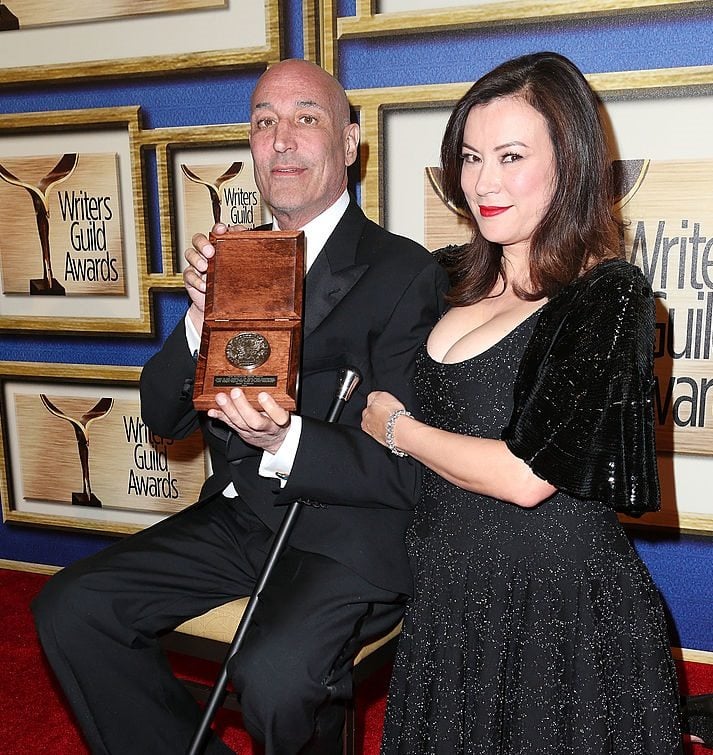
Sam Simon and Jennifer Tilly / Frederick M. Brown/Getty Images
Early Career
Sam Simon grew up in Beverly Hills, California, in a neighborhood that offered a surreal preview of the life he would eventually lead. His neighbors included Groucho Marx and Elvis Presley. At one point, Elvis reportedly returned the family's lost dog in a limousine. Simon later recalled walking in on Groucho Marx jumping off his mother's bed, a bizarre childhood moment that hinted at the eccentric world around him.
His father, Arthur, lost a leg during World War II and later ran a successful clothing manufacturing business. His mother, Joan, owned an art gallery in Venice and frequently hosted prominent artists such as Andy Warhol and Ed Kienholz. Despite growing up comfortably, Simon described his childhood as volatile and complicated, shaped in part by a difficult relationship with his mother.
He was recruited to play football at Stanford University but quit the team after his first practice. Instead, he focused on his artistic instincts, becoming a cartoonist for the Stanford student newspaper. While still an undergraduate, he sold sports cartoons to the San Francisco Chronicle and the San Francisco Examiner.
After graduating in 1977 with a degree in psychology, Simon landed a job at the Los Angeles animation studio Filmation. There, he worked as a storyboard artist and writer on shows including "Fat Albert and the Cosby Kids" and "The New Adventures of Mighty Mouse and Heckle and Jeckle." Though it gave him valuable experience, he later dismissed much of that work as forgettable and set his sights on something bigger.
In 1981, a friend encouraged him to submit an unsolicited spec script to the creators of the hit sitcom "Taxi." The producers were so impressed that they produced the script and hired him as a full-time writer. He was just 26 years old. Within a few years, Simon had risen to the role of showrunner, becoming one of the youngest in network television history. After "Taxi" ended, he joined the writing staff of "Cheers" and continued building a reputation as one of the sharpest comedic voices in television.
Origins Of The Simpsons
"Taxi" was created and executive-produced by James L. Brooks, one of the most influential figures in television. In 1987, while working on "The Tracey Ullman Show," Brooks decided to incorporate short animated segments between sketches. For one of those segments, he reached out to cartoonist Matt Groening, whose "Life in Hell" comic strip had gained a loyal following.
Rather than adapt his existing work, Groening quickly devised a new concept centered on a dysfunctional family he called "The Simpsons." Members of "The Tracey Ullman Show" cast, including Dan Castellaneta and Julie Kavner, provided the voices for Homer and Marge.
After two years of successful shorts, audiences wanted more. Brooks paired Groening with his longtime collaborator Sam Simon and tasked them with developing "The Simpsons" into a full-length primetime series.
The show premiered on December 17, 1989, and quickly became a cultural phenomenon. Over the decades, it has grown into the longest-running scripted series in television history and is widely regarded as one of the greatest shows ever made.
Behind the scenes, Simon was a crucial architect of the show's early success. While Groening created the characters, Simon helped transform the concept into a functioning television series. He hired the original writing staff, many of whom later credited him as the person who shaped the show's voice and structure. One early writer famously said, "He was the guy we wrote for."
Simon insisted on bringing traditional sitcom discipline to animation. He had the voice actors record their lines together as an ensemble, rather than separately, which gave the show a more natural rhythm and timing. He also encouraged a collaborative writing environment, where scripts were heavily rewritten as a group. That approach helped create the layered tone that blended absurd humor with grounded, emotionally resonant storytelling.
He also helped populate the world of Springfield, contributing to the creation and development of characters like Mr. Burns, Chief Wiggum, Bleeding Gums Murphy, and Dr. Hibbert. His instincts helped turn what could have been a quirky cartoon into a mainstream hit that appealed to both adults and children.
At the same time, Simon's personality could be intense. He later admitted, "Work turns me into a monster," describing the pressure he put on himself to make everything perfect. Others who worked with him described him as brilliant but difficult, a perfectionist whose passion sometimes spilled over into conflict.
Ironically, Simon did not expect "The Simpsons" to last. His goal in the beginning was simply to produce 13 great episodes. He believed the show might only run for a single season.
As the show's popularity exploded, tensions between Simon and Groening grew. After four seasons and 81 episodes, Simon decided to leave in 1993 following a period of creative conflict. The split was not entirely amicable, but it ultimately worked out extraordinarily well for everyone involved.
Cashing In
Despite leaving "The Simpsons" relatively early in its run, Simon negotiated one of the most lucrative exit deals in television history. He retained his executive producer credit and secured backend participation in the show's syndication and home video revenue.
At the time, home video was still in its infancy, and the long-term value of those rights was far from obvious. In hindsight, the deal proved enormously valuable. "The Simpsons" became a global syndication powerhouse and one of the most successful home video franchises in entertainment history, generating billions of dollars in revenue.
Simon continued to receive executive producer credit on every episode for the rest of his life and beyond. His share of the show's backend profits reportedly earned him $20–30 million per year, decades after he had stopped working on the series. As he once put it:
"I make tens of millions of dollars a year… over 25 years it adds up."
In total, his earnings from "The Simpsons" reached into the hundreds of millions of dollars.
Ironically, Simon later admitted that he rarely watched the show in his later years.
Retirement And Philanthropy
After leaving "The Simpsons" in 1993 at just 38 years old, Simon had the freedom to do whatever he wanted. He remained creatively active, working on projects like "The George Carlin Show" and "The Drew Carey Show," directing dozens of episodes and continuing to write and produce television.
At the same time, he pursued a wide range of personal interests. He became a competitive poker player, finishing in the money at multiple World Series of Poker events and even defeating his ex-wife Jennifer Tilly in a tournament. He once hired a former FBI agent to teach him how to read people at the poker table.
He also developed a passion for boxing. Simon fought in amateur bouts himself and later joined the management team of heavyweight boxer Lamon Brewster. In 2004, Brewster scored a stunning upset victory over Wladimir Klitschko to win the WBO heavyweight title, a moment Simon described as one of the highlights of his life.
Simon also became a regular on Howard Stern's radio show and built an extensive art collection featuring works by artists such as John Singer Sargent, Andy Warhol, and Ed Ruscha.
But it was philanthropy that ultimately defined the final chapter of his life.
In 2002, he founded The Sam Simon Foundation, which provided free veterinary care, rescued animals, and trained service dogs for people in need. Over time, his charitable efforts expanded dramatically. He funded the rescue of animals ranging from dogs and chimpanzees to grizzly bears and elephants. He donated a ship to the Sea Shepherd Conservation Society to help combat illegal whaling. He supported PETA so extensively that the organization renamed its headquarters the Sam Simon Center in his honor.
He also launched a vegan food program that fed hundreds of families each day, reflecting his broader commitment to reducing animal suffering.
Simon often explained his motivation simply: "I have more money than I'm interested in spending."

WILLIAM WEST/AFP/Getty Images

WILLIAM WEST/AFP/Getty Images
In late 2012, Simon was diagnosed with terminal colon cancer and given only a few months to live. Instead, he lived for several more years and used that time to accelerate his giving. He openly described the process as intentional, saying, "In many ways, I am consciously crafting my death."
Even in the face of illness, he maintained his sense of humor, once joking that if you wanted publicity, cancer was "the greatest thing in the world."
He had no children and ensured that the vast majority of his fortune would go to charitable causes. By the time of his death, he had given away hundreds of millions of dollars.
"I've given most of it away… I won't be rich until we get [my next] quarterly installment from The Simpsons!"
Sam Simon died on March 8, 2015, at the age of 59. He helped create one of the most influential shows in television history, then spent the fortune it generated trying to make the world a better place.
/2010/12/simon.jpg)
/2026/03/jennifer-tilly-scaled.jpg)
/2016/08/kevin.jpg)
/2021/03/Dan-Castellaneta.jpg)
/2009/11/Lisa-Kudrow-1.jpg)
/2015/10/GettyImages-138963924.jpg)
/2020/06/taylor.png)
/2017/02/GettyImages-528215436.jpg)
:strip_exif()/2009/09/P-Diddy.jpg)
:strip_exif()/2015/09/GettyImages-476575299.jpg)
/2018/03/GettyImages-821622848.jpg)
/2009/09/Jennifer-Aniston.jpg)
/2019/10/denzel-washington-1.jpg)
/2019/11/GettyImages-1094653148.jpg)
/2020/01/lopez3.jpg)
/2019/04/rr.jpg)
/2009/11/George-Clooney.jpg)
/2009/09/Brad-Pitt.jpg)
/2020/04/Megan-Fox.jpg)
/2020/02/Angelina-Jolie.png)
/2009/09/Cristiano-Ronaldo.jpg)