
Despite the immense wealth he accumulated playing Ron Weasley, Rupert Grint is not immune from tax problems .
The Harry Potter star made international headlines after losing a grueling, five-year legal battle against HM Revenue and Customs (HMRC)—the UK's equivalent of the IRS. The First-Tier Tax Tribunal ordered the 36-year-old actor to pay £1.8 million (approximately $2.3 million) in back taxes.
But how did a beloved child star end up in the crosshairs of the UK government over a decade-old tax return? The answer lies in the complex web of celebrity accounting, "goodwill" assets, and a piece of tax legislation famously known as the "Beatles Clause."
The Core Dispute: Income vs. Capital Gains
The roots of the 2024 ruling trace back to the 2011/2012 tax year, right as the Harry Potter film franchise was wrapping up. At the time, a 23-year-old Grint was entitled to massive future payouts in the form of residuals—money earned from ongoing DVD sales, streaming rights, television syndication, and theme park licensing.
To manage this wealth, Grint's late father, Nigel, who oversaw his business affairs, helped set up a company called "Clay 10," of which Rupert was the sole shareholder. Grint then sold his rights to his future earnings to Clay 10 for a total of £8.5 million.
Here is where the math caused a legal headache:
- The Income: £4 million of that sum was rightly declared as standard income.
- The Capital Gain: The remaining £4.5 million (roughly $5.8 million) was classified as "rights, records, and goodwill" and declared as a capital asset.
By classifying the £4.5 million as a capital gain, Grint's accountants claimed "entrepreneurs' relief," allowing him to pay a capital gains tax rate of just 10%. Had that money been classified as regular income, it would have been subject to the UK's highest income tax bracket at the time, which was 52%.
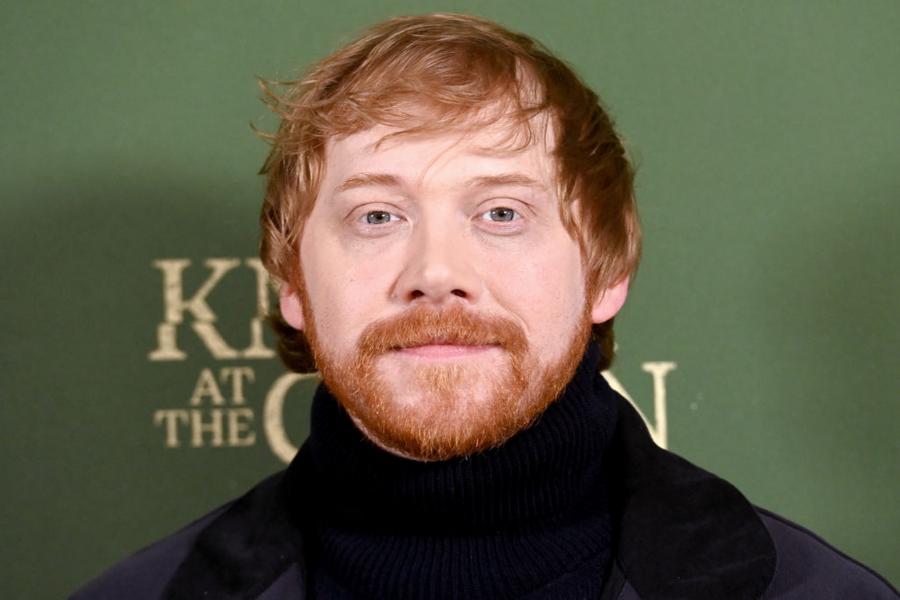
Dave J Hogan/Getty Images
Striking a Chord: The "Beatles Clause"
In 2014, HMRC opened an inquiry into Grint's 2011/2012 tax return. By 2019, they formally challenged the £4.5 million classification, arguing it was a blatant attempt to disguise income. When Grint appealed, the case went to a tribunal.
To win their case, HMRC deployed the "Sale of Occupational Income" provisions found in the Income Tax Act 2007. In British financial circles, this is widely known as the "Beatles Clause." The rule was originally introduced decades ago to stop 1960s pop stars (like The Beatles) and high-earning entertainers from dodging high income tax rates by converting their performance earnings into lower-taxed capital receipts via shell companies. HMRC argued that Grint's setup with Clay 10 was doing exactly what the Beatles Clause was designed to prevent.
The Tribunal's Verdict
In late 2024, Tribunal Judge Harriet Morgan handed down a decisive ruling in favor of HMRC.
She dismissed the argument from Grint's legal team that the company was set up primarily for liability protection. Instead, Judge Morgan ruled that the "avoidance test" was met, meaning one of the main objectives of the arrangement was explicitly to shield the actor from a massive income tax liability.
Furthermore, the judge ruled that the £4.5 million in question "derived substantially the whole of its value from the activities of Mr. Grint." Simply put: because the money existed entirely due to Grint's labor as an actor, it was taxable as income, not as a capital asset.
A History of Tax Woes
Unfortunately for Grint, the 2024 tribunal wasn't his first time losing to HMRC.
In 2016, the actor lost a separate court battle over a £1 million tax refund. In that instance, Grint had attempted to change his accounting dates so that 20 months of his income would be taxed in the 2009-2010 tax year. His goal was to pull his earnings forward to avoid the UK's top tax rate, which was scheduled to jump from 40% to 50% in the 2010-2011 tax year. The judge in that case blocked the move, ruling against the accounting maneuver.
/2020/01/Rupert-Grint.jpg)
/2019/02/GettyImages-1057592782.jpg)
/2012/09/GettyImages-144029357.jpg)
/2017/03/GettyImages-540179188.jpg)
/2021/01/GettyImages-136948873.jpg)
/2013/03/GettyImages-474639939.jpg)
/2017/02/GettyImages-528215436.jpg)
/2009/11/George-Clooney.jpg)
/2009/09/Cristiano-Ronaldo.jpg)
/2009/09/Jennifer-Aniston.jpg)
/2019/04/rr.jpg)
/2020/04/Megan-Fox.jpg)
/2019/11/GettyImages-1094653148.jpg)
/2019/10/denzel-washington-1.jpg)
/2009/09/Brad-Pitt.jpg)
/2018/03/GettyImages-821622848.jpg)
/2020/06/taylor.png)
/2020/02/Angelina-Jolie.png)
/2020/01/lopez3.jpg)
:strip_exif()/2015/09/GettyImages-476575299.jpg)
:strip_exif()/2009/09/P-Diddy.jpg)