
Basically, every celebrity on earth has a booze brand now. Kevin Hart, The Rock, Nick Jonas, Rita Ora, LeBron James, and Kendall Jenner all have tequila brands. Matthew McConaughey has a bourbon company. Drake has a whiskey company. Dan Aykroyd and Post Malone have vodka companies…
Late last week, a rumor was whipping around the internet that claimed Miles Teller had sold his booze brand, The Finnish Long Drink, for $325 million.
If true, that would put Miles in an elite group of celebrities who have sold booze companies for enormous windfalls. Notable members of that club include George Clooney, who sold Casamigos Tequila for $1 billion. Ryan Reynolds, who sold Aviation Gin for $600 million (including potential milestone payouts). And Conor McGregor, who sold Proper Twelve whiskey at a valuation of $600 million.
When asked directly about his share of the windfall late last week, Teller played coy:
"I don't really talk numbers. I was always taught that's not in good taste. All I'll say is that I'm not retiring from acting anytime soon."
Uh ya. Because, and I'm sorry if this upsets all the Teller-heads out there, but Miles's net worth will barely budge from this sale for a very simple reason…
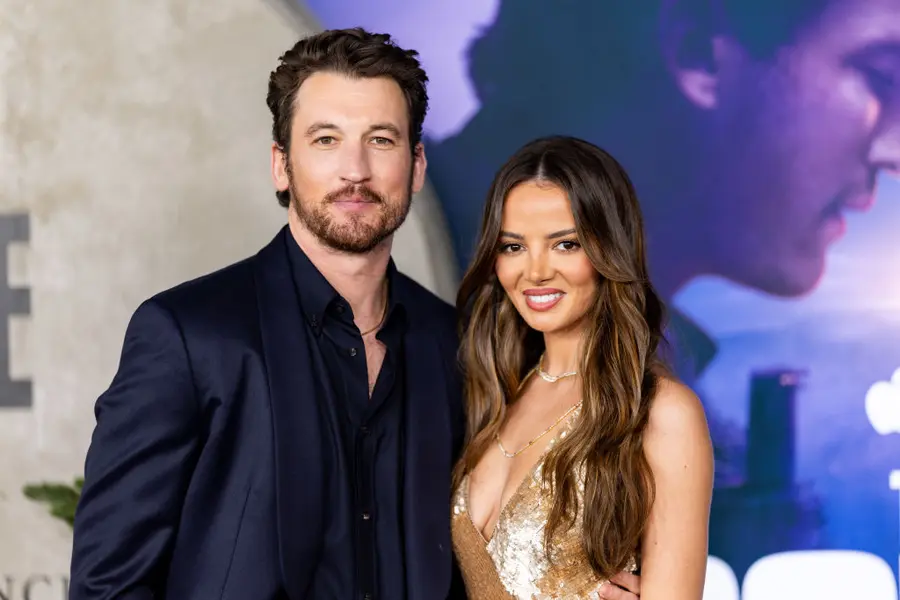
(Photo by Matt Winkelmeyer/WireImage)
The $325 Million Headline vs. Reality
When a company gets acquired for an eye-watering sum like $325 million, the headline makes it sound like the celebrity face of the brand just got a direct deposit for that exact amount.
But unless you're George Clooney—who literally co-founded Casamigos from scratch with two buddies and owned a massive, undiluted third of the company—that's not how most of the celebrity booze investments actually work.
The Finnish Long Drink was founded by four Finnish expats who wanted to bring their country's national beverage, a crisp mix of gin and grapefruit soda, to the States.
Back in 2019, they were doing the grueling, unglamorous work of building a brand: pouring tiny plastic cups of their drink at local liquor stores. As luck would have it, Teller wandered into a tasting at his local New York shop, tried the drink, and loved it. Less than a year later, he wasn't just a fan; he was a minority investor. And he does deserve some credit. He was an early investor.
However. Getting a drink from a few boutique New York shelves to a national phenomenon that sells 100 million cans a year requires an absolute mountain of cash. You have to pay for brewing, canning, distribution, national ad campaigns, and an army of sales reps.
The brand eventually raised over $40 million across multiple investment rounds. Heavyweight investment firms like Neuberger Berman and Marcy Venture Partners (Jay-Z's VC fund) poured millions into the brand during these rounds. Furthermore, the brand brought on several more celebrity investors, including DJ Kygo, PGA golfer Rickie Fowler, and NFL player Braxton Berrios.
But I'll actually give Miles another point of credit here because in these later rounds he actually doubled down. After making his initial investment in 2019, Miles increased his stake during one of the 2023 fundraising rounds.
Napkin Math
So how much did Miles roughly make off this sale? Let's do some quick napkin math.
First off, as we stated a moment ago, the brand has four original co-founders. Let's assume this group retained 40% of the equity, 10% a piece.
Then you've got a group of institutional investors who likely scooped up around 45%, most of which went to Neuberger Berman when it injected $25 million in a 2021 round.
That leaves the celebrity pool with 15%. A reasonable estimate considering how early he was and the fact that he doubled down would peg Miles' equity in the 3% to 5% range. Let's split the difference and call it 4%.
On a $325 million sale, that works out to a $13 million gross payment to Teller.
Now we have to subtract his initial investment.
Early-stage celebrity angel checks typically range from $250,000 to $500,000.
When he increased his stake to fund national expansion, the company's valuation was already much higher. He likely had to write a much larger check—perhaps $1 million to $2 million—to meaningfully increase his percentage.
Let's estimate he put in $2,000,000 of his own cash over the seven years.
The Final Verdict
- Gross Payout: ~$13,000,000
- Minus Estimated Investment: ~$2,000,000
- Estimated Net Profit: ~$11,000,000
After taxes and paying his business managers, his take-home cash is probably closer to $6 million or $7 million. Obviously, that's a huge win, but now you also understand his quote in the article:
"All I'll say is that I'm not retiring from acting anytime soon."
/2020/10/Miles-Teller.jpg)
/2023/05/Screenshot-2023-05-18-221709.jpg)
/2019/10/GettyImages-1128659106.jpg)
/2011/03/Shailene-Woodley.jpg)
/2014/04/Veronica-Roth.jpg)
/2013/03/jurnee.jpg)
/2017/02/GettyImages-528215436.jpg)
/2019/10/denzel-washington-1.jpg)
/2009/09/Jennifer-Aniston.jpg)
/2009/11/George-Clooney.jpg)
/2009/09/Brad-Pitt.jpg)
/2018/03/GettyImages-821622848.jpg)
/2020/06/taylor.png)
/2019/04/rr.jpg)
/2020/02/Angelina-Jolie.png)
:strip_exif()/2009/09/P-Diddy.jpg)
/2009/09/Cristiano-Ronaldo.jpg)
/2020/01/lopez3.jpg)
:strip_exif()/2015/09/GettyImages-476575299.jpg)
/2019/11/GettyImages-1094653148.jpg)
/2020/04/Megan-Fox.jpg)