On December 27, 2001, Martha Stewart was traveling aboard a private jet to Mexico when she made a phone call that would change her life forever. During a refueling stop in San Antonio, Texas, she spoke to her stockbroker's assistant and ordered the sale of 3,928 shares of a biotechnology company called ImClone Systems.
The following day, ImClone announced devastating news about its experimental cancer drug, sending the company's stock price plunging. By selling when she did, Martha avoided a loss of exactly $45,673.
What followed was one of the most extraordinary financial disasters in celebrity history. The stock trade triggered a federal investigation, a criminal conviction, five months in prison, and a spectacular decline in the value of the business empire that had made Stewart America's first self-made female billionaire.
Nearly 25 years later, Martha Stewart has put an astonishing price tag on the ordeal: $1 billion. And in a remarkable full-circle twist, she brought up that figure while explaining why she doesn't own a private jet today.
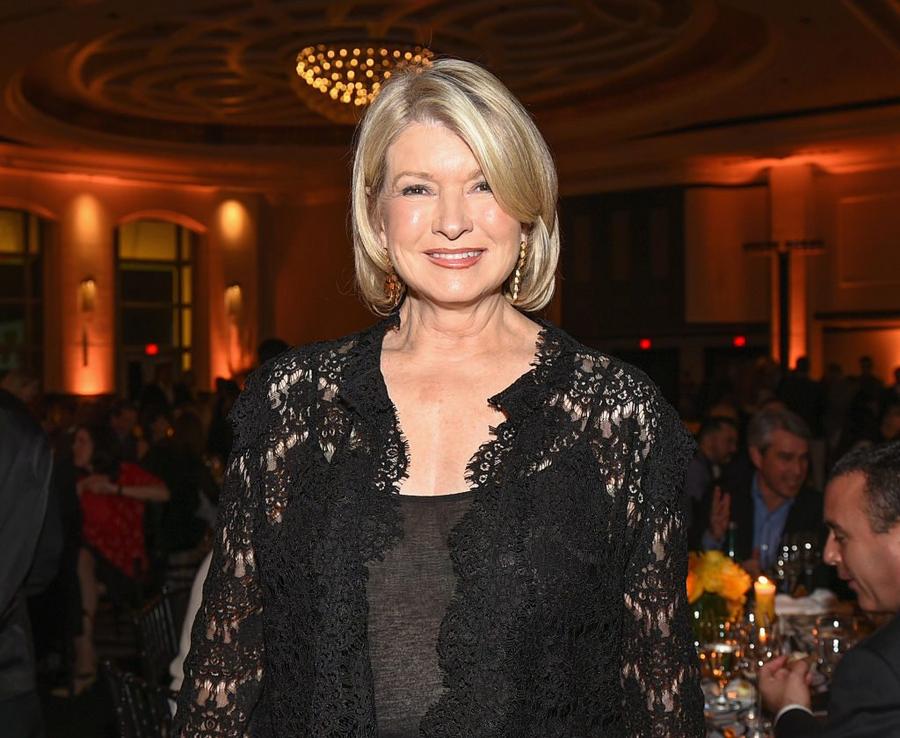
Mid-Life Millionaires -Martha Stewart / Denis Contreras/Getty Images
Why Martha Stewart Doesn't Own A Private Jet
During an appearance on MasterClass founder David Rogier's new podcast, "Other People's Business," Stewart was discussing modern celebrity entrepreneurs, including Kim Kardashian. Martha expressed admiration for the Kardashian family's business success, revealing that Kim has sought her advice and observing that the reality star now travels aboard a Gulfstream G5 private jet.
Rogier asked Stewart why she didn't have a private jet of her own. Her answer immediately took the conversation back to the scandal that nearly destroyed her career.
"Because I fell in a hole," Stewart replied. "I lost about a billion dollars in my legal problems. The lawyers took me to the cleaners, and they were horrible."
Stewart, now 85, said she plans to explore the experience further in her forthcoming autobiography. She also made clear that she has recovered financially and is doing well today, telling Rogier, "But I'm back. I mean, I'm pretty good."
The billion-dollar figure is an extraordinary acknowledgment of how much Stewart believes the legal ordeal ultimately cost her. And to understand how she arrived at such an enormous number, it's worth revisiting the events that unfolded after that fateful December afternoon.
Here is the full interview, which also explores Stewart's extraordinary career earnings and the business empire she created:
The $45,673 Stock Trade That Started Everything
The story begins with ImClone Systems, a biotechnology company run by Samuel Waksal, a friend of Martha Stewart. In December 2001, ImClone was awaiting a critical decision from the Food and Drug Administration concerning Erbitux, an experimental cancer treatment.
On December 27, Waksal and members of his family attempted to sell their ImClone shares. Stewart's Merrill Lynch broker, Peter Bacanovic, learned about those sales and contacted Martha's office while she was traveling to Mexico. Stewart subsequently spoke with Bacanovic's assistant, Douglas Faneuil, who told her that Waksal was trying to sell his shares.
Stewart instructed Faneuil to sell all 3,928 of her ImClone shares. She also tried to reach Waksal to find out what was happening with the company. The next day, the FDA announced that it had refused to review ImClone's application for Erbitux, and the stock fell sharply.
Federal regulators subsequently determined that Stewart's timely sale had allowed her to avoid a loss of $45,673. For a woman whose personal fortune had already crossed $1 billion, it was a relatively insignificant sum.
But the trade itself was only the beginning of her troubles. During the subsequent investigation, Stewart and Bacanovic maintained that they had a preexisting agreement to sell her shares if ImClone fell below $60. Prosecutors challenged that explanation and accused the pair of lying to investigators.
In March 2004, Stewart was convicted of conspiracy, obstruction of an agency proceeding, and making false statements to federal investigators. Importantly, she was never criminally convicted of insider trading. It was her conduct during the investigation, rather than an insider-trading conviction, that sent her to prison.
She was sentenced to five months in federal prison, followed by five months of home confinement and two years of supervised release. She entered federal prison in Alderson, West Virginia, in October 2004 and was released in March 2005.
In 2006, Stewart also resolved the SEC's separate civil insider-trading case, agreeing to pay approximately $195,000 in disgorgement, interest, and penalties without admitting or denying the allegations. She also accepted a five-year prohibition on serving as a director of a public company.
The direct financial penalties were a tiny fraction of the amount Stewart now says the entire ordeal cost her. The far greater damage came from what happened to the company she had spent decades building.
Before The Scandal, Martha Stewart Was A Billionaire
To appreciate the size of Stewart's financial losses, it's worth remembering just how successful her business had become before ImClone.
Stewart began her professional career as a model before working as a stockbroker on Wall Street. She later built a catering business out of her Connecticut farmhouse, published the bestselling 1982 book "Entertaining," and transformed her expertise in cooking, gardening, decorating, and entertaining into an enormously successful magazine and television franchise. Her frequent television appearances, including on Oprah Winfrey's program, helped introduce her to an even larger national audience.
In 1997, she consolidated her publishing, television, and merchandising interests into Martha Stewart Living Omnimedia, or MSLO. Two years later, on October 19, 1999, she took the company public on the New York Stock Exchange.
Shares were priced at $18 in the IPO, opened at $37.25, briefly traded as high as $52, and closed the first trading day at $35.56. At that price, MSLO had a market capitalization exceeding $2 billion.
Martha personally controlled more than 34 million shares, giving her an ownership stake worth $1.2 billion at the end of that first day. The IPO made her America's first self-made female billionaire, an extraordinary achievement for someone who had started her business in a farmhouse kitchen.
And the operation behind that valuation was a formidable money-making machine. One of its most successful components was a retail licensing arrangement that generated tens of millions of dollars in annual royalties.
The $65 Million-A-Year Kmart Deal
One of Stewart's greatest business triumphs was her partnership with Kmart. Long before celebrity entrepreneurs like Gwyneth Paltrow and Jessica Alba launched their own lifestyle and consumer-product empires, Martha had developed an entire universe of merchandise bearing her name.
Through the Martha Stewart Everyday collection, Kmart sold everything from sheets, towels, and cookware to furniture, gardening supplies, and Christmas decorations. At its peak, according to Stewart's new interview, the partnership generated nearly $2 billion in annual merchandise sales.
Even more impressively, Stewart said the arrangement generated as much as $65 million annually in royalties. Those royalties flowed through Martha Stewart Living Omnimedia under its licensing agreement with the retailer. The company's SEC filings confirm a $65 million guaranteed royalty payment under the Kmart agreement.
It was one of the great celebrity merchandising deals of its era. The revenue helped fuel Stewart's expansion into magazines, television, publishing, and other ventures, while giving her the financial resources to consolidate her businesses into a publicly traded company.
In many ways, Martha had developed the template that modern celebrity entrepreneurs would eventually follow. She wasn't simply endorsing other companies' products. She had created an entire commercial ecosystem around her personal brand, using the same name and expertise to generate revenue through television, publishing, and merchandise.
That business model also created a tremendous vulnerability. When Martha's personal reputation came under attack, the value of the company bearing her name was exposed to the fallout.
How Did Martha Stewart Lose $1 Billion?
Some of the financial devastation was visible almost immediately after the ImClone investigation became public.
MSLO's share price had already retreated substantially from its post-IPO highs, but the scandal compounded the company's troubles. Shares that had traded in the mid-$30s eventually sank into single digits. Contemporary reporting documented hundreds of millions of dollars disappearing from the value of Stewart's personal company holdings, including a decline of $330 million associated with the controversy.
Stewart relinquished her positions as chairwoman and CEO following her indictment, although she remained the company's largest shareholder. The investigation dominated headlines, her television career was disrupted, and the business faced years of uncertainty about whether its founder would be able to continue serving as the public face of the brand.
There was one especially bizarre development. While Stewart was actually serving her prison sentence, MSLO shares staged an enormous rally. The rebound briefly restored the value of her holdings to billionaire territory. But those gains did not last, and the company's longer-term decline continued.
By 2015, Martha Stewart Living Omnimedia was a shadow of the company that had once commanded a valuation exceeding $2 billion. That June, Sequential Brands Group announced it would acquire MSLO in a cash-and-stock transaction worth $353 million.
As we wrote when the sale was announced, selling a business for $353 million would ordinarily qualify as an enormous success. But for a company that had once been valued above $2 billion, it represented a dramatic fall from its glory days.
Stewart did not personally receive the full $353 million, which represented the value of the entire business. She received consideration for her shares, maintained an ongoing relationship with the Martha Stewart brand, and continued developing new ventures.
Four years later, Sequential sold the Martha Stewart and Emeril Lagasse brands to Marquee Brands for $175 million, with the possibility of another $40 million in additional payments. Martha remained the defining public personality associated with the brand, but the intellectual property was now controlled by another company.
So where does her new $1 billion figure come from? Stewart didn't provide a detailed breakdown. The decline in her company holdings accounts for hundreds of millions of dollars, while legal expenses, damaged business relationships, interrupted commercial opportunities, and the long-term consequences of the scandal could have contributed to the broader financial fallout she describes.
Stewart clearly believes the ultimate damage was vastly greater than the publicly documented legal settlements or the initial stock-market decline. Her forthcoming autobiography may provide a fuller accounting of how she arrived at the billion-dollar figure.
A $400 Million Comeback
Despite the extraordinary financial and personal setbacks, Stewart managed something that few public figures could have accomplished: she rebuilt her career and remained culturally relevant for decades after the scandal.
She returned to television shortly after her release from prison, continuing to publish books and rebuild commercial relationships with advertisers and retailers. In 2005, she even starred in "The Apprentice: Martha Stewart," a spinoff of the reality franchise associated with Donald Trump.
Her unexpected friendship with Snoop Dogg eventually developed into the VH1 series "Martha & Snoop's Potluck Dinner Party," introducing Stewart to a new generation of fans who knew her as much for her sense of humor as for her recipes. Their partnership led to numerous television appearances, commercials, and other collaborations, helping reinvent her public image.
At 81, she became the oldest cover model in Sports Illustrated Swimsuit Issue history. She also published her 100th book, opened a restaurant in Las Vegas, launched additional consumer businesses, and became the subject of the 2024 Netflix documentary "Martha."
Today, Martha Stewart has a net worth of $400 million. Her real estate holdings include her sprawling Bedford estate in New York, the historic Skylands property in Maine, and a $12.3 million Manhattan duplex purchased with her daughter Alexis in 2024.
She may no longer be a billionaire, but she has built a second act that would be an extraordinary lifetime accomplishment for almost anyone else. And at 85, she continues to develop new businesses, publish books, and expand a brand that has already endured for more than four decades.
Still, the contrast is difficult to ignore. In December 2001, Martha Stewart was traveling aboard a private jet when she made a stock trade that saved her $45,673. Nearly a quarter-century later, she says the consequences of that trade cost her $1 billion and help explain why she doesn't own a private jet today.
It's one of the strangest financial round trips in American business history. And for Martha Stewart, it's apparently still a painful one.