
Unfortunately, the post-fame career path for many Disney child stars has a way of turning ugly. Yes, there are genuine success stories. A handful go on to become real A-listers with long, lucrative careers. But for every Ariana Grande, there are dozens of former Disney actors whose momentum stalls completely once the spotlight moves on. And in too many cases, it doesn't just stall. It collapses.
Without naming names, it's been widely documented that former Disney stars experience an unusually high rate of financial trouble, legal issues, and public personal struggles after their peak fame fades. This is not a moral judgment so much as a structural problem baked into the system that creates them.
Disney performers tend to become extremely famous at a very young and psychologically unfinished age. They are not especially well paid by Hollywood standards, but they are enormous stars inside a tightly controlled Disney ecosystem. They receive VIP treatment at theme parks, are swarmed by adoring young fans, and exist in a bubble where their relevance feels permanent. Then the audience grows up. The shows change. The actors age out of the brand. The bubble pops.
What remains is a former child star trying to shed a deeply ingrained typecast while competing in a normal Hollywood market that no longer views them as essential. Some manage the transition. Many do not. Those who succeed and stay in entertainment often settle into steady but smaller careers, landing sitcom roles or carving out a niche on Broadway.
And then there's Bridgit Mendler.
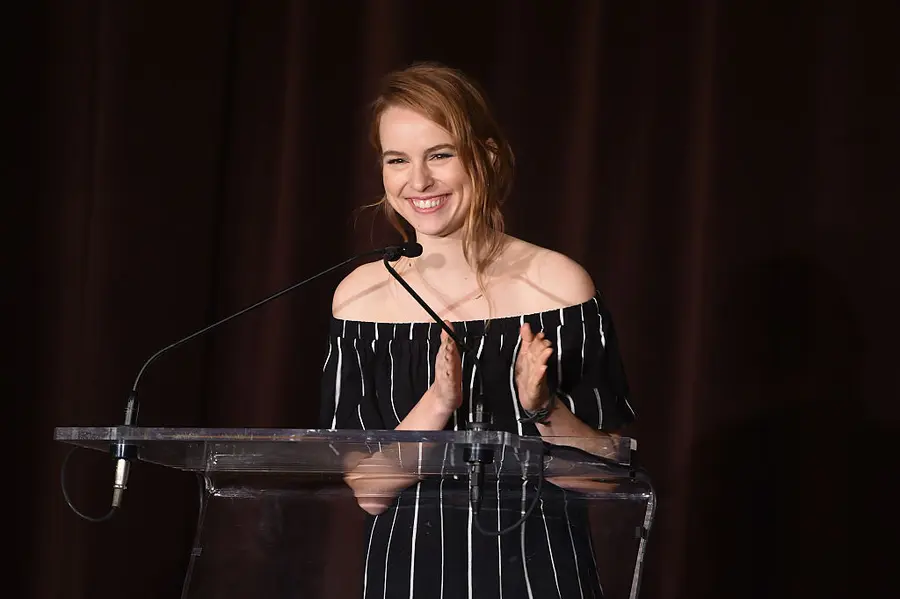
(Photo by Jamie McCarthy/Getty Images for Save The Children)
From Disney Star To Orbiting Stars
Bridgit Mendler first rose to fame in the late 2000s and early 2010s as one of Disney Channel's most recognizable faces. She broke through with a recurring role on "Wizards of Waverly Place" before becoming a household name as Teddy Duncan on "Good Luck Charlie," a four-season hit that anchored Disney's family sitcom lineup for years. At the same time, Mendler successfully launched a music career, signing with Hollywood Records and releasing the album "Hello My Name Is…," which produced the Platinum-certified single "Ready or Not." Unlike many Disney-era pop releases, her music leaned toward confident, self-written pop with crossover appeal, helping her stand out as more than a packaged TV star.
By the mid-2010s, Mendler had done what most Disney alumni hope to do, but few actually pull off: she exited the brand on her own terms. She continued acting in network sitcoms like "Undateable," appeared in films and streaming projects, and released music independently without chasing chart dominance or tabloid relevance.
Then, quietly and without fanfare, she began stepping away from entertainment entirely. Instead of doubling down on Hollywood, Mendler redirected her focus toward a staggeringly ambitious academic reinvention. She enrolled at the Massachusetts Institute of Technology (MIT) as a master's student and PhD candidate, but she didn't stop there. She simultaneously earned her J.D. from Harvard Law School, where she served as co-president of the Harvard Space Law Society. It was a dual-track education designed to master both the engineering of complex systems and the regulatory frameworks that govern them.
Northwood Space
That pivot set the foundation for an unusually sharp second act. In the early 2020s, Mendler co-founded Northwood Space. Mendler is not just a quiet investor or partner. She is the CEO.
Northwood Space was co-founded to tackle one of the space industry's most pressing and least glamorous problems: the growing bottleneck in ground-based satellite communications. While rockets and satellite launches capture public attention, the infrastructure required to move data between orbit and Earth has lagged badly behind the pace of deployment. Northwood's entire premise is built around fixing that imbalance.
Northwood's solution is to treat satellite ground infrastructure less like bespoke hardware projects and more like a modern telecommunications network. The company is developing mass-produced, phased-array ground stations that can be deployed rapidly and track multiple satellites simultaneously without relying on large, mechanically steered dish antennas. The goal is to dramatically increase capacity, reduce latency, and allow satellites to connect with Earth more frequently, effectively creating the equivalent of cell towers for space.
$100 Million Fundraising Round
In 2025, Northwood raised $30 million in Series A capital. And today it was revealed that Northwood had raised another $100 million in Series B capital. That's not all. With today's $100 million announcement, Northwood ALSO revealed it had secured a $49.8 million contract with the United States Space Force to help upgrade the "satellite control network," which, as Bridgit explained on a call with reporters today, "handles a huge variety of consequential space missions for our government."
Bridgit's Paper Wealth Estimate
We don't know how much of Northwood Brigit owns or the company's overall valuation, but we can make an educated guess for both. In a typical Series B round, investors usually acquire 15% to 20% of the company. Calculation:
- If $100M purchased 20% of the company: $100M / 0.20 = $500 million post-money valuation.
- If $100M purchased 12.5% (a common "premium" for hot defense/space tech): $100M / 0.125 = $800 million post-money valuation.
Long story short, the company is likely valued between $500 million and $800 million. Somewhat confirming that range is the fact that none of the press reports about today's fundraising round referred to the company as "Unicorn," which is reserved for a company worth north of $1 billion.
To estimate Bridgit Mendler's stake, we must track the likely dilution of her equity through Northwood's three major funding events (Seed, Series A, and Series B).
Equity & Ownership: Northwood Space
Founder Dilution & Funding History | Updated Feb 2026
| Funding Stage | Est. Dilution | Founder Pool |
|---|---|---|
| Seed Round $6.3M (Feb 2024) | ~20% | ~80% |
| Series A $30M (April 2025) | ~20% | ~64% |
| Series B $100M (Jan 2026) | ~20% | ~51% |
Based on the estimated valuation of $500M–$800M and an ownership stake of 10–15%, Bridgit Mendler's stake is likely worth between $50 million and $120 million.
If Northwood continues to prosper and someday achieves a valuation of $6.7 billion, assuming Bridgit owns 15%, she will be a billionaire.
Not too shabby for a former Disney star!
/2011/04/GettyImages-182088065.jpg)
/2010/06/Elon-Musk.jpg)
/2020/06/jb2.jpg)
/2015/07/David-Choe.jpg)
/2021/02/elon.jpg)
/2021/10/elon2.jpg)
/2009/11/George-Clooney.jpg)
/2019/10/denzel-washington-1.jpg)
/2019/04/rr.jpg)
:strip_exif()/2015/09/GettyImages-476575299.jpg)
:strip_exif()/2009/09/P-Diddy.jpg)
/2020/02/Angelina-Jolie.png)
/2009/09/Jennifer-Aniston.jpg)
/2018/03/GettyImages-821622848.jpg)
/2019/11/GettyImages-1094653148.jpg)
/2020/04/Megan-Fox.jpg)
/2020/01/lopez3.jpg)
/2009/09/Brad-Pitt.jpg)
/2020/06/taylor.png)
/2017/02/GettyImages-528215436.jpg)
/2009/09/Cristiano-Ronaldo.jpg)