The Billionaire BMW Heirs Insist They Don't Have An Easy Life

By on June 5, 2019 in ArticlesBillionaire News

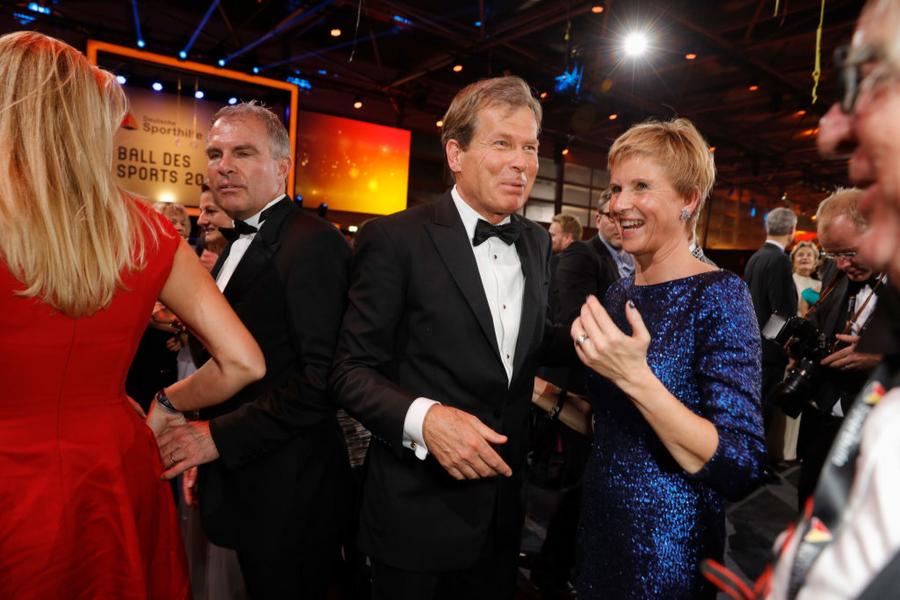
Susanne Klatten and Stefan Quandt are the children of the late German industrialist Herbert Quandt. Together, the siblings control nearly half of BMW, own stakes in several other major companies and command a combined fortune of more than $30 billion.

That makes them two of the richest people in Germany and places both siblings among the richest people in the world.

From the outside, their lives probably sound fairly easy. They inherited billions of dollars, sit on BMW's supervisory board and have enough money to spend the rest of their lives relaxing on yachts in the Mediterranean.

But according to Susanne and Stefan, being born into one of Europe's largest fortunes comes with pressures and responsibilities that outsiders do not understand.

In a rare joint interview with Germany's "Manager Magazin," the billionaire siblings opened up about inherited wealth, self-doubt, public criticism and the burden of protecting a vast industrial empire.

"Many believe that we are permanently sitting around on a yacht in the Mediterranean," Susanne said. "The role as a guardian of wealth also has personal sides that aren't so nice."

For the average person, that may be a difficult complaint to take seriously. Susanne currently has a net worth of approximately $18.6 billion. Stefan is worth approximately $15.5 billion.

But the siblings insist that money is not what motivates them.

"For both of us, it's certainly not the money that drives us," Stefan said. "Above all, it is the responsibility of securing jobs in Germany."

The Quandt Family Fortune

Susanne and Stefan inherited their wealth from their father, Herbert Quandt, who played a crucial role in rescuing BMW from financial collapse in the late 1950s.

BMW was struggling so badly that its management considered selling the company to Daimler-Benz. Herbert opposed the takeover, increased his investment and backed a restructuring plan that allowed BMW to remain independent.

The gamble paid off spectacularly.

BMW grew into one of the world's largest and most prestigious luxury automobile manufacturers. Herbert's stake eventually became the foundation of one of Germany's greatest family fortunes.

Herbert Quandt was also a Nazi-era industrialist whose companies used forced labor during World War II. The Quandt family's wartime history remained largely hidden from the German public for decades before receiving renewed scrutiny through documentaries and historical research.

The family fortune also has an unusual connection to Nazi propaganda minister Joseph Goebbels. Herbert's first wife, Magda, later married Goebbels, making Herbert's descendants part of a complicated family history that we explored in our article about Joseph Goebbels' surviving step-grandchildren becoming billionaires.

Herbert died in 1982. His holdings passed to his widow, Johanna Quandt, and their children, Susanne and Stefan. Johanna died in 2015, leaving the siblings with even larger stakes in BMW.

Today, Susanne owns approximately 19% of BMW, while Stefan controls nearly 24%. Combined, they own close to half of the company.

More Than BMW

BMW is the most valuable part of the family fortune, but it is not the siblings' only major asset.

Susanne controls Altana, a specialty chemicals company that was once owned by the Quandt family. She also owns a significant stake in carbon-fiber manufacturer SGL Carbon.

Stefan's holdings include interests in logistics company Logwin and pharmaceutical company Heel.

Both siblings serve on BMW's supervisory board, but they say they do not interfere in the company's daily operations.

Susanne described their role as that of advisers and long-term shareholders. They review major personnel and strategy decisions but leave the management board in charge of actually running the company.

Stefan said he does not call lower-level executives to demand information or second-guess management. Instead, he tries to give the company's leadership a "long leash."

That approach, he argued, gives BMW an advantage over companies controlled by short-term investors. BMW's executives do not have to spend their time worrying about hostile takeovers or making decisions designed solely to boost the share price for the next quarter.

The family's commitment was tested during BMW's disastrous ownership of British automaker Rover. BMW lost billions of dollars on Rover during the 1990s, creating one of the worst crises in the company's history.

Susanne and Stefan continued supporting BMW through the turmoil.

Self-Doubt and Inherited Responsibility

Stefan was only 30 years old when he received his first seat on a corporate board.

Rather than feeling immediately comfortable with his position, he said the appointment caused him to question whether he was qualified. He sometimes wondered whether he would have preferred spending several years working as an ordinary product manager or studying architecture.

"My starting point was never: So, now I come and show everyone how it's done," Stefan said. "Instead, it was a constant questioning, associated with self-doubt."

Susanne said inherited wealth creates a responsibility to prove that the next generation can preserve and expand what it received.

"Our potential stems from the role of being an heir and developing that," she explained. "We work hard on that every day."

The siblings said they constantly evaluate whether they remain the best owners for the companies in their portfolios. Susanne argued that a good shareholder must contribute more than money. An owner should provide stability, strategic guidance and a long-term perspective without interfering with management.

The Darker Side of Extreme Wealth

Susanne has experienced some of the personal dangers that can accompany enormous wealth.

In 1978, when she was a teenager, German police disrupted a plot to kidnap Susanne and her mother, Johanna.

Decades later, Susanne became involved with a man who secretly recorded their encounters and attempted to blackmail her for millions of dollars. Rather than quietly paying him, she reported the scheme to police. The man was arrested and convicted.

Experiences like those help explain why Susanne guards her privacy and rarely grants interviews.

She also rejected the idea that inherited wealth should simply be redistributed through higher taxes. Susanne argued that taking money from wealthy families would not automatically create a fair society.

In her view, fairness means giving people the opportunity to develop their abilities and pursue their own goals.

Who Would Trade Places With Them?

The original German interview carried the headline, "Who Would Want to Trade Places With Us?"

The most honest answer is probably: nearly everyone.

Susanne Klatten and Stefan Quandt inherited advantages that almost no one else will ever experience. They have never had to worry about paying rent, losing health insurance or surviving a missed paycheck. Each sibling could sell a fraction of his or her BMW holdings and live extravagantly for generations.

At the same time, they did not simply liquidate the family empire and disappear.

They chose to remain active shareholders in companies employing tens of thousands of people. Their decisions can affect factories, communities and the livelihoods of workers around the world.

That responsibility may indeed be stressful.

It is probably still preferable to not being worth $15 billion.

Did we make a mistake?
Submit a correction suggestion and help us fix it!
Submit a Correction