
Yesterday, we took a hard look at Prince Andrew's finances and uncovered something surprising: for all the castles, titles, and pageantry, he wasn't sitting on a secret royal fortune. In fact, stripped of allowances and bailouts, he was living on a military pension that wouldn't cover the heating bill of a single wing at Royal Lodge.
Which raises a bigger question.
People tend to assume that every member of the British royal family is born into staggering private wealth. After all, they grow up in palaces, travel with security details, and are surrounded by staff whose salaries are paid by… someone. The optics scream billionaire dynasty.
But that assumption is wrong.
Most of the glittering assets we associate with the monarchy — Buckingham Palace, Windsor Castle, the Crown Jewels, even the £15+ billion "Crown Estate" — are not private property. They are held in trust for the nation. They cannot be sold. They cannot be liquidated. They do not belong to the extended royal family in any personal sense.
The average member of the extended royal family is not privately wealthy and does not receive financial support from UK taxpayers. For example, Prince Andrew's daughters, Princesses Beatrice and Eugenie, do not receive A DIME of support from taxpayers or an allowance from their uncle, the King. They have normal corporate jobs. Beatrice works as the Vice President of Partnerships & Strategy at the tech company Afiniti, and Eugenie is a director at the Hauser & Wirth art gallery in London.
In reality, only TWO members of the British royal family actually have massive personal wealth:
- King Charles
- Prince William
The King and his heir are exceptionally rich thanks to two separate real estate empires created nearly 700 years ago — medieval financial machines that still funnel tens of millions of dollars per year into exactly two private bank accounts.
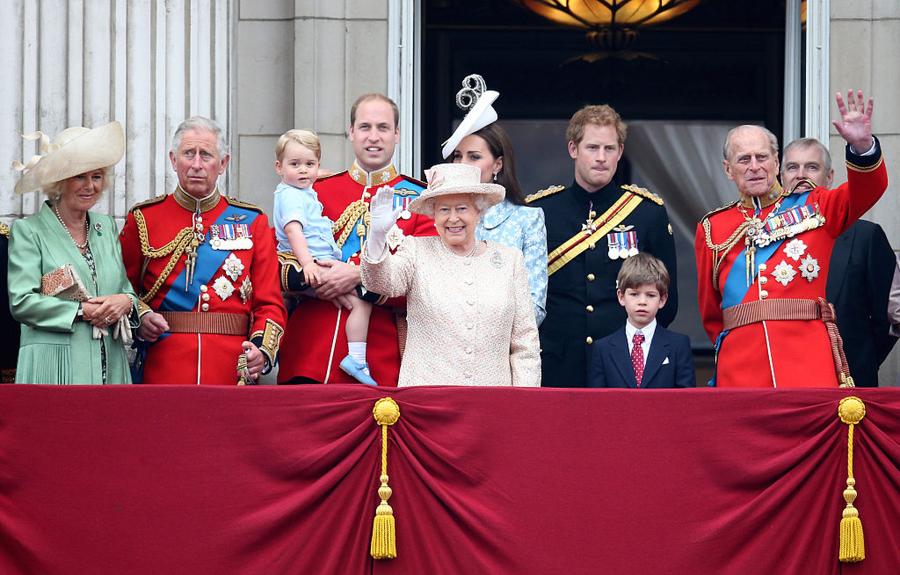
(Photo by Chris Jackson/Getty Images)
The Illusion of Royal Wealth: What They Don't Actually Own
Let's start with the biggest misconception.
When you picture royal wealth, you picture Buckingham Palace. Windsor Castle. The Tower of London. The Crown Jewels glittering under museum lights. Vast swaths of London real estate spitting off billions in rent every year. Many of these assets fall under what is known as "the Crown Estate" — a vast property portfolio valued at over £15 billion.
Surely "the Crown Estate" is owned by… the Crown, right? Well, for centuries, they did indeed belong to the family personally, but everything changed in 1760.
When 22-year-old King George III inherited the throne, he also inherited a financial disaster. At the time, the monarch was responsible for funding large portions of the civil government — judges, ambassadors, administrative costs — all while Britain was fighting the enormously expensive Seven Years' War.
The traditional Crown Lands simply weren't generating enough income to keep up with the bills. The monarchy was effectively drowning in debt.
So George III struck one of the most consequential financial bargains in British history.
He surrendered the revenue from the Crown Estate to Parliament. In exchange, Parliament agreed to take over the costs of running the civil government and provide the monarch with a fixed annual payment, then called the Civil List and today known as the Sovereign Grant.
It was essentially a bailout.
Since 1760, every new monarch — including King Charles III — has had to renew this arrangement. The Crown Estate remains tied to the Crown as an institution, but its profits are collected by the government. The monarch receives a percentage back to fund official duties, palace maintenance, staff, and travel.
Crucially, that money is not private wealth.
- The King cannot sell Buckingham Palace.
- He cannot mortgage Windsor Castle.
- He cannot auction off the Crown Jewels to buy a yacht.
For the 2024–25 financial year, the Sovereign Grant remained at £86.3 million. Following a review of Crown Estate profits, the percentage used to calculate the Grant was adjusted beginning in April 2024, leading to the significant increase to £132.1 million for 2025–26. There are plans for the Grant to rise further — potentially to around £137.9 million in 2026–27.
It's important to note that the Sovereign Grant is not personal income for the King — it is state funding for official roles and duties. But that doesn't mean the King, and his heir apparent (William), are left without personal income. And that brings us to two extremely important and extremely valuable hereditary trust funds that give the King and William extreme private wealth:
- The Duchy of Lancaster
- The Duchy of Cornwall
The Duchy of Lancaster
Unlike Buckingham Palace or the Crown Jewels, the Duchy of Lancaster is not held for the nation. It is a private estate that belongs exclusively to the reigning monarch. And it exists for one purpose: to generate personal income for the King.
The Duchy's origins stretch back to the 13th century, when vast tracts of land were confiscated from rebellious nobles and consolidated under royal control. But the truly pivotal moment came in 1399.
That year, Henry Bolingbroke — heir to the powerful House of Lancaster — returned from exile, overthrew his cousin King Richard II, and crowned himself King Henry IV. Overnight, he faced a dangerous financial dilemma. As monarch, his enormous Lancaster inheritance risked merging into the Crown's general holdings. If he ever lost the throne, his family could lose its private fortune.
So Henry moved quickly. One of his first acts as king was to legally separate the Duchy of Lancaster from the rest of the Crown's lands. He ring-fenced it. The estate would descend with the monarch, but not as state property. It would remain a distinct, private portfolio belonging personally to the Sovereign.
That 600-year-old legal maneuver still governs the estate today.
The Duchy of Lancaster now encompasses roughly 45,000 acres across England and Wales. Its holdings include prime commercial real estate in London — notably the Savoy Estate — as well as farmland, residential properties, historic buildings, and even limestone quarries.
The estate is currently valued at approximately £650–£680 million (roughly $820–$860 million). More importantly, it generates a steady annual surplus.
In recent years, the Duchy has produced between £24 and £27 million per year (roughly $30–$35 million) in net income. That money flows directly to the monarch as private income, traditionally referred to as the Privy Purse.
Technically, the income is tax-free. For years, that fact did not sit well with average British citizen taxpayers. To ease public criticism over its tax-exempt status, King Charles has voluntarily paid standard U.K. income tax on the income he receives from it, continuing a practice he adopted decades ago while heir to the throne.
Still, the structure remains extraordinary.
Every year, tens of millions of pounds in rental income, agricultural revenue, and commercial profits flow from a medieval land empire into the personal accounts of exactly one man: the King.
But the Duchy of Lancaster is only half of the story. The other medieval empire belongs not to the King, but to his heir. Today, that is Prince William. It will eventually be Prince George.
The Duchy of Cornwall: The Heir's 700-Year-Old Cash Machine
In 1337, King Edward III (Prince William's great-great-great-great-great-great-great-great-great-great-great-great-great-great-great-great-great-great-great-great-great-grandfather – 21 greats) wanted to solve a problem. His eldest son, Edward of Woodstock, was heir to the throne. But Edward III did not want his son financially dependent on the Crown while waiting to become king. He wanted him powerful. Independent. Flush with cash.
So he created something unprecedented.
Edward upgraded the Earldom of Cornwall into a Duchy and bundled it with vast tracts of land, feudal rights, tolls, and revenue streams — including the lucrative right to tax tin mining, one of medieval England's most valuable industries.
The Duchy of Cornwall controls roughly 130,000–135,000 acres across 23 counties in England and Wales. Its holdings include agricultural land, residential developments, commercial properties, coastal rights, Dartmoor Prison, and even the Oval cricket ground in London.
The Duchy's net assets are valued at more than £1 billion (roughly $1.3 billion).
But the real story isn't the valuation. It's the income.
The estate generates an annual surplus that flows directly to the Prince of Wales as private income. In the 2023–2024 financial year, William received approximately £23.6 million (about $30.4 million). In 2024–2025, he received roughly £22.9 million (about $30.9 million).
That income funds his household, private staff, security costs not covered by the state, charitable initiatives, and the personal lives of himself, Princess Catherine, and their three children.
Like the Duchy of Lancaster, the Duchy of Cornwall is classified as a "crown body" and does not pay corporation tax. William voluntarily pays income tax on the revenue he receives, though he has chosen not to disclose the exact amount of his tax bill.
Male vs. Female Heirs: A New Loophole
Under the original royal charter, the Duchy would belong exclusively to the eldest surviving male heir to the throne. Only the male heir.
That rule stood for nearly 700 years.
But modern Britain eventually had to confront medieval estate law.
On December 3, 2012, William and Kate announced they were expecting their first child. Under the succession rules that had governed Britain for centuries, if their firstborn had been a girl and a younger son followed, that daughter would have been displaced in the line of succession. The same male-preference system would also have denied her the Duchy of Cornwall.
History intervened to update the antiquated rules of the throne—but fixing the money required a brilliant legal loophole.
In April 2013, Parliament passed the Succession to the Crown Act, ending male-preference primogeniture and ensuring that the monarch's eldest child—regardless of gender—would inherit the throne.
But here is the catch: Parliament did change the 1337 Royal Charter for the Duchy of Cornwall. Legally, the title of "Duke of Cornwall" and the actual ownership of the $1.3 billion estate still belongs exclusively to a son. A female heir cannot inherit it.
So, what would have happened to the money if William and Kate's baby had been a girl?
To make sure a future Queen wouldn't be left penniless while waiting for the throne, Parliament utilized a financial backdoor built into the Sovereign Grant Act 2011. Under this law, if the heir apparent is female, the Duchy estate legally reverts back to the Monarch. However, the Treasury intercepts the revenues, reduces the Monarch's Sovereign Grant by the exact amount of the Duchy's surplus, and pays a grant of that exact same amount directly to the female heir.
Three months after the 2013 succession law passed, William and Kate welcomed a boy: His Royal Highness Prince George of Wales. So the 700-year-old tradition continues unbroken.
Put it this way: Let's say William and Kate's firstborn child had been a girl named… Georgina. And let's say a few years later, they welcomed a boy. Georgina would have been the first female heir who would have been allowed to take the throne to become Queen of England ahead of a younger male sibling. However, unlike all previous heirs to the throne, while she was waiting to become Queen, Georgina would NOT have inherited the duchy of Cornwall… but she WOULD have received the income it produced.
Did Queen Elizabeth Benefit from the Duchy of Cornwall?
First off, Elizabeth was never really supposed to be Queen in the first place. She only moved to the front of the line because of a massive royal scandal. In 1936, her uncle, King Edward VIII, famously abdicated the throne so he could marry his divorced American girlfriend, Wallis Simpson. Because Edward had no children, the crown passed to his younger brother, Elizabeth's father, who became King George VI.
At that moment, 10-year-old Elizabeth became the heir to the throne. But here is where the medieval math cost her a fortune:
Under the rules at the time, Elizabeth was the "Heir Presumptive," meaning she was the heir only because her father had no sons. If her parents had welcomed a baby boy even a year before the King's death, that boy would have bumped Elizabeth out of the top spot.
Because the 1337 Charter for the Duchy of Cornwall was strictly for "the eldest son of the Monarch," Elizabeth was legally barred from the estate.
As a result, from the age of 10 until she became Queen at 25, Elizabeth did not receive a single penny from the Duchy of Cornwall's multi-million dollar portfolio. Instead, all those profits went directly to her father, the King.
By contrast, both son Charles and grandson William became independent tycoons the moment they became heirs.
The Private Castles: The Exception to the Rule
While the Duchies of Lancaster and Cornwall represent the engine of the royals' liquid wealth, there is one final piece to the puzzle. King Charles does own a small handful of the family's famous assets outright.
Unlike Buckingham Palace or Windsor Castle, Balmoral Castle in Scotland and the Sandringham Estate in Norfolk are not state-owned. They are private property. Queen Victoria and Prince Albert bought Sandringham and Balmoral with their own money in the 19th century, and they have been passed down directly from monarch to monarch ever since.
When Queen Elizabeth II died in 2022, Charles inherited these vast estates—worth an estimated combined total of well over $200 million—along with her private racehorses, stamp collection, and personal investment portfolio. And thanks to a controversial 1993 agreement with the UK government, wealth passed from Sovereign to Sovereign is completely exempt from Britain's standard 40% inheritance tax.
The Bottom Line: A Two-Person Billionaire Club
When you zoom out and look at the actual balance sheet of the British Monarchy, the grand illusion dissolves.
The crown jewels, the London palaces, and the $15 billion Crown Estate belong to the nation. The actual, liquid, generational wealth of the family is entirely locked up in the Duchy of Lancaster and the Duchy of Cornwall. And by ancient design, the keys to those two vaults are held by exactly two men: the King and his Heir.
The system is brutally efficient at preserving wealth at the absolute apex of the hierarchy. Which brings us back to Prince Andrew, Princess Beatrice, and the rest of the extended Windsor family.
Because the massive revenues from the Duchies are legally restricted to the Sovereign and the Prince of Wales, the King's siblings and nieces have absolutely no institutional safety net. Unless the King decides to voluntarily gift them a private allowance out of his own Duchy profits, they are largely on their own. They must rely on personal inheritances, marry into wealth, or—shockingly—go out and get corporate jobs.
The British Royal Family projects the image of a fabulously wealthy dynasty. But behind palace doors, it's a billionaire club with a strict maximum capacity of two.
/2009/11/Prince-Charles.jpg)
/2014/07/GettyImages-477003500.jpg)
/2019/04/william-1.jpg)
/2013/07/GettyImages-117132409.jpg)
/2018/04/thumb.jpg)
/2021/03/GettyImages-995182746.jpg)
/2020/01/lopez3.jpg)
/2019/04/rr.jpg)
/2009/09/Cristiano-Ronaldo.jpg)
/2009/09/Brad-Pitt.jpg)
/2019/11/GettyImages-1094653148.jpg)
:strip_exif()/2009/09/P-Diddy.jpg)
/2009/09/Jennifer-Aniston.jpg)
/2020/04/Megan-Fox.jpg)
/2020/06/taylor.png)
/2019/10/denzel-washington-1.jpg)
:strip_exif()/2015/09/GettyImages-476575299.jpg)
/2020/02/Angelina-Jolie.png)
/2009/11/George-Clooney.jpg)
/2017/02/GettyImages-528215436.jpg)
/2018/03/GettyImages-821622848.jpg)