
/2018/04/GettyImages-515878326.jpg)
/2014/01/GettyImages-465224842.jpg)
/2018/11/Brendan-Iribe.jpg)
/2010/06/Elon-Musk.jpg)
/2019/03/alt.jpg)
/2022/09/Jason-Calacanis.jpg)
/2020/06/taylor.png)
/2009/09/Cristiano-Ronaldo.jpg)
/2018/03/GettyImages-821622848.jpg)
/2020/01/lopez3.jpg)
/2017/02/GettyImages-528215436.jpg)
/2019/11/GettyImages-1094653148.jpg)
/2019/10/denzel-washington-1.jpg)
/2009/09/Jennifer-Aniston.jpg)
/2009/09/Brad-Pitt.jpg)
/2020/04/Megan-Fox.jpg)
:strip_exif()/2009/09/P-Diddy.jpg)
What is Palmer Luckey's Net Worth?
Palmer Luckey is an American businessman and entrepreneur who has a net worth of $6 billion.
Palmer Luckey earned his first fortune as the founder of Oculus VR, which he sold to Facebook in 2014 for $2.7 billion. After departing Oculus, Luckey shifted his focus to national security technology and founded Anduril Industries, a defense company built around artificial intelligence, autonomous systems, and software-driven battlefield infrastructure. Anduril quickly became one of the fastest-growing defense startups of its generation, earning major government contracts and positioning itself as a next-generation alternative to traditional defense contractors. In June 2025, Anduril raised money at a $30 billion valuation. In March 2026, it raised money at $60 billion valuation.
Known for his inventive mind, unconventional personality, and appetite for disruptive ideas, Luckey has remained a polarizing and influential figure in both Silicon Valley and the defense world. His work reflects a rare ability to identify emerging technologies before they reach public consciousness and then push them into widespread adoption through engineering, design, and relentless iteration.
Facebook Earnings and Lawsuit
In 2016, Luckey donated $9,000 to a pro-Trump organization, a move that ignited a firestorm within the largely liberal culture of Facebook. This political friction eventually led to his dismissal in 2017. Luckey felt his ouster was illegal retaliation for his political views and hired an employment lawyer to challenge the tech giant.
The resulting legal battle ended in a $100 million settlement, representing the value of the stock awards he would have earned had he remained through July 2019. In total, Luckey's time at Facebook earned him roughly $600 million in combined cash and stock, providing the financial foundation for his entry into the defense industry.
Early Life
Palmer Freeman Luckey was born in 1992 and grew up in Southern California. From an early age he was drawn to electronics, gaming, robotics, and experimental hardware. His childhood bedroom gradually transformed into a personal workshop filled with salvaged components, home-built computers, and early prototypes of the devices he imagined. Luckey was largely self-taught. He spent countless hours on engineering forums, reading manuals, repairing old technology, and hacking together gadgets that combined optics, software, motors, and custom circuitry.
He attended Golden West College and later California State University, Long Beach, studying journalism and engineering while continuing to pour most of his energy into personal VR experiments. What began as a hobby soon evolved into a highly technical specialty.
Beginnings of Oculus
Luckey's obsession with creating an affordable, high-quality virtual reality headset led him to develop the first Oculus Rift prototype in his teens. At the time, VR existed mostly in research labs and high-end industrial applications. Consumer hardware was expensive, bulky, and largely ineffective. Luckey believed the technology could be miniaturized, optimized, and sold at a price point accessible to ordinary gamers.
His early prototypes caught the attention of prominent developers, particularly John Carmack, who integrated the device into a modified version of "Doom 3" and showcased it publicly. Interest surged, and Luckey partnered with Brendan Iribe, Michael Antonov, and Nate Mitchell to form Oculus VR in 2012. They launched a Kickstarter campaign that became one of the most talked-about crowdfunding efforts of its era, drawing thousands of supporters and proving that demand for consumer VR was real and growing.
Facebook Acquisition and Oculus Expansion
In 2014 Facebook acquired Oculus VR for approximately $2 billion in cash and stock. The acquisition marked one of the earliest major bets by a large technology company on immersive computing, social VR, and the idea of a metaverse. Luckey became a high-profile figure almost overnight, appearing at conferences, media events, and product demonstrations that showcased the potential of VR in gaming, communication, and education.
The company refined its prototypes into consumer hardware, leading to the release of the Oculus Rift and later the Oculus Quest. While Luckey's role eventually shifted, his early engineering vision set the direction for the company's hardware strategy and helped establish VR as a viable platform for mass-market entertainment.
Departure from Oculus
Luckey left Oculus in 2017. His exit drew widespread media attention and generated speculation regarding internal politics, public controversy, and the direction of the company under Facebook's leadership. Regardless of the circumstances surrounding his departure, his influence on the VR landscape remained profound. The headsets that followed continued to rely on fundamental technologies and design philosophies he helped develop.
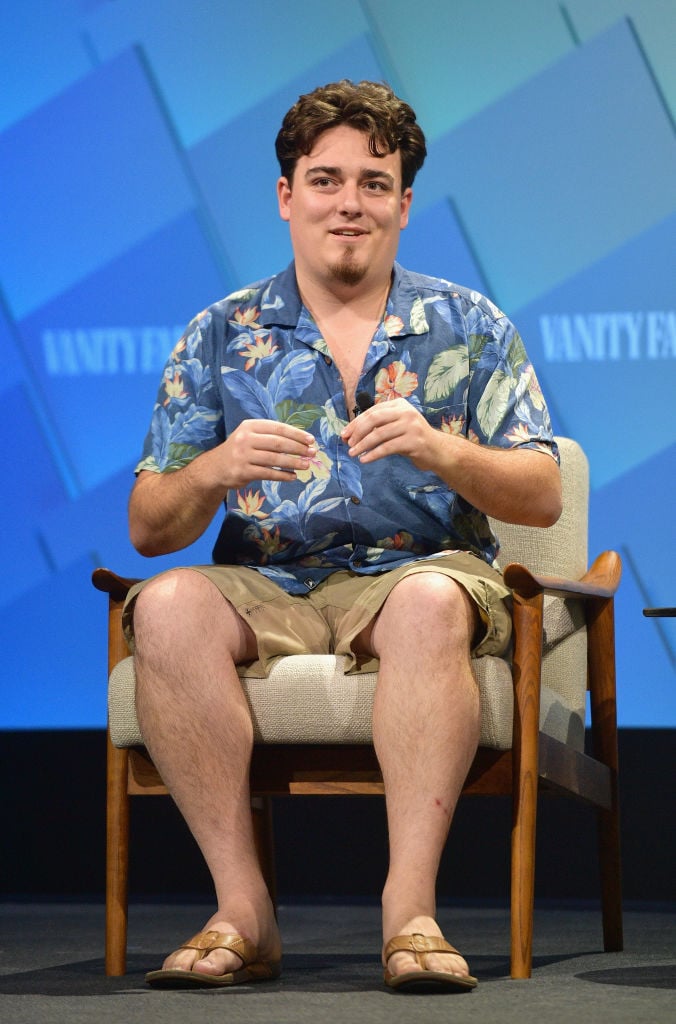
(Photo by Matt Winkelmeyer/Getty Images)
Anduril Industries
Following his exit from Facebook, Luckey founded Anduril Industries with the goal of bringing "Silicon Valley speed" to the Pentagon. The company's core product is Lattice, an AI-powered operating system that networks together drones, sensors, and weapons into a single autonomous web.
Anduril's growth has been unprecedented:
- Contract Success: The company has secured billions in contracts for counter-drone systems, autonomous underwater vehicles (Ghost Shark), and fighter jets.
- Manufacturing Power: In 2025, Luckey broke ground on a $1 billion "Arsenal" factory in Ohio to mass-produce autonomous weapons.
- Record Valuation: In March 2026, a funding round led by Thrive Capital and Andreessen Horowitz valued the company at $60 billion, doubling its valuation in less than a year.
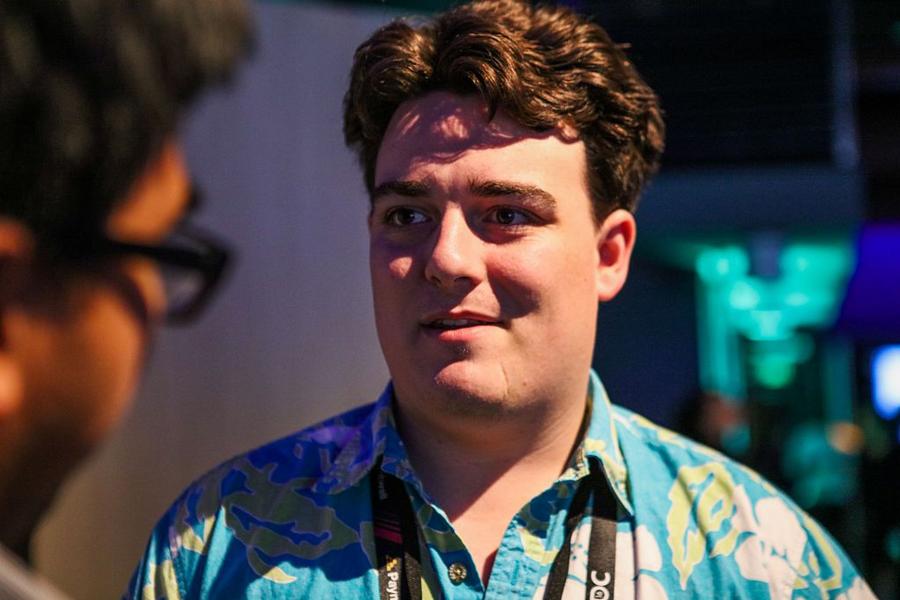
GABRIELLE LURIE/AFP/Getty Images
Personal Life
Luckey is married to his longtime partner, Nicole Edelmann. The couple, who share a passion for video games and cosplay, welcomed their first child in 2024. Luckey remains famous for his casual attire, frequently appearing in Hawaiian shirts and flip-flops even in high-level government meetings. He owns a significant collection of military hardware, including a retired Navy Special Operations boat and several helicopters. In 2021, Palmer's sister, Ginger Luckey, married former US Congressman Matt Gaetz.
Politics
A prominent supporter of the Republican party, Luckey has become a major political donor and an advisor to the Trump administration on defense modernization. While he previously identified as a libertarian, he now works closely with GOP leadership to reshape the U.S. military's approach to technology, emphasizing the need for AI and autonomous systems to maintain a competitive edge over global adversaries.
/2018/04/GettyImages-515878326.jpg)
/2018/11/Brendan-Iribe.jpg)
/2014/01/GettyImages-465224842.jpg)
/2025/02/missing_profile.jpg)
/2010/06/Elon-Musk.jpg)
/2015/12/GettyImages-167842816.jpg)
/2018/10/Jensen-Huang.jpg)
/2013/12/GettyImages-2741606.jpg)
/2020/02/Angelina-Jolie.png)
:strip_exif()/2015/09/GettyImages-476575299.jpg)
/2019/04/rr.jpg)
/2009/11/George-Clooney.jpg)