
Leonid Radvinsky, the secretive billionaire owner of OnlyFans, has died at the age of 43 following a battle with cancer. His death was announced today by the company, which said he passed away after a prolonged illness. An exact date was not provided, though early reports and online records suggest he may have died on March 20, 2026.
For someone who quietly built one of the most profitable and controversial internet businesses of the modern era, Radvinsky leaves behind remarkably little public record. He gave virtually no interviews, rarely appeared in photographs, and operated for years under the alias "AdminLeo." Yet despite that anonymity, he reshaped an entire industry and generated billions of dollars in wealth almost entirely behind the scenes.
OnlyFans didn't just mint a reclusive billionaire. It also created a new class of ultra-high-earning internet celebrities almost overnight. Creators like Danielle Bregoli, better known as Bhad Bhabie, reportedly earned $1 million in her first six hours on the platform and tens of millions more in the years that followed. Others, like Sophie Rain, have generated staggering sums in a short period of time, illustrating just how powerful the platform's direct-to-consumer model became. For many performers, OnlyFans flipped the economics of adult entertainment, turning what was once a studio-controlled business into one where individuals could build independent, highly lucrative empires.
At the time of his death, Radvinsky's net worth was estimated to be in the range of $5 billion to $7 billion, depending on how OnlyFans was valued. The platform he owned had become one of the most lucrative digital businesses in the world, producing hundreds of millions of dollars in annual profits with a headcount smaller than most mid-sized startups. Last year, the company was in talks to sell itself for as much as $8 billion, but those talks apparently fell apart.
Whatever the sale price, it's remarkable when you consider that Leonid's involvement with OnlyFans started with a $30 million acquisition…
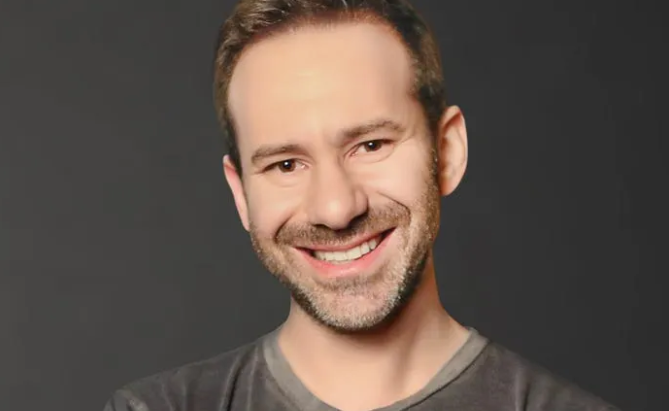
An Unlikely Path To A Billion-Dollar Empire
Leonid Radvinsky was born in Odesa, in what was then the Ukrainian Soviet Socialist Republic, before immigrating to the United States as a child. His family settled in the Chicago area, where he grew up and later attended Northwestern University, graduating summa cum laude with a degree in economics in 2002.
Long before that degree, however, Radvinsky had already begun building the foundation of his future fortune.
As a teenager in the late 1990s, he was deeply immersed in the early internet. At just 15 years old, he worked as a webmaster for a fan site dedicated to the video game "X-COM: Apocalypse." Around the same time, he launched his first real business: a company called Cybertania.
Cybertania operated a network of websites that trafficked in adult content referrals, particularly through so-called "password sharing" sites. These sites promised access to restricted adult content, often using provocative or misleading language to attract users. In reality, they primarily functioned as traffic funnels, directing visitors to third-party sites in exchange for affiliate commissions.
The business was wildly profitable. At one point, a single site was reportedly generating $5,000 per day in revenue, an enormous sum in the early 2000s.
But the tactics also drew scrutiny. Companies like Microsoft and Amazon sued Radvinsky over allegations of spamming and deceptive practices. The cases were ultimately settled out of court, and Radvinsky was never charged with any crime. Still, the experience established a pattern that would follow him throughout his career: operating in gray areas, pushing boundaries, and staying just on the right side of legality.
The Rise of "AdminLeo"
In 2004, Radvinsky launched what would become his first major financial success: MyFreeCams.
The site allowed users to watch live webcam performances and tip performers using a virtual currency system. It quickly grew into one of the largest platforms in its category, generating hundreds of millions of dollars in annual payments.
To the outside world, the site had no obvious founder. To insiders, he was simply "AdminLeo."
Radvinsky cultivated an almost mythological level of anonymity. He avoided photographs, rarely spoke publicly, and even banned users who attempted to share images of him online. In an industry often driven by personality and branding, he remained completely invisible.
Despite its success, MyFreeCams was not without controversy. Some performers later claimed that accounts were shut down without warning and that unpaid balances were withheld. Banks also flagged unusual financial activity tied to the company, including complex international payment flows and the use of offshore processors. No criminal charges were ever filed, but the scrutiny highlighted the opaque nature of the business.
By the mid-2010s, however, MyFreeCams was beginning to lose momentum. Search interest declined, competition increased, and Radvinsky began looking for his next move.
The $30 Million Bet That Changed Everything
In 2018, Radvinsky made what may go down as one of the greatest acquisitions in internet history.
He purchased a majority stake in a little-known UK-based startup called OnlyFans from its founders, Tim and Guy Stokely. The reported price was around $30 million.
At the time, OnlyFans was a modest subscription platform with roughly 1 million users and less than $100 million in annual revenue. Its core concept was simple: allow creators to charge fans directly for access to exclusive content.
The real innovation, however, was the revenue split.
Creators kept 80% of their earnings. The platform took 20%.
This was a radical departure from traditional adult platforms, where performers often earned a fraction of the revenue their content generated. By flipping the economics, OnlyFans turned creators into entrepreneurs and incentivized them to aggressively promote their own content.
Radvinsky immediately recognized the potential.
Under his ownership, OnlyFans leaned heavily into adult content, positioning itself as a direct-to-consumer platform for performers who wanted independence from studios and intermediaries. The model proved explosive.
Then came 2020.
As the COVID-19 pandemic forced billions of people indoors, OnlyFans experienced unprecedented growth. Millions of new creators joined the platform. Hundreds of millions of users signed up as paying subscribers.
Revenue skyrocketed.
- 2019: $304 million
- 2020: $2.2 billion
- 2021: $4.8 billion
- 2022: $5.6 billion
- 2023: $6.6 billion
- 2024: $7.2 billion
By 2024, OnlyFans had paid out more than $25 billion to creators since its launch.
And because the company operated with extraordinary efficiency, much of that revenue flowed straight to the bottom line.
The Quietest Cash Machine in Tech
What made OnlyFans truly remarkable was not just its growth but its profitability.
With just 46 employees, the company generated $1.4 billion in revenue and roughly $684 million in pre-tax profit in 2024. That kind of margin is almost unheard of, even in the tech world.
And because Radvinsky owned the majority of the company, he was able to extract enormous dividends.
- 2021: $284 million
- 2022: $338 million
- 2023: $472 million
- 2024: $701 million
In just four years, he paid himself nearly $1.8 billion.
At his peak, he was earning close to $2 million per day from a single website.
Unlike many tech billionaires, Radvinsky did not rely on stock market valuations or venture capital hype. His wealth was built on cold, hard cash. And then there's the creators who got rich…
Creators Earned Incredible Fortunes
And then there were the creators who got rich.
Radvinsky's billion-dollar payday was ultimately fueled by the 20% cut he took from the talent. But the 80% that flowed back to the creators minted an entirely new class of digital millionaires. While Radvinsky operated in the shadows, his top earners operated in the glaring spotlight of pop culture, pulling in annual incomes that dwarfed Wall Street CEOs, Hollywood A-listers, and professional athletes.
The platform fundamentally rewired the economics of fame. You didn't need a studio, a record label, or a traditional network. You just needed an audience willing to pay for access.
A look at the platform's most lucrative accounts highlights the staggering scale of the wealth being generated:
Bhad Bhabie (Danielle Bregoli): The rapper and internet personality joined OnlyFans in 2021, just days after her 18th birthday. She famously made $1 million in her first six hours on the site. A year later, tired of public skepticism, she posted a screen recording of her creator dashboard proving she had grossed over $52 million. By 2025, she claimed her lifetime net earnings had surpassed $75 million.
Sophie Rain: In late 2024, the 20-year-old creator broke the internet when she shared a screenshot of her dashboard showing she had made over $43 million in a single year—more than the annual salary of the NBA's highest-paid players. By late 2025, reports indicated her gross earnings had eclipsed the $85 million mark, driven by massive engagement and a fiercely loyal subscriber base.
Corinna Kopf: Originally known simply as a peripheral member of David Dobrik's YouTube "Vlog Squad," Kopf transitioned to OnlyFans and instantly became an economic powerhouse. She reportedly generated $4.2 million in her first 48 hours. By late 2024, at just 28 years old, she officially retired from the platform after publicly revealing she had amassed a staggering $67 million over three years.
Amouranth (Kaitlyn Siragusa): The reigning queen of Twitch streaming used OnlyFans as an unfiltered monetization funnel for her massive gaming audience. By methodically driving her viewers to her paywalled content, she generated over $1.5 million a month, ultimately pulling in an estimated $57 million from the platform before using her wealth to quietly acquire conventional businesses, including gas stations and real estate.
Piper Rockelle: Demonstrating the controversial, rapid-fire monetization of modern internet fame, the former child YouTube star launched her OnlyFans page on January 1, 2026, shortly after her 18th birthday. Leveraging her massive, lifelong social media following, she claimed to have generated $3.4 million in her first 24 hours alone, breaking Sophie Rain's previous single-day record.
Bella Thorne: The former Disney star temporarily crashed the OnlyFans servers when she launched her page in 2020. She generated $1 million in her first 24 hours and reportedly over $11 million in her first week, instantly validating the platform as a mainstream cash machine.
Fame Without Visibility
Despite controlling one of the most talked-about platforms in the world, Radvinsky remained almost completely unknown to the public.
There are only a handful of verified photos of him. He rarely attended public events. He did not give interviews. Even his LinkedIn profile made no mention of OnlyFans.
He lived in Florida, owned luxury real estate, and quietly invested in cryptocurrency and NFTs. He also operated a small venture capital firm called Leo, which focused on technology investments.
To most users of OnlyFans, he simply did not exist.
And that may have been exactly how he wanted it.
Controversy and Criticism
As OnlyFans grew, so did criticism.
The platform faced ongoing scrutiny over content moderation, age verification, and financial practices. Some creators accused the company of withholding payments or shutting down accounts without explanation. Others raised concerns about security after reporting hacks that drained their earnings.
In 2021, OnlyFans briefly announced it would ban explicit content, citing pressure from banking partners. The decision was reversed just days later after widespread backlash.
There were also legal challenges. A lawsuit filed in the United States accused the company of attempting to suppress competitors through improper relationships with social media platforms. OnlyFans denied the allegations.
Despite these issues, the business continued to grow, and its core model remained intact.
To Sell or Not to Sell
In the years leading up to his death, Radvinsky explored the possibility of selling a stake in OnlyFans.
Various reports suggested the company could be valued between $5 billion and $8 billion. Potential buyers included billionaire media executive Scooter Braun, private equity firms, and investment groups, though a deal was never finalized.
The hesitation was understandable.
OnlyFans was generating hundreds of millions of dollars in annual profit. Selling the business would have provided a massive one-time payout, but holding onto it meant a steady stream of income that could last for decades.
It was, in many ways, the ultimate owner's dilemma.
Who Inherits OnlyFans?
The death of a sole owner usually triggers a chaotic scramble for control. But true to form, Radvinsky appears to have planned for this quietly and methodically.
He is survived by his wife, Katie Chudnovsky, and their four children. While the family has requested privacy and released no public details regarding the estate, the future of OnlyFans likely rests within a legal structure Radvinsky established well before his health began to fail.
In 2024, Radvinsky quietly transferred his ownership of Fenix International—the UK-based parent company of OnlyFans—into a private trust. It is highly probable that his wife and children are the primary beneficiaries, effectively making them the new owners of the internet's most lucrative cash machine.
But inheriting OnlyFans is not like inheriting a traditional tech startup. The platform remains culturally controversial, heavily scrutinized by regulators, and constantly at the mercy of banking partners and payment processors. For a family that has historically shunned the spotlight just as much as Radvinsky did, maintaining control of a high-profile adult entertainment empire presents a complex burden.
This reality makes the previously stalled sale talks even more significant. The trust now faces the exact same owner's dilemma Radvinsky did: hold onto the platform to collect its massive annual dividends, or seek a clean break? With Radvinsky gone, the push for an acquisition—potentially cashing out for upwards of $5.5 billion—may accelerate, turning his unprecedented digital legacy into a final, historic payday for his heirs.
A Strange and Unmatched Legacy
Leonid Radvinsky's story is one of the most unusual in modern business history. He built one of the greatest cash-flow businesses the internet has ever seen.
He was not a household name. He did not build a consumer brand in the traditional sense. He did not give keynote speeches or appear on magazine covers.
Instead, he quietly acquired a small, struggling startup and turned it into a global powerhouse that reshaped an entire industry.
He created a system where millions of people could earn a living directly from their audience, without intermediaries. In doing so, he generated billions of dollars in economic activity and amassed a personal fortune that rivaled some of the biggest names in tech.
And yet, most people had never heard of him. That contradiction may be the most fitting summary of his life.
/2017/03/db5-1.jpg)
/2025/03/GettyImages-931650740.jpg)
/2024/07/danielle.jpg)
/2023/12/danielle-boca-house.jpg)
/2022/04/danielle2.png)
/2022/04/GettyImages-1167934133.jpg)
/2020/06/taylor.png)
/2009/09/Jennifer-Aniston.jpg)
/2020/01/lopez3.jpg)
/2019/04/rr.jpg)
/2018/03/GettyImages-821622848.jpg)
/2009/11/George-Clooney.jpg)
/2019/10/denzel-washington-1.jpg)
/2009/09/Brad-Pitt.jpg)
:strip_exif()/2015/09/GettyImages-476575299.jpg)
/2020/02/Angelina-Jolie.png)
/2009/09/Cristiano-Ronaldo.jpg)
:strip_exif()/2009/09/P-Diddy.jpg)
/2019/11/GettyImages-1094653148.jpg)
/2017/02/GettyImages-528215436.jpg)
/2020/04/Megan-Fox.jpg)