When John Paul DeJoria came home from work one evening in the 1960s, his wife hurried past him on the stairs, said she needed to go to the store, and drove away in the family's only car. Upstairs, their two-and-a-half-year-old son was sitting beside a small pile of clothes. There was a note. His wife wasn't coming back, and she was leaving their child with him.
DeJoria later said she had also emptied their bank account and stopped paying the rent and utilities without telling him. An eviction was already in motion. Within days, the 22-year-old father and his little boy were sleeping in a borrowed 1951 Cadillac with a broken water pump.
To buy food, DeJoria searched vacant lots and the areas around soda machines for discarded bottles. Stores paid two cents for a small one and five cents for a large one. He would collect whatever he could find, redeem the bottles, and use the money to feed his son.
This wasn't the beginning of a business venture. It was an emergency, and DeJoria had no idea when it would end.
Learning to Survive a Closed Door
DeJoria knew what it was like to live with very little. He grew up in Los Angeles, the son of an Italian immigrant father and a Greek immigrant mother who separated when he was two. His mother worked hard to support him and his brother, and for a period the boys stayed with a foster family during the week. By nine, he was selling Christmas cards. At 11, he delivered newspapers before school and handed over much of his earnings at home.
After high school, he joined the Navy. The Cadillac episode came a few years after his return to civilian life. It ended when a biker friend named Lee Meyers offered him and his son a spare room. Friends helped with child care while DeJoria worked. He had been saved from the immediate crisis, but he was still a long way from financial security.
He worked a string of jobs, including janitorial work, insurance sales, and selling Collier's encyclopedias door-to-door. The encyclopedia job taught him something that would prove more useful than almost any business degree: how to hear no, walk to the next house, and make the next pitch as enthusiastically as the first. While the typical salesman reportedly lasted just three days, DeJoria stayed for three years.
In 1971, a friend persuaded him to try the professional hair-care industry. He joined Redken at $600 a month and worked his way into management, eventually overseeing its chain-salon and beauty-school divisions. He was fired in 1975, despite his success. At Fermodyl, he helped increase sales but was dismissed again. At the Institute of Trichology, he earned so much in commissions that, according to his account, he was making more than the owner. That job ended, too.
Three firings might have convinced someone else to leave the industry. DeJoria had a different takeaway: he'd learned how the products were made, how salons bought them, how distributors operated, and what actually persuaded customers to reorder. What he hadn't figured out was how to own the business rather than just sell for it.
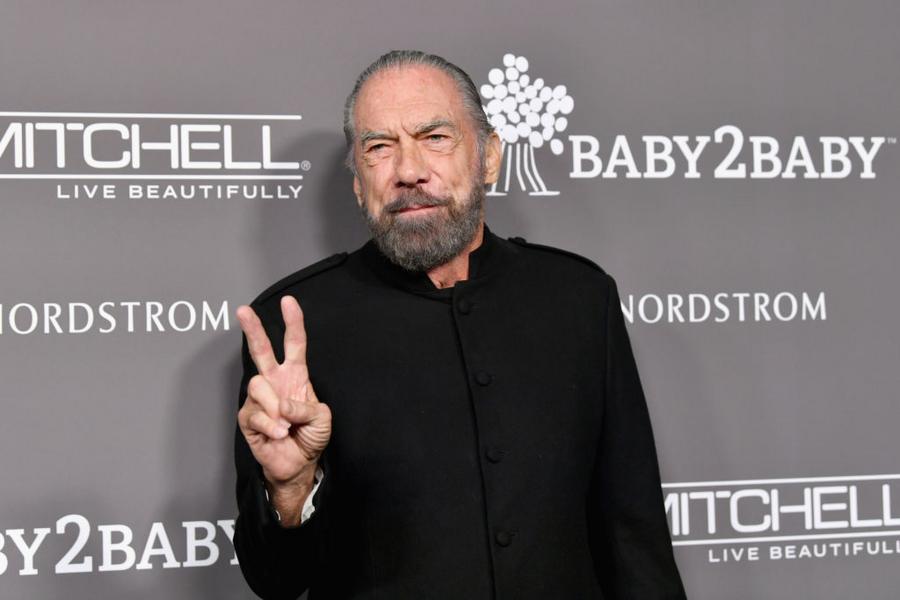
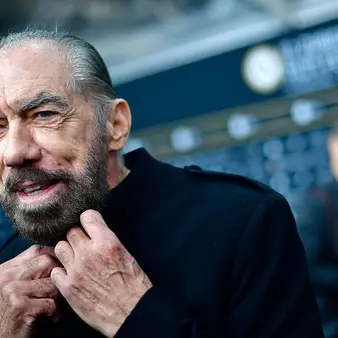
Emma McIntyre/Getty Images
A Half-Million-Dollar Plan That Fell Apart
DeJoria's opportunity came through his friend Paul Mitchell, a celebrated hairstylist who understood hair and product development but needed someone who understood business. In 1980, they planned to start a professional hair-care company together. The proposed arrangement was straightforward: DeJoria and Mitchell would each own 30%, and an investor contributing $500,000 would get the remaining 40%.
They thought the funding was coming. DeJoria left his existing work to concentrate on the launch. His marriage was also coming apart, and he left his wife the house, their money, and the better car. Then the promised $500,000 failed to materialize.
For the second time in his life, John Paul DeJoria was homeless. This time he slept in an aging Rolls-Royce, parking along Mulholland Drive, and sometimes showered at the public facilities in Griffith Park. He was approaching 36 years old. He had a prospective business partner, a business plan, and almost no money to execute it.
One day, actress Joanna Pettet, an acquaintance from years earlier, spotted him living in the car. She offered him a room for a couple of months. DeJoria accepted and even printed business cards with her telephone number, making a fledgling company that had no office sound considerably more established than it was.
With no replacement investor in sight, Mitchell and DeJoria decided to proceed anyway. Their combined startup capital, some of it borrowed, was just $700.
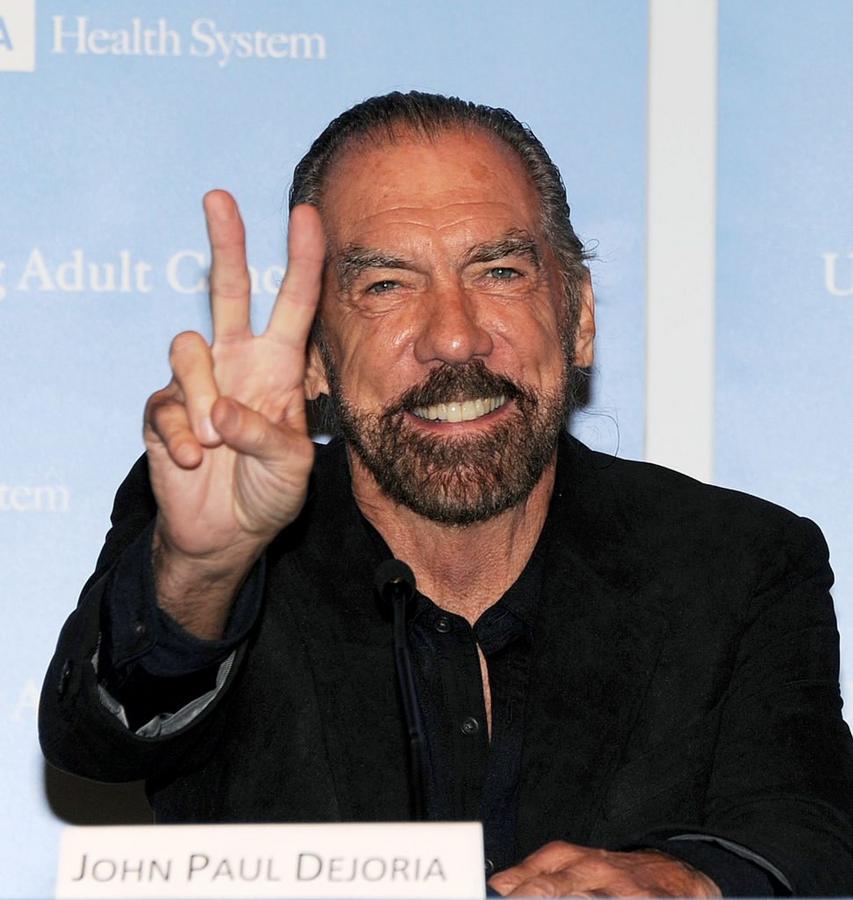
John Paul DeJoria – Billionaire /Kevin Winter/Getty Images
Seven Hundred Dollars and a Lot of Shampoo
Their first products were two shampoos and a leave-in conditioner, designed for professional stylists rather than supermarket shelves. They convinced suppliers to produce an initial run on credit and spent their precious cash on getting the packaging ready. The bottles were white with simple black lettering because color printing cost more than they could afford. What began as a budget decision became one of the industry's most recognizable designs.
DeJoria loaded products into his car and visited salons one by one. Most said no. He and Mitchell demonstrated the products, trained stylists, and offered to take back unsold bottles if a salon wasn't satisfied. They weren't buying expensive advertising; they were betting that if a hairdresser liked the results, the hairdresser would reorder and recommend the products to customers.
At one point, DeJoria persuaded a dozen salons to place orders and write checks with the payee line blank. He carried those checks to a beauty distributor to prove he already had customers waiting. The distributor agreed to take 2,000 bottles if DeJoria helped sell them. DeJoria even offered a 5% discount to get paid on delivery rather than wait the usual 45 days. He needed the cash to keep the company moving.
The numbers began to move. John Paul Mitchell Systems recorded $1.37 million in sales in fiscal 1982. By 1985, annual sales had passed $10 million; by 1988, they had reached $60.7 million. A company that nearly collapsed before its first shipment was turning into a major name in professional hair care.
Then, in 1989, Paul Mitchell died of pancreatic cancer. DeJoria continued building the business they had founded, maintaining its commitment to professional salons. But even as the shampoo company grew, a friend had begun talking to him about a product about which he knew almost nothing. The idea had nothing to do with salons.
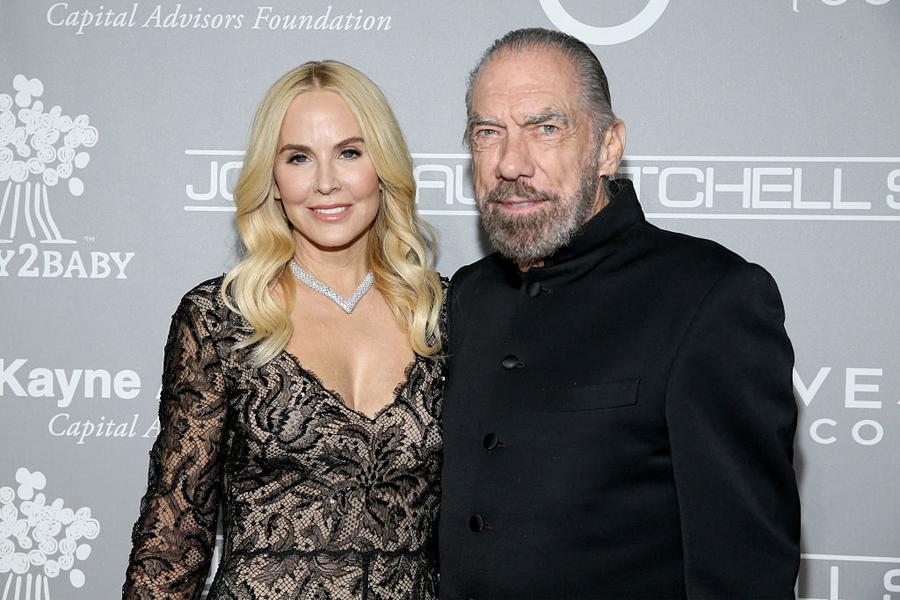
Alberto E. Rodriguez/Getty Images
The $37 Bottle Nobody Took Seriously
DeJoria had asked his friend Martin Crowley to bring back some good tequila from Mexico. Crowley returned fascinated by a hand-blown bottle and the possibility of producing a tequila smooth enough to sip, not just shoot or bury in a margarita. Working with tequila expert Francisco Alcaraz, they developed the product that became Patrón.
In 1989, DeJoria financed the first 12,000 bottles. The retail price was $37 each, at a time when many Americans were accustomed to tequila costing a fraction of that amount. Distributors were skeptical. The two men were trying to sell a luxury version of a spirit that much of the U.S. market didn't yet regard as luxurious.
There was no instant explosion in sales. Crowley did much of the difficult work of building the spirits business while DeJoria continued running Paul Mitchell. The partners fought for distribution, handed out samples, and introduced Patrón to the network of stylists and salon owners who attended Paul Mitchell events. Later, executive Ed Brown helped turn it into a major international brand. Slowly, the expensive tequila began finding its audience.
Patrón also endured a complicated ownership battle. Crowley died in 2003, leaving his interest in the company to benefit a charitable trust supporting children's education. DeJoria claimed a contractual right to buy that interest for $43 million, but the estate challenged the arrangement as Bacardi pursued its own interest in the company. Years of legal maneuvering ended in a 2008 settlement. Bacardi acquired a 30% stake, and DeJoria emerged with the other 70%.
The brand continued expanding. By the time its founders' ambitions had been fully realized, Patrón had helped change how Americans thought about tequila. Instead of being an inexpensive spirit for shots, premium tequila had become a luxury category, with Patrón one of its most recognizable names. The spirits business was producing more than three million cases annually. Bacardi already owned nearly a third of the company, and eventually it wanted the rest.
On January 22, 2018, Bacardi announced an agreement to acquire the rest of Patrón at a $5.1 billion enterprise valuation. The transaction closed that April. DeJoria sold his approximately 70% stake, a holding corresponding to roughly $3.57 billion of the headline valuation before debt, taxes, and other adjustments.
The Empire He Chose Not to Sell
The striking thing about DeJoria's two biggest companies is that he made opposite decisions about what to do with them. He sold Patrón. But in 2007, he had established a 360-year trust intended to keep John Paul Mitchell Systems independent, family-operated, and committed to professional hairdressers. His daughter Michaeline later became CEO, carrying that business into another generation.
His fortune, which today stands at $3 billion, also made possible the kind of giving he had learned about before he had any money. DeJoria remembers being six when his mother handed him and his brother a dime to put in a Salvation Army collection bucket. The family could hardly spare it, but she wanted them to know that someone else could still need help more. In 2011, he joined the Giving Pledge, committing to donate at least half his fortune to charitable causes.
He likes to say that "success unshared is failure." It's a philosophy informed by the people who helped him when he had nothing: the biker who found a room for a father and son, and the actress who opened her home to a man trying to start over.
When DeJoria was 22, a discarded bottle was worth two or five cents to him. Decades later, bottles bearing names he had helped create were sold all over the world. One company became a multibillion-dollar acquisition. The other was the business he wanted his family to keep for generations.