
/2014/06/GettyImages-135478301.jpg)
/2017/01/Josef-Fares-1.jpg)
/2010/05/Shigeru-Miyamoto.png)
/2016/01/Vince-Zampella.jpg)
/2019/12/sam-houser.png)
/2018/06/GettyImages-528995890.jpg)
/2020/01/lopez3.jpg)
/2019/10/denzel-washington-1.jpg)
/2019/04/rr.jpg)
:strip_exif()/2015/09/GettyImages-476575299.jpg)
/2009/09/Jennifer-Aniston.jpg)
/2019/11/GettyImages-1094653148.jpg)
/2020/02/Angelina-Jolie.png)
/2020/06/taylor.png)
/2018/03/GettyImages-821622848.jpg)
/2009/09/Brad-Pitt.jpg)
/2009/11/George-Clooney.jpg)
What is Hideo Kojima's Net Worth?
Hideo Kojima is a Japanese video game designer who has a net worth of $30 million. Hideo Kojima is widely regarded as one of the most influential auteurs in the history of interactive entertainment. Over a career spanning nearly four decades, Kojima fundamentally reshaped expectations for what video games could be, blending cinematic storytelling, philosophical themes, experimental mechanics, and meticulous world-building into blockbuster commercial releases. He is best known as the creator of the "Metal Gear" franchise, which helped popularize stealth-based gameplay and introduced sophisticated narrative structures rarely seen in games at the time.
Kojima's work is defined by his willingness to challenge conventions. He routinely broke the fourth wall, blurred the line between player and character, and treated games as a medium capable of exploring politics, identity, warfare, surveillance, and human connection. His productions combined Hollywood-level presentation with idiosyncratic humor, long-form cutscenes, and self-referential commentary on the nature of media itself. After decades at Konami, Kojima made a high-profile departure and founded his independent studio, Kojima Productions, where he continued pushing creative boundaries with titles like "Death Stranding." By merging auteur-driven vision with large-scale production, Kojima became one of the rare game designers whose name alone functions as a global brand.
Early Life
Hideo Kojima was born on August 24, 1963, in Setagaya, Tokyo, Japan, and spent part of his childhood in the Kansai region. He developed an early passion for film, literature, and science fiction, frequently citing movies as his primary creative influence. Kojima initially aspired to become a filmmaker, but concerns about job stability led him to pursue work in the emerging video game industry during the 1980s. His background in cinema would later become one of the defining characteristics of his games.
Konami and the Birth of Metal Gear
Kojima joined Konami in 1986 as a planner and designer. His breakthrough came with "Metal Gear" (1987), developed for the MSX2 home computer. Technical limitations prevented the use of action-heavy combat, prompting Kojima to design a game focused on stealth and avoidance rather than direct confrontation. This design choice became the foundation of an entirely new genre.
The franchise reached global prominence with "Metal Gear Solid" (1998) on the original PlayStation. The game combined cinematic cutscenes, voice acting, complex characters, and a layered political narrative centered on nuclear proliferation and military power. It was a massive commercial and critical success and established Kojima as a leading creative figure in the industry.
Expanding the Metal Gear Saga
Kojima continued to push narrative and mechanical boundaries with sequels including "Metal Gear Solid 2: Sons of Liberty," "Metal Gear Solid 3: Snake Eater," "Metal Gear Solid 4: Guns of the Patriots," and "Metal Gear Solid V: The Phantom Pain." These titles explored themes such as information control, artificial intelligence, genetic determinism, and the cyclical nature of war.
"Metal Gear Solid 2" in particular became famous for subverting player expectations, using misinformation and meta-commentary years before such ideas became mainstream topics. Across the series, Kojima blurred gameplay and storytelling, often forcing players to question their own role within the narrative.
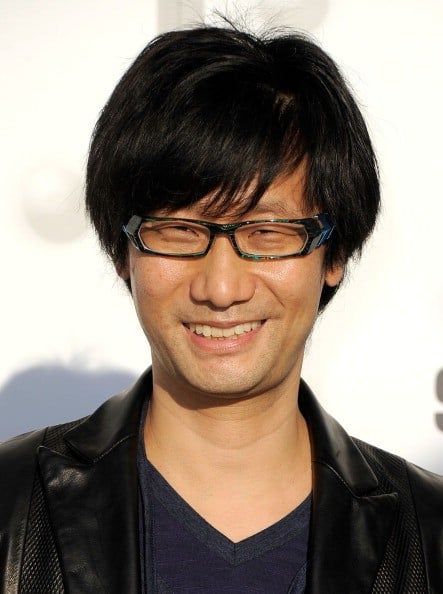
Frazer Harrison/Getty Images
Creative Tensions and Departure from Konami
Despite the success of the "Metal Gear" franchise, Kojima's relationship with Konami grew increasingly strained as the company shifted its business priorities. In 2015, after completing "Metal Gear Solid V: The Phantom Pain," Kojima departed Konami under highly publicized circumstances. His exit marked the end of one of the most successful creator-publisher partnerships in video game history.
Kojima Productions and Independence
Later in 2015, Kojima founded Kojima Productions as an independent studio, entering into a publishing partnership with Sony Interactive Entertainment. His first project under the new studio was "Death Stranding," released in 2019. The game starred major film actors and presented an unconventional gameplay loop centered on delivery, isolation, and connection.
Initially divisive, "Death Stranding" was praised for its ambition and originality. Its themes of rebuilding society through cooperation resonated strongly with players and critics over time, cementing Kojima's reputation as a creator willing to take creative risks even at blockbuster scale.
Style, Influences, and Cultural Impact
Kojima is known for his cinematic direction, long cutscenes, licensed music choices, and dense lore. He frequently collaborates with filmmakers, actors, and composers, and his work often reflects his love of Western cinema and literature. Unlike most game directors, Kojima has cultivated a public-facing persona, engaging directly with fans and positioning himself as a visible author of his work.
His influence can be seen across modern game design, particularly in narrative-driven titles and stealth mechanics. Few designers have achieved comparable name recognition or creative autonomy within the industry.
/2014/06/GettyImages-135478301.jpg)
/2018/06/GettyImages-528995890.jpg)
/2017/01/Josef-Fares-1.jpg)
/2026/03/Will-Wright.png)
/2010/05/Shigeru-Miyamoto.png)
/2016/01/Vince-Zampella.jpg)
/2019/12/sam-houser.png)
/2021/07/mark.jpg)
/2017/02/GettyImages-528215436.jpg)
/2009/09/Cristiano-Ronaldo.jpg)