
/2010/03/Jesse-Jackson.jpg)
/2017/01/John-Lewis.jpg)
/2014/11/GettyImages-113297054.jpg)
/2009/11/Barack-Obama-1.jpg)
/2014/07/GettyImages-451122000.jpg)
/2010/03/GettyImages-911943150.jpg)
/2020/01/lopez3.jpg)
/2018/03/GettyImages-821622848.jpg)
/2020/04/Megan-Fox.jpg)
/2019/10/denzel-washington-1.jpg)
/2009/09/Brad-Pitt.jpg)
/2020/06/taylor.png)
/2009/11/George-Clooney.jpg)
:strip_exif()/2009/09/P-Diddy.jpg)
/2019/11/GettyImages-1094653148.jpg)
/2009/09/Cristiano-Ronaldo.jpg)
/2009/09/Jennifer-Aniston.jpg)
What was Jesse Jackson's Net Worth and Salary?
Jesse Jackson was an American civil rights leader, Baptist minister, and political activist who had a net worth of $4 million. Jesse Jackson died on February 17, 2026, at the age of 84.
A protégé of Dr. Martin Luther King Jr., Jesse Jackson rose to national prominence in the 1960s as one of the most visible figures of the civil rights movement. He worked alongside King in the Southern Christian Leadership Conference (SCLC) and later founded his own organizations—the Operation PUSH (People United to Save Humanity) in 1971 and the National Rainbow Coalition in 1984—to promote economic empowerment and political representation for African Americans and other marginalized communities.
Jackson became a powerful voice for progressive causes, pushing for voting rights, education, and fair employment, while also using his platform to mediate conflicts and promote diplomacy abroad. His charisma and oratorical skill helped make him a unifying figure across generations of activists. In 1984 and 1988, he ran for the Democratic presidential nomination, becoming the first African American candidate to mount a serious campaign for the office. His 1988 campaign, in particular, made history by winning several primaries and helping to expand the Democratic Party's base to include more Black, Latino, and working-class voters.
Throughout his career, Jackson served as an unofficial ambassador and humanitarian, negotiating the release of hostages and political prisoners in Syria, Cuba, and Iraq. His work earned him global recognition, including the Presidential Medal of Freedom in 2000. Despite facing criticism and controversy at times, Jackson's impact on American politics and civil rights remains profound. Through his leadership, he helped pave the way for future generations of Black politicians and activists, and his enduring message of inclusion, equality, and empowerment continues to influence social justice movements today.
Financial Disclosures
According to a Chicago Tribune investigation in 1987, Jesse's wife Jacqueline held the majority of the family's assets in her name. According to the article, at that time, the family owned assets valued at $400-600,000. After adjusting for inflation, that's the same as around $1.2 – $1.7 million in today's dollars. In March 2001, Jesse submitted a personal financial disclosure, which showed he was receiving a total of $120,000 per year in salary at that time from the four organizations he controlled. He was also receiving $5,000 per week in salary from CNN for his show "Both Sides with Jesse Jackson." The disclosure further revealed that his organizations spent $614,000 on travel for Jesse in the previous year, but was also reimbursed $450,000 by the Democratic National Committee a part of a "get out the vote" effort.
Early Life
Jesse Louis Jackson Sr. was born Jesse Louis Burns on October 8, 1941, in Greenville, South Carolina. His mother, 16-year-old Helen Burns, became pregnant by her 33-year-old married neighbor, Noah Louis Robinson, a former boxer. In 1943, Helen married Charles Henry Jackson, who later adopted Jesse and gave him his surname. Jackson maintained contact with both men throughout his life, often reflecting that the tension between abandonment and acceptance shaped his drive, ambition, and understanding of identity.
He grew up in rigidly segregated Greenville, where Jim Crow laws dictated nearly every aspect of daily life. He later recalled being forced to use separate entrances, drink from separate fountains, and sit at the back of buses. Those early humiliations left a lasting imprint. At the same time, teachers and classmates recognized his charisma and confidence. Even as a boy, he displayed the verbal agility and self-assurance that would define his public life.
Education
Jackson attended Sterling High School, Greenville's segregated Black high school, where he excelled academically and athletically. He graduated tenth in his class, served as student body president, and lettered in football, basketball, and baseball. In 1959, he accepted a football scholarship to the University of Illinois, turning down a minor league baseball opportunity.
The experience at Illinois exposed him to a different but still painful form of racism. Feeling isolated at the predominantly white institution, he transferred after his freshman year to North Carolina A&T State University in Greensboro, a historically Black college. There he thrived. He became a campus leader, served as student body president, joined Omega Psi Phi fraternity, and grew increasingly involved in civil rights activism inspired by the Greensboro sit-in movement that had begun there in 1960.
Jackson earned a bachelor's degree in sociology in 1964 and enrolled at Chicago Theological Seminary to pursue a Master of Divinity degree. The escalating civil rights struggle, particularly the violence in Selma in 1965, pulled him deeper into activism. In 1966, he left the seminary before completing his degree to work full time in the movement. The seminary later awarded him his degree in 2000 in recognition of his academic work and decades of ministry and activism.
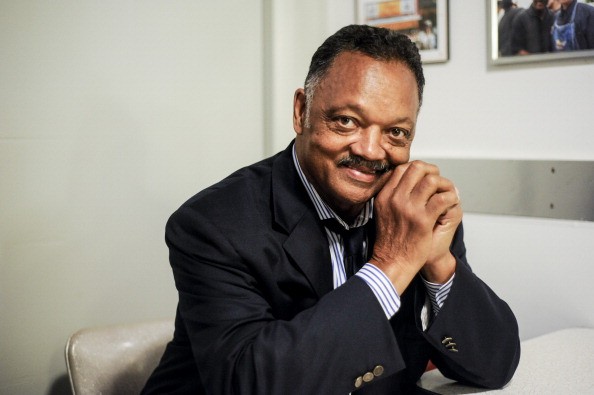
Kris Connor/Getty Images
Civil Rights Activism
Jackson's activism began while he was still a student. In 1960, he participated in a Greenville library sit-in that challenged segregation in public facilities. By the mid-1960s, he had joined the Southern Christian Leadership Conference (SCLC) and quickly emerged as one of its most dynamic young leaders.
He worked closely with Dr. Martin Luther King Jr., who appointed him head of the Chicago branch of Operation Breadbasket, the SCLC's economic empowerment initiative. Operation Breadbasket used boycotts and corporate negotiations to pressure companies to hire Black employees, promote minority contractors, and invest in underserved communities. Under Jackson's leadership, the program expanded rapidly and gained national visibility.
After King's assassination in 1968, Jackson sought to carry forward elements of King's economic justice agenda. Tensions within the SCLC leadership led to his suspension in 1971. He subsequently founded Operation PUSH (People United to Save Humanity), focusing on economic empowerment, education, and voter registration. Through initiatives like PUSH-Excel, he encouraged academic achievement and civic engagement among young people.
In 1984, he broadened his political vision by forming the National Rainbow Coalition, designed to unite African Americans, Latinos, labor unions, family farmers, poor whites, and other marginalized constituencies into a multiracial political force.
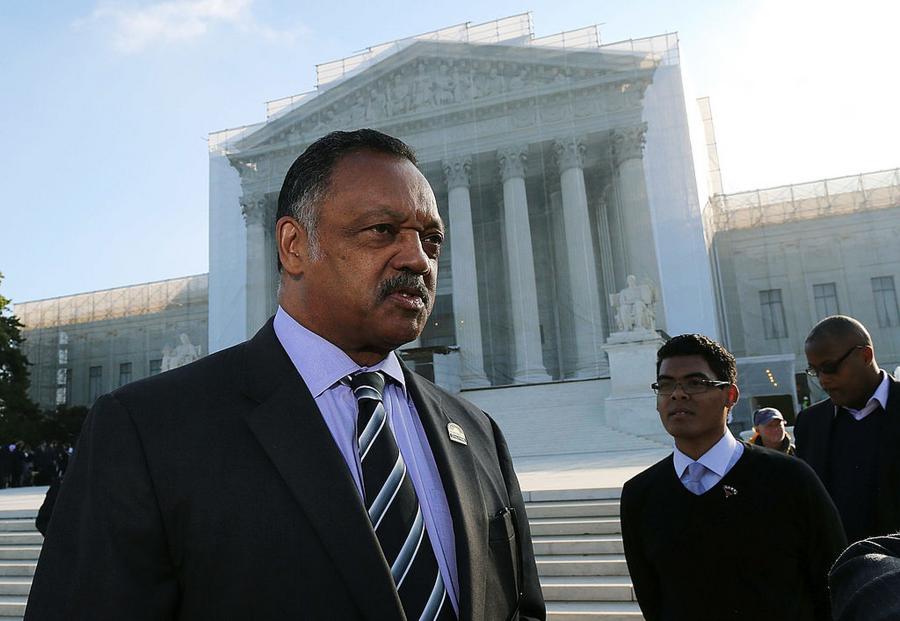
(Photo by Mark Wilson/Getty Images)
Political Career
Jackson entered presidential politics in 1984 when he sought the Democratic nomination. He became only the second Black candidate to mount a major-party presidential campaign after Shirley Chisholm. His candidacy energized millions of voters, particularly in the South, and he won 3.2 million primary votes. Though he finished behind Walter Mondale and Gary Hart, his electrifying speech at the 1984 Democratic National Convention introduced his signature refrain, "Keep hope alive," and cemented his status as a national political force.
He ran again in 1988 with a more organized and expansive campaign. That year he won several primaries and caucuses and secured nearly 7 million votes, capturing 29% of the total Democratic primary vote. While he ultimately lost the nomination to Michael Dukakis, his performance demonstrated that a Black candidate could compete seriously for a major-party nomination and helped expand minority participation in national politics.
From 1991 to 1997, Jackson served as one of two unpaid "statehood senators" for the District of Columbia, lobbying Congress for D.C. voting rights and statehood. Though the role carried no legislative authority, it reflected his continued push for structural political reform.
Over the decades, he remained an influential voice within the Democratic Party, supporting Bill Clinton in 1992 and playing a key role in mobilizing Black voters. He endorsed Barack Obama in 2008 and was visibly emotional during Obama's election-night victory. In later cycles, he backed Hillary Clinton and Bernie Sanders, aligning himself with the party's progressive wing.
Media and International Work
Jackson extended his influence through media and diplomacy. From 1992 to 2000, he hosted CNN's "Both Sides with Jesse Jackson," a weekly public affairs program featuring debate and commentary.
Internationally, he engaged in high-profile diplomatic missions. In 1984, he helped secure the release of a U.S. Navy pilot held captive in Syria. He later negotiated or advocated for the release of political prisoners and hostages in Cuba, Iraq, and elsewhere. Supporters viewed these missions as humanitarian diplomacy; critics sometimes questioned the political optics. Either way, they reinforced his role as a global civil rights figure whose influence extended beyond domestic politics.
Personal Life & Death
Jackson married Jacqueline Lavinia Brown in December 1962. Together, they had five children: Santita, Jesse Jr., Jonathan, Yusef, and Jacqueline. Over time, several of his children followed him into public life. Jesse Jackson Jr. served as a U.S. Congressman from Illinois from 1995 until his resignation in 2012. Jonathan Jackson was elected to represent Illinois's 1st Congressional District in 2022. Santita Jackson built a career as a political commentator and media personality.
In 2001, Jackson publicly acknowledged that he had fathered a daughter, Ashley, in 1999 with Karin Stanford, a former staff member of his advocacy organization, the Rainbow PUSH Coalition. The revelation drew intense national attention and prompted a public apology. Jackson accepted financial responsibility and maintained a relationship with his daughter in the years that followed.
His family life was also marked by challenges. In 2013, Jesse Jackson Jr. was sentenced to 30 months in federal prison after pleading guilty to misusing $750,000 in campaign funds for personal expenses. The episode was a painful chapter for the family and unfolded publicly amid Jackson's continuing role as a national civil rights figure.
In November 2017, Jackson announced that he had been diagnosed with Parkinson's disease. In 2025, his organization disclosed that he was also suffering from progressive supranuclear palsy, a rare and severe neurodegenerative disorder that shares some symptoms with Parkinson's and affects movement, balance, and speech. He formally stepped down from leadership of the Rainbow PUSH Coalition in 2023 but continued to attend public events and advocate for economic and racial justice despite declining health. Jesse Jackson died on February 17, 2026, at the age of 84.
/2010/03/Jesse-Jackson.jpg)
/2010/03/GettyImages-911943150.jpg)
/2021/12/mlk.jpg)
/2017/01/John-Lewis.jpg)
/2014/11/GettyImages-113297054.jpg)
/2014/09/Bernie-Sanders.jpg)
/2014/11/GettyImages-583549262.jpg)
:strip_exif()/2015/09/GettyImages-476575299.jpg)
/2020/02/Angelina-Jolie.png)
/2019/04/rr.jpg)