
/2013/07/Nils-Lofgren.jpg)
/2012/11/GettyImages-2243371.jpg)
/2013/09/GettyImages-183150788.jpg)
/2013/09/Roy-Bittan.jpg)
/2013/01/Patti-Scialfa-1.jpg)
/2010/09/GettyImages-486131136.jpg)
/2020/06/taylor.png)
/2017/02/GettyImages-528215436.jpg)
/2019/10/denzel-washington-1.jpg)
/2009/09/Jennifer-Aniston.jpg)
:strip_exif()/2009/09/P-Diddy.jpg)
/2020/02/Angelina-Jolie.png)
/2009/09/Cristiano-Ronaldo.jpg)
/2019/04/rr.jpg)
/2018/03/GettyImages-821622848.jpg)
/2009/09/Brad-Pitt.jpg)
/2009/11/George-Clooney.jpg)
What is Nils Lofgren's net worth?
Nils Lofgren is an American musician who has a net worth of $20 million.
Known for his expressive guitar work, acrobatic stage presence, and understated professionalism, Nils Lofgren occupies a rare space in popular music: a highly respected musician's musician who has also played a central role on some of rock's biggest stages. He first emerged in the late 1960s as a teenage prodigy with Neil Young's band Crazy Horse, contributing both guitar and songwriting to albums that helped define the raw, emotional sound of early 1970s rock.
Over time, Lofgren built a parallel solo career that showcased his melodic instincts and lyrical sensitivity, while also becoming a sought-after collaborator and sideman. His most prominent long-term role has been as a member of Bruce Springsteen's E Street Band, where his versatility and energy helped refresh the group's sound following the death of Clarence Clemons. Whether working in stadiums or small clubs, as a band member or a solo artist, Lofgren has consistently prioritized musical integrity over celebrity, earning a reputation for reliability, humility, and excellence that few of his peers can match.
Early Life
Nils Lofgren was born on June 21, 1951, in Chicago, Illinois, and grew up in a musically inclined household. He began studying classical accordion as a child before switching to guitar, an instrument that would become central to his identity. As a teenager, he showed an unusual combination of technical skill and emotional expression, along with a strong work ethic that set him apart from many of his contemporaries. His family later relocated to the West Coast, placing him closer to the emerging rock scene of the late 1960s. By his mid-teens, Lofgren was already performing professionally, an experience that quickly pushed him into the orbit of established musicians.
Crazy Horse and Neil Young
Lofgren's first major break came when he joined Crazy Horse while still in his teens. Although the band was best known as Neil Young's primary backing group, it functioned as a collaborative unit, and Lofgren contributed significantly both as a guitarist and songwriter. He appeared on albums such as "After the Gold Rush" and "Tonight's the Night," projects that have since become cornerstones of the rock canon. His playing complemented Young's jagged, emotionally charged style, adding melodic depth and rhythmic flexibility. Despite his youth, Lofgren earned respect quickly, learning the demands of touring, recording, and creative collaboration at the highest level. His time with Crazy Horse provided a foundation that shaped the rest of his career, particularly his comfort with improvisation and emotionally direct performance.
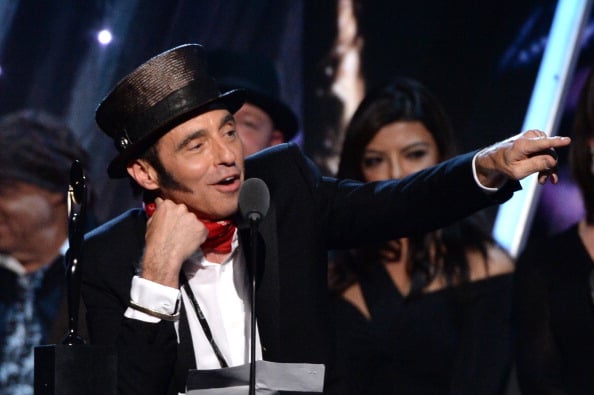
Larry Busacca/Getty Images
Solo Career
In the early 1970s, Lofgren stepped out on his own, releasing his self-titled debut album "Nils Lofgren" in 1975. The record showcased a more polished, introspective side of his songwriting, blending rock, folk, and pop influences. His follow-up album, "Cry Tough," included songs that would later become fan favorites and concert staples. Throughout the 1970s and early 1980s, Lofgren released a steady stream of solo albums, including "Night Fades Away," "I Came to Dance," and "Flip." While these records did not always achieve major commercial success, they earned critical respect and cultivated a loyal audience. Lofgren's solo work emphasized melody, personal storytelling, and musicianship, often standing in contrast to the bombast that characterized much arena rock of the era.
Joining the E Street Band
In 1984, Lofgren joined Bruce Springsteen's E Street Band, initially filling the role left vacant by guitarist Steven Van Zandt's departure. He later became an even more integral presence following the death of saxophonist Clarence Clemons, taking on expanded musical responsibilities during live performances. Lofgren's athletic stage style, including his signature guitar spins and jumps, added visual energy to the band's concerts, while his disciplined musicianship ensured seamless integration into Springsteen's tightly arranged songs. He appeared on albums such as "Tunnel of Love," "The Rising," and "Magic," contributing both guitar and occasional backing vocals. His work with the E Street Band introduced him to a vastly larger audience while allowing him to remain a collaborative player rather than a frontman.
Collaborations and Session Work
Beyond his most famous associations, Lofgren has worked with a wide range of artists across genres. He has collaborated with Lou Reed, Ringo Starr, and members of Crosby, Stills, Nash, and Young, among others. His reputation as a dependable and tasteful guitarist made him a frequent choice for session work, where his ability to serve the song rather than dominate it proved especially valuable. Lofgren's versatility extends to multiple instruments, including piano and accordion, allowing him to adapt to diverse musical settings with ease.
Style and Musicianship
Lofgren's playing style blends technical precision with emotional restraint. Unlike guitarists known primarily for flash or speed, he focuses on phrasing, tone, and dynamics. His live performances often incorporate physical movement, yet his musicianship remains controlled and intentional. As a songwriter, he favors direct language and melodic clarity, often exploring themes of perseverance, self-reflection, and personal responsibility. This balance between athletic performance and thoughtful composition has become one of his defining traits.
Later Work and Legacy
In the decades since his initial rise, Lofgren has continued to release solo material and tour both independently and with the E Street Band. Albums such as "Break Away Angel" and "Blue with Lou" reflect a mature artist revisiting earlier influences while refining his craft. His longevity in an industry known for volatility speaks to his adaptability and professionalism. While he may not possess the household-name recognition of some of his collaborators, Lofgren's influence is deeply felt among musicians and longtime fans. His career stands as an example of how consistency, humility, and dedication to the music itself can sustain a meaningful artistic life over generations.
/2013/07/Nils-Lofgren.jpg)
/2010/09/GettyImages-486131136.jpg)
/2013/03/George-Lynch.jpg)
/2013/09/Ian-Astbury.jpg)
/2013/09/Roy-Bittan.jpg)
/2011/12/Bobby-V-e1609869829831.jpg)
/2014/01/red.jpg)
/2012/10/Tom-Johnston.jpg)
/2019/11/GettyImages-1094653148.jpg)
/2020/04/Megan-Fox.jpg)