
/2013/06/bl.jpg)
/2013/07/Shannon-Lee.jpg)
/2015/06/bl.jpg)
/2020/02/jackie-chan.jpg)
/2014/08/donnie-yen.png)
/2009/12/Jet-Li.jpg)
/2009/09/Brad-Pitt.jpg)
/2020/02/Angelina-Jolie.png)
/2019/04/rr.jpg)
/2019/10/denzel-washington-1.jpg)
/2009/09/Jennifer-Aniston.jpg)
/2020/04/Megan-Fox.jpg)
/2020/06/taylor.png)
/2019/11/GettyImages-1094653148.jpg)
/2009/09/Cristiano-Ronaldo.jpg)
:strip_exif()/2009/09/P-Diddy.jpg)
/2018/03/GettyImages-821622848.jpg)
What Was Bruce Lee's Net Worth and Salary?
Bruce Lee was a Chinese-American martial artist, martial arts instructor, and movie star who had a net worth of $1.5 million at the time of his death in 1973. That's the same as around $10 million today, after adjusting for inflation.
Rising to international fame in the early 1970s, Lee combined extraordinary physical ability with philosophical depth, creating a new kind of screen presence defined by speed, realism, and intensity. His films, including "The Big Boss," "Fist of Fury," "Way of the Dragon," and "Enter the Dragon," redefined the martial arts genre and helped introduce it to Western audiences on an unprecedented scale. Beyond acting, Lee developed his own fighting philosophy, Jeet Kune Do, which emphasized adaptability, efficiency, and personal expression over rigid styles. He was also a teacher, choreographer, and writer who influenced generations of athletes, actors, and filmmakers. At the time of his death in 1973, he had amassed a relatively modest fortune, but his films would go on to generate hundreds of millions of dollars worldwide. Though his life was cut short at just 32, Lee's impact on film, fitness, and global popular culture remains profound.
Who Inherited Bruce Lee's Estate?
When Bruce Lee died in 1973, he was not yet the global commercial powerhouse he would later become. Despite his rising fame, he was relatively cash-poor, with most of his wealth tied up in future earning potential rather than liquid assets. His estate primarily consisted of his ownership stake in Concord Production Inc., the film company he co-founded with Raymond Chow, along with the rights to his name, likeness, and image. He had also recently taken out life insurance policies, which proved critical in providing immediate financial support for his family after his death.
Lee died intestate, meaning he did not leave behind a will. As a California resident, his estate was handled under state intestacy laws and distributed among his immediate family. His wife, Linda Lee Cadwell, inherited 50% of the estate, including control over his Right of Publicity. His two children, Brandon Lee and Shannon Lee, each inherited 25%. Shannon inherited Brandon's stake upon his death in 1993.
The absence of a will led to complications in the years that followed. There was tension between Linda and members of Lee's extended family in Hong Kong, who believed they had claims to aspects of his legacy. In 1976, Linda sold Bruce's shares in Concord Production Inc. to Raymond Chow, effectively giving up control of his film company in order to help stabilize the estate.
Recognizing the long-term value of Bruce Lee's image and legacy, Linda spent years aggressively protecting his intellectual property, pursuing legal action against unauthorized uses of his name and likeness. These efforts laid the foundation for what would become a highly valuable licensing and merchandising business.
Today, Bruce Lee's estate is managed through Bruce Lee Enterprises, which is owned and operated by his daughter, Shannon Lee. Decades after his death, the estate continues to generate millions of dollars annually through licensing deals, merchandise, and media rights, far surpassing the financial success Lee experienced during his lifetime.
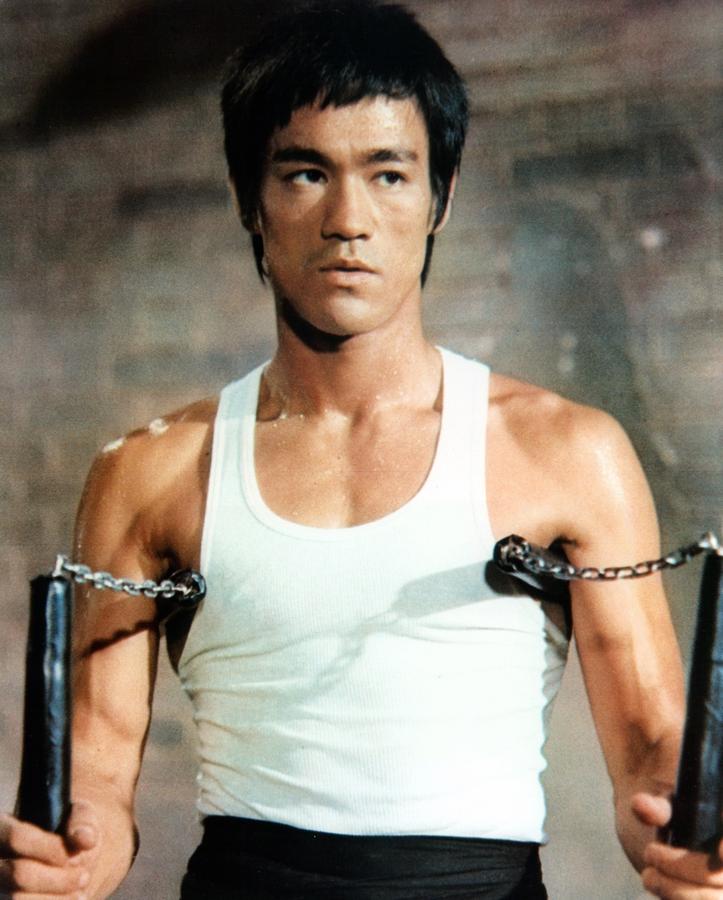
(Photo by Getty Images)
Early Life
Bruce Lee was born Lee Jun-fan in November 1940 in San Francisco, California, while his father, Lee Hoi-chuen, was touring the United States as a Cantonese opera performer. He was raised in Hong Kong, where he spent most of his childhood after his family returned when he was an infant.
Acting was part of his life from the very beginning. He appeared as a baby in the film "Golden Gate Girl" and went on to act in numerous Hong Kong films as a child, including "The Kid" at age nine. By the time he was 18, he had appeared in roughly 20 films.
As a teenager, Lee was energetic and often involved in street fights. Seeking discipline, he began training in Wing Chun under master Ip Man. At the same time, he explored other forms of movement, including boxing and dance, even winning a Hong Kong cha-cha championship in 1958. These diverse influences would later shape his unique fighting style.
Return to the United States
Due to increasing involvement in street altercations, Lee's parents sent him back to the United States in 1959. He eventually settled in Seattle, where he completed high school and enrolled at the University of Washington, studying philosophy.
During this period, he began teaching martial arts and developed a following among students from diverse backgrounds. His approach challenged traditional conventions, emphasizing practicality, efficiency, and adaptability rather than rigid adherence to specific styles.
A major turning point came in 1964 when Lee gave a martial arts demonstration in Long Beach, California. The performance caught the attention of television producer William Dozier, who soon helped Lee secure auditions in Hollywood.
Early Hollywood Career
Lee's first major American role came in 1966 when he was cast as Kato in "The Green Hornet." Though the series lasted only one season, his performance stood out, particularly for its authentic martial arts action. In Hong Kong, the show became so popular it was often referred to as "The Kato Show."
Despite this visibility, Lee struggled to find substantial roles in Hollywood, often limited to supporting parts or stereotypical casting. He supplemented his income by teaching martial arts and making guest appearances on shows such as "Here Come the Brides."
Frustrated by the lack of opportunities, Lee began developing his own martial arts philosophy, which would become Jeet Kune Do, and opened training schools in the United States.
Breakthrough in Hong Kong
Recognizing his rising popularity in Asia, Lee returned to Hong Kong in the early 1970s, where he quickly became a major film star. He signed with Golden Harvest and starred in "The Big Boss" (1971) and "Fist of Fury" (1972), both of which were enormous box office successes.
With his growing leverage, Lee negotiated greater creative control. He formed his own production company, Concord Production Inc., and wrote, directed, and starred in "Way of the Dragon" (1972). The film featured a now-legendary fight scene with Chuck Norris, which became one of the most iconic moments in martial arts cinema.
"Enter the Dragon" and Global Stardom
Lee's international breakthrough came with "Enter the Dragon" (1973), a co-production between Warner Bros., Golden Harvest, and Concord. In the film, he played a martial artist who infiltrates a criminal organization by entering a high-stakes tournament.
Lee was heavily involved in the film's creative direction, contributing to the script and choreographing the fight sequences. His emphasis on realism and precision elevated the film beyond traditional action fare.
"Enter the Dragon" became a global phenomenon, ultimately grossing hundreds of millions of dollars worldwide and cementing Lee's status as an international icon.
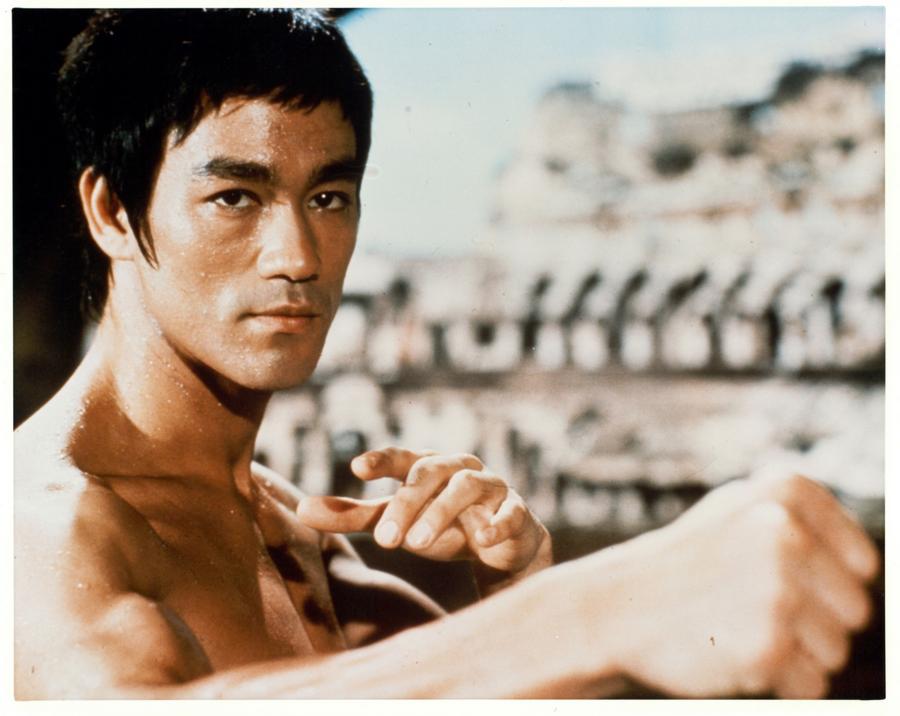
(Photo by Warner Brothers/Getty Images)
Jeet Kune Do and Philosophy
Lee developed Jeet Kune Do as a philosophy rather than a fixed system, emphasizing efficiency, directness, and personal expression. His ideas drew from philosophy, psychology, and real-world experience, and they continue to influence martial arts and fitness culture today.
Personal Life
Bruce Lee married Linda Emery in 1964 after the two met while he was teaching martial arts in Seattle. The couple remained together until his death and had two children, Brandon and Shannon.
Lee's family life was closely tied to his work, with Linda often supporting his career during its early struggles in the United States. Their son Brandon Lee later became an actor but died tragically in 1993 at the age of 28 after being accidentally shot on the set of the film "The Crow."
Despite his intense public persona, Lee was deeply interested in philosophy, self-improvement, and personal discipline, and he maintained a private side centered around family and intellectual pursuits.
Final Years and Death
After achieving major success in Hong Kong, Lee began work on "Game of Death," though production was paused when he accepted the lead role in "Enter the Dragon."
In May 1973, he suffered a collapse and was diagnosed with cerebral edema. He later died on July 20, 1973, after a recurrence of the condition, just days before the premiere of "Enter the Dragon."
His sudden death at 32 shocked fans worldwide and contributed to the enduring mystique surrounding his life.
Legacy and Cultural Impact
Bruce Lee's legacy extends far beyond his films. He revolutionized martial arts cinema, helped open doors for Asian actors in Hollywood, and reshaped how action sequences are performed.
His influence can be seen in generations of performers, including stars such as Jackie Chan and Jet Li, and in modern action films, video games, and global fitness culture.
Decades after his death, Bruce Lee remains one of the most influential figures in entertainment history, a performer whose work continues to inspire audiences around the world.
/2013/06/bl.jpg)
/2015/06/bl.jpg)
/2013/07/Shannon-Lee.jpg)
/2020/02/jackie-chan.jpg)
/2014/08/donnie-yen.png)
/2020/04/Chuck-Norris.jpg)
/2015/04/Cary-Hiroyuki-Tagawa.jpg)
:strip_exif()/2015/09/GettyImages-476575299.jpg)
/2017/02/GettyImages-528215436.jpg)