
/2026/04/Barney-Frank.jpg)
:strip_exif()/2009/09/P-Diddy.jpg)
/2019/11/GettyImages-1094653148.jpg)
/2009/09/Jennifer-Aniston.jpg)
/2017/02/GettyImages-528215436.jpg)
/2019/10/denzel-washington-1.jpg)
/2020/01/lopez3.jpg)
/2018/03/GettyImages-821622848.jpg)
/2020/02/Angelina-Jolie.png)
/2019/04/rr.jpg)
:strip_exif()/2015/09/GettyImages-476575299.jpg)
/2009/11/George-Clooney.jpg)
/2009/09/Cristiano-Ronaldo.jpg)
/2009/09/Brad-Pitt.jpg)
/2020/04/Megan-Fox.jpg)
/2020/06/taylor.png)
What is Barney Frank's net worth?
Barney Frank is an American politician, author, and longtime Democratic congressman who has a net worth of $1.5 million. Barney Frank served as one of the most influential voices in U.S. financial policy during the late 20th and early 21st centuries. Best known as a chief architect of the landmark Dodd-Frank Act, he played a central role in reshaping Wall Street regulation in the aftermath of the 2008 financial crisis. Over a 32-year career in the U.S. House of Representatives, Frank became known for his sharp intellect, biting wit, and willingness to engage directly with both political allies and opponents. Representing Massachusetts from 1981 to 2013, he rose to chair the House Financial Services Committee, where he oversaw major reforms affecting banking, housing, and financial markets. Beyond economic policy, Frank was a trailblazer in LGBTQ+ rights, becoming one of the first openly gay members of Congress and the first to enter a same-sex marriage while in office. In his later years, he has remained an outspoken political commentator, continuing to shape debates within the Democratic Party even as his health has declined.
Financial Disclosures
Like all members of Congress, Frank was required to file annual financial disclosure reports during his tenure. These filings do not provide exact dollar amounts for assets and liabilities, instead listing them within broad ranges. As a result, outside organizations such as OpenSecrets estimate net worth by calculating midpoints within those ranges.
By the end of his congressional career, Frank was a millionaire, though his wealth was modest compared to many of his peers in Washington. Based on analyses of his final disclosures:
In 2010, his estimated net worth ranged from approximately $619,000 to $1.51 million, with an average estimate of about $1.06 million.
In 2011, his final full year of reporting, his estimated net worth rose slightly to around $1.08 million.
While this level of wealth placed him comfortably in the upper tier of American households, it was well below the average for members of Congress at the time. In 2011, the average net worth for Democratic members of the House was estimated to be roughly $7.8 million, highlighting the relatively modest scale of Frank's personal finances compared to many of his colleagues.
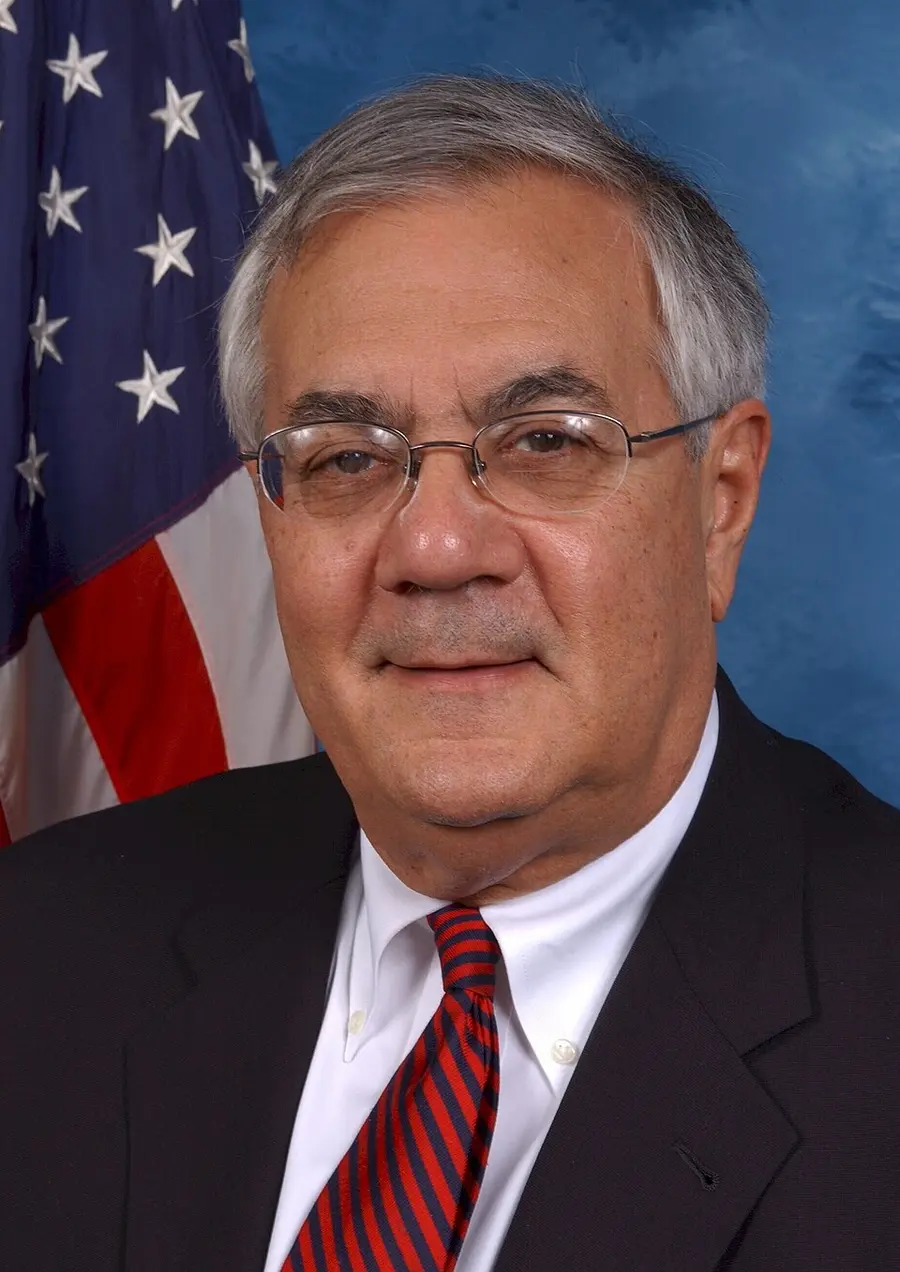
Public Domain
Early Life
Barney Frank was born Barnett Frank on March 31, 1940, in Bayonne, New Jersey. He grew up in a working-class family and showed an early interest in politics and public service.
Frank attended Harvard University, where he earned his undergraduate degree before going on to complete a Ph.D. in government. His academic training in political science laid the foundation for his later career in public policy and legislative strategy.
Early Political Career
Before entering Congress, Frank worked in a variety of political and governmental roles. He served as an aide to Boston Mayor Kevin White and later became a member of the Massachusetts House of Representatives, where he built a reputation as a skilled legislator.
In 1980, Frank was elected to the U.S. House of Representatives, beginning a career that would span more than three decades.
Congressional Career and Financial Policy
Frank represented Massachusetts in the House from 1981 to 2013, becoming one of the most prominent Democrats on economic and financial issues. He eventually rose to chair the House Financial Services Committee, a position he held during the most turbulent period of the modern financial system.
In the wake of the 2008 financial crisis, Frank worked closely with Senate leaders to craft sweeping regulatory reforms. The result was the Dodd-Frank Act, a comprehensive overhaul of financial oversight that imposed stricter regulations on banks, created new consumer protections, and aimed to reduce systemic risk in the financial system.
Frank consistently defended the legislation in the years that followed, arguing that it strengthened the stability of the U.S. economy and helped prevent future crises.
Advocacy and LGBTQ+ Milestones
In addition to his work on economic policy, Frank was a pioneering figure in LGBTQ+ representation in government. In 1987, he publicly came out as gay, becoming one of the first members of Congress to do so voluntarily.
He later became the first sitting member of Congress to enter into a same-sex marriage, marking a significant milestone in the broader movement for LGBTQ+ equality in the United States.
Frank also advocated for civil rights, housing reform, and social welfare programs throughout his career, positioning himself as a leading liberal voice within the Democratic Party.
Later Career and Commentary
After retiring from Congress in 2013, Frank remained active in public life as a commentator, author, and advisor. He continued to speak out on financial regulation and political strategy, often offering candid assessments of both parties.
In his later years, Frank has been particularly vocal about internal divisions within the Democratic Party, arguing that some progressive positions risk alienating broader segments of the electorate. Despite his long-standing identification with liberal causes, he has encouraged Democrats to remain politically pragmatic in order to win elections.
/2026/04/Barney-Frank.jpg)
/2009/11/George-Clooney.jpg)
/2010/11/Frank-Welker.jpg)
/2014/10/linda.jpg)
/2014/09/frankie-faison.jpg)
/2026/04/rivian.jpg)
/2016/03/hulk.jpg)
/2024/10/Screenshot-2024-10-07-145518.jpg)