
In late January, just three short months ago, the entire internet got swept up in what had to be the most amazing celebrity windfall stories of the last decade: Khaby Lame, the guy who became a TikTok superstar without saying a word thanks to his hilarious silent reaction videos, had supposedly sold his company for $975 million.
The headlines and social media posts were impossible to resist (not for everyone!). Endless congratulatory tweets were published by viral meme accounts chasing engagement. To their shame, supposedly serious outlets like Forbes and Bloomberg published stories and clickbaity social media posts essentially declaring the $975 million deal as absolute, 100% done-deal fact.
It was settled: Khaby Lame sold his company for $975 million. He had risen from a Senegalese immigrant factory worker in Italy to a billionaire in just a few years thanks to social media. What a world!
It seemed too good to be true. Because… it was. And now the other shoe has dropped.
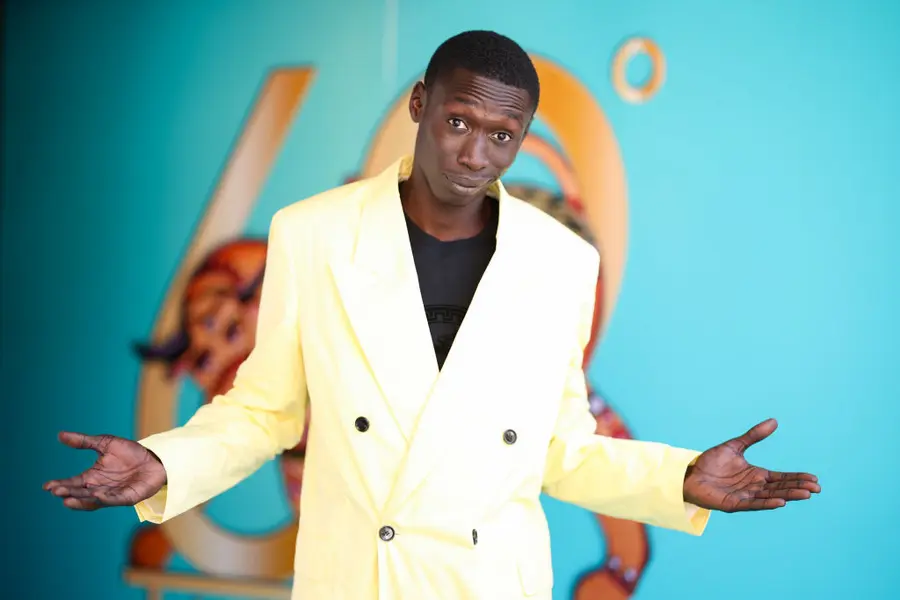
(Photo by Daniele Venturelli/Getty Images)
Before we get into what just happened, let's take a step back and recap exactly what this "deal" actually was.
The transaction involved Khaby's business, Step Distinctive Limited, and a Hong Kong-based financial printing company called Rich Sparkle Holdings (NASDAQ: ANPA). According to a January press release and a corresponding SEC 6-K filing, Rich Sparkle was acquiring Khaby's company for $975 million.
But there was a massive catch: Rich Sparkle wasn't paying a single dime in cash. It was an all-stock transaction. They were simply minting 75 million brand-new shares out of thin air and handing them to Khaby and his partners.
To understand why that $975 million headline was so ridiculous, you had to look at the stock's history. Rich Sparkle had only gone public in July 2025 at around $4 a share, giving the obscure printing company a modest $40 million market cap. For most of the next six months, the stock hovered around $20 a share, giving it a market cap of roughly $250 million.
Then came the January press release about the Khaby acquisition. Day traders pounced, and the stock shot up to $150 a share. Suddenly, a tiny Hong Kong printer briefly boasted an absurd $1.8 billion market cap. That peak-hype pricing is exactly the math the media used to declare Khaby a near-billionaire.
Back when everyone else was cheering, I warned you to look closer. I pointed out that Rich Sparkle's trading volume was basically a ghost town. Because the stock was so incredibly illiquid, I noted that Khaby couldn't actually sell those shares without crashing the price. It was nothing more than a highly volatile "paper wealth" gamble.
Fast forward to today, and that paper is rapidly turning into confetti.
Unfortunately, the Khaby Lame mega-deal has officially hit a snag. And by "hit a snag," I mean the stock has crashed, brokerages are locking people out, and Khaby himself seems to be pretending the whole thing never happened.
Here is the brutal reality check of the $975 million mystery:
1. The 90% Stock Implosion
As we just recapped, the hype train pushed ANPA stock to a dizzying $150 a share and a $1.8 billion market cap in January. By the time I published my first article calling out the illusion, it had already dropped to $50 a share ($600 million market cap).
Today? The stock is trading at $8 a share.
That drags the company's total market cap down to roughly $130 million. Let's do some quick math: If the entire company is currently worth $130 million, how exactly is it paying $975 million for Khaby Lame's business? It isn't. The valuation was a mirage fueled by a low-float stock bubble, and that bubble has decisively popped.
2. Brokerages Pull the Plug
This is where the story goes from "bad trade" to "structural nightmare." Several prominent investment platforms—including Fidelity, Charles Schwab, ETrade, Merrill Lynch, and Vanguard—have officially restricted or blocked online trading for Rich Sparkle's shares. Interactive Brokers simply lists it as "non-tradable."
Why? Because major brokerages don't want the logistical headaches associated with micro-cap stocks that behave like erratic penny stocks. When trading volume drops back down to an anemic 10,000 to 20,000 shares a day (as it currently has for ANPA), it becomes too risky and illiquid for major platforms to support.
As I noted in January: If Khaby ever wanted to sell his 36.75 million shares into a market that only trades 15,000 shares a day, it would take him years. Now, even the retail day traders can't easily buy or sell.
3. The Deal Might Actually Be Dead
The most fascinating detail buried in the latest SEC filings isn't the stock price—it's the fact that this deal might not have ever formally closed.
Back in January, Rich Sparkle put out a press release claiming the acquisition was "completed." But a recent March 31 SEC filing tells a different story. That document described the deal as still contingent on certain conditions. Even worse, the original January filing explicitly stated that if those conditions weren't met or waived by February 28, the deal would be void.
Did Khaby's company ever actually receive those 75 million shares? We have no idea. Rich Sparkle's Hong Kong office is ghosting reporters.
4. Radio Silence from Khaby
Perhaps the loudest signal that things have gone sideways is the silence from the silent reaction guy himself.
In January, Khaby stated he was "excited" to become a Rich Sparkle shareholder. Today? He has completely scrubbed the "ANPA" stock ticker from his TikTok and Instagram bios. His team is ignoring requests for comment. Instead of pushing his "AI Digital Twin" or the Chinese e-commerce model that Rich Sparkle promised to build, Khaby is back to doing standard influencer brand deals with companies like Lego and the Youth Olympic Games.
The Verdict (Again)
This entire saga is a masterclass in why you should never trust a headline that values a stock-swap acquisition at its peak hype price.
The idea of "industrializing" Khaby Lame's attention via an AI clone sounded like a cyberpunk dream for investors. But reality is much less glamorous. It involves frozen broker accounts, missed SEC deadlines, plunging valuations, and deleted Instagram bios.
Khaby Lame is an incredibly successful creator, and his estimated $80 million actual net worth is nothing to sneeze at. But he isn't a billionaire. And the next time a meme stock promises to turn TikTok views into a billion dollars of instant equity, keep your skepticism—and your sardonic smirk—ready. ¯\(ツ)/¯
/2021/10/Khaby-Lame-2.jpg)
/2022/06/GettyImages-1398138070.jpg)
/2020/02/Charli-DAmelio-1.jpg)
/2020/03/addison-rae-1.jpg)
/2021/10/GettyImages-1235070879.jpg)
/2026/03/laguna-thumb.png)
/2020/02/Angelina-Jolie.png)
/2009/09/Cristiano-Ronaldo.jpg)
:strip_exif()/2009/09/P-Diddy.jpg)
/2020/06/taylor.png)
/2019/11/GettyImages-1094653148.jpg)
/2019/04/rr.jpg)
/2009/11/George-Clooney.jpg)
:strip_exif()/2015/09/GettyImages-476575299.jpg)
/2019/10/denzel-washington-1.jpg)
/2009/09/Jennifer-Aniston.jpg)
/2020/04/Megan-Fox.jpg)
/2009/09/Brad-Pitt.jpg)
/2017/02/GettyImages-528215436.jpg)
/2018/03/GettyImages-821622848.jpg)
/2020/01/lopez3.jpg)