
If you're of a certain age, the name Christian Laettner probably still triggers a very specific memory.
March 28, 1992. Duke vs. Kentucky. East Regional Final. Two seconds left. Grant Hill throws a full-court pass. Laettner catches, pivots, fades… and hits one of the most famous shots in college basketball history.
Game over.
More than 30 years later, Laettner pulled off another buzzer-beater. Only this time, the stakes weren't a trip to the Final Four.
They were financial survival.
At one point, the former Duke legend was sitting on more than $30 million in debt, staring down lawsuits from fellow athletes, foreclosure on a multi-million-dollar home, and even an involuntary bankruptcy filing. By all accounts, his post-NBA business empire was collapsing in real time.
And then, just when it looked like everything was about to be wiped out, Laettner got one last shot.
And somehow… he hit it.
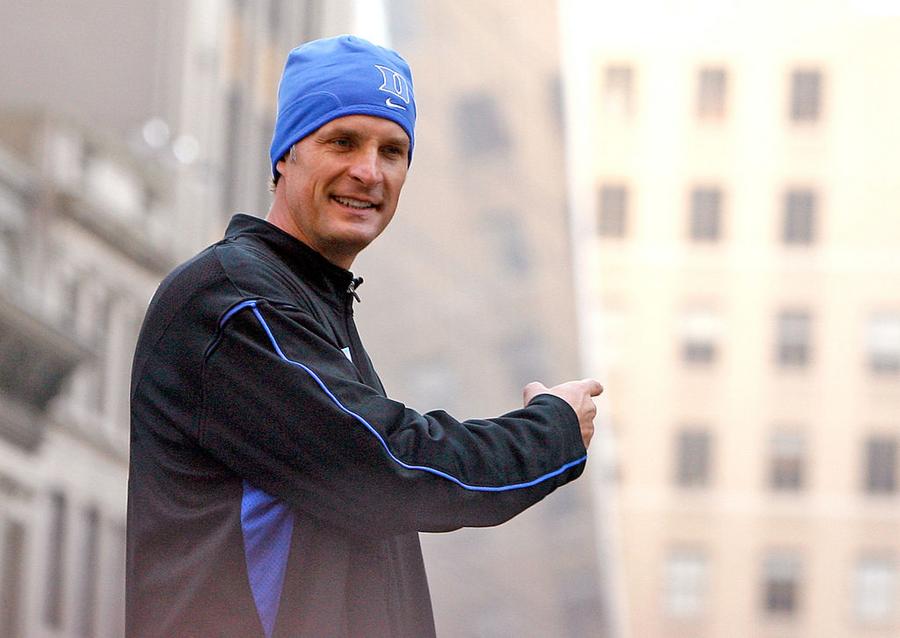
Mike Lawrie/Getty Images
The Rise: From NBA Millions To Real Estate Mogul Dreams
Over a 13-year NBA career, Laettner earned more than $60 million in salary. But unlike many athletes who stick to passive investments, he wanted to build something bigger.
In the mid-1990s, he teamed up with former Duke teammate Brian Davis and developer Tom Niemann to launch Blue Devil Ventures, a real estate development firm focused on revitalizing urban properties.
Their first major project was in Durham, North Carolina.
At the time, downtown Durham was filled with abandoned tobacco warehouses. Long before "urban revitalization" became a buzzword, Laettner and his partners saw an opportunity. They acquired a cluster of these old buildings and converted them into a mixed-use development called West Village, featuring loft apartments, office space, and retail.
It was a home run.
The project reached near full occupancy and quickly became a centerpiece of Durham's revitalization. On paper, Laettner looked like a former athlete who had successfully transitioned into a serious businessman.
That success would ultimately set the stage for everything that went wrong.
The Expansion: Big Swings And Bigger Risks
Flush with confidence from West Village, Laettner and Davis decided to scale aggressively.
They pushed into new markets like Baltimore, Philadelphia, and Washington, D.C., attempting to replicate their Durham success. At the same time, they set their sights even higher.
In 2006, the duo attempted to purchase the NBA's Memphis Grizzlies for $360 million. They also explored acquiring a Major League Soccer franchise.
The problem? They didn't have the capital.
So they started borrowing. Heavily.
Instead of relying solely on institutional financing, Laettner and Davis tapped into their network of fellow athletes. What followed was a who's-who list of high-profile loans:
- Scottie Pippen: $2.5 million
- Shawne Merriman: $3 million
- Johnny Dawkins: roughly $670,000
- Jonathan Stewart and Ernie Sims: millions more
It was an unusually tight-knit and risky web of athlete-to-athlete lending.
Then everything unraveled.
The NBA rejected their Grizzlies bid, reportedly costing investors around $5 million. Their out-of-state real estate projects stalled. And when the 2008 financial crisis hit, the entire strategy collapsed under its own weight.
The Collapse: Lawsuits, Debt, And A Brutal Boardroom Fight
By 2010, the numbers were staggering.
Laettner reportedly had around $10 million in assets and roughly $40 million in liabilities.
Creditors began lining up.
Scottie Pippen sued and secured a $2.5 million judgment. Shawne Merriman won a $3.7 million judgment. Corporate lenders like Fannie Mae and Chevron pursued unpaid obligations.
And then his personal life started unraveling right alongside his balance sheet.
At the peak of his business success, Laettner lived in a $3.65 million custom mansion in Ponte Vedra Beach, Florida, one of the most exclusive areas near Jacksonville. But as his finances deteriorated, the house became collateral damage.
In March 2015, he was served with foreclosure papers. With penalties and interest, the total owed had ballooned to more than $5 million. By October 2015, the home was sold off.
Around the same time, his wife filed for divorce.
The empire wasn't just cracking. It was collapsing from every direction at once.
At the center of the storm was Blue Devil Ventures and, more specifically, the West Village project. It had become the only truly valuable asset left.
That's when things turned especially messy.
In a controversial move, Laettner and an allied partner voted to remove co-founder Tom Niemann from management of one of the key entities tied to the project. Shortly after, Laettner personally sued that same entity for $10 million, claiming unpaid loans.
Sabotaging His Own Company
Then came the part that stunned even seasoned observers.
Acting as a manager of the company, Laettner allowed the company to essentially not defend against his own lawsuit. The result was a $10 million default judgment in his favor, essentially legally sabotaging his own company to ensure he got paid before his partners did.
Other partners were furious. Lawsuits followed, accusing Laettner and others of self-dealing and manipulating the company's finances to their advantage.
The boardroom had turned into a battlefield.
The Brink: Forced Bankruptcy
By 2016, creditors had run out of patience.
Five entities, including NFL players Jonathan Stewart and Ernie Sims, filed an involuntary Chapter 7 bankruptcy petition against Laettner. They claimed he owed more than $14 million and sought to force liquidation of his remaining assets.
Involuntary bankruptcies are incredibly rare. It meant his creditors had completely lost faith in his ability to pay and were asking a federal court to step in, take control, and liquidate everything he had left.
At that moment, it appeared that Laettner's business career would end not with a comeback, but with a court-ordered dismantling.
The Buzzer-Beater: A $187 Million Lifeline
And then, in a twist that feels almost scripted, the very project that helped create the mess ended up saving him.
While Laettner's broader empire was collapsing, the original West Village development in Durham had quietly continued to thrive. Occupancy remained high, and the property became increasingly valuable.
In early 2016, the fully completed West Village complex was sold by its current owners to an Ohio-based investment group for $187 million.
Laettner, through a related entity, still held a minority stake.
That stake entitled him to a share of a payout pool reportedly exceeding $28 million.
It was exactly the kind of liquidity event he desperately needed.
Armed with that cash, Laettner's legal team negotiated with creditors and worked toward a global settlement. By September 2016, he had reached an agreement to repay investors and avoid Chapter 7 liquidation.
In other words, just when everything looked over…
He got one last shot.
And just like in 1992, it went in.
The Aftermath
Laettner's financial saga didn't end with a triumphant comeback. It ended with survival.
The $187 million West Village sale makes for a great headline, but Laettner did not walk away with anything close to that number. As a minority partner through a related entity, his actual share was only a fraction of the total, with estimates at the time suggesting a payout somewhere in the range of $10 million to $28 million.
That money was immediately spoken for.
First, it went toward the $14.05 million owed to the five creditors who filed the involuntary bankruptcy petition. Then came additional judgments, including millions owed to Scottie Pippen and Shawne Merriman. On top of that were years of legal fees tied to lawsuits, internal partnership disputes, and bankruptcy defense.
By the time everything was settled, the "buzzer-beater" had done exactly one thing: it kept him from being wiped out entirely.
The lifestyle he had built during his peak business years was already gone. His $3.65 million mansion in Ponte Vedra Beach had been lost to foreclosure and sold off in 2015 after the debt on the property ballooned past $5 million. Around the same time, his wife filed for divorce, adding a personal dimension to an already brutal financial unraveling.
What remained was a reset.
Today, Laettner lives a far more low-profile, working life than the one he envisioned during his real estate expansion years. He earns income through speaking engagements, corporate appearances, and youth basketball camps, and has spent time coaching at the minor league level. It is a stark contrast to the high-leverage, multi-city development empire he once attempted to build.
In the end, Laettner's business career mirrored his basketball legacy in an unexpected way. Not because of dominance or championships, but because when everything was on the line, and the clock was about to hit zero, he found a way to survive.
Just barely… one more time,
/2011/01/Christian-Laettner.jpg)
/2014/09/Bobby-Hurley1.jpg)
/2016/09/lithuania-dead.png)
/2012/08/dream.jpg)
/2026/03/bachelor-mansion.png)
/2022/06/paul-.jpg)
/2020/02/Angelina-Jolie.png)
/2018/03/GettyImages-821622848.jpg)
/2020/06/taylor.png)
/2020/04/Megan-Fox.jpg)
:strip_exif()/2009/09/P-Diddy.jpg)
/2009/11/George-Clooney.jpg)
/2020/01/lopez3.jpg)
/2019/10/denzel-washington-1.jpg)
/2019/04/rr.jpg)
:strip_exif()/2015/09/GettyImages-476575299.jpg)
/2019/11/GettyImages-1094653148.jpg)
/2017/02/GettyImages-528215436.jpg)
/2009/09/Brad-Pitt.jpg)
/2009/09/Jennifer-Aniston.jpg)
/2009/09/Cristiano-Ronaldo.jpg)