
Back in 2013, entrepreneurs Don Ressler and Adam Goldenberg had an idea. The founders of TechStyle Fashion Group, the company behind subscription brands like JustFab and ShoeDazzle, believed the athleisure category was about to explode. Americans were increasingly embracing comfortable clothing that could transition from the gym to everyday life. But at the time, the market was dominated by a handful of brands that were either extremely expensive or uninspiring in design.
Their plan was to launch a stylish, colorful, reasonably priced activewear brand built around a membership model. But they needed the right partner. The first person they thought of was actress Kate Hudson.
Hudson was already known for her laid-back California lifestyle and love of fitness. More importantly, she brought authenticity. Unlike many celebrity endorsement deals, it was easy to imagine Hudson actually wearing the product in her daily life. So the trio teamed up to launch a new brand called "Fabletics."
More than a decade later, that bet is starting to look extremely smart.
Today, Fabletics has grown into a global activewear brand generating more than $1 billion in annual revenue. The company operates more than 120 retail stores worldwide, with dozens more locations planned as it continues expanding internationally. Its subscription-based membership model, once controversial, has become one of the brand's biggest strengths, with millions of members generating predictable recurring revenue.
And if the company ever goes public, Hudson could end up joining a very exclusive club: the ranks of celebrity billionaires.
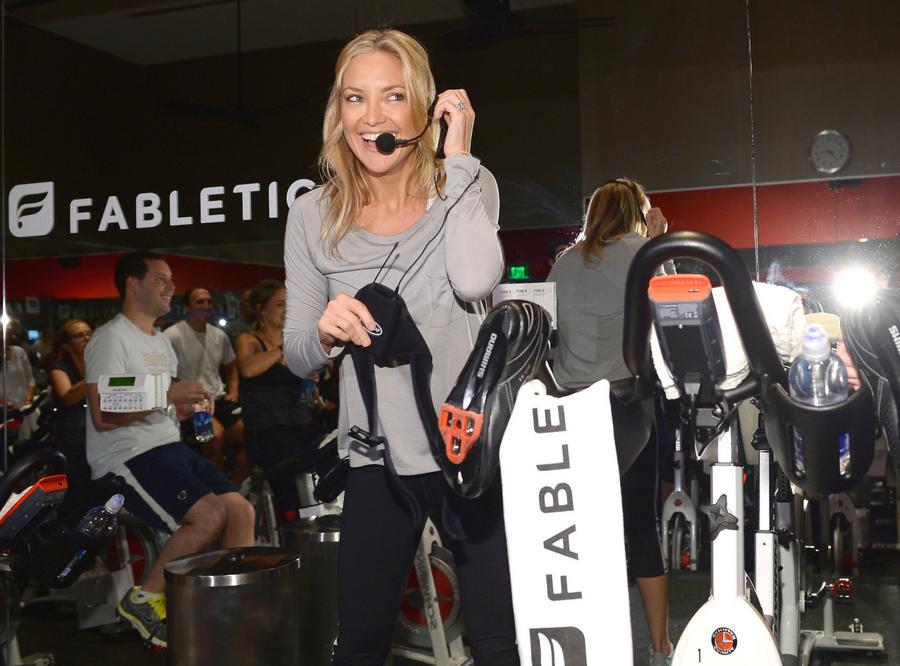
Michael Buckner/Getty Images for Fabletics
The Celebrity Co-Founder Who Was Actually Involved
One of the reasons Fabletics succeeded where many celebrity brands fail is Hudson's unusually hands-on role from the beginning.
She was not simply the face of the brand. She helped review budgets, weighed in on marketing strategy, participated in the design process, and closely monitored which products were selling. In the early years she reportedly reviewed sales numbers weekly to understand what customers were responding to.
Hudson also helped shape the tone of the brand. Fabletics positioned itself as inclusive and accessible, offering a wide range of sizes and pricing its products well below premium competitors like Lululemon, where leggings could easily cost close to $100.
The company also leaned heavily into data. Its membership model allowed it to collect detailed information about customer preferences, helping the brand quickly adapt designs and inventory.
Of course, the road wasn't entirely smooth. Early production problems forced the company to scrap an entire initial clothing run worth hundreds of thousands of dollars. The membership model also drew criticism when some customers complained about monthly charges if they forgot to skip a billing cycle.
But the brand quickly refined its messaging and operations. Once those early issues were resolved, growth accelerated rapidly.
From Startup To Billion-Dollar Brand
In its early years, Fabletics grew at a remarkable pace.
By 2017, the company had reached roughly $250 million in annual sales and built a membership base of more than one million customers. The brand expanded into physical retail, a move that many digitally native brands struggle to execute successfully.
That decision proved to be a major growth engine. Stores helped recruit new members while also strengthening brand awareness.
Over the next several years, the company continued to expand its product lineup beyond women's yoga apparel into menswear, lifestyle clothing, and specialty products such as medical scrubs. The men's category has become one of the fastest-growing parts of the business.
In 2025, Fabletics crossed a major milestone: more than $1 billion in annual revenue.
Today, the brand operates more than 120 stores globally and continues opening new locations across the United States and international markets.
The Billionaire Question
Because Fabletics is privately held within TechStyle Fashion Group, its exact valuation is not publicly disclosed.
In July 2021, the company explored the possibility of an IPO. Two months earlier, the trendy milk company Oatly went public and fetched a $10 billion valuation. The year before its public offering, Oatly generted $420 million in revenue, double the year before that. Fabletics reportedly generated over $500 million in revenue in 2020. Using Oatly as one of several comparables, Fabletics indicated it hoped to go public in the $5 billion range.
As it turns out, the 2021-2023 IPO frenzy was a bit of a fluke. Oatly, and several other similar companies, have lost more than 90% of their market value since going public. Today, Oatly's market cap is $322 million.
But let's say Fabletics does go public in the near future. Hudson reportedly owns around a 20% stake in the company. If that ownership estimate is accurate, the value of her stake could vary widely depending on the company's eventual valuation:
- $2 billion company value → $400 million stake
- $2.5 billion company value → $500 million stake
- $3 billion company value → $600 million stake
- $4 billion company value → $800 million stake
- $5 billion company value → $1 billion stake
At Celebrity Net Worth, we currently estimate Kate Hudson's net worth at $500 million, largely because Fabletics remains a private company and its valuation is not confirmed.
However, if the company eventually goes public at anything close to the rumored $5 billion valuation, Hudson's stake alone could theoretically approach $1 billion.
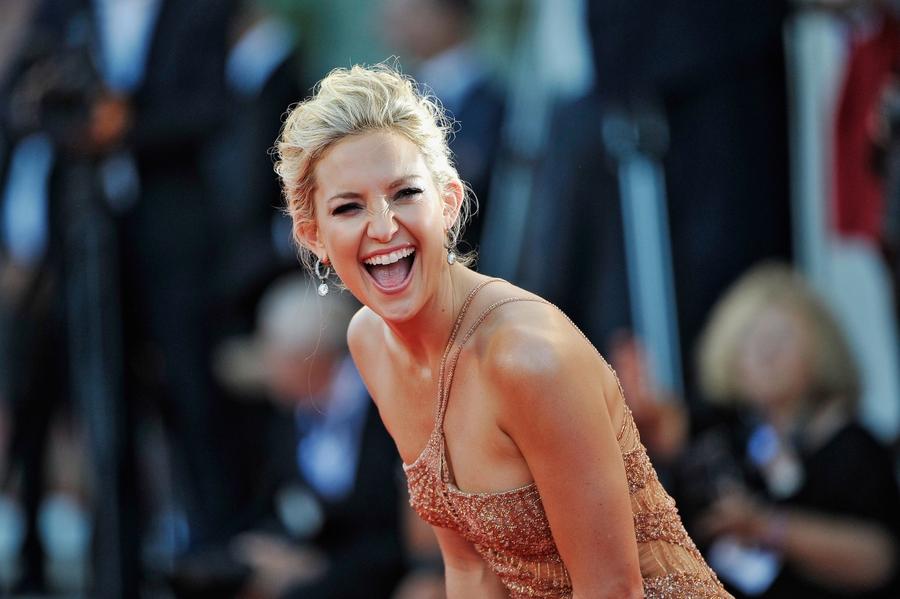
(Photo by Gareth Cattermole/Getty Images)
A Growing Club Of Celebrity Entrepreneurs
If that happens, Hudson would join a growing list of celebrities who have built billion-dollar fortunes through consumer brands.
Rihanna reached billionaire status thanks to Fenty Beauty. Kim Kardashian built a massive fortune through Skims. Jessica Alba's Honest Company also went public, though its stock struggled after its IPO.
Hudson's path is somewhat different. Unlike many celebrity brands that rely primarily on licensing deals, Fabletics has built a large-scale retail operation with recurring membership revenue and a growing international footprint.
And unlike many celebrity founders, Hudson has remained deeply involved in shaping the company.
Whether or not the brand eventually goes public, one thing is clear: the actress who once seemed destined only for Hollywood romantic comedies has quietly built one of the most successful celebrity-backed apparel companies in the world.
If Fabletics continues its current trajectory, Kate Hudson may not just be a movie star.
She may soon be the next celebrity billionaire.
/2009/11/Kate-Hudson.jpg)
/2025/11/skims-kims.png)
/2021/05/jessica2.jpg)
/2025/04/Hailey-Bieber.jpg)
/2025/04/hailey2.png)
/2021/05/jessicathumb.jpg)
/2020/04/Megan-Fox.jpg)
/2020/02/Angelina-Jolie.png)
:strip_exif()/2009/09/P-Diddy.jpg)
/2009/09/Brad-Pitt.jpg)
/2019/04/rr.jpg)
:strip_exif()/2015/09/GettyImages-476575299.jpg)
/2018/03/GettyImages-821622848.jpg)
/2019/10/denzel-washington-1.jpg)
/2009/11/George-Clooney.jpg)
/2020/06/taylor.png)
/2019/11/GettyImages-1094653148.jpg)
/2009/09/Cristiano-Ronaldo.jpg)
/2017/02/GettyImages-528215436.jpg)
/2020/01/lopez3.jpg)
/2009/09/Jennifer-Aniston.jpg)