
In the last week, an endless supply of low-quality Twitter meme accounts have breathlessly published headline after headline claiming that Khaby Lame had "sold his company" for $975 million. A slightly more sensational version of the rumor went even further, declaring that "Khaby Lame is now a billionaire!" Last week, there were no authoritative sources reporting this story. To my amazement, yesterday both Forbes and Bloomberg published versions of the headline. Here is Forbes's headline:
TikTok Star Khaby Lame Sells His Core Company In Deal Worth $975 Millionhttps://t.co/uIxGyrC2vX pic.twitter.com/fiL50yPfU2
— Forbes (@Forbes) January 27, 2026
Here is Bloomberg's headline:
The world's biggest TikToker, Khaby Lame, has signed a $975 million deal to transform his 360 million social-media followers into a commercial venture @nicolesyLIVE outlines what's in his agreement https://t.co/Ba44b5SiUX pic.twitter.com/42NtRnK2YM
— Bloomberg (@business) January 28, 2026
I'm amazed because neither of these supposedly authoritative high-quality business outlets actually discussed the details of this "sale." And the details really matter here. Could it be true??? Did Khaby Lame, a Senegalese immigrant turned laid-off Italian factory worker turned TikTok star, really sell his company for just under $1 billion???!!! Short answer, no.
Before getting into the weeds, let's put two facts on the record:
- Khaby Lame did not just sell anything for $975 million in cash.
- No, he is not a billionaire. We estimate his net worth at $80 million, which is still extraordinary for someone who built a global brand on silent TikTok reaction videos.
The Truth Behind Khaby Lame's $975 Million "Sale"
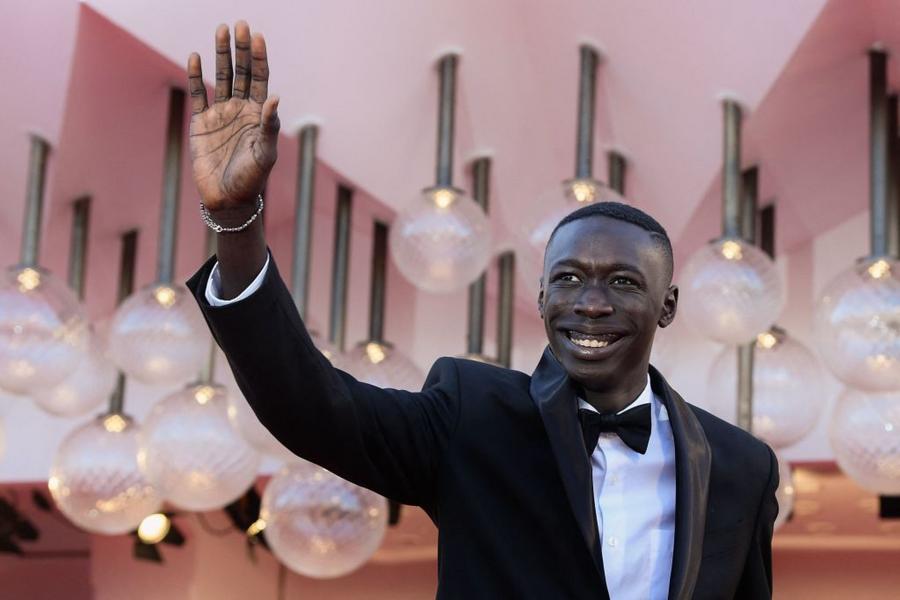
(Filippo MONTEFORTE / AFP via Getty Images)
This story involves two companies:
- Step Distinctive Limited (Khaby Lame's company)
- Rich Sparkle Holdings (The acquiring company)
Step Distinctive Limited is Khaby Lame's company. And actually, he only owns 49% of Step Distinctive for some reason. He must have already sold 51% to some other party. Rich Sparkle Holdings is a Hong Kong–based company whose original business focuses on printing and financial documentation, including IPO prospectuses. Rich Sparkle generated roughly $6 million in revenue last year and went public in July 2025 on the NASDAQ under the ticker ANPA.US.
On January 11, Rich Sparkle published a press release that announced that it had reached a deal to acquire Step Distinctive Limited. The press release did not mention the purchase price. After a bit of digging, I found this 6-K filed with the SEC from Rich Sparkle that contains a lot more details on the transaction.
According to that 6-K filing, Rich Sparkle agreed to acquire Step Distinctive in a transaction valued at "$975 million." No cash is involved. It's an all-stock transaction. Furthermore, Rich Sparkle is not using shares that already existed for the deal; it's creating 75 million brand-new shares out of thin air.
There's nothing wrong with selling a company for stock. In fact, it can be an amazing way to make even more in the long run than the initial sale price. But for a stock deal to actually be worth what the headline claims, two conditions need to be true:
Condition #1: The Acquirer Needs A Proven Track Record
When you accept stock instead of cash, you are betting on the acquiring company's long-term survival and performance. Most deals include lockup periods that prevent sellers from dumping shares for six months or longer. During that time, the stock price can rise, fall, or collapse entirely.
Rich Sparkle has only been a public company since July 2025, roughly six months before this deal was announced. At IPO, its shares traded around $4, giving it a market capitalization of roughly $40 million. For most of the past year, the stock has hovered around $20, implying an average market cap closer to $250 million.
In the days following the Khaby Lame announcement, the stock briefly spiked, pushing the company's market cap above $1 billion. It has since fallen back significantly.
That is not the kind of stability sellers usually want when accepting hundreds of millions of dollars in stock.
Condition #2: The Stock Must Be Liquid
Liquidity matters just as much as price.
The stock of an average S&P 500 company trades 3-6 million shares a day. Let's say you accepted 20 million shares in a company. If that company only trades 3 million shares a day on average, if you sold all 20 million the day after the lockup expired, the stock price will plummet. As another example, 20-30 million shares of Google parent Alphabet change hands every day. Once again, selling 20 million in a single day would effectively double the volume and likely tank the price. On the other hand, if you had "just" 500,000 shares of Google, you could probably get away with dumping all of them in a single day, generating around $170 million at today's stock price, without raising a single eyebrow.
Khaby Lame's deal fails both conditions.
Rich Sparkle has only been public since July 2025. That's six months ago. Its price at IPO was around $4. At that level, the company's market cap was $40 million. For most of the last six months, the stock has traded at around $20 a share. At that level, the company's market cap averaged around $250 million. In the days immediately after the press release announcing the Khaby Lame acquisition, Rich Sparkle's stock jumped dramatically. The company briefly had a market cap well above $1 billion. It has since fallen back down.
Rich Sparkle's daily trading volume in the last six months has been extremely anemic. Before the Khaby Lame hype, the stock sometimes traded fewer than 3,000 shares a day. In the days after the hype, the volume jumped to around 100,000 per day but the more recent average is around 10,000-20,000 shares a day. As a reminder, Rich Sparkle essentially minted 75 million new shares out of thin air to do this deal. Khaby owns 49% of his company, so he will soon own 36.75 million shares in an extremely young company that generally trades around 20,000 shares per day.
Step Distinctive Limited itself was incorporated in the British Virgin Islands on July 12, 2025, almost exactly when Rich Sparkle went public.
In other words, this was a newly public microcap company with limited operating history that, on paper, briefly transformed into a multi-billion-dollar enterprise almost overnight.
Practically, there is no scenario where Khaby Lame can turn that figure into anything remotely close to $975 million in real, spendable money. Not without destroying the stock price, not without years of selling into limited liquidity, and not without massive risk that the valuation collapses long before that happens.
Oh, and let's also highlight the fact that Rich Sparkle's current market cap, which is still benefiting from some Khaby hype, is around $800 million (a few weeks ago it was $250 million and a few months ago it was $40 million). How can the company I just described pay $975 million for something?
The Bottom Line
Khaby Lame is wildly successful. He earns $20–40 million per year. He has an estimated net worth of $80 million. He is the most followed person on TikTok and one of the most powerful creators in the world.
But he did not just become a billionaire.
The $975 million headline is a perfect example of how internet math, vague press releases, and stock-based valuations can combine into a story that sounds incredible but falls apart the moment you read past the headline.
Don't believe the hype.
/2026/04/khaby-lame.jpg)
/2021/10/Khaby-Lame-2.jpg)
/2024/04/donald-trump.jpg)
/2024/04/donald.jpg)
/2014/07/stock2-e1404971174213-1.jpg)
/2022/04/f45-2.jpg)
/2009/11/George-Clooney.jpg)
/2019/11/GettyImages-1094653148.jpg)
/2018/03/GettyImages-821622848.jpg)
/2019/10/denzel-washington-1.jpg)
:strip_exif()/2009/09/P-Diddy.jpg)
/2020/04/Megan-Fox.jpg)
/2020/02/Angelina-Jolie.png)
:strip_exif()/2015/09/GettyImages-476575299.jpg)
/2009/09/Jennifer-Aniston.jpg)
/2020/01/lopez3.jpg)
/2009/09/Cristiano-Ronaldo.jpg)
/2009/09/Brad-Pitt.jpg)
/2020/06/taylor.png)
/2019/04/rr.jpg)
/2017/02/GettyImages-528215436.jpg)