
For much of the last two decades, John Malone was the undisputed largest individual landowner in the United States. The reclusive cable billionaire quietly transformed his telecommunications fortune into a sprawling empire of ranches, timberlands, and conservation properties that span roughly 2.2 million combined acres.
Play a tiny violin for John because with a single purchase, Stan Kroenke just took the top spot.
Also, if you want to get technical, there's a family called the Emmersons who own 2.44 million acres, which previously made them the largest landowners in the US, but they are not an individual, and either way, they are now outranked by Kroenke.
The Emmersons are an interesting bunch. They are intensely private and barely speak to the press. Their empire is controlled by a company called Sierra Pacific Industries, which was founded by Red Emmerson in 1949. At the time, Emmerson was a young entrepreneur in California's Sierra Nevada region who saw an opportunity to buy small, distressed sawmills that larger companies overlooked. Rather than chasing scale immediately, he focused on acquiring mills cheaply, keeping costs low, and reinvesting profits back into land and equipment.
A major turning point came in the 1970s and 1980s, when many timber companies began selling off land to boost short-term profits or converting themselves into REIT-style financial vehicles. The Emmersons went the opposite direction. They doubled down on ownership, steadily buying forestland across California, Oregon, Washington, and later the South. By owning the land, the trees, and the mills, Sierra Pacific built a vertically integrated model that insulated the family from lumber price swings and housing cycles.
Another key moment came in 1999, when Sierra Pacific acquired the assets of Louisiana-Pacific's California timber operations. The deal dramatically expanded the family's acreage and solidified their position as one of the largest private forest owners in the country.
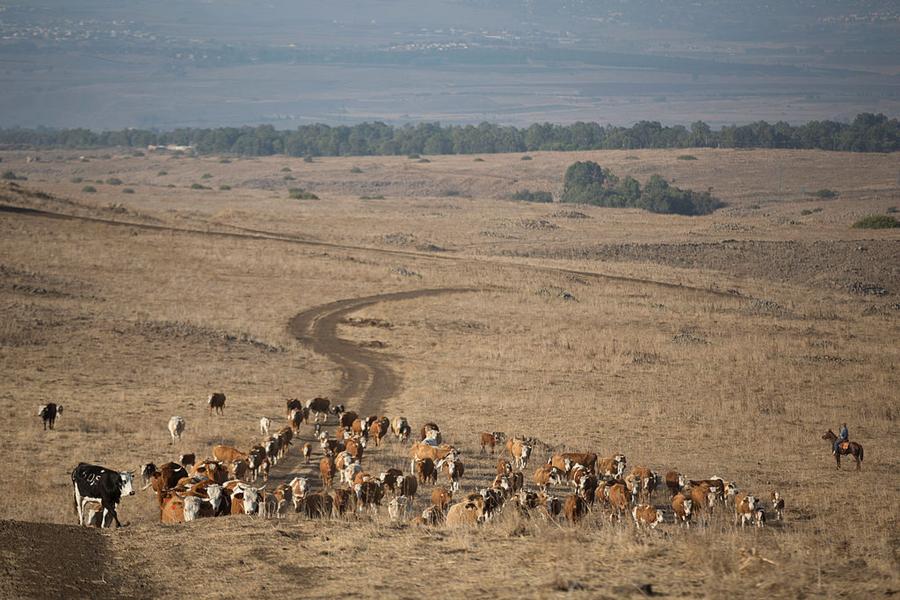
Uriel Sinai/Getty Images
John Malone's history is equally fascinating. Outside of his roughly 2.2 million acres of land, Malone also owns a large chunk of Warner Bros. Discovery, part of the Atlanta Braves, and Formula 1. Not a Formula 1 team. Not part of Formula 1. All of Formula 1.
After starting his career at Bell Labs, Malone returned to Johns Hopkins to earn a PhD in operations research—a background in mathematical modeling that would later become his "secret weapon" in complex financial engineering. Following a three-year stint at McKinsey & Co., where he observed Wall Street's skepticism toward the fledgling cable industry, he moved to General Instrument.
As head of the Jerrold division, he crossed paths with Bob Magness, founder of the then-foundering Tele-Communications, Inc. (TCI). In 1973, Malone took a massive gamble, moving to Colorado to become TCI's CEO. At the time, the company was a financial wreck: it generated only $12 million in annual sales but was suffocating under $132 million in debt. Through aggressive acquisitions and tax-efficient structures, he grew the subscriber base from 400,000 to 8.5 million by 1990. In 1998, he orchestrated a landmark $32 billion sale to AT&T, a move that provided AT&T with the infrastructure to pivot from traditional telephony into high-speed internet, while cementing Malone's status as a billionaire.
The AT&T deal allowed Malone to retain control of Liberty Media, originally a TCI subsidiary. Under his leadership, Liberty evolved into a global powerhouse, utilizing a "tracker stock" strategy to isolate and grow specific assets. His portfolio expanded to include giants like Virgin Media, QVC, and the Game Show Network.
Malone's strategy shifted toward sports and live entertainment as "appointment viewing" became more valuable in the streaming age:
- The Atlanta Braves: Acquired in 2007, the team was eventually spun off into the Atlanta Braves Holdings, Inc., showcasing Malone's knack for unlocking shareholder value.
- Formula One (F1): In 2016, Liberty acquired F1 for $4.4 billion. Under Malone's oversight, the sport exploded in US popularity, largely fueled by the Netflix series Drive to Survive.
- Warner Bros. Discovery: Malone was a primary architect behind the Discovery/Scripps merger in 2017 and the subsequent massive merger with WarnerMedia in 2022, placing him at the center of the "streaming wars" alongside brands like HBO, HGTV, and CNN.
Malone did not set out to become a land baron. By his own telling, the obsession traced back to a formative summer he spent on a family farm in Pennsylvania, an experience that left him with a lifelong attachment to open space, working land, and the idea that acreage, unlike companies, rarely disappears.

Scott Olson/Getty Images
Meanwhile, LA Rams owner Stan Kroenke has slowly been adding to his own impressive land portfolio. Up until very recently, Stan owned around 1.7 million acres of land. That made him the third-largest individual landowner in the US.
Sitting between Stan and John was Ted Turner, who owns around 2 million acres. A popular, but unfortunately false, legend about Ted Turner's impressive land holdings is that he can ride a horse from Canada to Mexico without leaving his own property. Fun concept, unfortunately, not real though.
Getting back to Stan. It was just revealed that Stan was the buyer last month of 937,000 acres of New Mexico ranchland. The purchase price was not disclosed, but it boosted his total holdings to 2.7 million acres, allowing Stan to officially leap beyond Ted, the Emmersons, and John to become America's undisputed largest landowner.
Stan owns at least nine ranches in America, including the 560,000-acre Q Creek in Wyoming. His real estate holdings represent around $4 billion out of his $22 billion net worth.
In addition to being married to a Walmart heir, Stan earned a fortune through real estate development. He parlayed that fortune (and some of his shared Walmart fortune) into a sports empire that today includes:
- The Los Angeles Rams (NFL)
- Arsenal Football Club
- The Denver Nuggets (NBA)
- The Colorado Avalanche (NHL)
- The Colorado Rapids (MLS)
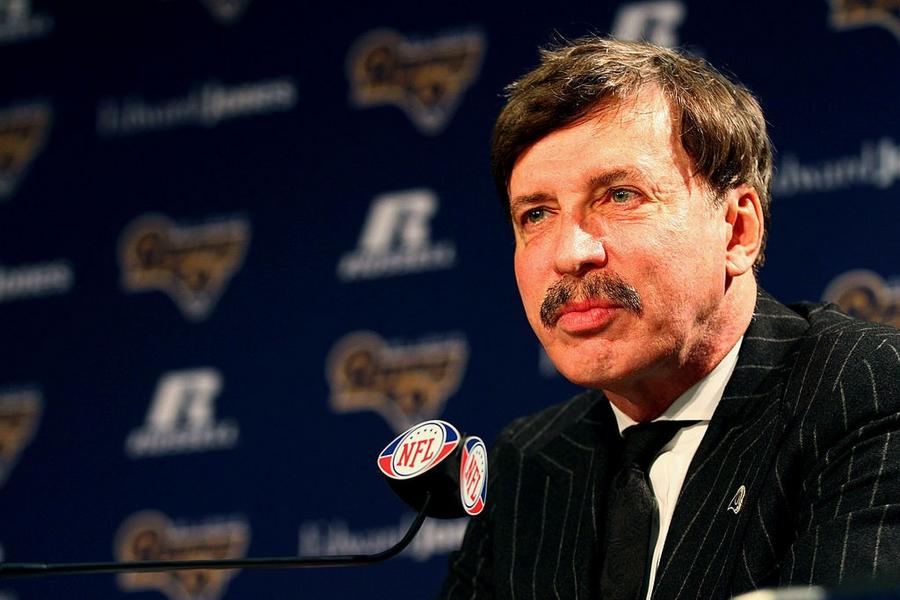
Dilip Vishwanat/Getty Images
The 20 Largest Landowners in the United States
If the top 20 private landowners in the U.S. formed their own country, their 22 million acres would make them larger than Ireland, Switzerland, or South Carolina. This immense territory isn't just empty space; it's a powerhouse of American industry, driven by legacy timber tracts, some of the world's largest cattle ranches, and a burgeoning market for carbon-offset conservation.
1. Stan Kroenke (2,700,000 acres)
In a move that stunned the real estate world in late 2025, sports mogul Stan Kroenke (owner of the LA Rams and Denver Nuggets) acquired nearly 1 million acres from the Singleton family. This acquisition propelled him from the #4 spot to #1. His portfolio now spans at least nine massive ranches, including the historic W.T. Waggoner Ranch in Texas and Q Creek in Wyoming. Kroenke's holdings are a blend of working cattle operations and premier recreational land.
2. The Emmerson Family (2,440,000 acres)
Owners of Sierra Pacific Industries, the Emmersons are the undisputed kings of American timber. Based in California, their holdings are primarily industrial forests in the Pacific Northwest. They are known for a vertically integrated model, owning the land, the trees, and the mills that process them. Their 2026 ranking remains steady, as they continue to acquire strategic timber tracts to bolster their sustainable harvesting operations.
3. John Malone (2,200,000 acres)
The "Cable Cowboy" and Liberty Media chairman emeritus held the top spot for years before the Kroenke surge. Malone's land strategy is diverse, ranging from timberlands in Maine and New Hampshire to massive cattle ranches in Wyoming and Colorado. He is a vocal advocate for land conservation, often placing his properties under easements to protect them from future development.
4. Ted Turner (2,000,000 acres)
The CNN founder is perhaps the most famous face of American land conservation. His holdings are legendary for their focus on "rewilding," specifically his efforts to restore the American bison population. His Vermejo Park Ranch in New Mexico is a crown jewel of his portfolio, functioning as both a world-class eco-tourism destination and a biological preserve.
5. The Reed Family (1,615,000 acres)
As the owners of Green Diamond Resource Company, the Reeds are a multi-generational timber family. Their land is concentrated in the Pacific Northwest and the South. In recent years, they have become leaders in "working forest" conservation, balancing commercial logging with the protection of endangered species like the northern spotted owl.
6. The Buck Family (1,320,000 acres)
Following the passing of Subway co-founder Peter Buck, his heirs have maintained his massive commitment to the North Maine Woods. Their holdings are managed primarily for timber and conservation, ensuring that hundreds of thousands of acres of pristine Maine forest remains undeveloped and open for traditional public use like hunting and fishing.
7. The Irving Family (1,267,000 acres)
The Canadian-based Irving family owns J.D. Irving, Limited. While their total international holdings are much larger, their U.S. land is primarily located in Maine. They are known for advanced silviculture techniques, planting millions of trees every year to maintain a high-yield, sustainable timber supply for their various paper and wood product businesses.
8. The King Ranch Heirs (911,000 acres)
The legendary King Ranch in South Texas is more than a property; it is a cultural institution. Larger than the state of Rhode Island, it is a diversified powerhouse involved in cattle, citrus, turfgrass, and even retail branding. The heirs have successfully transitioned the historic 19th-century ranch into a modern, multi-industry conglomerate.
9. The Pingree Heirs (830,000 acres)
Dating back to the mid-1800s, the Pingree family holdings represent one of the oldest timber dynasties in Maine. Managed by Seven Islands Land Company, their forests are globally recognized for sustainable management practices. They were among the first major landowners to achieve FSC (Forest Stewardship Council) certification for their entire acreage.
10. The Cullen Heirs (800,000 acres)
The Cullen family, heirs to the fortune of oil legend Hugh Roy Cullen, entered the top 10 this year following the reshuffling of the list. Their holdings, managed through Quintana Minerals Corporation, are a mix of resource-rich lands and agricultural tracts, primarily located across Texas and the Southeast.
11. Brad Kelley (675,000 acres)
Brad Kelley, a self-made billionaire who founded Commonwealth Brands, owns massive ranching tracts in Texas, Florida, and Kentucky. He is famously private and is known for using his land to raise rare species of exotic animals, often moving away from traditional commercial cattle operations.
12. The Wilks Brothers (675,000 acres)
Dan and Farris Wilks, who made their fortune in the fracking industry, have rapidly accumulated land across Idaho, Montana, and Texas. They are often at the center of public debates regarding land access and hunting rights, as they frequently close off previously public-access routes on their private parcels.
13. Thomas Peterffy (647,000 acres)
Thomas Peterffy, the founder of Interactive Brokers, owns one of the largest contiguous blocks of land in the Eastern U.S.—the Foley Timber & Land tract in Florida. His approach has focused on long-term timber value and potential future development as Florida's population continues to expand northward.
14. Stefan Soloviev (617,000 acres)
Soloviev has been the biggest climber in the agricultural sector over the last five years. His company, Crossroads Agriculture, has acquired vast swathes of the "Breadbasket"—specifically in Kansas and Colorado—focusing on high-efficiency crop production and grain logistics.
15. The Lykes Heirs (615,000 acres)
Another Florida powerhouse, the Lykes family has been a fixture of the state's economy for over a century. Their land supports one of the largest cow-calf operations in the country and is a major producer of citrus, which has been the family's hallmark for generations.
16. The Ford Family (600,000 acres)
The Fords own Roseburg Forest Products. Their land is the engine of their timber business, spanning the Pacific Northwest and the Southeast. They are notable for being one of the few large timber owners that remain family-owned rather than transitioning to a Real Estate Investment Trust (REIT).
17. The O'Connor Heirs (587,800 acres)
Like the King Ranch heirs, the O'Connors are a storied Texas ranching family. Their land is located in the coastal bend of Texas and is rich in both agricultural value and oil and gas minerals, which have sustained the family's wealth for over a century.
18. The Westervelt Heirs (566,000 acres)
Based in the Southeast, the Westervelt family has transitioned from a paper company into a modern land resources firm. Their acreage is managed for timber, hunting leases, and ecological mitigation banking, where they restore wetlands to offset industrial development elsewhere.
19. The Stimson Family (552,000 acres)
The Stimsons own the Stimson Lumber Company, one of the oldest continuously operating forest products companies in the West. Their land is primarily located in Oregon, Idaho, and Washington, supporting a chain of mills that provide specialized lumber products.
20. The Martin Family (550,000 acres)
Operating under the brand RoyOMartin, this family has been a staple of the Louisiana timber industry for three generations. Their land supports state-of-the-art manufacturing facilities for oriented strand board (OSB) and plywood, making them a critical player in the Southern timber economy.
The "Pioneer Woman" Factor: The Drummond Family
Have you heard of Ree Drummond, aka "The Pioneer Woman"? Here's a fun fact: Her husband, Ladd Drummond, is a member of the Drummond family. If we expanded our list a bit beyond 20, the Drummonds would rank #23 with 433,000 acres. The Drummonds own roughly 9% of Osage County, Oklahoma. Their operation, the Drummond Land & Cattle Co., is a massive cattle business that also serves as a vital partner for the U.S. government, providing sanctuary for thousands of wild horses and burros.
/2015/09/John-Malone.jpg)
/2010/07/Stanley-Kroenke.jpg)
/2022/01/ann-walton.jpg)
/2009/10/Ted-Turner.jpg)
/2015/09/bhuton.jpg)
/2012/11/ree-e1592084823842.jpg)
/2009/09/Cristiano-Ronaldo.jpg)
/2020/02/Angelina-Jolie.png)
:strip_exif()/2009/09/P-Diddy.jpg)
/2020/06/taylor.png)
/2020/04/Megan-Fox.jpg)
/2017/02/GettyImages-528215436.jpg)
:strip_exif()/2015/09/GettyImages-476575299.jpg)
/2019/04/rr.jpg)
/2019/11/GettyImages-1094653148.jpg)
/2009/11/George-Clooney.jpg)
/2009/09/Jennifer-Aniston.jpg)
/2018/03/GettyImages-821622848.jpg)
/2009/09/Brad-Pitt.jpg)
/2020/01/lopez3.jpg)
/2019/10/denzel-washington-1.jpg)