
/2025/05/GettyImages-2208048759.jpg)
/2026/01/Cody-Bellinger.png)
/2015/10/Jason-Heyward.jpg)
/2018/12/George-Springer.jpg)
/2025/02/GettyImages-2163991550.jpg)
/2020/06/taylor.png)
/2020/02/Angelina-Jolie.png)
/2020/01/lopez3.jpg)
:strip_exif()/2009/09/P-Diddy.jpg)
/2019/04/rr.jpg)
/2009/11/George-Clooney.jpg)
/2019/11/GettyImages-1094653148.jpg)
/2009/09/Cristiano-Ronaldo.jpg)
/2017/02/GettyImages-528215436.jpg)
/2009/09/Jennifer-Aniston.jpg)
/2019/10/denzel-washington-1.jpg)
/2018/03/GettyImages-821622848.jpg)
What is Kyle Tucker's net worth & salary?
Kyle Tucker is an American baseball player who has a net worth of $60 million. A left-handed hitter with power, patience, and speed, Tucker emerged as a cornerstone player in Houston before proving his portability as a star following a high-profile trade to Chicago. Over the course of his prime seasons, he became known less for headline-grabbing theatrics and more for relentless efficiency, regularly producing 4- to 5-WAR campaigns while anchoring playoff-caliber lineups. His ability to impact games in multiple ways has made him especially valuable in October, where he logged deep postseason runs year after year and played a key role on a championship roster. By the time he reached free agency, Tucker was widely regarded as the most well-rounded player on the market, a rare combination of durability, two-way skill, and big-game experience. That reputation ultimately positioned him to command one of the most aggressive short-term contracts in modern baseball history, reshaping expectations for how elite players can maximize value without sacrificing flexibility.
Early Life
Kyle Daniel Tucker was born on January 17, 1997. He grew up in Florida and attended Plant High School in Tampa, a baseball powerhouse that previously produced stars such as Wade Boggs and Pete Alonso. Tucker quickly stood out as a polished hitter with advanced plate discipline and emerging power, earning national attention before his senior season. His amateur success made him one of the most highly regarded prep prospects in the country, setting the stage for a rapid rise through professional baseball.
MLB Career
Tucker was selected fifth overall in the 2015 MLB Draft by the Houston Astros, a franchise in the midst of building a modern dynasty. After developing steadily in the minor leagues, he reached the majors and soon established himself as a core piece of Houston's lineup. His breakout seasons featured a rare blend of power, on-base ability, and speed, while his defense in right field earned both internal trust and league-wide recognition.
During his tenure with the Astros, Tucker helped the team remain a perennial postseason threat. He played a crucial role in deep playoff runs and was part of the roster that won the 2022 World Series, further cementing his reputation as a player whose performance translated seamlessly to October. His production was remarkably consistent, with multiple seasons of elite run creation and strong defensive metrics.
In a blockbuster move designed to extend their competitive window, Houston later traded Tucker to the Chicago Cubs in exchange for a package of young talent. The Cubs viewed Tucker as a transformative addition, betting that his presence could accelerate a return to the playoffs. He delivered on that expectation, providing middle-of-the-order production and leadership, even as injuries muted parts of his second half. Despite the short tenure, Tucker's impact reaffirmed his status as one of baseball's most reliable stars.
Playing Style & Accolades
Tucker's value lies in his completeness. At the plate, he pairs above-average power with patience, regularly posting strong on-base percentages while driving the ball to all fields. On the bases, he is an intelligent and efficient runner, adding incremental value that often goes unnoticed in traditional box scores. Defensively, his strong arm and instincts in right field have earned him a Gold Glove, complementing his offensive accolades.
Over his career, Tucker accumulated multiple All-Star selections and Silver Slugger awards, finishing among league leaders in advanced metrics such as WAR and OPS+. While he rarely dominated MVP voting in any single season, his year-to-year consistency made him one of the safest elite bets in the sport.
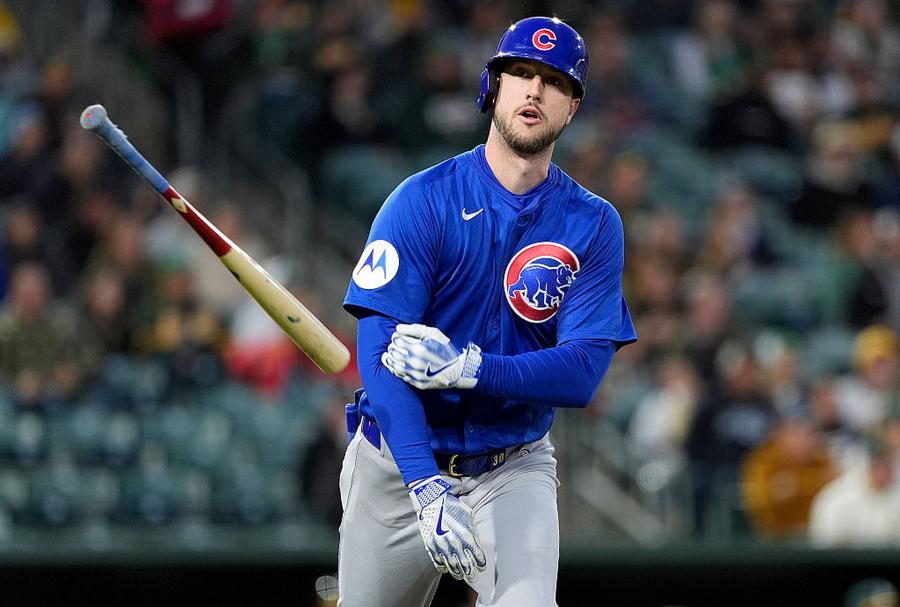
Kyle Tucker of the Chicago Cubs. (Thearon W. Henderson/Getty Images)
Pre-2026 Career Earnings
After being selected fifth overall in the 2015 MLB Draft, Tucker signed a standard rookie deal that paid a modest signing bonus by superstar standards, reflecting the league's tightly controlled compensation structure for amateur players. For several years, his income remained relatively limited while he progressed through the minor leagues and established himself at the major league level.
Once Tucker became a full-time contributor in Houston, his salary began to rise, though it was still constrained by team control. During his pre-arbitration seasons, he earned close to the league minimum despite producing at an All-Star level, a disparity common for young stars who break out early. Those years represented enormous surplus value for the Astros, as Tucker delivered elite performance at a fraction of his open-market worth.
Tucker's first major pay increases arrived through the arbitration process. As his power numbers, defensive value, and postseason résumé grew, so did his annual salary. Each arbitration year brought a significant raise, ultimately pushing his compensation into the high eight figures. By the time he was traded to Chicago, Tucker was already one of the highest-paid arbitration-eligible players in the sport, a reflection of both his consistency and his standing among the game's top outfielders.
Across his seasons with Houston and Chicago prior to 2026, Tucker earned $33 million in total salary.
$240 Million Contract
In January 2026, Tucker signed a four-year, $240 million contract with the Los Angeles Dodgers, a deal widely viewed as one of the most aggressive free-agent contracts in baseball history. The agreement carried an average annual value of roughly $60 million, second only to Shohei Ohtani among MLB contracts and the highest ever for a non–two-way player.
The contract included opt-outs after the second and third seasons, giving Tucker the flexibility to re-enter free agency while still in his early 30s. It also featured deferred money spread across the later years of the deal, a structure that has become increasingly common for the Dodgers. Even with those deferrals, the present-day value of the contract set a new benchmark for annual compensation.
The deal underscored a broader shift in how elite players can maximize earnings, prioritizing short-term dominance and optionality over decade-long commitments. For Tucker, it represented both financial security and strategic control over the next phase of his career, all while joining a roster built to contend for championships immediately.
/2025/05/GettyImages-2208048759.jpg)
/2026/01/Cody-Bellinger.png)
/2026/01/GettyImages-2220579351.jpg)
/2025/12/GettyImages-2239622993.jpg)
/2025/10/GettyImages-2190484946.jpg)
/2025/12/GettyImages-2248932972.jpg)
/2016/06/GettyImages-504137888.jpg)
/2020/01/kyle.jpg)
/2020/04/Megan-Fox.jpg)
/2009/09/Brad-Pitt.jpg)