
/2012/08/bill-wrigley.jpg)
/2025/03/William_Wrigley_Jr.jpg)
/2026/01/jane-lauder.png)
/2012/08/Jim-davis.png)
/2009/12/GettyImages-85663947.jpg)
/2025/02/missing_profile.jpg)
/2019/04/rr.jpg)
/2020/06/taylor.png)
/2019/10/denzel-washington-1.jpg)
/2020/02/Angelina-Jolie.png)
/2009/11/George-Clooney.jpg)
/2018/03/GettyImages-821622848.jpg)
/2009/09/Brad-Pitt.jpg)
:strip_exif()/2009/09/P-Diddy.jpg)
/2009/09/Jennifer-Aniston.jpg)
/2017/02/GettyImages-528215436.jpg)
/2020/04/Megan-Fox.jpg)
What is William Wrigley, Jr.'s net worth?
William Wrigley, Jr., also known as Bill Wrigley, is an American candy heir who has a net worth of $3.7 billion. That makes him one of the richest people in Illinois.
As the great-grandson of founder William Wrigley Jr., he represents the fourth generation of leadership and stewardship tied to a company that helped define modern mass marketing and brand building. Over the course of his career, Wrigley II became deeply involved in the family business, eventually serving as chairman of the William Wrigley Jr. Company and playing a central role in guiding it through its final decades as a publicly traded, family-controlled enterprise. His tenure coincided with a period of global expansion, operational modernization, and increasing consolidation within the food and consumer packaged goods industry.
Wrigley II is best known financially for what came at the end of that arc rather than the beginning. In 2008, the family agreed to sell the William Wrigley Jr. Company to Mars Inc. in a landmark $23 billion transaction, one of the largest deals ever completed in the food sector. The sale transformed the private wealth profile of the extended Wrigley family overnight and cemented William Wrigley Jr. II as one of the wealthiest individuals in Illinois. Since the Mars acquisition, he has lived largely outside the public spotlight, focusing on private investments, philanthropy, and the careful management of generational wealth built on one of America's most enduring consumer brands.
Early Life and Family Background
William Wrigley Jr. II was born into a family whose name had been synonymous with chewing gum, baseball, and Chicago business for nearly a century. His great-grandfather, William Wrigley Jr., founded the company that bore his name and turned gum into a global staple through relentless advertising, distribution innovation, and brand discipline. By the time Wrigley II came of age, the family enterprise had already survived the Great Depression, multiple leadership transitions, and decades as a publicly traded company with strong family control.
Growing up, Wrigley II was exposed early to the responsibilities and expectations that come with inheriting a legacy business. Education, discipline, and long-term thinking were emphasized, along with an understanding that the family fortune was tied to stewardship rather than short-term gain. That mindset would later shape his approach to leadership within the company and his role in overseeing its eventual sale.
Career at the William Wrigley Jr. Company
William Wrigley Jr. II joined the family business in the latter half of the 20th century, working his way into senior leadership during a period when global consumer brands were facing increasing competition from multinational conglomerates. Over time, he rose to become chairman of the William Wrigley Jr. Company, helping guide strategy at the board level rather than acting as a day-to-day operator.
During his tenure, Wrigley remained focused on the core principles that had defined the company since its founding. These included aggressive brand protection, heavy investment in advertising, and a cautious approach to diversification. Under family leadership, Wrigley gum brands such as "Juicy Fruit," "Spearmint," and "Doublemint" continued to dominate market share in the United States while expanding their reach internationally.
Wrigley II also had to navigate the increasing pressure facing family-controlled public companies. As global food giants grew through mergers and acquisitions, remaining independent became more challenging. Capital requirements rose, distribution networks became more complex, and competition intensified across every major market. These forces set the stage for the most consequential decision of his career.
The $23 Billion Mars Deal
In 2008, the Wrigley family agreed to sell the William Wrigley Jr. Company to Mars Inc. for approximately $23 billion. The transaction marked the end of more than a century of family control and instantly ranked among the largest deals in consumer products history. For Mars, the acquisition added the world's most famous gum brands to its privately held portfolio. For the Wrigley family, it converted a multigenerational operating business into diversified liquid wealth.
William Wrigley Jr. II was a key figure in shepherding the deal to completion. The sale required balancing emotional attachment to a legacy brand with the financial and strategic realities of the modern global marketplace. When the transaction closed, dozens of Wrigley heirs received enormous payouts, with several becoming billionaires overnight. Wrigley II emerged from the deal as one of the most prominent beneficiaries, cementing his status among America's ultra-wealthy.
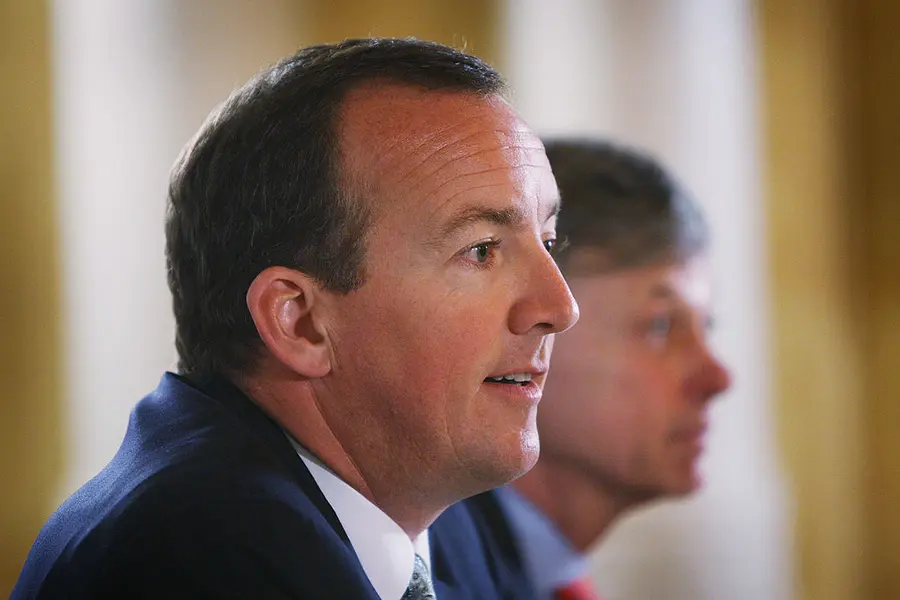
(Photo by Scott Olson/Getty Images)
Life After Wrigley
Following the Mars acquisition, William Wrigley Jr. II largely stepped away from public corporate leadership. Unlike some heirs who parlay liquidity events into high-profile venture capital or media careers, Wrigley II has maintained a notably low profile. His post-sale activities have focused on private investing, family governance, and philanthropy rather than public-facing entrepreneurship.
He has also remained closely associated with Chicago civic and cultural life, continuing the family's long tradition of quiet influence rather than headline-seeking philanthropy. The Wrigley name remains deeply embedded in the city's identity, even decades after the family relinquished ownership of the Chicago Cubs and control of the gum company.
Real Estate
William Wrigley Jr. II has deployed a portion of his post-Mars liquidity into high-end residential real estate, with a clear preference for waterfront and resort-style properties rather than urban trophy homes. His most notable recent transaction involved a sprawling compound in North Palm Beach, Florida, located within the exclusive Lost Tree Village gated community.
In December 2025, Wrigley sold the off-market North Palm Beach compound for $97.5 million, making it one of the most expensive residential sales ever recorded in the area. The property sat along the Intracoastal Waterway and comprised two adjacent parcels, each with its own mansion. According to property records, the larger estate was built in 2013, while the second residence was completed in 2014. The compound also featured multiple private docks and substantial undeveloped land adjacent to the main home, though it remains unclear whether that portion was eligible for further development.
Wrigley assembled the property over time rather than purchasing it as a single turnkey estate. He acquired the larger parcel in 2009 for approximately $11 million and added the neighboring property the following year for $6.1 million. The nearly $100 million sale price represents a dramatic appreciation over his combined acquisition cost, reflecting both South Florida's luxury real estate boom and the growing premium placed on waterfront compounds in gated communities.
Lost Tree Village is known for attracting senior business executives and ultra-high-net-worth individuals, with amenities that include an 18-hole golf course designed by Jack Nicklaus. The sale further cemented the area's status as one of Florida's most exclusive residential enclaves.
Beyond Florida, Wrigley has also held notable luxury properties in traditional wealth hubs. In 2022, he sold a mansion in Aspen, Colorado, for $30 million, underscoring a pattern of owning and eventually exiting resort-market real estate rather than maintaining a sprawling, permanent portfolio.
/2012/08/bill-wrigley.jpg)
/2025/02/missing_profile.jpg)
/2025/03/William_Wrigley_Jr.jpg)
/2025/12/wrigley.png)
/2014/04/harmsworth.png)
/2019/02/CNW-Man-12.png)
/2012/08/Jim-davis.png)
/2012/07/GettyImages-486434039.jpg)
/2009/09/Cristiano-Ronaldo.jpg)
/2019/11/GettyImages-1094653148.jpg)