
/2018/11/sa.jpg)
/2015/05/GettyImages-56096745.jpg)
/2014/02/GettyImages-475092105.jpg)
/2013/08/Doc-Severinsen-1.jpg)
:strip_exif()/2009/09/Jay-Leno.jpg)
/2013/08/law.jpg)
/2019/10/denzel-washington-1.jpg)
/2019/04/rr.jpg)
/2009/11/George-Clooney.jpg)
/2009/09/Brad-Pitt.jpg)
/2017/02/GettyImages-528215436.jpg)
/2020/02/Angelina-Jolie.png)
/2009/09/Jennifer-Aniston.jpg)
/2020/04/Megan-Fox.jpg)
/2020/01/lopez3.jpg)
/2018/03/GettyImages-821622848.jpg)
:strip_exif()/2015/09/GettyImages-476575299.jpg)
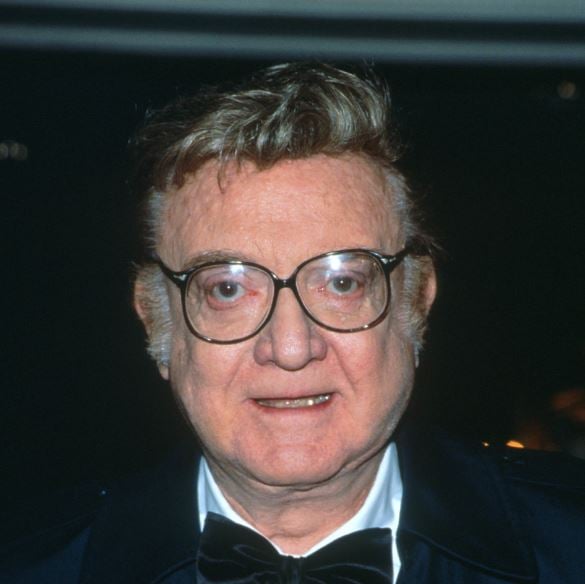
What is Steve Allen's Net Worth?
Steve Allen was an American television and radio personality, comedian, writer, composer and musician, and actor who had a net worth of $18 million. Steve Allen was the co-creator and inaugural host of "The Tonight Show," the first late-night television talk show to air nationwide, and the host of the variety program "The Steve Allen Show." Among his numerous other activities, he wrote, produced, and hosted the PBS series "Meeting of Minds"; penned thousands of songs; and wrote over 50 books, including short story collections, children's books, and non-fiction works.
Early Life
Steve Allen was born on December 26, 1921 in New York City as the only child of Belle Montrose and Billy Allen, a vaudeville comedy duo. When Steve was just a baby, his father passed away, and he was subsequently raised by his mother and her family on the South Side of Chicago. At the age of 16, he ran away from home and panhandled on the streets.
Career Beginnings
Allen began his career in radio at the station KOY in Phoenix, Arizona. He later served as an announcer for KFAC in Los Angeles. In 1946, Allen moved to the Mutual Broadcasting System, where he had his own comedy show called "Smile Time." His popularity grew after he moved back to Los Angeles and began working at KNX. There, Allen honed his ad-libbing skills, which he subsequently brought to his role as a television announcer for professional wrestling in 1949. The year after that, he began starring on his first network show, "The Steven Allen Show," which aired from 1950 to 1952 on CBS. During that time, in 1951, Allen gained national attention when he guest-hosted the popular variety show "Arthur Godfrey's Talent Scouts." In 1953, Allen became a regular panelist on the game show "What's My Line?," bringing him even more fame.
The Tonight Show
In 1953, Allen created and became the host of the late-night television talk show "Tonight Starring Steve Allen," which originally aired on the local New York City station WNBT-TV. The show moved up to the national NBC network in 1954 as "The Tonight Show," with Gene Rayburn serving as the announcer. Allen hosted the program, the first late-night nationwide television talk show, until 1957. As the host, he pioneered a number of routines that would go on to become cornerstones of late-night television, including "man on the street" comedic interview segments and audience-participation comedy breaks.
In 1957 Allen stepped away from the program, and NBC selected Jack Paar as his successor. Paar shifted "The Tonight Show" toward a more conversational and personality-driven format, often centering the show on long, candid interviews. His emotional on-air persona and memorable monologues gave the series a new identity and helped solidify its national influence. Paar hosted until 1962, when he departed at the height of his popularity.
Johnny Carson then took over in 1962, beginning what became the most iconic run in late-night television history. Carson hosted for thirty years and transformed "The Tonight Show" into a cultural institution, refining the monologue, popularizing the host's desk-and-couch setup, and setting a standard that future late-night programs would emulate. When Carson retired in 1992, Jay Leno became the new host and led the show throughout most of the 1990s and 2000s, becoming one of the most-watched late-night personalities of his era.
In 2009 Conan O'Brien briefly succeeded Leno after years as the host of "Late Night," although NBC ultimately reinstated Leno in 2010 following a widely publicized scheduling conflict. Leno continued until 2014, when the network transitioned the franchise to Jimmy Fallon. Fallon brought a younger, more music-driven, viral-content-oriented approach to the show, incorporating games, musical impressions, and digital-friendly comedy into the long-running format.
This succession from Steve Allen to Jack Paar, Johnny Carson, Jay Leno, Conan O'Brien, and finally Jimmy Fallon reflects the evolution of late-night television across generations, with each host shaping the show to fit the cultural moment of their tenure.
Getty
The Steve Allen Show
In mid-1956, Allen began hosting his own primetime Sunday night variety program, "The Steve Allen Show," on NBC. Regulars on the show included Tom Poston, Bill Dana, Don Knotts, Gabriel Dell, and Louis Nye. Among the numerous guests were Bob Hope, Errol Flynn, Jerry Lewis, Shelley Winters, and Kim Novak. Allen hosted "The Steven Allen Show" until its cancellation in 1960. The show returned in 1961 on ABC as "The New Steve Allen Show," but it was canceled after 14 episodes.
Other Television Programs
Allen returned to network television in 1964 as host of the CBS panel game show "I've Got a Secret." He would later host the syndicated revival from 1972 to 1973. Before that, Allen hosted "The Steve Allen Comedy Hour" in 1967 and a syndicated variety show for Filmways from 1968 to 1971. He had his next major show in 1977, when he created the PBS series "Meeting of Minds." The series brought together actors to portray various historical figures in roundtable discussions; they would talk about such social issues as racism, slavery, religion, women's rights, and crime and punishment. Allen wrote, produced, and hosted the show, which ran until 1981. Highly acclaimed, "Meeting of Minds" won many accolades, including a Peabody Award for Allen.
In 1984, Allen created and began hosting the talk show "Steve Allen's Music Room" on the newly created Disney Channel. The show featured jazz vibraphonist and bandleader Terry Gibbs and included such guests as Paul Williams, Burt Bacharach, Dizzy Gillespie, Rosemary Clooney, and Henry Mancini. Allen also hosted a spinoff show on Disney Channel called "Steve Allen's Comedy Room." In addition to his various hosting gigs, he acted in some drama series over the years, with guest roles on "The DuPont Show with June Allyson," "Rich Man, Poor Man," "St. Elsewhere," "Homicide: Life on the Street," and "Diagnosis: Murder." In the 1990s, Allen lent his voice to two episodes of "The Simpsons" and was a guest on the Cartoon Network parody talk show "Space Ghost Coast to Coast."
Film Career
In 1949, Allen wrote the screenplay to the compilation film "Down Memory Lane"; he also appeared in the film as himself. He had his first starring role in a film in 1956, when he portrayed clarinetist and bandleader Benny Goodman in the musical biopic "The Benny Goodman Story." Allen starred opposite Donna Reed. In 1959, he appeared as himself in the drama "The Big Circus," and in 1960 he starred as a sociology professor in the B-movie "College Confidential." Later in the 1960s, Allen appeared in the crime thriller "Warning Shot," the comedy "Where Were You When the Lights Went Out?," and the dramedy "The Comic." His final film role was in the 1994 high school basketball drama "The St. Tammany Miracle," in which he played the grandfather of Soleil Moon Frye's character.
Music Composing
By his own estimate, Allen penned over 8,500 songs, although only a small portion of them were recorded. He launched his recording career in 1951 with his album "Steve Allen at the Piano," which was released by Columbia Records. After that, Allen recorded various novelty songs and jazz songs for subsidiaries of Decca Records. Among his most popular songs were "This Could Be the Start of Something" and "Pretend You Don't See Her." Allen also earned acclaim for setting words to Ray Brown's instrumental "Gravy Waltz," a collaboration that earned Allen a Grammy Award for Best Original Jazz Composition. Allen also wrote music and lyrics for some stage shows, including the short-lived Broadway musicals "Sophie" and "Belle Starr," and composed the score for the 1968 spy film "A Man Called Dagger." In 1985, he wrote all 19 songs for the CBS television musical miniseries "Alice in Wonderland."
Books and Essays
Allen authored over 50 books, including children's books, short story collections, autobiographies, and volumes of opinions and essays. Notable titles included the non-fiction works "Dumbth: The Lost Art of Thinking with 101 Ways to Reason Better and Improve Your Mind," "Steve Allen on the Bible, Religion, and Morality," and "Vulgarians at the Gate: Trash TV and Raunch Radio." Allen was also credited as the author of a series of mystery novels that were ghostwritten by others. Elsewhere, as a noted scientific skeptic, he penned many essays for Skeptic magazine.
Personal Life and Death
Allen married his first wife, Dorothy Goodman, in 1943. They had three children — Steve Jr., Brian, and David — and divorced in 1952. Allen went on to marry actress Jayne Meadows in 1954; they had a son named Bill and remained together until Allen's passing.
On October 30, 2000, Allen was driving to see his son in Los Angeles when another driver, backing out of his driveway, struck the side of Allen's car. Although he suffered injuries, including a ruptured blood vessel, Allen didn't realize the extent of the damage. Arriving at his son's home, he took a nap and passed away in his sleep. Allen is interred at Forest Lawn Memorial Park in the Hollywood Hills.
/2018/11/sa.jpg)
/2015/05/GettyImages-56096745.jpg)
/2010/08/Johnny-Carson.jpg)
/2015/06/Conan-OBrien.jpg)
/2018/03/Ed-McMahon.jpg)
/2017/09/gr2.png)
/2014/02/GettyImages-475092105.jpg)
/2012/02/Marc-Summers.jpg)
:strip_exif()/2009/09/P-Diddy.jpg)
/2020/06/taylor.png)
/2019/11/GettyImages-1094653148.jpg)