
/2018/05/Esther-Williams.jpg)
/2014/05/GettyImages-95677985.jpg)
/2014/12/June-Allyson.jpg)
/2020/09/z.jpg)
/2019/03/canj.jpg)
/2019/08/fl.jpg)
/2020/04/Megan-Fox.jpg)
/2009/09/Cristiano-Ronaldo.jpg)
/2020/01/lopez3.jpg)
/2017/02/GettyImages-528215436.jpg)
/2019/04/rr.jpg)
/2018/03/GettyImages-821622848.jpg)
:strip_exif()/2009/09/P-Diddy.jpg)
/2009/09/Jennifer-Aniston.jpg)
/2009/11/George-Clooney.jpg)
/2019/11/GettyImages-1094653148.jpg)
/2020/06/taylor.png)
What was Esther Williams' net worth?
Esther Williams was an American actress and competitive swimmer who had a net worth of $40 million at the time of her death in 2013.
Esther Williams was an American competitive swimmer turned Hollywood actress who became one of MGM's biggest stars in the 1940s and early 1950s. Known as the "Million Dollar Mermaid," she headlined a unique genre of lavish "aquamusicals" that blended synchronized swimming, elaborate choreography, and Technicolor spectacle. After missing out on the 1940 Olympics due to World War II, Williams pivoted from elite athletics into entertainment, where her physical grace and screen presence made her one of the era's top box office draws. Films like "Bathing Beauty," "Neptune's Daughter," and "Dangerous When Wet" helped MGM pioneer a distinctive style of musical built around water-based performances, generating tens of millions in revenue for the studio. Despite her success, she often expressed frustration at being typecast in swimming roles and sought more traditional acting opportunities. After her film career declined in the late 1950s, Williams reinvented herself as a savvy businesswoman, building a successful brand around swimming pools and swimwear. Her legacy spans both Hollywood and American consumer culture, where she helped popularize backyard pools as a suburban staple.
Early Life and Swimming Career
Esther Jane Williams was born on August 8, 1921, in Inglewood, California. She did not grow up wealthy, and her introduction to swimming came through determination rather than privilege. To gain access to her local municipal pool, she took a job counting towels, earning one hour of swim time for every 100 towels she counted.
It was at that pool that lifeguards began teaching her competitive strokes, including the butterfly, which was still relatively uncommon at the time. Williams quickly emerged as a prodigy. By her late teens, she had won multiple national titles, including three gold medals at the 1939 Amateur Athletic Union championships.
Her success earned her a spot on the 1940 U.S. Olympic team, where she was expected to compete for gold. However, the outbreak of World War II led to the cancellation of the Tokyo Games, abruptly ending her Olympic ambitions and forcing her to reconsider her future.
Hollywood Discovery and Breakthrough
With her Olympic dreams cut short, Williams joined Billy Rose's "Aquacade," a touring water show that blended performance and athletics. There, she performed alongside Olympic champion and "Tarzan" star Johnny Weissmuller, learning how to adapt her competitive swimming into a form of entertainment.
MGM talent scouts quickly took notice. Interestingly, Williams did not immediately accept their offer, reportedly turning the studio down for nearly a year before signing. She approached Hollywood pragmatically, later joking that MGM's main contribution to her career was simply "changing the leading man and the water in my pool."
Her early screen test in "Andy Hardy's Double Life" generated strong audience response, and MGM quickly positioned her as a rising star.
Rise of the Aqua-Musical Star
Williams' breakout role came in "Bathing Beauty" (1944), which launched MGM's "aqua-musical" formula. The studio built elaborate productions around her athleticism, combining synchronized swimming, underwater cinematography, and large-scale choreography.
MGM invested heavily in her success, even constructing a custom 90-by-90-foot, 25-foot-deep pool on Stage 30 at a cost of $250,000, an enormous sum at the time. The facility included underwater viewing windows, hydraulic lifts, and specialized equipment designed to capture increasingly elaborate sequences.
Over the next decade, Williams starred in a string of successful films including "Thrill of a Romance," "Duchess of Idaho," "Neptune's Daughter," and "Million Dollar Mermaid." At her peak, she ranked among the top 10 box office stars in 1949 and 1950, with her films collectively generating more than $80 million for MGM.
Despite the commercial success, the physical demands were intense. She later estimated that she swam over 1,200 miles on camera during her career.
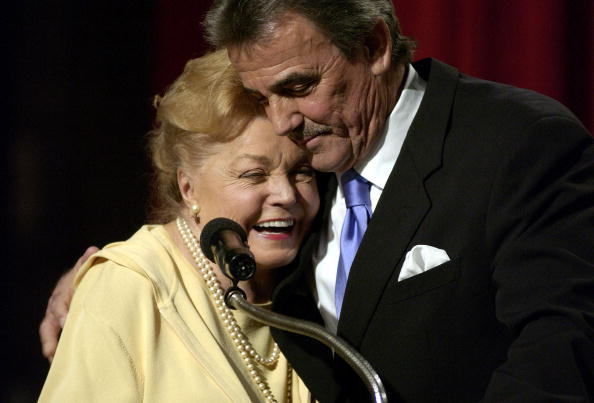
Amanda Edwards/Getty Images
Injuries, Typecasting, and Career Challenges
The spectacle of Williams' films often came at a personal cost. She suffered repeated injuries, including multiple ruptured eardrums from underwater filming.
Her most serious injury occurred during the production of "Million Dollar Mermaid," when she broke her back performing a high dive while wearing a heavy jeweled crown. The accident required months of recovery and underscored the risks behind her seemingly graceful performances.
Williams grew increasingly frustrated with being typecast in swimming roles. She pushed for dramatic parts, but audiences were less receptive to her outside the pool. Films like "The Hoodlum Saint" and "The Unguarded Moment" failed to replicate her earlier success, reinforcing MGM's reluctance to deviate from the established formula.
Contracts, Salaries & Career Earnings
Like most stars of Hollywood's Golden Age, Esther Williams was paid on a studio salary rather than receiving a share of box office profits. However, her importance to MGM allowed her to command top-tier compensation for the era.
In 1950, she signed a major contract reportedly worth $1.3 million, which included weekly pay of approximately $2,500. While modest by modern standards, this placed her among the higher-paid performers of her time.
Her films were consistently profitable, with her aquamusicals collectively generating tens of millions in revenue for MGM. However, Williams did not directly participate in that upside due to the studio system's compensation structure.
By the late 1950s, as her career slowed, she made the decision to buy out her MGM contract, a costly but important move that allowed her to regain control over her professional future.
Business Ventures and Reinvention
Williams proved to be highly forward-thinking about life after Hollywood. In 1959, she partnered in the launch of Esther Williams Swimming Pools, a brand that capitalized on the booming postwar suburban housing market.
The company became a major success, helping popularize affordable above-ground and in-ground pools across the United States. Her name became synonymous with backyard leisure and swimming culture.
In 1988, alongside her husband Edward Bell, she launched the Esther Williams Swimwear Collection. Dissatisfied with modern swimwear designs, she created high-quality, retro-inspired pieces that emphasized structure and durability. The brand achieved long-term commercial success and remains associated with her legacy.
Personal Life and Financial Challenges
Williams' personal life included four marriages and significant financial ups and downs. Her second marriage, to singer Ben Gage, proved particularly damaging financially. According to her own account, he squandered millions of dollars through gambling, failed business ventures, and unpaid taxes, leaving her with a $750,000 IRS bill by the time of their divorce.
She later married actor Fernando Lamas, becoming the stepmother of Lorenzo Lamas. Their marriage lasted until Fernando's death in 1982. Although it provided greater financial stability, it also came with personal challenges, including strained family dynamics.
In 1988, she married Edward Bell, a professor of French literature, and the couple remained together for the rest of her life.
Legacy
Esther Williams occupies a unique place in Hollywood history as both an elite athlete and a film star who created an entirely new genre of entertainment. Her aquamusicals combined athleticism, choreography, and spectacle in a way that had never been seen before and has rarely been replicated since.
Although she was sometimes limited by the very formula that made her famous, her films remain iconic examples of mid-century Hollywood extravagance. Beyond cinema, her influence extended into business, where she helped popularize swimming as both a recreational activity and a lifestyle.
Her career stands as a testament to reinvention, resilience, and the ability to transform missed opportunities into lasting success.
/2018/05/Esther-Williams.jpg)
/2019/08/fl.jpg)
/2019/03/canj.jpg)
/2019/03/dale.jpg)
/2019/01/Deborah-Kerr.jpg)
/2019/10/dm.jpg)
/2018/05/Johnny-Weissmuller-1.jpg)
/2009/09/Brad-Pitt.jpg)
:strip_exif()/2015/09/GettyImages-476575299.jpg)