
/2018/01/Edward-G.-Robinson.jpg)
/2013/10/Charlton-Heston-1.jpg)
/2022/06/Jack-Lemmon.jpg)
/2023/06/cecil.png)
/2022/02/george-burns.jpg)
/2017/08/james-cagney.png)
/2019/04/rr.jpg)
/2019/11/GettyImages-1094653148.jpg)
/2009/09/Brad-Pitt.jpg)
/2018/03/GettyImages-821622848.jpg)
/2009/11/George-Clooney.jpg)
/2020/02/Angelina-Jolie.png)
/2020/04/Megan-Fox.jpg)
/2009/09/Cristiano-Ronaldo.jpg)
:strip_exif()/2009/09/P-Diddy.jpg)
/2019/10/denzel-washington-1.jpg)
:strip_exif()/2015/09/GettyImages-476575299.jpg)
What Was Edward G. Robinson's Net Worth?
Edward G. Robinson was a Romanian American actor who had a net worth equal to $100 million at the time of his death after adjusting for inflation. Edward G. Robinson was born in Bucharest, Romania, in December 1893 and passed away in January 1973. During his 50-year career, Robinson appeared in more than 100 films and 30 Broadway productions. He was often a tough-guy gangster, including in movies like "Key Largo" (1948) and "Little Caesar" (1931). Edward was a critic of fascism and Nazism during the '30s and '40s. He testified at the House Un-American Activities Committee during the Red Scare, but he was cleared of involvement. Robinson's most well-known films include "Double Indemnity" (1944), "The Ten Commandments" (1956), and "Soylent Green" (1973). He was listed as #24 on the list of greatest male stars of Classic American cinema by the American Film Institute. Edward received an Honorary Academy Award in 1973 and a star on the Hollywood Walk of Fame for Motion Picture in 1960 at 6235 Hollywood Blvd. He also received a Screen Actors Guild Life Achievement Award in 1969. Edward G. Robinson passed away on January 26, 1973, at the age of 79 from bladder cancer.
Early Life
Edward G. Robinson was born Emanuel Goldenberg on December 12, 1893, in Bucharest, Kingdom of Romania. He grew up in a Romanian Jewish family that spoke Yiddish, and he was the son of Yeshaya and Sarah Goldenberg. His father was a builder. An anti-Semitic gang reportedly attacked one of Edward's brothers during a "schoolboy pogrom," which prompted the family to immigrate to the U.S. They arrived in New York City in February 1904, and 10-year-old Emanuel began using the name "Edward." His family lived on the Lower East Side, and his bar mitzvah took place at the First Roumanian-American Congregation. Robinson studied at Townsend Harris High School and the City College of New York. He originally planned on becoming a criminal attorney, but he developed an interest in acting and earned a scholarship to the American Academy of Dramatic Arts. He subsequently changed his name to Edward G. Robinson. During World War I, Edward served in the U.S. Navy, but he wasn't sent overseas.
Career
Robinson made his professional stage debut in a 1913 New York production of "Paid in Full," and he first performed on Broadway in "Under Fire" in 1915. He went on to appear in 29 more Broadway productions, including "Samson and Delilah," "Peer Gynt," "The Goat Song," and "The Brothers Karamazov." His final Broadway play was "Middle of the Night," which earned him a Tony nomination for Best Actor in Play in 1956. Edward made his onscreen debut in the 1916 film "Arms and the Woman," and he didn't appear in another film until 1923's "The Bright Shawl." In the '30s, he was a vocal critic of Nazism and fascism, and he tried to enlist in the military after the U.S. formally entered the war in 1941 but was rejected due to his age. Robinson was instead appointed a Special Representative (based in London) by the Office of War Information, and he gave radio addresses in multiple languages to European countries that had been taken over by Nazis. In the '30s and '40s, he also appeared in films such as "The Night Ride" (1930), "A Lady to Love" (1930), "East Is West" (1930), "Little Caesar" (1931), "Smart Money" (1931), "Silver Dollar" (1932), "The Man with Two Faces" (1934), "Barbary Coast" (1935), "The Last Gangster" (1937), "I Am the Law" (1938), "Manpower" (1941), "Tales of Manhattan" (1942), "Scarlet Street" (1945), "All My Sons" (1948), "Key Largo" (1948), and "House of Strangers" (1949).
In the '50s, Edward starred in the films "Operation X" (1950), "Vice Squad" (1953), "The Glass Web" (1953), "The Violent Men" (1955), "Illegal" (1955), and "Nightmare" (1956), and he co-starred with Charlton Heston, Yul Brynner, and Anne Baxter in the 1956 religious epic "The Ten Commandments." The film earned seven Academy Award nominations, including Best Picture. Next, Robinson appeared in the TV movie "The Devil and Daniel Webster" (1960) and in films such as "Two Weeks in Another Town" (1962), "The Prize" (1963), "Good Neighbor Sam" (1964), "The Outrage" (1964), "The Cincinnati Kid" (1965), "Grand Slam" (1967), "Never a Dull Moment" (1968), "Mackenna's Gold" (1969), "Song of Norway" (1970), and "Neither by Day Nor by Night" (1972). His final film was 1973's "Soylent Green," which was released posthumously and starred Charlton Heston and Leigh Taylor-Young.
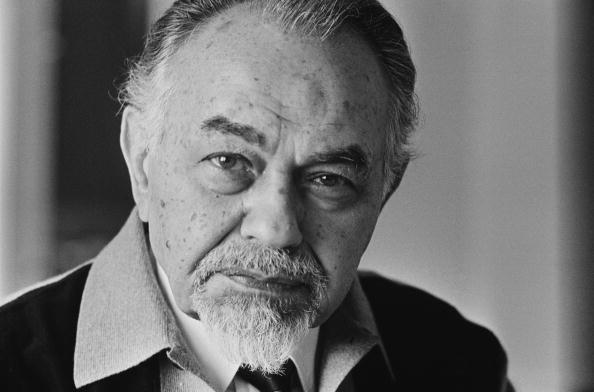
Harry Benson/Express/Getty Images
Personal Life and Death
Edward married actress Gladys Lloyd on January 21, 1927, and they welcomed a son, Edward Jr. (better known as Manny), in 1933. After Robinson and Lloyd divorced in 1956, Edward married dress designer Jane Bodenheimer on January 16, 1958. The couple remained married until January 26, 1973, when Robinson passed away from bladder cancer at the age of 79. His funeral took place at Temple Israel in Los Angeles, and Charlton Heston gave the eulogy. More than 1,000 mourners attended Edward's funeral, and his pallbearers included Frank Sinatra and George Burns. Robinson's body was entombed at Beth-El Cemetery in Queens, New York, in his family's mausoleum.
Art Collection
Robinson was famously a very shrewd and passionate art collector. By the time of his death, he had amassed what was widely considered one of the greatest collections of French Impressionist paintings. He started purchasing art in the 1930s. In the 1940s, Edward built his own art gallery to house a growing collection. By 1953, his collection included works by Renoir, Cezanne, Degas, Picasso, Gauguin, Matisse and Van Gogh. Robinson reportedly went into debt to finance his art collection. He also lost half the collection in a 1956 divorce, though he was eventually able to buy many of his paintings back. A portion of his collection was purchased after his death for $5 million, which is the same as around $30 million today.
Awards and Nominations
Robinson received an Honorary Award at the 1973 Academy Awards, a Life Achievement Award at the 1970 Screen Actors Guild Awards, and a star on the Hollywood Walk of Fame in 1960. In 2012, he was posthumously inducted into the Online Film & Television Association Award Film Hall of Fame in the Acting category. He won 20 Photoplay Awards between 1930 and 1949. Edward earned a National Board of Review Award for Best Acting for "Tales of Manhattan" in 1942, and he was named Best Actor for "House of Strangers" at the 1949 Cannes Film Festival. He also received a Laurel Award nomination for Supporting Performance, Male for "The Cincinnati Kid" (1966) and Picturegoer Award nominations for Best Actor for "The Woman in the Window" (1945) and "Scarlet Street" (1946).
/2018/01/Edward-G.-Robinson.jpg)
/2017/08/james-cagney.png)
/2022/06/Jack-Lemmon.jpg)
/2014/10/GettyImages-886658018.jpg)
/2016/04/gregory-peck.jpg)
/2018/07/Richard-Harris.jpg)
/2014/06/Gene-Kelly.jpg)
/2014/06/Stanley-Kubrick-1.jpg)
/2020/06/taylor.png)
/2017/02/GettyImages-528215436.jpg)