
/2017/10/Gilbert-OSullivan.jpg)
/2010/11/Biz-Markie.jpg)
/2009/11/Whitney-Houston.jpg)
/2009/11/Kelly-Clarkson.jpg)
/2024/12/Zach-Bryan.jpg)
/2013/03/Petula-Clark-1.jpg)
/2020/01/lopez3.jpg)
/2017/02/GettyImages-528215436.jpg)
:strip_exif()/2015/09/GettyImages-476575299.jpg)
:strip_exif()/2009/09/P-Diddy.jpg)
/2009/09/Brad-Pitt.jpg)
/2019/11/GettyImages-1094653148.jpg)
/2009/11/George-Clooney.jpg)
/2009/09/Jennifer-Aniston.jpg)
/2018/03/GettyImages-821622848.jpg)
/2020/06/taylor.png)
/2019/10/denzel-washington-1.jpg)
What is Gilbert O'Sullivan's Net Worth?
Gilbert O'Sullivan is an Irish singer-songwriter who has a net worth of $20 million. Gilbert has revealed in interviews that the vast majority of his wealth can be traced back to one song, "Alone Again (Naturally)." The track was a massive global hit, spending six weeks at #1 on the Billboard Hot 100 in the United States and becoming one of the biggest-selling singles of the decade. Its earning power extended far beyond its initial release, most notably in the early 1990s when rapper Biz Markie sampled the song without permission. O'Sullivan successfully sued, winning full control of the royalties and helping set a landmark legal precedent that reshaped how sampling is handled in the music industry.
He has also revealed that he turned down multiple lucrative licensing offers for the song over the years, including a reported $250,000 payday to use it in a washing machine commercial, choosing to protect the integrity of the track rather than maximize short-term income.
During his early peak years, O'Sullivan later revealed that as much as 90% of his income in 1971–1972 was lost to taxes, a reality that shaped many of his later financial decisions
As part of his mid-1970s legal battle with his former manager Gordon Mills and MAM Records, O'Sullivan regained control of his master recordings and publishing rights. That victory proved far more valuable than any short-term payout, as it gave him long-term ownership of his catalog and the ability to collect royalties from his songs for decades.
Gilbert O'Sullivan rose to international fame in the early 1970s with a string of distinctive, piano-driven pop hits that blended catchy melodies with witty, often melancholic lyrics. Emerging at a time when glam rock and harder-edged sounds were dominating the charts, O'Sullivan carved out a unique niche with his soft, melodic style and quirky image, quickly becoming one of the most successful solo artists of the era.
His breakthrough came in 1970 with "Nothing Rhymed," a thoughtful and unconventional hit that showcased his lyrical sensibility. He followed it with a remarkable run of chart success, including "Alone Again (Naturally)," which became a global smash and one of the biggest-selling singles of the decade. The song's introspective tone and deceptively upbeat arrangement helped it stand out, and it topped the charts in the United States while reaching a wide international audience. Other hits like "Clair" and "Get Down" further cemented his reputation as a gifted songwriter with a knack for combining humor, storytelling, and emotional depth.
At the height of his popularity, O'Sullivan was among the most commercially successful artists in the world, selling millions of records and dominating radio airplay. However, his momentum slowed in the mid-1970s following a high-profile legal dispute with his former manager over royalties and creative control, a battle that ultimately helped set important precedents for artists' rights in the music industry.
Though his chart dominance declined after the early 1970s, O'Sullivan continued to write, record, and perform for decades, maintaining a loyal following. His work has endured thanks to its timeless songwriting and influence, with "Alone Again (Naturally)" in particular remaining a staple of classic pop radio and one of the most recognizable songs of its era.
Grand Upright Music, Ltd v. Warner Bros. Records Inc.
In 1991, O'Sullivan sued rapper Biz Markie and Warner Bros. Records for sampling "Alone Again (Naturally)" without permission on Markie's track "Alone Again." The case, heard in the United States District Court for the Southern District of New York, became one of the most consequential copyright rulings in modern music history. Judge Kevin Thomas Duffy opened his decision with the blunt statement, "Thou shalt not steal," setting the tone for what would be a decisive victory for O'Sullivan.
The court ruled that the unauthorized sample constituted clear copyright infringement. O'Sullivan was awarded $250,000 in damages and granted 100% of the royalties associated with the infringing use. However, the financial consequences for Biz Markie and his label went far beyond that initial penalty. The judge issued an injunction ordering Warner Bros. to immediately pull Markie's album "I Need a Haircut" from store shelves, effectively halting its sales and wiping out its commercial potential at a critical moment in his career.
In an unusually aggressive move for a civil copyright case, the court also referred the matter to the U.S. Attorney's Office for possible criminal prosecution. While no charges were ultimately filed, the message to the music industry was unmistakable: unauthorized sampling would be treated as theft, with serious financial and legal consequences.
The ruling had a lasting economic impact on the entire music business, particularly within hip-hop. What had previously been a relatively informal practice became a tightly regulated and expensive process. Record labels were forced to implement formal sample clearance procedures, often requiring significant upfront payments or the surrender of substantial publishing rights to original artists like O'Sullivan. Producers and artists could no longer freely build tracks from existing recordings without negotiating costly agreements.
For Biz Markie, the case marked a turning point. His follow-up album, "All Samples Cleared!," released in 1993, was a direct and somewhat tongue-in-cheek acknowledgment of the new legal reality. However, despite adapting to the stricter rules, his commercial momentum never fully recovered after the album recall and surrounding controversy. For O'Sullivan, the lawsuit reinforced his control over one of the most valuable songs of the era and ensured that any future use of his work would be properly compensated.
Early Life and Education
Gilbert O'Sullivan was born Raymond O'Sullivan on December 1, 1946, in Waterford, Ireland, as one of six siblings. His mother ran a confectionery store, and his father worked as a butcher. The family immigrated to England when O'Sullivan was seven, living in London for a year before settling in Swindon. There, he learned to play piano. O'Sullivan was educated at St. Joseph's Catholic College and Swindon College. While attending the latter, he played in a number of bands, including the Doodles, the Prefects, and Rick's Blues. In addition to piano, O'Sullivan learned the drums and began writing songs.
Rise to Fame
In 1967, O'Sullivan moved to London to pursue a recording career. So he could stand out from the pack, he created a new look for himself that included a bowl cut, a cloth cap, and trousers, reminiscent of a Depression-era street urchin. O'Sullivan eventually landed a five-year record deal with CBS Records' April Music. He struggled at first with the unsuccessful singles "Disappear" and "What Can I Do," leading him to move to the Irish label Major Minor Records. Still struggling to find success, O'Sullivan sent demo tapes to manager Gordon Mills and was subsequently signed to Mills's new label MAM Records. He had his breakthrough in 1970 with the song "Nothing Rhymed," which became his first hit single. It reached number eight on the UK singles chart and peaked at number two in Ireland and number one in the Netherlands. The song was featured on O'Sullivan's debut album, "Himself," which came out in 1971 to both strong reviews and sales. Also in 1971, O'Sullivan had hits with the singles "Underneath the Blanket Go," "We Will," and "No Matter How I Try."
O'Sullivan rose to international fame in 1972 with his single "Alone Again (Naturally)." A ballad about suicide and loss, it charted in numerous countries around the world and spent a total of six weeks atop the Billboard Hot 100 in the United States. It went on to earn Grammy Award nominations for Song of the Year and Record of the Year. Coinciding with this success, O'Sullivan scrapped his old appearance and adopted a more modern, collegiate-style look characterized by a sweater with a large "G" on it. He continued his commercial success in 1972 with the single "Clair," another international hit and his first UK number-one single. The album it was on, "Back to Front," also reached number one in the UK. With over ten million disc sales in 1972, O'Sullivan was the top star of the year. He decided to go in a different direction with his third album, "I'm a Writer, Not a Fighter," which came out in 1973. Inflected by rock and funk influences, it spawned the hit single "Get Down."
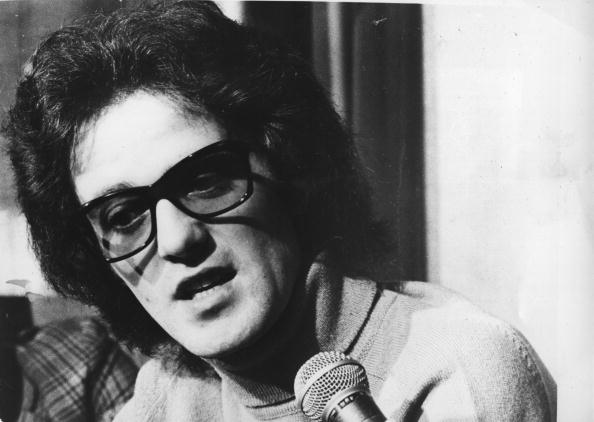
Keystone/Getty Images
Further Career
By the time of his fourth album, "A Stranger in My Own Back Yard," in 1974, O'Sullivan was experiencing declining commercial fortunes. The album was his first to miss the top five of the UK Albums Chart, and its lead single, "A Woman's Place," was decried as sexist. O'Sullivan had his final two hit songs of the era with "Christmas Song" in late 1974 and "I Don't Love You But I Think I Like You" in mid-1975. After releasing the album "Southpaw" in 1977, he discovered that his contract with MAM unfairly favored the label's owner Gordon Mills. This led to an extended court battle that, while won by O'Sullivan, significantly hurt his recording career. In 1980, he returned to his old label CBS Records and had a moderate hit with the single "What's in a Kiss?" Following the release of his albums "Off Centre" and "Life & Rhymes," O'Sullivan took a hiatus between 1983 and 1986. He didn't release his next album, "In the Key of G," until 1989. O'Sullivan became prolific again in the 1990s and especially in the 21st century, with particular acclaim in Japan. He released multiple hit compilation albums, performed on tours, and in 2022 released his 20th studio album, "Driven."
Gordon Mills Lawsuit and Catalog Ownership
By the mid-1970s, at the height of his early fame, Gilbert O'Sullivan began to realize that the business arrangements behind his success were far less favorable than he had believed. He had signed with manager Gordon Mills and MAM Records at a time when he was an unknown artist, trusting that he would eventually receive the same kind of publishing and ownership structure that other successful songwriters were granted. According to O'Sullivan, he had been led to believe he would share not only in songwriting income but also in broader ownership rights tied to his music.
As his commercial success peaked and then began to decline, it became clear that those promises had not been fulfilled. In 1977, after the release of "Southpaw," O'Sullivan discovered that his contract heavily favored Mills and the label, leaving him with far less control and income than expected. The relationship deteriorated, and what had initially seemed like an amicable split quickly turned into a serious legal dispute.
O'Sullivan ultimately took legal action against Mills and MAM Records, initiating a lengthy and high-stakes court battle. The case centered on unpaid royalties, broken contractual promises, and the ownership of his recordings and publishing rights. While the dispute came at a difficult time in his career and contributed to a slowdown in his commercial momentum, the outcome proved to be financially transformative.
He won the case and secured a substantial settlement. More importantly, he regained control of his master recordings and publishing catalog. That meant he owned both the recordings themselves and the underlying compositions, allowing him to collect the majority of royalties generated by his music going forward.
In the long run, this victory became one of the most important financial turning points of his career. Decades after his biggest hits first topped the charts, songs like "Alone Again (Naturally)" continue to generate steady income through radio play, streaming, licensing, and covers. What initially appeared to be a damaging dispute ultimately ensured that O'Sullivan retained control over his most valuable asset: his music.
Personal Life
In early 1980, O'Sullivan married his Norwegian girlfriend Aase Brekke. Together, they have two daughters named Helen-Marie and Tara.
/2017/10/Gilbert-OSullivan.jpg)
/2013/03/Petula-Clark-1.jpg)
/2010/11/Biz-Markie.jpg)
/2016/08/GettyImages-533595602.jpg)
/2025/05/salt-pepa.jpg)
/2014/06/paul.jpg)
/2017/07/GettyImages-475154623.jpg)
/2025/02/Sly-Stone.jpg)
/2020/02/Angelina-Jolie.png)
/2019/04/rr.jpg)
/2020/04/Megan-Fox.jpg)
/2009/09/Cristiano-Ronaldo.jpg)