
/2020/06/harvey-levin.jpg)
/2012/07/sg.jpg)
/2013/08/Josh-Elliott.jpg)
/2026/01/Tony-Dokoupil.jpg)
/2018/01/bs.jpg)
/2019/04/Marilyn-Milian.jpg)
:strip_exif()/2015/09/GettyImages-476575299.jpg)
/2017/02/GettyImages-528215436.jpg)
/2019/11/GettyImages-1094653148.jpg)
/2009/09/Brad-Pitt.jpg)
:strip_exif()/2009/09/P-Diddy.jpg)
/2019/10/denzel-washington-1.jpg)
/2020/02/Angelina-Jolie.png)
/2009/09/Jennifer-Aniston.jpg)
/2020/01/lopez3.jpg)
/2009/09/Cristiano-Ronaldo.jpg)
/2018/03/GettyImages-821622848.jpg)
What is Harvey Levin's Net Worth and Salary?
Harvey Levin is an American television producer, lawyer, legal analyst, and celebrity reporter who has a net worth of $20 million. Harvey Levin is a media executive, journalist, and former lawyer best known for creating TMZ and reshaping how celebrity news is reported and consumed. His career sits at the intersection of law, television journalism, and pop culture, with a particular emphasis on speed, legal precision, and mass-market appeal.
Levin began his professional life as an attorney, specializing in criminal and civil law, before transitioning into legal commentary. He became widely known in the 1980s and 1990s as an on-air legal analyst, offering plain-spoken explanations of complex cases on local Los Angeles television and later on national programs. His ability to translate legal nuance into accessible television made him a trusted presence during high-profile trials and breaking news events.
That legal background proved foundational when Levin co-created TMZ in 2005. Under his leadership, TMZ pioneered a fast, aggressive, and legally savvy approach to celebrity journalism. The site and its associated TV shows became famous for breaking major stories involving arrests, deaths, divorces, and scandals, often beating traditional news outlets by hours or days. Levin emphasized sourcing, documentation, and legal vetting, allowing TMZ to publish controversial material while minimizing legal exposure.
Interestingly, Harvey does not own, and has never actually owned, TMZ. The site was launched as a joint venture between AOL and Telepictures Productions, a division of Warner Bros. For most of the site's history, it was a subsidiary of WarnerMedia. In September 2021, WarnerMedia sold TMZ to Fox Entertainment in a deal valued at roughly $50 million.
Beyond TMZ, Levin expanded the brand into television formats, including daily syndicated shows and courtroom-style programs that blended entertainment with legal analysis. Over time, he became both a behind-the-scenes executive and an on-air figure, shaping editorial decisions and occasionally stepping in front of the camera.
Salary
Between TMZ and People's Court, Harvey earns at least $5 million per year in base salary and other earnings.
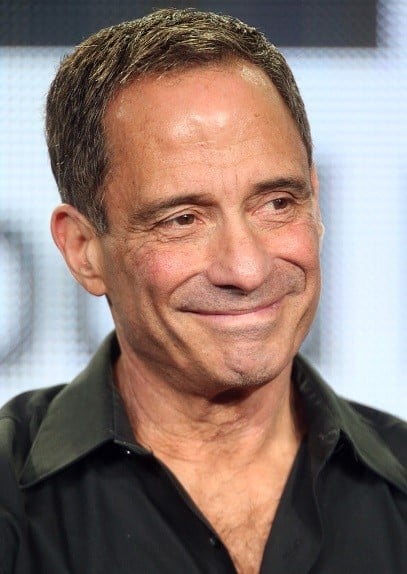
Getty Images
Early Life & Education
Harvey Levin was born in 1950. He attended American University in Washington, D.C., where he earned a degree in political science. He later enrolled at the University of Chicago Law School, one of the country's most academically demanding legal institutions. His legal education emphasized rigorous analysis, argumentation, and precision, skills that would later become central to his media career.
After law school, Levin practiced law in California, focusing on criminal defense and civil litigation. While he found the work intellectually challenging, he was increasingly drawn to the broader implications of law as a public-facing institution, particularly how complex legal proceedings were explained or misunderstood by the general public.
Transition From Law to Television
Levin's move from practicing attorney to television personality began in the late 1970s and early 1980s, when local Los Angeles stations sought legal experts who could explain court cases in clear, relatable language. Levin quickly distinguished himself by avoiding jargon and emphasizing practical outcomes rather than abstract legal theory.
He became a familiar presence on Los Angeles television, eventually hosting legal talk shows and appearing as a recurring analyst during major trials. His on-air style was direct, confident, and conversational, helping demystify courtroom drama for viewers who lacked legal training.
This period established Levin as a hybrid figure, part lawyer, part journalist, and part television host. It also introduced him to the realities of broadcast media, including production constraints, ratings pressures, and the importance of storytelling.
People's Court and National Recognition
Levin's national profile rose significantly through his involvement with courtroom television. He served as a legal consultant and later as an on-air presence connected to shows like "The People's Court," where his legal expertise helped shape how cases were presented to audiences.
Courtroom television reinforced Levin's belief that legal stories could be both informative and entertaining. It also sharpened his instincts about pacing, narrative tension, and audience engagement, elements that would later define TMZ's editorial approach.
By the early 2000s, Levin had spent decades straddling law and media, developing a rare understanding of how legal risk, public interest, and entertainment value intersect.
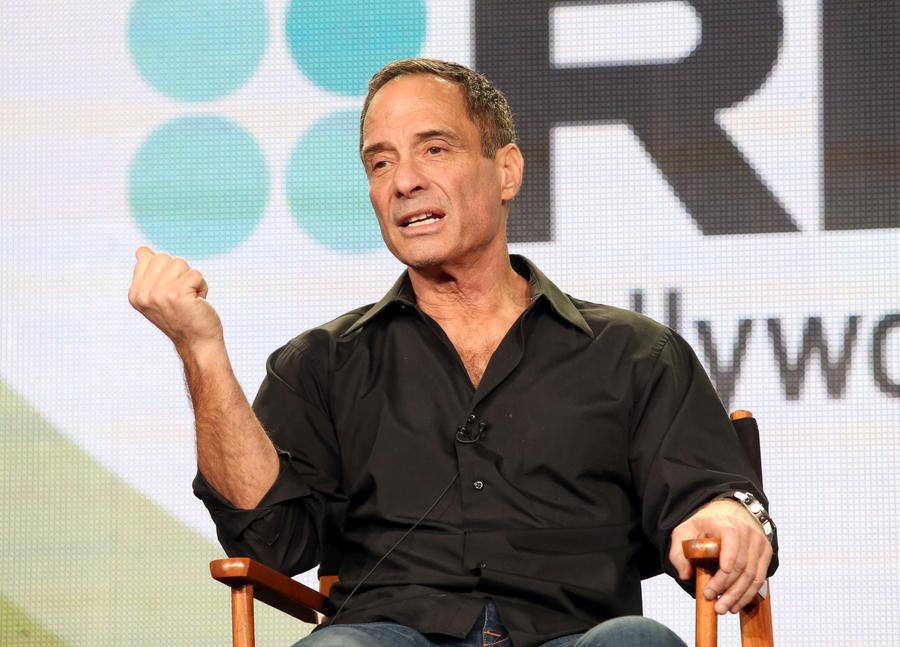
(Photo by Frederick M. Brown/Getty Images)
Founding TMZ
In 2005, Levin co-founded TMZ with backing from AOL and Telepictures, a Warner Bros. subsidiary. The concept was deceptively simple but revolutionary in execution: apply the urgency of breaking news journalism to celebrity coverage, while using legal rigor to publish stories others were hesitant to touch.
TMZ operated on a digital-first model at a time when many traditional outlets still prioritized print or scheduled broadcasts. Levin insisted on aggressive sourcing, including firsthand documents, audio, video, and direct confirmation from involved parties. His legal background allowed TMZ to move quickly without crossing lines that could trigger costly lawsuits.
The site rapidly became known for major scoops involving celebrity arrests, deaths, and personal scandals. Its willingness to publish raw information, often accompanied by blunt headlines and minimal moral framing, drew both enormous traffic and intense criticism.
TMZ on Television
TMZ's success online soon expanded to television. "TMZ on TV," a daily syndicated program, adopted a newsroom-meets-roundtable format that showcased editors discussing breaking stories in real time. Levin frequently appeared on camera, acting as both editor-in-chief and final arbiter of what was newsworthy.
The show's tone mirrored the website's ethos: fast, irreverent, and unapologetically focused on celebrity culture as a serious business. The television expansion turned TMZ from a website into a full-fledged media brand with multiple revenue streams and a constant presence across platforms.
Levin later oversaw additional programs, including investigative specials and legal-themed shows that reflected his ongoing interest in the justice system.
Editorial Philosophy and Controversies
Levin has consistently defended TMZ's approach as journalism, arguing that celebrities wield cultural and economic power that justifies scrutiny. He has emphasized that TMZ does not pay for stories, a policy intended to protect credibility and reduce legal risk.
Critics, however, have accused TMZ of exploiting personal tragedy and blurring ethical boundaries. Levin has responded by pointing to the outlet's accuracy rate and its frequent role in correcting misinformation propagated by slower-moving traditional media.
This tension between speed, ethics, and public interest has defined much of Levin's career and remains central to his reputation.
Later Career and Influence
In addition to his work with TMZ, Levin has continued to develop and produce television content rooted in law and pop culture. He has remained an influential figure behind the scenes, shaping editorial standards, mentoring producers, and guiding the brand's evolution as media consumption habits changed.
Levin's influence extends beyond TMZ itself. Many digital outlets adopted similar breaking-news tactics, rapid publishing cycles, and legal vetting processes modeled on TMZ's playbook.
Personal Life
In April 2010, while appearing as an event speaker for the National Lesbian and Gay Journalists Association, Levin publicly confirmed that he identified as gay. He has been in a long-term relationship with Andy Mauer, a Southern California chiropractor. Together, they own multiple properties, and their joint-deed listing date back as far as the late 1990s. He has appeared multiple times on Out Magazine's "Power 50" list as one of the most prominent and influential LGBTQ voices in America—No. 15 in 2012, No. 25 in 2013, No. 34 in 2014, No. 48 in 2015, and No. 40 in 2016.
Real Estate
In 1998, Harvey paid $950,000 for a home in Los Angeles. He put the home up for sale in March 2013 for $5.3 million, ultimately accepting $3.6 million in August 2015. In 2003, Harvey paid $2.2 million for an 1,800-square-foot ocean-view condo in Marina Del Rey, California that today would likely sell for AT LEAST $5 million.
/2020/06/harvey-levin.jpg)
/2019/04/Marilyn-Milian.jpg)
/2018/01/bs.jpg)
/2026/01/Tony-Dokoupil.jpg)
/2014/12/Sharyl-Attkisson.jpg)
/2024/02/GettyImages-1482104064.jpg)
/2014/04/harmsworth.png)
/2018/08/lc.jpg)
/2020/04/Megan-Fox.jpg)
/2009/11/George-Clooney.jpg)