
/2017/04/willie.jpg)
/2021/01/muddy.jpg)
/2014/07/George-Buddy-Guy.jpg)
/2023/03/Etta-James.jpg)
/2017/05/Adelmo-Fornaciari.jpg)
/2021/05/Chuck-Berry.jpg)
/2017/02/GettyImages-528215436.jpg)
/2020/02/Angelina-Jolie.png)
/2009/09/Cristiano-Ronaldo.jpg)
/2020/04/Megan-Fox.jpg)
/2009/09/Brad-Pitt.jpg)
/2020/01/lopez3.jpg)
/2019/04/rr.jpg)
:strip_exif()/2009/09/P-Diddy.jpg)
:strip_exif()/2015/09/GettyImages-476575299.jpg)
/2009/09/Jennifer-Aniston.jpg)
/2019/10/denzel-washington-1.jpg)
What was Willie Dixon's net worth?
Willie Dixon was an American blues musician, singer, songwriter, arranger, and record producer who had a net worth of $2 million at the time of his death. Willie Dixon was born in Vicksburg, Mississippi in July 1915 and passed away in January 1992.
A prolific writer and behind-the-scenes architect of countless classic recordings, Dixon penned some of the most enduring songs in blues history, including "Hoochie Coochie Man," "Spoonful," "Little Red Rooster," and "I Just Want to Make Love to You." As a longtime producer and talent scout for Chess Records, he helped craft the careers and signature sounds of artists such as Muddy Waters, Howlin' Wolf, and Little Walter. While he was also a skilled performer, Dixon's greatest impact came through his songwriting and production, creating a catalog that would later be widely covered by rock bands including The Rolling Stones, Led Zeppelin, and Cream. His influence on 20th-century music is profound, with his compositions forming a bridge between traditional blues and the rise of rock and roll.
Early Life
Willie James Dixon was born on July 1, 1915, in Vicksburg, Mississippi. He grew up in the Mississippi Delta, where he was exposed to blues, gospel, and work songs from an early age. His mother, Daisy, often recited poetry, which influenced his interest in rhythm and lyricism. As a teenager, Dixon developed a love for music and began experimenting with vocal harmonies.
Before fully committing to music, Dixon pursued a career in boxing. Standing over six feet tall and powerfully built, he became a successful amateur boxer and even won the Illinois State Golden Gloves Heavyweight Championship after moving to Chicago in the 1930s. However, disputes over management and his reluctance to fight professionally led him to shift his focus back to music.
Move to Chicago and Early Career
After relocating to Chicago, Dixon became immersed in the city's vibrant blues scene. During World War II, he refused to serve in the military on conscientious grounds, which resulted in a prison sentence. After his release, he returned to music with renewed focus.
Dixon began performing and eventually joined the Big Three Trio, a group that blended blues, jazz, and vocal harmony. The trio achieved modest success and helped establish Dixon as a skilled bassist and arranger. His growing reputation led to opportunities working with Chess Records, where he would make his most significant contributions.
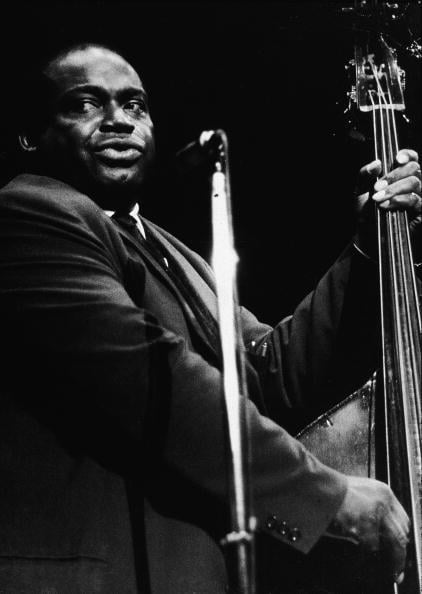
Getty Images
Chess Records and Songwriting Legacy
In the 1950s and 1960s, Dixon became one of the most important figures at Chess Records. While he occasionally performed, his primary role was as a songwriter, producer, and arranger. He worked closely with many of the label's top artists, helping to define the sound of Chicago blues.
Dixon wrote and produced numerous hits for Muddy Waters, including "Hoochie Coochie Man" and "I'm Ready," as well as for Howlin' Wolf, with songs like "Spoonful" and "Little Red Rooster." His songwriting combined traditional blues structures with memorable hooks and lyrical themes that resonated with both Black and white audiences.
His work during this period created a foundation that would later be embraced by British rock bands in the 1960s. Groups such as The Rolling Stones and Led Zeppelin recorded versions of his songs, bringing his music to a global audience and cementing his legacy as one of the most influential songwriters in popular music.
Later Career and Advocacy
By the late 1960s, Dixon's role at Chess Records diminished as the music industry evolved. However, he continued to perform, record, and tour, often appearing at blues festivals and international events. He also became an outspoken advocate for artists' rights, particularly regarding royalties and songwriting credits.
Dixon was instrumental in raising awareness about the lack of proper compensation for blues musicians whose work had been widely covered and commercialized. His efforts helped pave the way for greater recognition and financial justice for artists in the genre.
In the 1970s, he formed the Chicago Blues All-Stars, a group that showcased veteran musicians and introduced blues to new audiences. He also recorded albums under his own name, further highlighting his talents as a performer.
Awards and Legacy
Willie Dixon received numerous honors for his contributions to music, including induction into the Blues Hall of Fame and the Rock and Roll Hall of Fame. His songwriting catalog remains one of the most important in blues history, with his compositions continuing to be recorded and performed decades after they were first written.
Dixon's influence extends far beyond the blues. His work helped shape the sound of rock music, and his songs have been covered by some of the biggest artists in the world. Often described as the poet laureate of the blues, he combined storytelling, rhythm, and emotion in a way that defined an era of American music.
Death
Willie Dixon passed away on January 29, 1992, at the age of 76. His legacy lives on through his music, his influence on generations of musicians, and his role in elevating the blues from a regional tradition to a global art form.
/2017/04/willie.jpg)
/2021/01/muddy.jpg)
/2014/07/George-Buddy-Guy.jpg)
/2014/07/GettyImages-910804340.jpg)
/2014/09/Sam-Moore-1.jpg)
/2023/03/Etta-James.jpg)
/2014/12/GettyImages-79613275.jpg)
/2019/11/GettyImages-1094653148.jpg)
/2020/06/taylor.png)