
/2009/11/Prince-Charles.jpg)
/2013/12/GettyImages-699662606.jpg)
/2023/01/princess-diana.jpg)
/2014/07/Prince-Philip.jpg)
/2014/06/GettyImages-498937416.jpg)
/2019/04/harry.jpg)
/2020/06/taylor.png)
:strip_exif()/2009/09/P-Diddy.jpg)
/2020/04/Megan-Fox.jpg)
:strip_exif()/2015/09/GettyImages-476575299.jpg)
/2020/01/lopez3.jpg)
/2019/11/GettyImages-1094653148.jpg)
/2019/04/rr.jpg)
/2020/02/Angelina-Jolie.png)
/2009/09/Jennifer-Aniston.jpg)
/2009/11/George-Clooney.jpg)
/2018/03/GettyImages-821622848.jpg)
What is King Charles' net worth?
King Charles has a net worth of $800 million. King Charles is the constitutional monarch of sixteen realms of the 53-member Commonwealth of Nations and the Head of the Commonwealth and Supreme Governor of the Church of England. He is the eldest son of the late Queen Elizabeth II and the late Prince Philip, Duke of Edinburgh. Charles had a net worth of $100 million before ascending to the throne as King. It should also be noted that while he is commonly referred to as the King of England, Charles is actually the King of the United Kingdom, which includes England, Scotland, Northern Ireland, and Wales.
Prior to becoming King, Charles earned the bulk of his income from a real estate trust called the Duchy of Cornwall. This trust was established in 1337 to provide income to the Prince of Wales and his family. The Duchy of Cornwall is inherited by the eldest son of the reigning monarch. The estate owns significant real estate, including cottages, seaside estates, countryside manors, barns converted to homes, and even rental properties. In a typical year, Charles earned around $20-30 million from the trust, typically through rents and agricultural sales.
Charles served in the Royal Navy and Air Force and attended the Royal Air Force College in Cranwell, training as a jet pilot. He then attended the Royal Naval College, Dartmouth, for a six-week training course. After that, he served on the HMS Norfolk, HMS Minerva, and HMS Jupiter. He also joined the 845 Naval Air Squadron, and has operated a HMS Hermes, and took command of HMS Bronington. He is qualified to fly Chipmunk Basic Pilot Trainer, a Harrier T MK.4 V/STOL fighter jet, and several other aircraft.
Charles was formerly married to the late Diana, Princess of Wales. He is the father of Prince William and Prince Harry. He is currently married to Camilla Parker Bowles, who became known as Queen Consort upon his ascension to the throne.
Early Life
Charles Philip Arthur George was born at Buckingham Palace on November 14, 1948. He was baptized by the Archbishop of Canterbury, Geoffrey Fisher, using water from the River Jordan. His godparents included several senior members of the royal family, among them his grandparents and the Queen Mother.
He is the eldest child of Queen Elizabeth II and Prince Philip, Duke of Edinburgh, and grew up alongside three younger siblings: Princess Anne (born 1950), Andrew, the former Duke of York (born 1960), and Prince Edward, Duke of Edinburgh (born 1964). As the firstborn, Charles was the clear heir from the moment of his mother's accession.
From birth, Charles was destined for royal responsibility. When his mother became Queen in 1952, he automatically became heir apparent and was granted the titles Duke of Cornwall and Duke of Rothesay. For most of his life, he was known as Prince Charles, Prince of Wales, a title he held for an unprecedented 64 years before becoming King.
Education
Charles was initially educated at home by a governess, Catherine Peebles, before attending Hill House School in West London. He later studied at Cheam Preparatory School in Berkshire, followed by Gordonstoun School in Scotland, which his father had also attended. Charles famously disliked Gordonstoun's austere conditions, later recalling the experience as "cold and demanding."
In 1966, he spent two terms as an exchange student at Geelong Grammar School in Australia, where he became Head Boy. Upon completing his studies, he earned two A-levels in History and French.
Charles went on to study at Trinity College, Cambridge, earning a Bachelor of Arts degree in 1970 and later a Master of Arts. He also studied the Welsh language at Aberystwyth University, an experience that deepened his appreciation for Welsh history and culture.
Prince of Wales
In July 1969, Charles was formally invested as Prince of Wales and Earl of Chester in a televised ceremony at Caernarfon Castle. He used his position to champion issues often overlooked by earlier generations of royals—particularly the environment, architecture, and youth employment.
In 1976, he founded The Prince's Trust, which has since helped over a million disadvantaged young people across the UK with education, training, and entrepreneurship grants. For decades, the trust was funded directly by Charles's income from the Duchy of Cornwall, and it remains one of Britain's largest independent charitable organizations.
Charles's tenure as Prince of Wales was the longest in British history, lasting from 1958 until his accession in 2022.
Military Service
Following university, Charles joined the Royal Air Force and trained as a jet pilot at the RAF College Cranwell. He later attended the Royal Naval College, Dartmouth, before serving aboard several ships, including HMS Norfolk, HMS Minerva, and HMS Jupiter.
He qualified as a helicopter pilot and joined the 845 Naval Air Squadron, operating from the aircraft carrier HMS Hermes. In 1976, he took command of HMS Bronington, a coastal minesweeper. Over his military career, Charles became certified to fly more than a dozen aircraft, including the Chipmunk Basic Trainer and the Harrier T MK.4 V/STOL fighter.
His military service helped establish the deep respect he enjoys among Britain's armed forces and marked the foundation of his later ceremonial role as head of the UK's military branches.
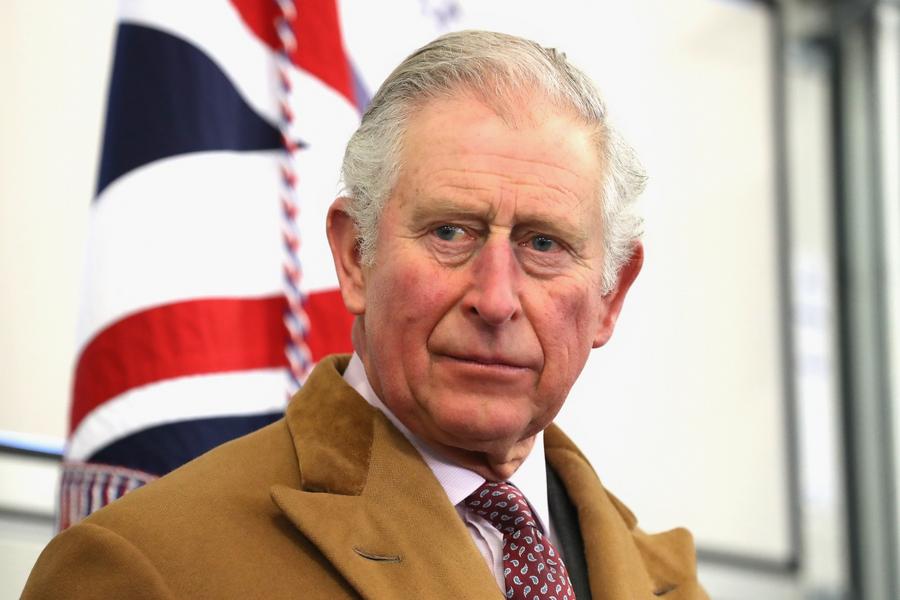
(Photo by Chris Jackson – WPA Pool /Getty Images)
Personal Life
Not only did Charles have a very active military life, but he also had a very busy love life. He was quite the man with the ladies. He was advised by the first Earl Mountbatten of Burma to have as many affairs as possible before getting married, but when it comes to choosing a wife, be sure she a sweet, inexperienced, and suitable.
He met Lady Diana Frances Spencer at her home while visiting her sister Sarah. After spending some time together, Charles began to consider asking for Lady Diana's hand in marriage. Despite a few objections, Charles did propose, and they were married in 1981. They had two children, Prince William and Prince Harry. Although some believe Prince Harry to be the son of James Hewitt, he has stated that the affair he had with Lady Diana was after Henry's birth.
The marriage of Lady Diana and Prince Charles ended in 1996. His second marriage was to Camilla Parker-Bowles, with whom Charles was having an affair while he was still married to Lady Diana. Charles was the first member of the Royal Family to have a civil wedding instead of a religious one.
Upon his accession to the throne, she became Queen Camilla.
The Duchy Of Cornwall Trust
According to a 14th-century royal charter, the Duchy of Cornwall does not simply go to the reigning monarch's eldest child; it is reserved exclusively for the eldest surviving son and heir to the throne. The Duchy is essentially a massive private real estate portfolio designed to give the heir apparent a substantial, independent income while awaiting the throne. It was established in 1337 by King Edward III to fund the military campaigns of his son, Edward the Black Prince.
When Charles became King in September 2022, Prince William automatically inherited the title of Duke of Cornwall and became the sole beneficiary of the Duchy. (Charles officially bestowed the "Prince of Wales" title upon him a day later, as that title is a gift, not an automatic inheritance). When William eventually becomes King, his eldest son, Prince George, will instantly inherit the Duchy.
The U.K. government considers the Duchy a "crown body," which means the estate itself cannot be subjected to corporate or capital gains taxes. Because this tax-exempt status has frequently been challenged by the public, Charles began voluntarily paying taxes on his personal Duchy income. When he married Princess Diana in 1981, he voluntarily paid a 25% tax rate, which he later increased to 50% for about a decade. From 1993 until his accession, Charles paid the standard UK income tax rate each year. Prince William continues to pay income tax on his earnings today, though he recently broke with his father's tradition of transparency by choosing not to publicly disclose the exact amount.
Today, the Duchy owns roughly 130,000 acres of land across 23 counties in the UK. The portfolio goes far beyond traditional farming; it includes residential housing developments, commercial real estate, coastal shorelines, and even the Oval cricket ground in London. As of 2025, the estimated net value of the estate is $1.3 billion. Thanks to highly profitable commercial management initiated by Charles, the Duchy now produces over $30 million in annual income for Prince William.
The Crown Estate
Separate from the Duchies is the Crown Estate, a colossal portfolio of urban centers, retail space, agricultural land, and highly lucrative offshore wind farms. It is technically owned by the reigning monarch "in right of the Crown" but is managed completely independently by a board of commissioners.
If King Charles personally owned and collected the profits from the Crown Estate, his net worth would exceed $19 billion (£15.8 billion), making him one of the wealthiest individuals in the world. However, he doesn't get to keep the profits. This traces back to 1760, when a 22-year-old King George III, drowning in national debt from the Seven Years' War, made a historic bargain. He agreed to surrender the entire revenue of the Crown Lands to the government; in exchange, Parliament agreed to pay the King a fixed annual salary.
Today, the Estate generates massive revenues—surpassing $1.3 billion (£1.1 billion) in profit in the 2023–2024 financial year alone. All of this money is turned over to the UK Treasury. In return, the monarch receives the "Sovereign Grant" to fund official duties, staff, travel, and the upkeep of royal palaces. While the grant was previously set at 25% of the Estate's profits, it was recently reduced to 12% due to a massive windfall from offshore wind leases. Even at the reduced percentage, the sheer profitability of the Estate means the Sovereign Grant will jump to roughly $165 million (£132 million) for the 2025–2026 financial year.
Because the Sovereign Grant only covers official state expenses, the King relies on a second, entirely private real estate portfolio for his personal income: The Duchy of Lancaster. Ring-fenced from the state by King Henry IV in 1399 via a clever legal loophole, this private estate is valued at over $850 million and produces roughly $30 to $35 million per year in pure, private cash, which Charles uses for personal expenses, extended family allowances, and charitable donations.
Royal Collections and Assets
In addition to these estates, Charles serves as custodian of the Royal Collection Trust. This oversees more than 1 million objects, including the Crown Jewels, antique furniture, and about 7,000 paintings by masters such as Rembrandt, Van Dyck, and Leonardo da Vinci. While older estimates often pegged the collection at $1 billion, modern art historians and valuation experts estimate the true value of the Royal Collection to be well over $12 billion (£10 billion). Crucially, this collection is held in trust for the nation; it is passed from monarch to monarch and cannot be sold by the King personally.
Charles also has the use of several royal residences, including Buckingham Palace, Windsor Castle, Sandringham House, and Balmoral Castle. Of these, Buckingham and Windsor belong to the Crown. However, Sandringham and Balmoral are privately owned by the monarch. King Charles inherited these estates directly from his mother, Queen Elizabeth II, in 2022—an inheritance worth hundreds of millions of dollars that was entirely exempt from the UK's standard 40% inheritance tax.
Philanthropy and Environmental Work
King Charles has devoted much of his life to philanthropy, sustainability, and conservation. His Prince's Trust and Prince's Charitable Foundation, established in 1979, have distributed more than $70 million in grants over the past decade. He has championed organic farming, climate awareness, and urban regeneration for decades—well before environmentalism became mainstream.
He also founded the Accounting for Sustainability Project and the International Sustainability Unit, both designed to encourage corporate and governmental accountability on ecological issues. Among the charitable causes supported by his foundation is Tusk, an organization dedicated to wildlife protection in Africa, which his sons have also supported.
/2009/11/Prince-Charles.jpg)
/2014/07/Prince-Philip.jpg)
/2022/09/GettyImages-918607948.jpg)
/2024/07/GettyImages-1243072898.jpg)
/2023/12/GettyImages-1233980062.jpg)
/2019/04/william-1.jpg)
/2020/06/Prince-George.jpg)
/2022/01/royal-family-wealth.jpg)
/2009/09/Cristiano-Ronaldo.jpg)
/2017/02/GettyImages-528215436.jpg)
/2009/09/Brad-Pitt.jpg)
/2019/10/denzel-washington-1.jpg)