
/2015/09/GettyImages-73372609.jpg)
/2015/10/Craig-Berube.jpg)
/2020/10/am.jpg)
/2020/07/Mike-Vernon.jpg)
/2014/09/GettyImages-2925220.jpg)
/2020/06/taylor.png)
/2018/03/GettyImages-821622848.jpg)
/2009/09/Brad-Pitt.jpg)
/2020/01/lopez3.jpg)
/2020/04/Megan-Fox.jpg)
/2019/11/GettyImages-1094653148.jpg)
:strip_exif()/2009/09/P-Diddy.jpg)
/2009/09/Cristiano-Ronaldo.jpg)
/2017/02/GettyImages-528215436.jpg)
/2019/04/rr.jpg)
/2019/10/denzel-washington-1.jpg)
:strip_exif()/2015/09/GettyImages-476575299.jpg)
What is Tim Hunter's net worth?
Tim Hunter is a Canadian professional hockey player and hockey coach who has a net worth of $10 million.
Tim Hunter is best known for his rugged, confrontational style during a long NHL career spent primarily in the league's enforcer era. Playing during the 1980s and 1990s, Hunter built a reputation as one of hockey's most intimidating physical presences, combining size, toughness, and a willingness to protect teammates at all costs. He was never a star in the traditional scoring sense, but his role was clearly defined, and he carved out more than a decade in the NHL by embracing it fully.
Hunter is most closely associated with the Washington Capitals, where he became a fan favorite and a symbol of the team's hard-nosed identity. Over his career, he also played for the Quebec Nordiques, Calgary Flames, and San Jose Sharks. After retiring as a player, Hunter transitioned into coaching, remaining connected to the game at the professional level for many years. His career reflects a specific era of NHL hockey, one in which physical deterrence and intimidation were viewed as essential roster components.
Early Life
Timothy Joseph Hunter was born on March 14, 1960, in Calgary, Alberta, Canada. He grew up in a hockey-centric environment and developed a reputation early on as a physically dominant player. Unlike many future NHL stars, Hunter was not known primarily for elite scoring ability in his youth, but rather for his size, strength, and aggressive edge.
Those traits shaped his development path and made him a natural fit for the physical style of professional hockey that dominated the league during his formative years.
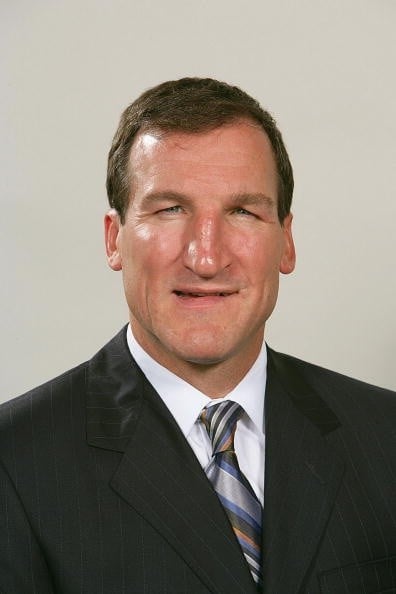
Don Smith/Getty Images
NHL Draft And Early Career
Hunter was selected by the Washington Capitals in the third round of the 1979 NHL Draft. He made his NHL debut in the early 1980s, gradually establishing himself as a regular lineup presence as he adapted to the speed and physical demands of the league.
His early seasons were spent earning trust through physical play, consistency, and a willingness to engage in fights when necessary. By the mid-1980s, Hunter had secured his place as one of Washington's primary enforcers.
Washington Capitals Years
Hunter's most notable tenure came with the Washington Capitals, where he spent the majority of his career. During his time in Washington, he became synonymous with the team's tough identity, regularly leading the club in penalty minutes and serving as an on-ice deterrent against opposing teams.
He was a regular fixture in Capitals lineups throughout the late 1980s and early 1990s, contributing leadership and physical presence even as his offensive output remained modest. Hunter's willingness to absorb punishment and protect teammates made him popular with fans and respected within the locker room.
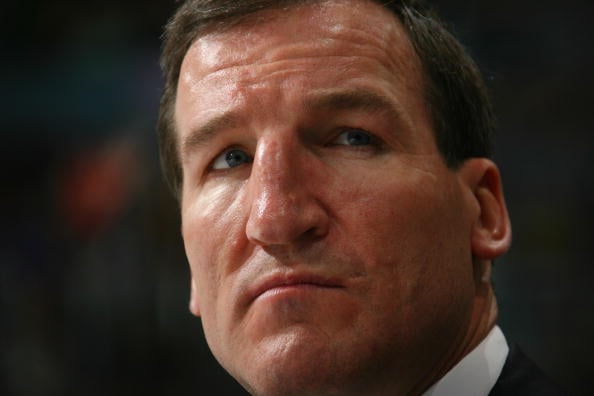
Getty Images
Later Playing Career
After leaving Washington, Hunter continued his NHL career with the Quebec Nordiques, Calgary Flames, and San Jose Sharks. While his role remained largely the same, his ice time gradually decreased as he moved into his 30s and the league began to evolve away from pure enforcer roles.
Hunter retired from professional hockey after the 1995–1996 season, finishing his playing career with more than 700 NHL games played and over 3,500 career penalty minutes, a figure that underscored his physical style.
Coaching Career
Following his retirement as a player, Hunter transitioned into coaching, remaining in the NHL ecosystem. He served as an assistant coach for several teams, including the Washington Capitals, where he helped guide younger players and brought first-hand knowledge of physical play and team defense.
His coaching career culminated in a head coaching role with the Capitals during the 2011–2012 season. Although his tenure as a head coach was brief, he continued to be viewed as a respected hockey mind with deep experience in professional locker rooms.
Life After Hockey
After stepping away from full-time coaching, Hunter largely retreated from the public spotlight. He has remained connected to hockey through occasional advisory roles and personal involvement in the sport, but without the high-profile visibility of his playing days.
Tim Hunter's career stands as a snapshot of a specific NHL era. He was not a scorer or a franchise cornerstone, but he fulfilled his role with durability and commitment, earning a long career in one of the most physically demanding periods in modern hockey history.
/2015/09/GettyImages-73372609.jpg)
/2015/10/Craig-Berube.jpg)
/2010/05/Nicklas-Backstrom-1.jpg)
/2010/05/Jarome-Iginla.jpg)
/2020/10/am.jpg)
/2014/06/GettyImages-535372720.jpg)
/2014/09/GettyImages-111678556.jpg)
/2020/02/Angelina-Jolie.png)
/2009/09/Jennifer-Aniston.jpg)
/2009/11/George-Clooney.jpg)