
/2011/02/Brigitte-Bardot.jpg)
/2013/04/Claudia-Cardinale.jpg)
/2015/07/GettyImages-631269774.jpg)
/2020/11/raquel-welch.jpg)
/2022/01/Jane-Birkin.jpg)
/2010/11/sophia.jpg)
/2018/03/GettyImages-821622848.jpg)
/2019/11/GettyImages-1094653148.jpg)
/2020/02/Angelina-Jolie.png)
/2019/04/rr.jpg)
/2019/10/denzel-washington-1.jpg)
/2009/09/Cristiano-Ronaldo.jpg)
/2009/09/Jennifer-Aniston.jpg)
:strip_exif()/2009/09/P-Diddy.jpg)
/2020/01/lopez3.jpg)
/2017/02/GettyImages-528215436.jpg)
:strip_exif()/2015/09/GettyImages-476575299.jpg)
What was Brigitte Bardot's Net Worth?
Brigitte Bardot was a French actress, singer, author, fashion icon, and animal rights activist who had a net worth of $65 million at the time of her death in December 2025, at the age of 91.
Brigitte Bardot was one of the most famous and influential women of the 20th century. Rising to international stardom in the mid-1950s, she became a defining symbol of postwar European cinema and sexual liberation after her breakout performance in "And God Created Woman." With her tousled blond hair, heavy eye makeup, and unapologetically sensual screen presence, Bardot redefined what a movie star could be, standing apart from the carefully polished Hollywood actresses of her era. At her peak, she was not only one of the highest-paid actresses in France but also a global cultural phenomenon whose fashion, hairstyle, and attitude were endlessly copied.
Between 1952 and 1973, Bardot appeared in 47 films, working with many of Europe's most respected directors while also starring in lightweight comedies that cemented her mass appeal. Yet she grew increasingly disenchanted with fame and the film industry, later describing her celebrity as a burden that robbed her of privacy and happiness. In 1973, at just 39 years old and still enormously famous, Bardot abruptly retired from acting. She spent the remainder of her life largely out of the public eye, devoting herself almost entirely to animal welfare activism through the Fondation Brigitte Bardot. By the time of her death, she was remembered as both a revolutionary screen icon and a fiercely committed, if often controversial, activist.
Early Life
Brigitte Anne-Marie Bardot was born on September 28, 1934, in Paris, France, and raised in the city's affluent 16th arrondissement. Her parents, Louis Bardot and Anne-Marie Mucel, came from comfortable backgrounds. Her father was an industrialist who owned several factories, and the household was conservative, Catholic, and emotionally strict. Bardot later described her childhood as cold and disciplined, recounting incidents of harsh punishment that left a lasting impression on her.
As a child, Bardot suffered from amblyopia, which caused reduced vision in her left eye, and she struggled socially. She was enrolled at the private Cours Hattemer school and later attended the Conservatoire de Paris, where she trained in ballet under Russian choreographer Boris Knyazev. Dance provided structure and escape, and it was initially her intended career path.
Her life changed dramatically in 1949 when she was hired as a junior fashion model by Elle magazine co-founder Hélène Gordon-Lazareff. Bardot appeared on the cover of Elle at just 15 years old, an early signal of her striking visual appeal. Modeling soon led to screen tests, and through the film world she met Roger Vadim, then an assistant director. Despite her parents' objections, the relationship became central to her personal and professional life.
Early Film Career and Rise to Stardom
Bardot made her film debut in 1952 with the comedy "Le Trou normand" and quickly followed with her first starring role in "Manina, la fille sans voile," later released internationally as "The Girl in the Bikini." Although these early films attracted modest attention, they established her screen persona: youthful, spontaneous, and provocatively natural.
Throughout the early 1950s, Bardot worked relentlessly, appearing in a string of French and European productions including "Act of Love," "Royal Affairs in Versailles," and "Caroline and the Rebels." In 1956, she appeared in the Hollywood production "Helen of Troy," filmed in Italy, but her limited English and lack of interest in the American studio system prevented a sustained Hollywood career.
That same year proved decisive. Directed by Roger Vadim, "And God Created Woman" transformed Bardot into an international sensation. Though initially a box-office disappointment in France, the film exploded in the United States and beyond. Bardot's portrayal of Juliette Hardy, a young woman openly driven by sexual desire, shocked audiences and critics alike. She was instantly labeled a sex symbol, though her appeal was less polished glamour than raw, modern sensuality. Overnight, "B.B." became one of the most recognizable initials in the world.
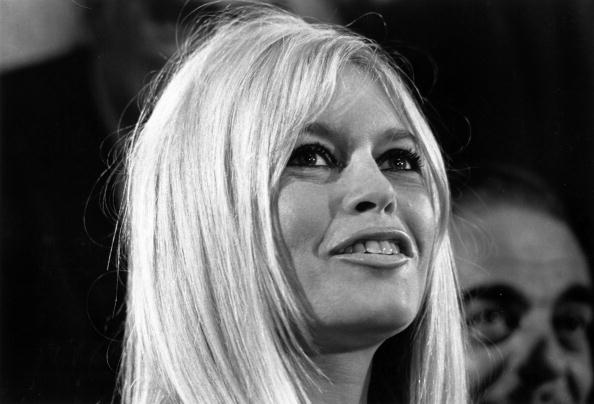
Len Trievnor/Express/Getty Images
International Fame and Peak Years
By the late 1950s, Bardot was the most famous actress in France and among the most photographed women on Earth. In 1958, she became the country's highest-paid actress. Films such as "Babette Goes to War," "A Woman Like Satan," and "In Case of Adversity" reinforced her box-office power, while her offscreen life became tabloid fodder.
Despite her reputation for light entertainment, Bardot occasionally delivered more serious performances. Her role in Henri-Georges Clouzot's courtroom drama "The Truth" earned widespread acclaim and an Academy Award nomination for Best Foreign Film. Bardot later said it was the only film she believed was genuinely good.
She also worked with some of Europe's most important directors, including Jean-Luc Godard on "Contempt," Louis Malle on "A Very Private Affair" and "Viva Maria!," and René Clair earlier in her career. "Viva Maria!" earned Bardot the only major acting-award nomination of her career, a BAFTA nod for Best Foreign Actress.
Although she appeared in a handful of English-language films, including "Dear Brigitte" and "Shalako" opposite Sean Connery, Bardot never relocated to Hollywood. She preferred Europe and resisted the rigid control of American studios.
Music, Fashion, and Cultural Impact
Beyond film, Bardot had a successful parallel career as a singer. She recorded several albums in the 1960s, often collaborating with Serge Gainsbourg, including the internationally famous duet "Bonnie and Clyde." Her breathy, conversational singing style matched her screen persona and influenced generations of French pop artists.
Bardot's cultural influence extended far beyond entertainment. Her hairstyle, makeup, and casual fashion choices helped popularize a new, relaxed vision of femininity. In 1969, she became the first celebrity chosen as the model for Marianne, the symbolic representation of the French Republic, cementing her status as a national icon.
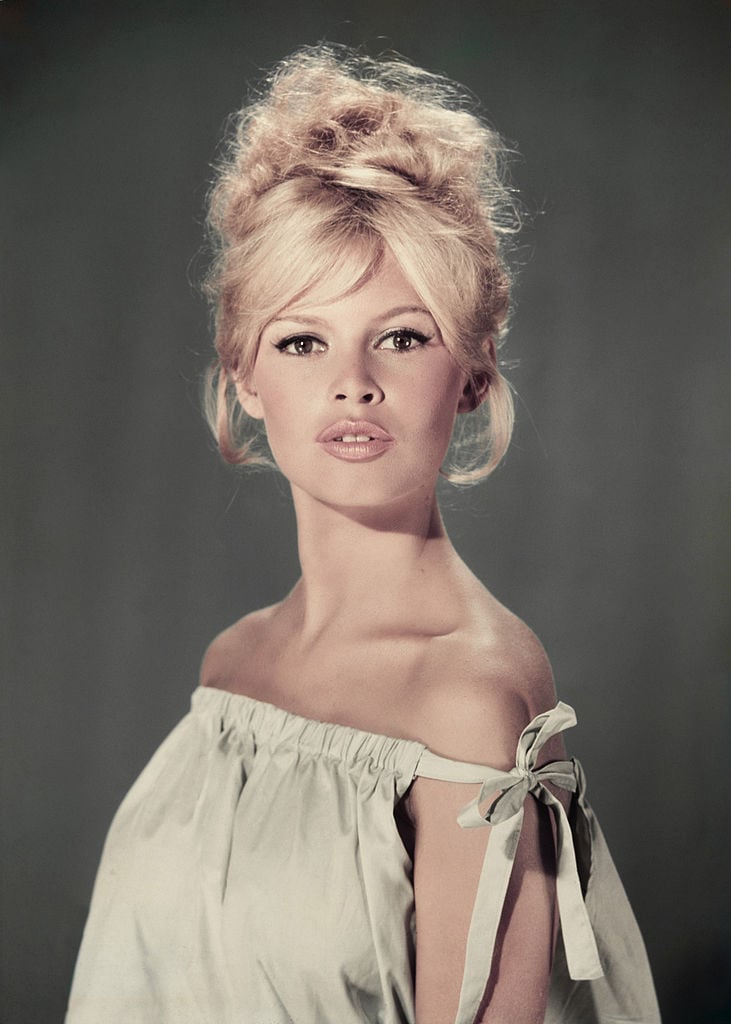
(Photo by Hulton Archive/Getty Images)
Retirement From Acting
Disillusioned with fame and increasingly uncomfortable with public scrutiny, Bardot announced her retirement from acting in 1973. Her final films, including "If Don Juan Were a Woman" and "The Edifying and Joyous Story of Colinot," were poorly received, reinforcing her desire to leave cinema behind.
At an age when many actresses were still chasing major roles, Bardot walked away completely. She never returned to acting and spent the rest of her life fiercely protecting her privacy.
Animal Rights Activism
Bardot's second life proved nearly as consequential as her first. In 1986, she founded the Fondation Brigitte Bardot, dedicated to the welfare and protection of animals. She auctioned off personal possessions, including jewelry, to finance the organization, raising millions of francs.
Over the following decades, the foundation worked in more than 70 countries, fighting against seal hunting, bullfighting, vivisection, and animal cruelty. Bardot became a vocal international advocate, often writing open letters to world leaders and participating in high-profile campaigns. By the time of her death, the foundation had taken in more than 12,000 animals.
Personal Life and Controversies
Bardot married four times and had numerous high-profile relationships, including with Jean-Louis Trintignant and Serge Gainsbourg. She had one son, Nicolas Charrier, with her second husband, actor Jacques Charrier.
Her later years were marked by significant controversy. Bardot was repeatedly convicted in French courts for inciting racial or religious hatred based on statements in her books and public letters. These views, widely condemned, complicated her legacy and stood in stark contrast to her humanitarian work on behalf of animals.
Awards and Honors
Bardot received numerous honors during her lifetime, including a David di Donatello Award for "The Truth," a French Legion of Honor medal, and induction into the United Nations Environment Programme's Global 500 Roll of Honour. In 2017, a statue of Bardot was erected in Saint-Tropez, the town she helped transform into an international resort.
Real Estate
In 1958, Bardot purchased La Madrague, a secluded oceanfront estate in Saint-Tropez that became her lifelong refuge. She later acquired additional nearby property to house rescued animals. La Madrague remained her primary residence and symbolized her retreat from public life.
/2011/02/Brigitte-Bardot.jpg)
/2010/11/sophia.jpg)
/2020/11/raquel-welch.jpg)
/2013/04/Claudia-Cardinale.jpg)
/2015/07/GettyImages-631269774.jpg)
/2009/09/Julia-Roberts.jpg)
/2009/11/Pamela-Anderson.jpg)
/2022/08/jane-russell-2.png)
/2020/04/Megan-Fox.jpg)
/2009/11/George-Clooney.jpg)
/2020/06/taylor.png)