
/2009/09/Michael-Jackson.jpg)
/2013/06/John-Branca-1.jpg)
:strip_exif()/2020/01/paul-mccartney-3.jpg)
/2022/12/bigi.jpg)
/2021/01/prince-michael.jpg)
/2010/03/GettyImages-176550317.jpg)
/2019/04/rr.jpg)
/2009/09/Brad-Pitt.jpg)
/2020/04/Megan-Fox.jpg)
/2009/09/Jennifer-Aniston.jpg)
/2017/02/GettyImages-528215436.jpg)
:strip_exif()/2009/09/P-Diddy.jpg)
/2019/10/denzel-washington-1.jpg)
/2020/01/lopez3.jpg)
/2020/02/Angelina-Jolie.png)
/2009/11/George-Clooney.jpg)
:strip_exif()/2015/09/GettyImages-476575299.jpg)
What was Michael Jackson's Net Worth?
Michael Jackson was an American singer, songwriter, actor, producer, and philanthropist who had a net worth of negative $500 million at the time of his death.
At his peak in the late 1980s and early 1990s, he was one of the highest-paid entertainers in the world, regularly pulling in $50 to $100 million per year from album sales, touring, merchandise, and endorsements. Over the course of his career, his total earnings easily exceeded $500 million, with blockbuster tours, record-breaking albums like "Thriller," and lucrative licensing deals fueling a seemingly unstoppable financial engine.
And yet, despite those massive earnings, Michael's financial reality at the time of his death told a very different story.
Behind the scenes, his spending was just as legendary as his income. Maintaining his lifestyle reportedly cost as much as $50 million per year. Neverland Ranch alone required millions annually in upkeep. He spent tens of millions on art, antiques, luxury cars, and collectibles, along with significant payouts tied to legal settlements, divorces, and ongoing litigation. On top of that, he poured an estimated $50 to $100 million into projects that never saw the light of day. As money came in, even more seemed to flow out.
To keep up, Michael increasingly relied on debt. Over time, he borrowed heavily against his most valuable asset, his stake in the Sony/ATV music publishing company. At one point, he took out a $380 million loan, using his catalog as collateral. The interest payments alone ran into the tens of millions per year. By the time he died in June 2009, Michael Jackson was roughly $500 million in debt, with creditors circling and key assets under pressure.
Under normal circumstances, that kind of financial situation would lead to a forced liquidation, with assets sold off to satisfy lenders. Instead, what happened next was one of the most remarkable financial turnarounds in entertainment history.
In the years since his death, Michael Jackson's estate has generated more than $2 billion in revenue. His debts have been fully repaid. His music catalog, likeness rights, and intellectual property have been transformed into a highly structured, global business that continues to produce tens of millions in annual income. Major deals, including catalog sales worth hundreds of millions of dollars, along with ongoing revenue from licensing, Broadway productions, and long-running Las Vegas shows, have turned what was once a financial disaster into a multi-billion-dollar success story.
In a strange and somewhat uncomfortable truth, Michael Jackson's financial legacy became far more stable, and far more valuable, after his death than it ever was during his life.
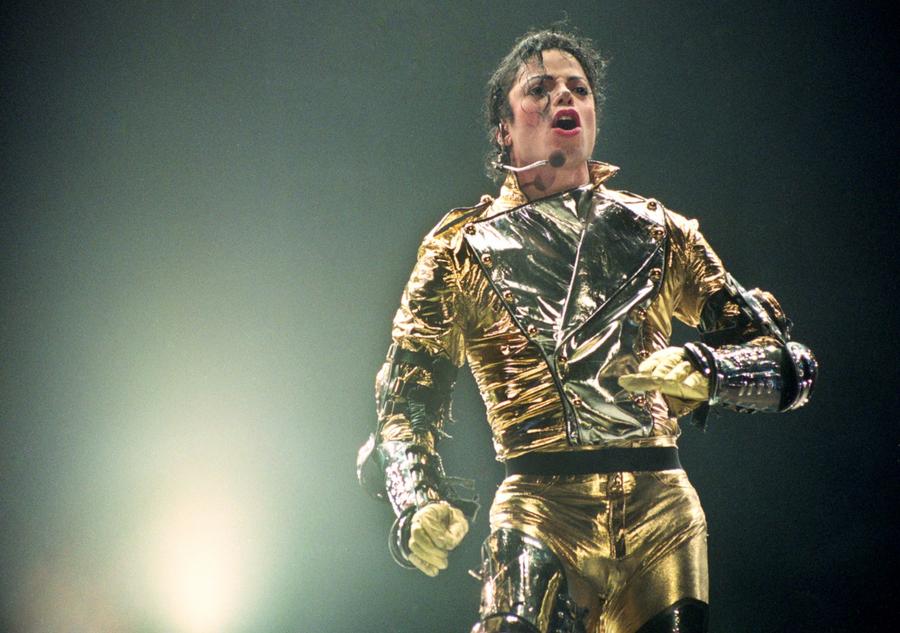
(Photo by Phil Walter/Getty Images)
Michael Jackson's Net Worth at Death
Technically, Michael Jackson's net worth at the time of his death was negative $500 million.
That figure is not an exaggeration or a rounding error. It reflects the reality of years of aggressive borrowing layered on top of equally aggressive spending.
To sustain his lifestyle, Michael repeatedly leveraged his most valuable asset: his 50% stake in Sony/ATV Music Publishing. At one point, he secured a $380 million loan from Bank of America, using that stake as collateral. The loan bought him time and liquidity, but it came at a steep cost. Annual interest payments alone ran into the tens of millions of dollars.
Instead of stabilizing his finances, the borrowed money was quickly spent. Within a few years, Michael had exhausted the entire $380 million loan and accumulated roughly $120 million in additional debt. In other words, he didn't just borrow heavily, he spent through the borrowed funds at a pace that made repayment nearly impossible.
By the end of his life, his financial situation had reached a breaking point. Creditors were circling, key assets were under pressure, and some lenders were positioning to seize collateral. His planned "This Is It" residency in London was not just a comeback tour, it was a financial necessity.
On paper, one of the most successful entertainers in history was effectively insolvent.
Music Catalog
At the time of his death, Michael Jackson's most valuable assets were his two music catalogs, which together represented one of the most powerful intellectual property portfolios in entertainment history.
Through his company Mijac Music, Michael owned the publishing rights to his own songs as well as material from a range of other artists, including Sly and the Family Stone, Ray Charles, and others. This catalog generated steady, high-margin income from licensing, royalties, and long-term publishing deals.
But his most famous and financially significant asset was his stake in Sony/ATV Music Publishing.
While it is often said that Michael "owned The Beatles' catalog," the more precise reality is that he owned 50% of Sony/ATV, the company that controlled The Beatles' publishing rights along with hundreds of thousands, and eventually millions, of other songs.
Michael's entry into the publishing world began in the early 1980s, when he started acquiring song rights through Mijac. He purchased the catalog of Sly and the Family Stone and snapped up classic hits like "Great Balls of Fire," "Shake Rattle Rattle and Roll," "When a Man Loves a Woman," and "Runaround Sue."
These early acquisitions set the stage for one of the most famous deals in music history.
Buying the Beatles
In 1984, Australian businessman Robert Holmes à Court put ATV Music Publishing up for sale. The company controlled the rights to roughly 4,000 songs, including the catalog of The Beatles, through its ownership of Northern Songs.
Due to a notoriously unfavorable early contract, Paul McCartney and John Lennon had lost control of their publishing rights. By the mid-1980s, neither Paul McCartney nor Yoko Ono was willing to meet the roughly $40 million asking price, despite multiple opportunities.
Meanwhile, a 25-year-old Michael Jackson was aggressively building a publishing portfolio. Fresh off the success of "Thriller," he had already spent millions acquiring song rights and understood the long-term value of owning intellectual property.
When his longtime attorney, John Branca, learned that ATV was available, he brought the opportunity to Michael. Jackson's response was simple: spare no expense.
With the highest competing bid around $40 million, Jackson came in with a decisive $47.5 million offer, roughly $115 million in today's dollars. After months of due diligence, legal review, and negotiation, the deal closed in 1985.
With that single transaction, Michael gained control over one of the most valuable song catalogs in history.
Ownership of the publishing rights meant he could license Beatles songs freely. In 1987, he sparked controversy by licensing "Revolution" to Nike for $500,000. In that deal, Jackson, as publisher, received half the fee, while Lennon and McCartney still earned their songwriter royalties.
It was a bold move that demonstrated both the power and the profitability of owning publishing rights.
Merging With Sony
In 1995, Sony approached Michael with a transformative proposal.
Sony offered to pay him $95 million, roughly $230 million in today's dollars, to merge ATV Music with its own publishing division. The result would be a new 50/50 joint venture: Sony/ATV Music Publishing.
Michael accepted.
The deal was a financial win on multiple levels. He immediately recouped nearly twice his original investment in ATV, while still retaining a 50% stake in a significantly larger and more diversified publishing company. Instead of concentrating his wealth in a single catalog, he now owned half of a rapidly expanding global platform.
Crucially, he also maintained 100% ownership of his personal catalog through Mijac Music, meaning he now controlled both his own work and a massive share of the broader publishing market.
Sony/ATV grew at an extraordinary pace in the years that followed:
- By the early 2000s, the catalog had expanded to roughly 200,000 songs
- By the early 2010s, it controlled more than two million songs
- The portfolio included works tied to artists such as Lady Gaga, Bob Dylan, Beck, and Eminem
By 2012, Sony/ATV was generating approximately $1.25 billion in annual revenue and around $500 million in profit, making it one of the most lucrative publishing companies in the world.
Today, the company is estimated to be worth between $2 billion and $4 billion. Even at the low end, Michael's former 50% stake represented a billion-dollar asset.
In 2016, his estate sold that stake to Sony for $750 million, closing the loop on what is widely considered one of the greatest investments in music history.
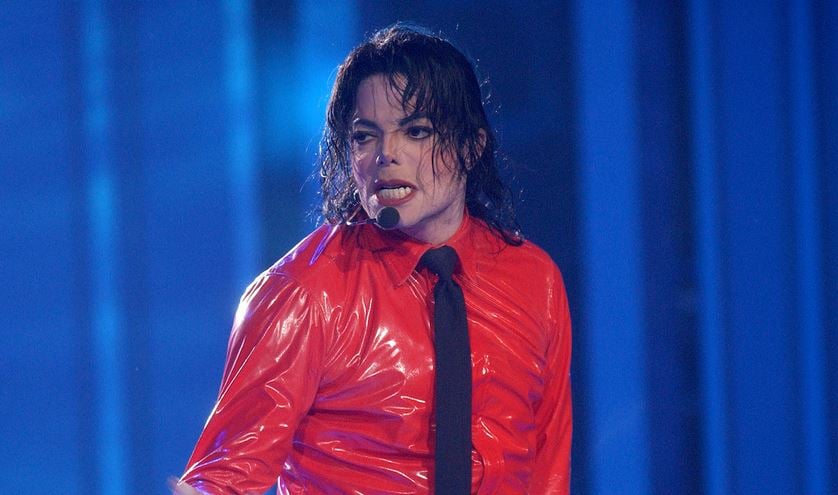
Getty
Earnings and Expenses
During his lifetime, Michael Jackson earned an estimated $500 million from music sales, touring, videos, endorsements, and licensing. At his peak, he was bringing in tens of millions per year and, for a time, operated at a level few entertainers in history have matched.
But the problem was never income. It was spending.
By the time of his death in 2009, Michael was effectively $500 million in debt, having spent virtually everything he earned and then some. Maintaining his lifestyle alone cost an estimated $30 million to $50 million per year. On top of that, he accumulated enormous unpaid bills to lawyers, agents, and advisers.
Some of his most notable expenses included:
- $19.5 million to purchase Neverland Ranch, plus millions annually in maintenance and staffing costs.
- Roughly $20 million to settle a 1993 child molestation lawsuit.
- An estimated $65 million spent on video and film projects, including the 35-minute movie "Ghosts," which he co-wrote with Stephen King.
- $12 million paid to Debbie Rowe.
- Millions per year in interest payments on his growing debt load.
- Tens of millions spent on art, antiques, luxury cars, clothing, exotic animals, and collectibles.
To sustain this level of spending, Michael increasingly relied on borrowing. At one point, he took out a $380 million loan using his stake in his music catalog as collateral. The loan provided short-term liquidity, but it also came with massive interest obligations that further strained his finances.
Rather than stabilizing his situation, the borrowed money was quickly spent. By the end of his life, he had exhausted the loan and had little realistic path to repaying either the principal or the mounting interest.
In his final years, Michael entered a complicated cycle of refinancing, asset pledging, and high-stakes negotiations with banks and investment firms, all in an effort to stay afloat while planning a comeback.
That comeback, the "This Is It" concert series in London, was intended not just as a return to the stage, but as a financial lifeline.
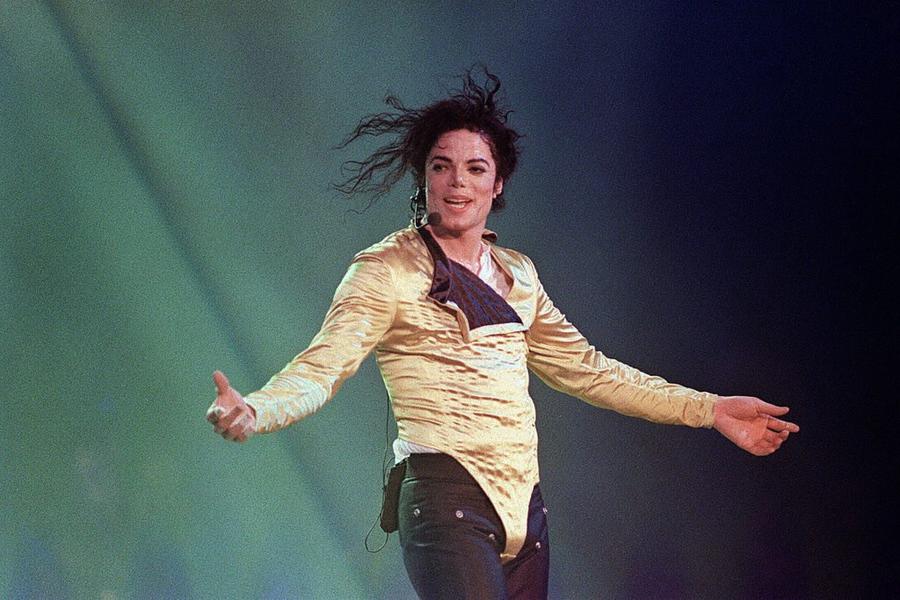
Michael Jackson Net Worth / FRANCIS Sylvain/AFP/Getty Images
Who Inherited Michael Jackson's Estate?
In the years following his death, Michael Jackson's estate underwent a dramatic financial turnaround under the leadership of executors John Branca and John McClain. Their primary objective was to stabilize the estate, eliminate its massive debt, and preserve its most valuable assets, particularly its music catalogs and intellectual property rights.
Michael's will laid out a clear structure for how his estate would be distributed:
- 40% to his three children, to be split evenly
- 20% to various children's charities
- 40% to his mother, Katherine Jackson
Upon Katherine's death, her 40% share will pass to Michael's children, meaning they will ultimately control 80% of the estate, or approximately 26.7% each.
In recent years, court filings have offered rare insight into how much the heirs have actually received. As of the mid-2020s, each of Michael's three children has reportedly received tens of millions of dollars in distributions, with total payouts across all beneficiaries reaching into the hundreds of millions.
Jackson Estate Net Worth Post Death
In purely financial terms, Michael Jackson's estate became far more valuable after his death than it ever was during his lifetime.
At the time of his death in 2009, the estate was burdened with roughly $400 million to $500 million in debt and faced the very real possibility of asset liquidation. Instead, his executors executed one of the most successful posthumous financial turnarounds in entertainment history.
Their early moves were decisive:
- A $250 million deal with Sony for future music rights provided immediate liquidity
- The concert documentary "This Is It" grossed $268 million worldwide
- Major licensing deals were signed with companies like Pepsi
- Long-term partnerships were formed with Cirque du Soleil, including successful Las Vegas productions
Those early wins stabilized the estate and allowed it to transition from crisis management to long-term value creation.
Since 2009, Michael Jackson's estate has generated more than $2 billion in revenue, consistently ranking as the highest-earning celebrity estate in the world. Unlike many posthumous estates that rely on short-term spikes in interest, Jackson's has evolved into a highly structured, diversified business built on music rights, licensing, live productions, and brand management.
Major financial milestones in recent years include:
- The 2016 sale of the estate's 50% stake in Sony/ATV to Sony for $750 million
- A 2024 deal selling a 50% stake in Mijac Music for $600 million, valuing the catalog at $1.2 billion
- Ongoing revenue from "MJ the Musical," Cirque du Soleil shows, streaming, and licensing
Today, the estate generates tens of millions of dollars annually and continues to grow in value, fueled by global demand for Michael's music and brand.
In a twist that few could have predicted in 2009, the financial empire Michael Jackson built, but nearly lost, has become one of the most successful and enduring posthumous business operations in history.
Neverland Ranch
As you probably know, Michael Jackson lived much of his adult life at a sprawling estate that he dubbed Neverland Ranch. Located in Los Olivos, California, in Santa Barbara County, Neverland has been on the market since 2015. Unfortunately, it has struggled to find a buyer even after being renovated, renamed, and reduced (in price). Here's a brief history of Neverland and a rare drone video tour courtesy of the real estate agent…
Michael Jackson purchased Neverland Ranch in 1987 for $19.5 million. That's the same as around $44 million in today's inflation-adjusted dollars. After acquiring the 2700-acre property, Jackson proceeded to build an elaborate fantasy land complete with an amusement park, exotic animals, and a working train. The upgrades and additions cost him millions of dollars. The property was built in a Peter Pan theme, a nod to Michael's feelings about his own arrested development thanks to early fame and lost childhood.
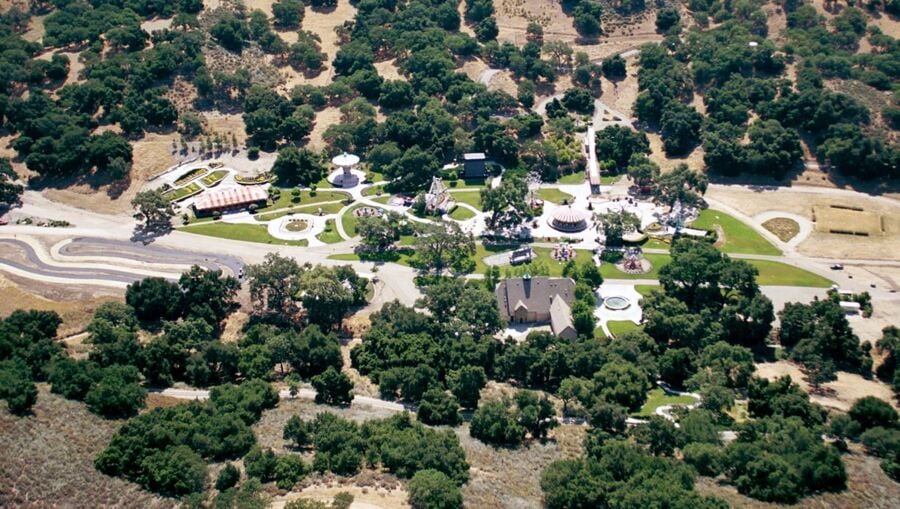
Getty
He threw lavish parties for friends, family, and even strangers at the house. Kim Kardashian's 14th birthday was held at the ranch thanks to her dad's business connections to Michael. Elizabeth Taylor got married there in 1991.
The main residence of the property is a 12,600-square-foot French-Normandy-style mansion. The house features five bedrooms, eight bathrooms, a dance studio, a 50-person movie theater, and much more. There's a four-acre lake, tennis courts, a basketball court, barns, and multiple guest/staff houses. In total, there are 22 structures on the property.
After Michael faced child molestation charges in 1993 and then again in 2003, Michael's career and financial status were permanently damaged. He no longer had the income that was necessary to pay the mortgage and the estimated $1 million per year in upkeep costs. At one point, he defaulted on what had ballooned to a $25 million debt connected to the property.
In 2008, Michael was facing foreclosure. His bank sold the $25 million debt to a private equity firm called Colony Capital for $23 million.
After Jackson died in 2009, Colony spent millions on upgrades, intending to sell the property as soon as possible. They changed the name from Neverland Ranch to Sycamore Valley Ranch. They listed it for $100 million.
Maybe it was bad vibes from the former owner, or perhaps the price was too high, but potential buyers did not show much interest in the property. In 2018, Colony reduced the price to $67 million.
In December 2020, billionaire Ron Burkle finally agreed to buy Neverland for $22 million.
Here is a rare drone video tour of Neverland:
/2009/09/Michael-Jackson.jpg)
/2010/03/GettyImages-176550317.jpg)
/2016/03/jack.jpg)
/2015/10/Michael-Jackson.jpg)
/2014/02/GettyImages-94983986.jpg)
/2023/02/GettyImages-95476311.jpg)
/2015/06/mj1.jpg)
/2019/02/GettyImages-2742886-e1551417388369.jpg)
/2020/06/taylor.png)
/2009/09/Cristiano-Ronaldo.jpg)
/2018/03/GettyImages-821622848.jpg)