
Most Westerners probably don't know too much about Iran's Supreme Leader Ayatollah Ali Khamenei. In fact, most Westerners don't know too much about Iran in general! One of the first things you should know about Iran is that it has a democratically elected president! Pretty cool! The current president of Iran is Masoud Pezeshkian. On the other hand, despite having a democratically elected president, the country is actually controlled by a single "Supreme Leader," also known as the Ayatollah, also known as the Guardian Jurist of Iran.
For more than 35 years, that role belonged to Ayatollah Ali Khamenei.
As Supreme Leader from 1989 until his death on February 28, 2026, Khamenei held ultimate authority over Iran's military, judiciary, intelligence services, state broadcasting, and nuclear policy. Presidents came and went. Parliaments shifted. Factions fought. Khamenei remained at the center of power.
For this monumental challenge, the Supreme Leader does not actually earn a salary. He does it out of the goodness of his heart, in the duty of Islam and Iran.
On the other hand, Iran's Supreme Leader, Ayatollah Ali Khamenei, allegedly personally oversaw a real estate, financial, and manufacturing empire that has been described by US officials as an "off-the-books hedge fund" that controls $200 billion in assets.
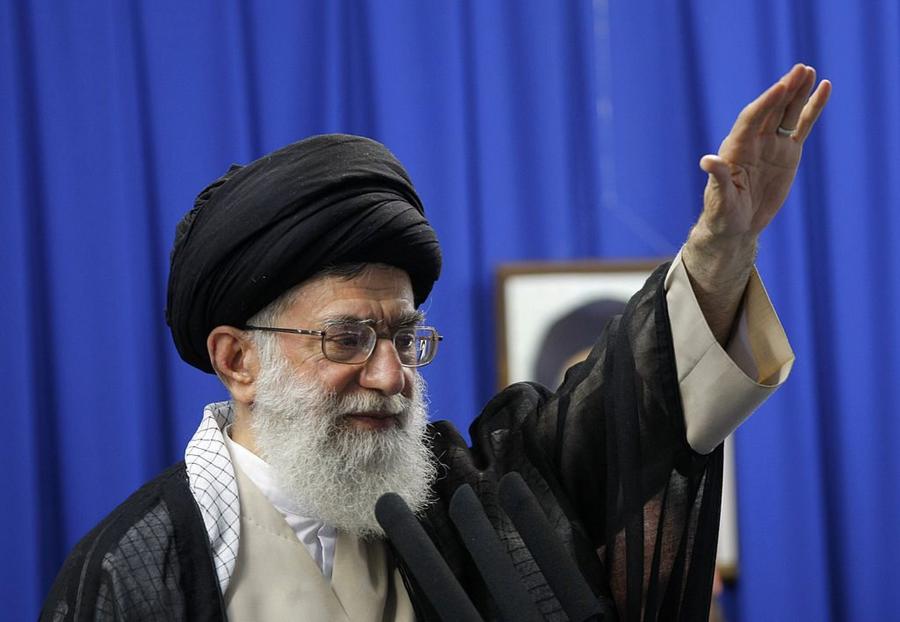
Ayatollah Ali Khamenei / BEHROUZ MEHRI/AFP/Getty Images
From Revolution to Supreme Rule
Ali Khamenei was born on July 17, 1935, in Mashhad, Iran. He is the second Supreme Leader of Iran, having taken over from Ayatollah Ruhollah Khomeini (no relation despite the similar sounding last names) upon his death in 1989. Ayatollah Ruhollah Khomeini is credited with being the driving force behind the revolution that ousted the pro-western Shah of Iran in 1979. Ousting the Shah turned Iran from a relatively westernized, free nation back into an extremely conservative Islamist state.
As an aside, prior to being ousted, the Shah of Iran, also known as Mohammad Reza Pahlavi, controlled nearly all of the oil revenue generated by his country. In the 1960s, he was making $12 million PER MONTH in oil dividends. That's the same as around $115 million per month today. In 1979, the year he was ousted, the Shah's net worth was $2 billion, and his extended family controlled another $2 billion in wealth stashed around the globe.
Dissidents at the time of his ouster provided an accounting of some of the Shah's most important personal assets. Those assets included majority equity stakes in:
- 17 banks
- 80% of Iran's largest insurance company
- 25 metal manufacturing companies
- 8 mining operations
- 25% of Iran's largest cement company
- 45 construction companies
- 43 food production companies
- An ownership stake in every single major hotel in Iran. One estimate claimed the Shah personally owned 70% of the country's hotel rooms
- 10% of General Motors Iran
So mayyyyyybe the Shah's critics had a right to be upset.
The Origins of Setad
The aftermath of the Islamic Revolution created an interesting problem in Iran. The sudden departure of the Shah, the entire extended royal family, and many formerly high-powered families meant that thousands of companies, real estate portfolios, and bank accounts were abandoned and essentially up for grabs.
Endless lawsuits and confrontations were spawned to resolve the disputes, but there was still a lot of confusion even 10 years later. So, in April 1989, Ayatollah Ruhollah Khomeini wrote and signed a two-paragraph edict that launched a new corporate entity called Setad. Technically, Setad Ejraiye Farmane Hazrate Emam, which translates to "Headquarters for Executing the Order of the Imam." Two of Ayatollah's most trusted advisors were placed in charge of Setad. Setad was then given the power to make the final decision on all seized and disputed assets.
Two months after creating Setad, on June 3rd, 1989, Ayatollah Ruhollah Khomeini died at the age of 86. He was quickly succeeded by his former student, Ali Khamenei.
Setad's Expansion Under Khamenei
As we previously stated, the original purpose of Setad was to oversee all of Iran's disputed and seized assets, specifically those connected to the Shah and extended members of the former royal family. Ayatollah Ruhollah Khomeini also intended for Setad to be dismantled after two years.
Ayatollah Ali Khamenei did not dismantle Setad after two years. In fact, he has spent the last several decades expanding Setad's power and influence to an exponential degree. Setad has slowly acquired large equity stakes in every aspect of Iran's economy.
Over the decades, Setad has quietly grown into one of the most powerful and secretive economic forces in Iran. It holds stakes in nearly every sector, including finance, agriculture, telecommunications, and even pharmaceuticals. In 2021, the power of Setad was publicly cemented when Iran's then-new president, Ebrahim Raisi, appointed Mohammad Mokhber—the long-time head of Setad—as the country's First Vice President. Mokhber had managed Setad since 2007 and was under U.S. sanctions for using the organization to enrich the Supreme Leader. His elevation to the executive branch was seen as a clear sign that Setad's influence now stretches from the economy into the core of Iran's political system.
An Off-The-Books $200 Billion Hedge Fund
According to an expose by Reuters in 2013, "Setad's portfolio includes banks, farms, cement companies, a licensed contraceptives maker, apartments seized from Iranians living abroad and much more."
Using information gathered from the Tehran Stock Exchange, anonymous tips, and a report from the US Department of Treasury, Reuters estimated that Setad controlled assets that had a total value of at least $95 billion. And who allegedly controlled Setad? One person: Ayatollah Ali Khamenei.
In 2019, the U.S. Embassy in Baghdad claimed the true figure could be closer to $200 billion. In 2018, then-U.S. Secretary of State Mike Pompeo described Setad as Khamenei's personal "off-the-books hedge fund."
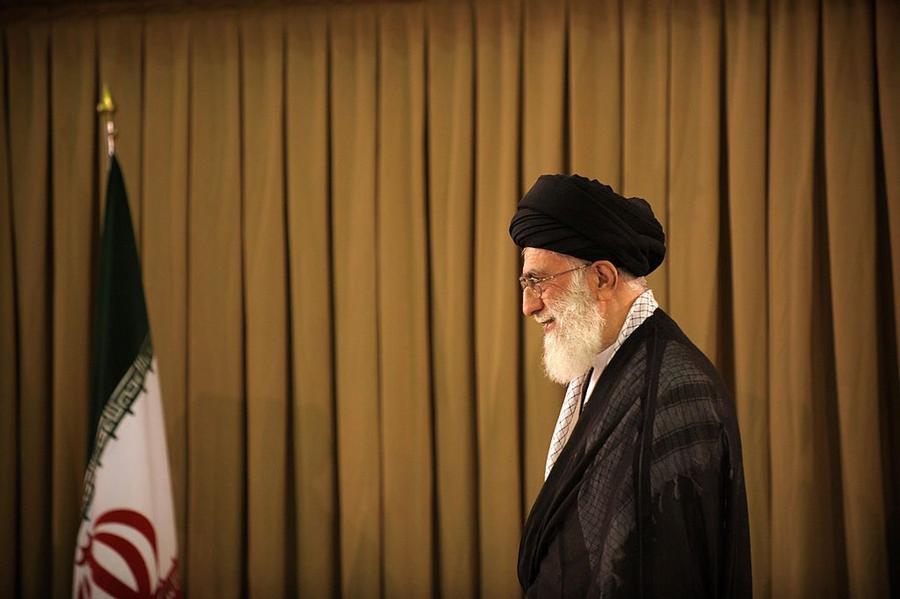
Ayatollah Ali Khamenei / OLIVIER LABAN-MATTEI/AFP/Getty Images
The Supreme Leader's Lifestyle
So, was Ayatollah Ali Khamenei a secret multi-billionaire capitalist tycoon disguised as a pious religious leader? The answer to that question is a little murky. From what the US Treasury Department has been able to determine, the Supreme Leader did not use any of his billions in any obvious way to benefit himself personally.
He resided in a relatively modest home in Tehran, located within a secured compound overseen by the Office of the Supreme Leader. Photographs from official meetings show simple furnishings, plain carpets, and sparsely decorated rooms. He wore traditional clerical robes and projected an image of religious austerity. There were no visible yachts, foreign estates, or luxury lifestyles associated with his name.
That modest presentation, however, did not diminish the scale of economic power concentrated under his authority. Even if the wealth tied to Setad was not spent on personal extravagance, control over such an immense financial apparatus provided leverage far more valuable than visible luxury: political insulation, patronage power, and financial independence from Iran's formal state budget.
Seizures, Intimidation, and Setad's Power
One of the most controversial aspects of Setad's vast business empire is the method by which many of the assets have reportedly been acquired. What began as an organization meant to resolve asset disputes has transformed into a force that allegedly seizes property using mafia-like tactics. One prominent example involves Parsian Bank, once Iran's largest non-state-owned financial institution. After its executives clashed with Setad leadership, the bank was seized, and its leaders were placed under house arrest. Practically overnight, Parsian's assets were redirected to benefit Setad and its affiliates.
In another striking case from 2019, an Iranian court ordered the confiscation of all properties owned by Baha'i families in the village of Ivel, branding their religion as a "perverse ideology." The assets were handed over to Setad, highlighting how religious minorities have often been targeted under the guise of legal enforcement.
A couple interviewed by Reuters in California produced documentation showing that Setad had seized their property decades ago due to alleged ties to the Shah. That real estate is now part of a publicly traded company controlled by Setad. Had they retained ownership, the couple estimates their stake would be worth over $100 million today. Instead, they received nothing.
Silencing Internal Dissent
Even prominent insiders have failed to challenge the scale of Khamenei's empire. In 2016, former Iranian President Akbar Hashemi Rafsanjani publicly referenced billions controlled by Khamenei's family. Not long after, his son Mehdi was sentenced to a decade in prison for corruption—widely seen as retaliation. The message was clear: even those within the regime risk punishment for exposing the Supreme Leader's financial power.
Empire Under Pressure
Even as Ayatollah Ali Khamenei projected personal austerity, U.S. officials and outside analysts long argued that his control over Setad gave him access to one of the largest pools of capital in the Middle East. Whether or not those assets constituted "personal wealth" in the traditional sense, the practical effect was the same: financial autonomy from parliament, insulation from sanctions, and the ability to direct resources toward institutions critical to regime stability, particularly the Islamic Revolutionary Guard Corps and allied networks.
Sanctions pressure, however, placed increasing strain on that system. As Iran's economy tightened under waves of U.S. and European restrictions, opaque financial channels became more important and more vulnerable. In 2024, reports surfaced alleging that individuals connected to sanction-circumvention networks had diverted hundreds of millions of dollars tied to oil sales. According to leaked documents cited by regional media, a broker granted access to state oil exports failed to return roughly $500 million in proceeds. While the full chain of accountability was never publicly clarified, the episode underscored a core tension inside Iran's shadow economy: secrecy that protects power can also conceal corruption.
The controversy reinforced a broader reality. Even within a tightly controlled system centered on the Supreme Leader's office, vast off-budget financial networks create opportunities for internal rivalries, patronage battles, and financial misconduct.
Official Denials
Iranian government officials have repeatedly dismissed reports by the U.S. Treasury Department and investigative journalists, labeling them "baseless" and "scattered."
Who Controls Setad Now?
With Ayatollah Ali Khamenei's death on February 28, 2026, one of the most immediate and consequential questions inside Iran was not only who would become the next Supreme Leader, but who would control Setad.
Formally, Setad does not belong to any individual. It operates under the authority of the Office of the Supreme Leader. That means control over its vast network of holdings is expected to transfer to whoever is appointed as Khamenei's successor by the Assembly of Experts. In theory, the transition is institutional, not personal.
In practice, the situation is more complex.
For decades, Setad's senior leadership was closely aligned with Khamenei and with key figures inside the Islamic Revolutionary Guard Corps. Its long-time executives operated within a system built on personal loyalty and tightly guarded financial channels. Any succession process inevitably raises questions about whether those internal alliances remain intact or shift toward new power centers.
There is also the possibility of increased IRGC influence. The Guard already commands significant economic assets of its own, and deeper integration with Setad-controlled entities would further consolidate military-economic power. Conversely, rival clerical or political factions may seek to assert oversight in order to prevent any single bloc from dominating the post-Khamenei landscape.
Because Setad functions outside Iran's formal state budget and parliamentary scrutiny, its assets represent not just wealth, but leverage. Control over Setad means the ability to fund patronage networks, stabilize political allies, manage sanctions workarounds, and influence succession politics behind closed doors.
In short, whoever ultimately consolidates authority over Setad will hold one of the most powerful economic tools in the Islamic Republic — and that reality may shape Iran's next chapter as much as any election or public decree.
/2014/08/GettyImages-88576746.jpg)
/2026/03/mojtaba-net-worth.jpg)
/2026/03/Mojtaba-Khamenei.png)
/2022/09/Mohammad-Reza-Pahlavi.jpg)
/2011/03/Mahmoud-Ahmadinejad.jpg)
/2025/02/missing_profile.jpg)
/2020/04/Megan-Fox.jpg)
:strip_exif()/2009/09/P-Diddy.jpg)
/2019/04/rr.jpg)
/2017/02/GettyImages-528215436.jpg)
/2009/11/George-Clooney.jpg)
:strip_exif()/2015/09/GettyImages-476575299.jpg)
/2009/09/Brad-Pitt.jpg)
/2019/10/denzel-washington-1.jpg)
/2020/01/lopez3.jpg)
/2018/03/GettyImages-821622848.jpg)
/2009/09/Jennifer-Aniston.jpg)
/2019/11/GettyImages-1094653148.jpg)
/2009/09/Cristiano-Ronaldo.jpg)
/2020/02/Angelina-Jolie.png)
/2020/06/taylor.png)