
/2020/01/Qaboos-bin-Said-Al-Said-of-Oman.png)
/2015/01/GettyImages-79011061.jpg)
/2009/12/King-Hassan-II.png)
/2025/08/Sheikh-Mohamed-bin-Zayed-Al-Nahyan.jpg)
/2021/11/king.jpg)
/2011/02/Saddam-Hussein-1.jpg)
:strip_exif()/2015/09/GettyImages-476575299.jpg)
/2020/01/lopez3.jpg)
/2009/09/Cristiano-Ronaldo.jpg)
/2020/02/Angelina-Jolie.png)
/2009/11/George-Clooney.jpg)
/2020/06/taylor.png)
/2019/11/GettyImages-1094653148.jpg)
:strip_exif()/2009/09/P-Diddy.jpg)
/2009/09/Brad-Pitt.jpg)
/2020/04/Megan-Fox.jpg)
/2018/03/GettyImages-821622848.jpg)
What was Qaboos Bin Said Al Said's Net Worth?
Qaboos Bin Said Al Said was the Sultan of Oman and its Dependencies and had a net worth of $900 million at the time of his death. He died on January 10, 2020.
Qaboos bin Said Al Said was the longest-serving ruler in the Arab world and one of the most consequential Middle Eastern leaders of the late 20th and early 21st centuries. Ruling Oman from 1970 until his death in 2020, he transformed a poor, isolated country into a modern state known for stability, gradual development, and unusually deft diplomacy. At home, he used oil wealth to build roads, ports, hospitals, schools, and a functioning national government where almost none had existed before. Abroad, he pursued a fiercely independent foreign policy that allowed Oman to maintain working relationships with rival powers including the United States, Iran, Israel, Saudi Arabia, and Yemen's Houthi movement. That balance turned Oman into a discreet diplomatic back channel, often likened to a Middle Eastern Switzerland, where adversaries could meet quietly when public negotiations were impossible. Though he ruled as an absolute monarch and tolerated little political dissent, Qaboos earned deep loyalty from many Omanis for delivering rising living standards, national cohesion, and decades of internal peace in a volatile region.
Early Life and Education
Qaboos bin Said Al Said was born on November 18, 1940, into the Al Said dynasty, which has ruled Oman since the 18th century. His father, Sultan Said bin Taimur, governed Oman through strict isolation and rigid social controls that left the country deeply impoverished and cut off from much of the modern world.
As a young man, Qaboos was sent to Britain for his education. He attended school in Suffolk and later trained at the Royal Military Academy Sandhurst, gaining both academic grounding and military discipline. After further study and travel in Europe, he returned to Oman in the mid-1960s. Instead of being groomed publicly for leadership, he was placed under virtual house arrest by his father for several years, isolated from politics while the country sat atop newly discovered oil wealth it barely exploited.
1970 Coup and Consolidation of Power
In July 1970, at the age of 29, Qaboos overthrew his father in a bloodless palace coup with the quiet backing of Britain. He immediately declared a new era for Oman, ending decades of isolation and announcing sweeping plans for development.
One of his first challenges was a leftist insurgency in southern Oman. Qaboos combined military action with economic investment, offering infrastructure, services, and political inclusion alongside force. The rebellion was defeated, and the strategy became a template for his rule: stability through development.
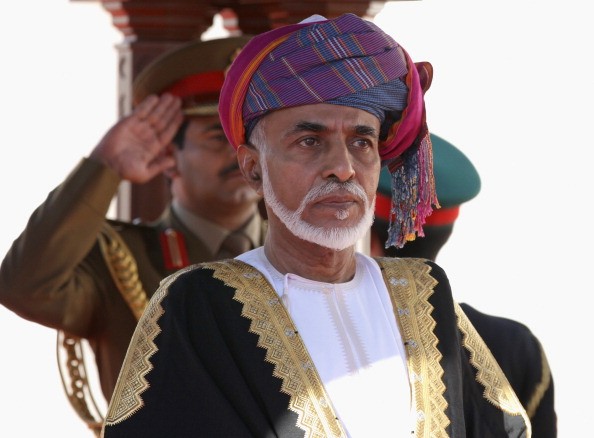
Chris Jackson/Getty Images
Modernizing Oman
Over the next several decades, Qaboos oversaw a near total transformation of the country. Oil revenues were channeled into paved highways, ports, power plants, hospitals, schools, and housing. Government ministries were created from scratch, and a professional civil service emerged where none had existed.
The scale of progress was dramatic. In 2010, the United Nations ranked Oman first in the world for improvement on the Human Development Index over the previous 40 years. Roads, universities, stadiums, and public institutions bearing Qaboos's name became fixtures of daily life. July 23, the date of his accession, was celebrated as Renaissance Day, symbolizing the country's rebirth.
Foreign Policy and Quiet Diplomacy
Qaboos's greatest international impact came through foreign policy. Rejecting rigid alliances, he insisted on nonalignment and independence. Oman maintained close ties with Western powers while also cultivating trust with Iran after the 1979 Islamic Revolution, a decision that set it apart from most Gulf states.
That positioning made Oman indispensable as a mediator. Qaboos helped secure the release of three American hikers imprisoned in Iran in 2011 and later hosted secret talks between Iranian and American officials that laid the groundwork for the 2015 nuclear agreement. Oman also welcomed Israeli leaders, including Yitzhak Rabin and later Benjamin Netanyahu, long before such contacts were common in the Gulf.
He consistently declined to join regional confrontations, staying out of wars in Yemen, the blockade of Qatar, and the Saudi-led intervention in Bahrain. This independence sometimes irritated more powerful neighbors but preserved Oman's role as a neutral intermediary.
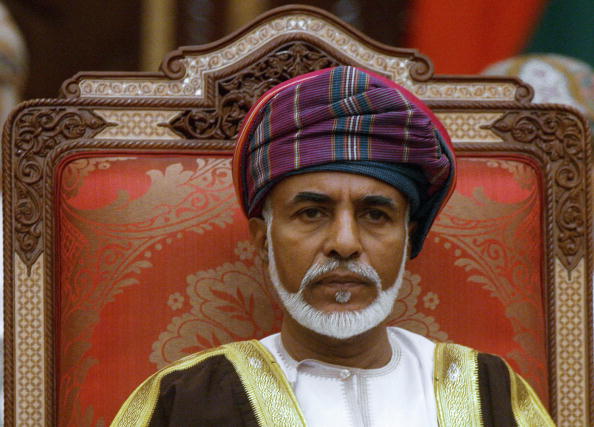
MOHAMMED MAHJOUB AFP / Getty Images
Governance and Domestic Limits
Despite limited political freedoms, Qaboos ruled with a comparatively light touch. He issued Oman's first constitution in 1996, established a consultative assembly, and granted universal suffrage to adults. Still, political parties remained banned, dissent tightly controlled, and ultimate authority firmly centralized in the sultan.
Periodic protests over jobs and wages, particularly during the Arab Spring, were met with a mix of police force and economic concessions. Qaboos responded by expanding public sector employment and raising salaries, decisions that later strained Oman's finances when oil prices fell.
Personal Life and Interests
Qaboos married briefly in the 1970s but had no children and lived most of his life unmarried. He was known to be private, soft-spoken, and intensely reserved. A lover of music, he played several instruments and founded a royal symphony orchestra. He also held multiple government roles simultaneously, at times serving as prime minister, defense minister, foreign minister, and finance minister.
Succession and Death
Qaboos died in January 2020 after a prolonged illness. Because he left no heirs, Oman followed a constitutional process that revealed a sealed letter naming his chosen successor. His cousin, Haitham bin Tariq Al Said, was sworn in the same day, pledging continuity in policy and governance.
Legacy
Sultan Qaboos left behind a country fundamentally reshaped by his vision. He ruled as an absolute monarch, yet delivered stability, rising prosperity, and an international reputation for diplomacy that far exceeded Oman's size. His legacy is that of a ruler who turned oil wealth into long-term national development and used quiet influence rather than force to give Oman an outsized role on the global stage.
/2020/01/Qaboos-bin-Said-Al-Said-of-Oman.png)
/2011/02/Saddam-Hussein-1.jpg)
/2009/12/King-Hassan-II.png)
/2022/09/Mohammad-Reza-Pahlavi.jpg)
/2021/11/king.jpg)
/2013/01/GettyImages-517093660.jpg)
/2015/12/GettyImages-131159552.jpg)
/2014/10/GettyImages-488419937.jpg)
/2019/10/denzel-washington-1.jpg)
/2019/04/rr.jpg)