
/2021/07/Bob-Weir.jpg)
/2011/12/Bill-Kreutzmann.jpg)
/2020/09/jerry-garcia-1.jpg)
/2020/03/John-Mayer.jpg)
/2022/02/Mickey-Hart.jpg)
/2009/11/Phil-Lesh.jpg)
/2009/09/Jennifer-Aniston.jpg)
:strip_exif()/2015/09/GettyImages-476575299.jpg)
:strip_exif()/2009/09/P-Diddy.jpg)
/2019/04/rr.jpg)
/2019/10/denzel-washington-1.jpg)
/2009/09/Brad-Pitt.jpg)
/2020/04/Megan-Fox.jpg)
/2018/03/GettyImages-821622848.jpg)
/2017/02/GettyImages-528215436.jpg)
/2019/11/GettyImages-1094653148.jpg)
/2020/02/Angelina-Jolie.png)
What was Bob Weir's Net Worth?
Bob Weir was an American singer, songwriter, and guitarist who had a net worth of $60 million at the time of his death in January 2026 at the age of 78.
Bob Weir was one of the central architects of the Grateful Dead's sound, culture, and longevity, helping transform the group from a mid-1960s Bay Area experiment into one of the most durable musical institutions in American history. As co-lead singer, rhythm guitarist, and songwriter alongside Jerry Garcia, Weir brought a distinctive musical sensibility that favored unconventional chord voicings, jagged rhythmic patterns, and songs that often defied standard rock structures. His work gave the band much of its eccentric edge, balancing Garcia's melodic fluidity with tension, swing, and surprise.
Within the Grateful Dead, Weir emerged as the group's second most important songwriting voice. He co-wrote enduring staples such as "Truckin'," "Sugar Magnolia," "The Other One," and "Cassidy," and often handled the band's country-rock material, helping anchor their more free-form improvisation in American roots music. Albums like "Workingman's Dead" and "American Beauty" showcased his ability to merge folk, country, and rock into songs that felt both timeless and strange. Though frequently overshadowed by Garcia's mystique, Weir's contributions were essential to the band's internal chemistry and live sound.
Outside the Dead, Weir maintained an active parallel career. He released solo albums beginning with "Ace," formed side projects including Kingfish and Bobby and the Midnites, and consistently toured during and after the Dead's peak years. Following Garcia's death in 1995, Weir became a key steward of the Dead's musical legacy, leading groups such as RatDog and performing in various post-Dead configurations.
In the 2010s, Weir helped reintroduce the Grateful Dead's catalog to a new generation through Dead & Company, collaborating with John Mayer and fellow surviving members. Across six decades, Bob Weir's career embodied musical curiosity, communal spirit, and a refusal to play by conventional rules, securing his place as one of the most influential rhythm guitarists and bandbuilders in rock history.
Early Life
Bob Weir was born Robert Hall Weir on October 16, 1947, in San Francisco, California. His biological parents gave him up for adoption shortly after birth, and he was raised by adoptive parents in Atherton, an affluent Bay Area suburb. From an early age, Weir showed signs of both creative talent and academic difficulty. He struggled badly in school due to undiagnosed dyslexia, a condition that contributed to repeated disciplinary problems and expulsions. By his own account, he was removed from nearly every school he attended.
Music became both an outlet and a lifeline. After briefly attempting piano and trumpet, Weir picked up the guitar at age 13 and gravitated toward folk and bluegrass. As a teenager, he spent significant time around the Tangent, a Palo Alto folk club that functioned as a hub for the region's emerging countercultural musicians. During this period, he befriended John Perry Barlow, a fellow student at a Colorado boarding school for boys with behavioral issues, who would later become his most important lyricist and creative partner.
The Grateful Dead
On New Year's Eve 1965, the 16-year-old Weir wandered into Dana Morgan's Music Store in Palo Alto after hearing banjo music drifting outside. Inside, he met Jerry Garcia, who was waiting for students who never arrived. The two spent the night playing music and quickly decided to form a band. What began as the acoustic Mother McCree's Uptown Jug Champions soon evolved into the electric Warlocks, who shortly thereafter adopted the name Grateful Dead.
As the band's youngest member, Weir initially struggled to keep pace musically with Garcia and bassist Phil Lesh. In 1968, he and Ron "Pigpen" McKernan were briefly dismissed from the band due to concerns about their musicianship, though both returned within months. The episode proved formative for Weir, who recommitted himself to mastering the guitar, developing an idiosyncratic rhythm style built around unusual chord voicings, jazz-influenced timing, and counter-melodies rather than traditional strumming.
Over the next three decades, Weir became one of the Dead's defining musical voices. He served as co-lead singer and songwriter, contributing classics like "Sugar Magnolia," "Truckin'," "The Other One," "Cassidy," and "Playing in the Band." While Garcia was often seen as the band's spiritual and musical center, Weir functioned as its structural anchor, shaping the group's sound onstage and helping translate free improvisation into coherent, dynamic performances.
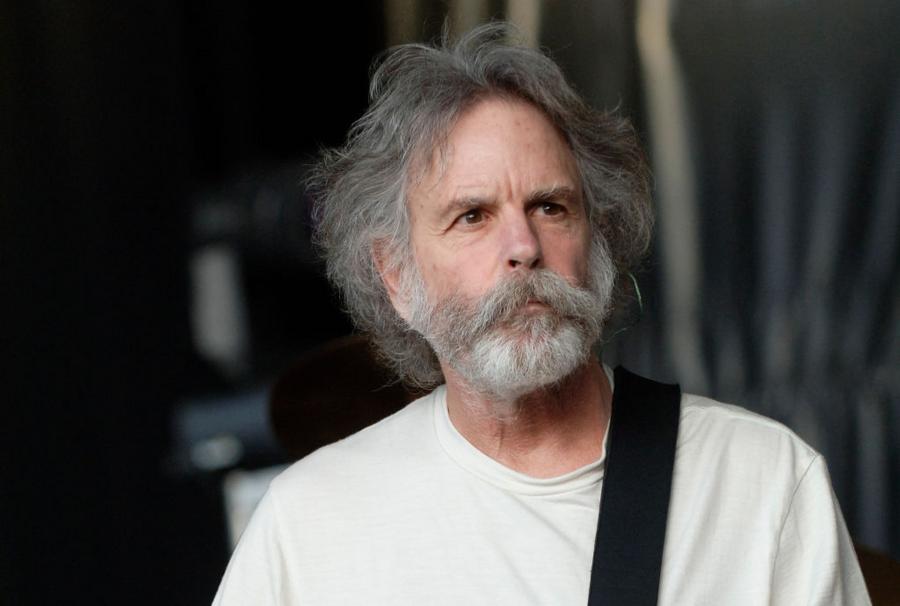
(Photo by Tim Mosenfelder/Getty Images)
Solo Work and Side Projects
In 1972, Weir released his first solo album, "Ace," which featured full participation from the "Grateful Dead" and produced the enduring live staple "Playing in the Band." He followed this with the more polished, pop-rock influenced "Heaven Help the Fool" in 1978. Throughout the 1970s and 1980s, Weir balanced his work with the "Dead" alongside side projects like "Kingfish" and "Bobby and the Midnites."
His solo career saw a significant late-period renaissance with the 2016 release of "Blue Mountain." His first album of entirely new material in 30 years, the "cowboy" folk record was inspired by his youth working as a ranch hand and received widespread critical acclaim.
Following Garcia's death in 1995, Weir emerged as a principal steward of the "Dead's" legacy. He formed "RatDog," which toured for over 15 years, and in 2018, he launched "Bobby Weir & Wolf Bros." Featuring bassist Don Was and drummer Jay Lane, the group—often expanded by a brass and string section known as "The Wolfpack"—reimagined the "Dead's" catalog with sophisticated, orchestral arrangements, culminating in the 2022 release "Live in Colorado."
Later Career and Dead & Company
In 2009, Weir and Phil Lesh co-founded Furthur, which toured extensively and earned a reputation for adventurous setlists and extended improvisation. After health setbacks in 2013 and 2014, including a collapse onstage and a hiatus from touring, Weir returned in force for the Grateful Dead's 50th anniversary concerts in 2015.
That reunion paved the way for Dead & Company, which paired Weir, Lesh, Mickey Hart, and Bill Kreutzmann with John Mayer and a younger rhythm section. Initially met with skepticism, the band became one of the most successful touring acts of the 21st century, culminating in a historic 2024–2025 residency at the "Sphere" in Las Vegas, which utilized ground-breaking visual technology to bring the "Dead's" psychedelic legacy into a new era.
Weir's cultural impact was formally recognized at the highest levels toward the end of his life. In 2024, he was named a "Kennedy Center Honoree" as part of the institution's 47th class, and in 2025, the "Grateful Dead" were honored as the "MusiCares Persons of the Year."
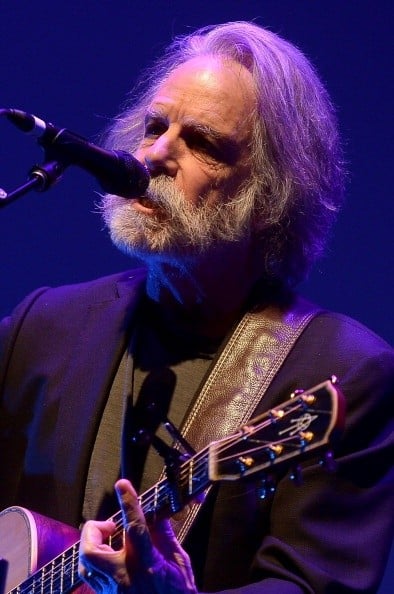
Michael Loccisano/Getty Images
Real Estate
Weir has long maintained a real estate footprint centered in Northern California. He purchased a home in Mill Valley for his biological father, whom he met later in life. After his father's death, that property was listed in 2020 for $1.395 million. Weir also owned a separate residence and a vacant lot in the Mill Valley area, along with a home in nearby Stinson Beach and another property in Menlo Park, close to where he grew up.
In March 2022, Weir expanded his holdings to Southern California, paying $2.1 million, roughly $500,000 over asking, for a home in Los Angeles' Silver Lake neighborhood.
Personal Life & Death
Weir married Natascha Münter in 1999, and the couple had two daughters, Shala Monet and Chloe Kaelia. Chloe, a professional photographer, frequently documented her father's later tours, providing fans with an intimate look at his life on the road. Later in life, Weir reconnected with his biological father, an experience he described as both grounding and emotionally complex.
Bob Weir died at age 78 on January 10, 2026. According to his family, he had successfully battled cancer after a July 2025 diagnosis but ultimately succumbed to underlying lung issues. He passed peacefully, surrounded by loved ones. In his final months, Weir remained deeply reflective, famously describing death as "the last and best reward for a life well-lived." His final performances served as a fitting coda to a career defined not by endings, but by the continuous evolution of a "living" musical language.
/2021/07/Bob-Weir.jpg)
/2020/09/jerry-garcia-1.jpg)
/2009/11/Phil-Lesh.jpg)
/2015/07/dead.jpg)
/2020/03/John-Mayer.jpg)
/2022/02/Mickey-Hart.jpg)
/2022/10/Bruce-Hornsby.jpg)
/2020/01/lopez3.jpg)