
/2009/09/otto2.jpg)
/2009/11/Shari-Arison.jpg)
/2012/08/Jim-davis.png)
/2013/12/Anders-Holch-Povlsen.png)
/2013/05/rahmi.jpg)
/2020/06/taylor.png)
/2020/01/lopez3.jpg)
/2009/11/George-Clooney.jpg)
/2019/04/rr.jpg)
/2009/09/Jennifer-Aniston.jpg)
/2017/02/GettyImages-528215436.jpg)
/2019/11/GettyImages-1094653148.jpg)
/2009/09/Cristiano-Ronaldo.jpg)
:strip_exif()/2015/09/GettyImages-476575299.jpg)
/2019/10/denzel-washington-1.jpg)
:strip_exif()/2009/09/P-Diddy.jpg)
/2020/02/Angelina-Jolie.png)
What is Michael Otto's net worth?
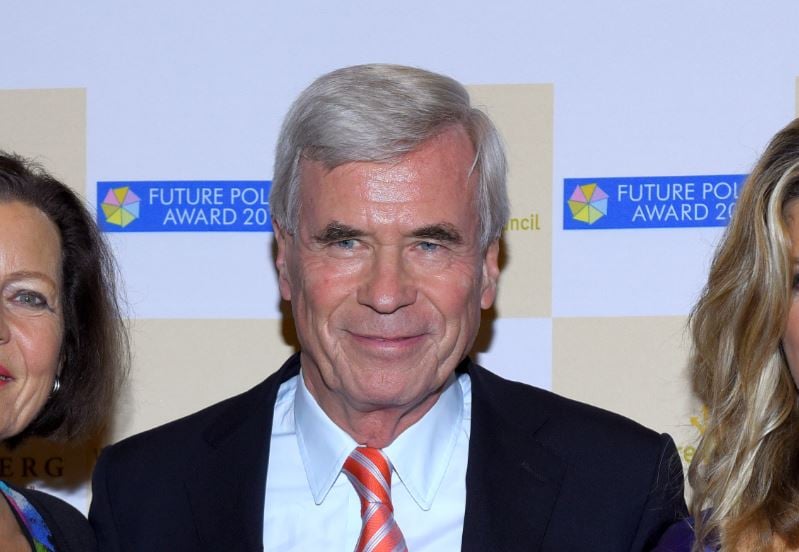
Michael Otto is a German businessman who has a net worth of $10 billion. Michael Otto is best known for transforming a traditional mail-order company into one of the world's largest privately held retail and e-commerce groups. As the longtime leader of Otto Group, Otto oversaw a generational shift that moved the company away from paper catalogs and toward online retail years before many global competitors fully grasped the scale of the digital transition. Under his leadership, the Otto Group grew into a sprawling international enterprise spanning e-commerce platforms, logistics, financial services, and retail brands across Europe, North America, and Asia.
Unlike many heirs to major family fortunes, Otto built a reputation as a hands-on strategist rather than a passive steward. He prioritized long-term ownership, resisted public listings, and consistently reinvested profits into technology and infrastructure. At the same time, he became known in Germany as a prominent voice on corporate responsibility, sustainability, and ethical capitalism, often taking public positions that contrasted sharply with short-term profit maximization. By the time he stepped back from day-to-day management, Michael Otto was widely regarded as one of Europe's most influential retail executives and one of the rare heirs who meaningfully reshaped the business he inherited.
Early Life and Education
Michael Otto was born on April 12, 1943, in Chemnitz, Germany, during World War II. He was the son of Werner Otto, who founded Otto Versand in Hamburg in 1949 as a mail-order shoe business. Michael grew up closely connected to the family company but was encouraged to pursue formal education and outside experience before entering the business.
He studied economics and sociology at the University of Hamburg and later earned a doctorate in economics. His academic background shaped his analytical approach to management and reinforced a belief in long-term planning over short-term financial engineering.
Taking Over Otto Versand
Michael Otto joined the family business in the early 1970s and became chairman of the executive board in 1981, formally succeeding his father. At the time, Otto Versand was already one of Germany's largest catalog retailers, with millions of customers and a dominant presence in mail-order shopping.
Rather than simply maintaining the existing model, Otto focused on diversification and international expansion. He began acquiring specialty retail brands, logistics companies, and service providers, gradually transforming Otto Versand into what would become the Otto Group. This structure allowed the company to operate dozens of semi-independent businesses while benefiting from shared infrastructure and capital.
Pioneering the Shift to E-Commerce
One of Michael Otto's most consequential decisions was to aggressively embrace online retail in the 1990s. While many traditional retailers treated the internet as a side project, Otto pushed the group to invest heavily in digital storefronts, fulfillment systems, and data-driven logistics.
By the early 2000s, Otto Group had become one of the largest e-commerce players in Europe, with a growing share of revenue coming from online sales rather than catalogs. This early pivot helped insulate the company from the decline of print retail and positioned it to compete with global digital rivals. Over time, Otto Group brands operated hundreds of online shops worldwide, serving tens of millions of customers annually.
Getty
Ownership Philosophy and Corporate Structure
Michael Otto strongly believed in private ownership and family control. Unlike many global retailers, Otto Group remained privately held, allowing Otto to prioritize stability and long-term investment over quarterly earnings pressure. He consistently rejected the idea of taking the company public, arguing that independence was essential to preserving corporate culture and strategic flexibility.
This philosophy extended to management succession. Otto emphasized professional leadership, gradually handing operational control to non-family executives while remaining involved in strategic oversight through supervisory roles.
Sustainability and Public Advocacy
Beyond retail, Otto became one of Germany's most prominent business advocates for sustainability and corporate responsibility. He frequently spoke about climate change, ethical supply chains, and the social obligations of large companies. Otto Group invested early in environmental initiatives, labor standards, and transparency programs, often exceeding regulatory requirements.
Otto also served on numerous advisory councils and foundations, using his platform to argue that capitalism needed reform to remain socially legitimate. His public positions sometimes drew criticism from more traditional business leaders but reinforced his image as a values-driven executive.
Later Years and Legacy
Michael Otto stepped back from day-to-day management in the mid-2010s, transitioning leadership to a new generation of executives while remaining involved as honorary chairman. By that point, the Otto Group had evolved far beyond its catalog roots into a diversified global retail and services empire.
His legacy is defined by transformation rather than inheritance. Michael Otto did not merely preserve his father's company. He reimagined it for the digital age, proving that a family-owned business could compete at global scale while maintaining private ownership and a strong ethical identity.
/2009/09/otto2.jpg)
/2009/11/Shari-Arison.jpg)
/2012/08/Jim-davis.png)
/2009/09/hans.jpg)
/2013/12/Anders-Holch-Povlsen.png)
/2019/02/CNW-Man-12.png)
/2025/02/missing_profile.jpg)
/2020/04/Megan-Fox.jpg)
/2009/09/Brad-Pitt.jpg)
/2018/03/GettyImages-821622848.jpg)